Understanding Basic Physics of Flight: The Science of Lift
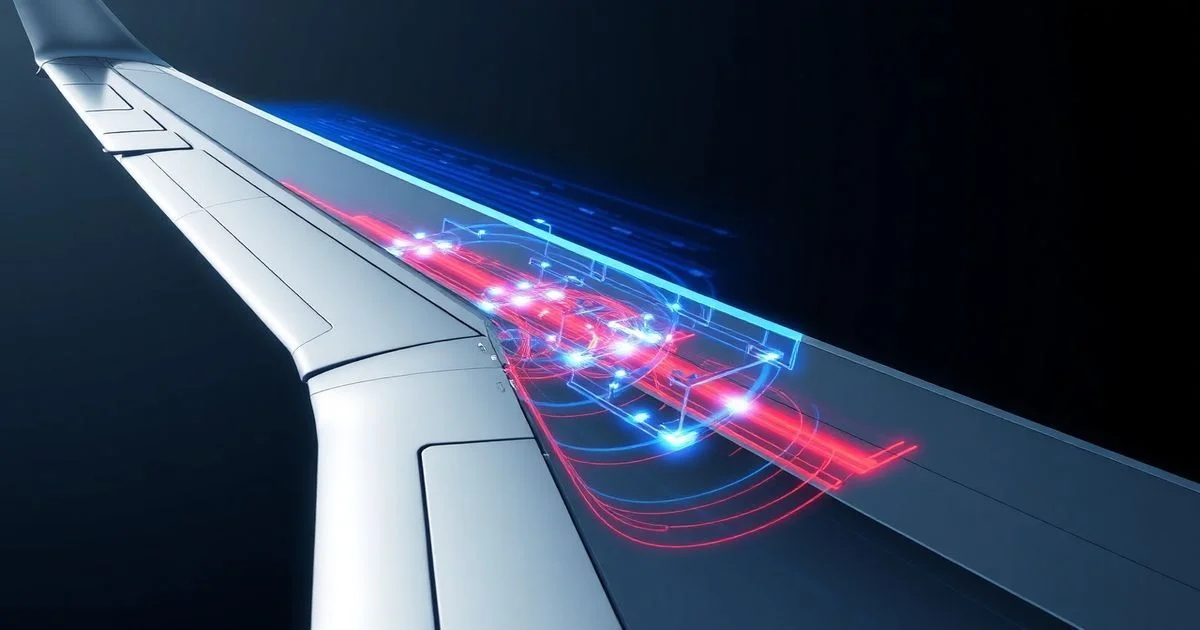
Achieving sustained atmospheric travel is one of humanity's greatest engineering triumphs, and the science of lift is essential to understanding basic physics of flight for any aviation enthusiast. For the tech-savvy professional, this requires moving beyond simple metaphors and into the realm of fluid dynamics and vector mechanics. This exploration covers how basic physics principles—such as pressure gradients, velocity, and surface geometry—interact to allow a multi-ton aircraft to conquer gravity and maintain stable transit through the air.
- The Fundamental Quartet: The Four Forces of Flight
- Understanding Basic Physics of Flight: Fluid Dynamics and Airflow
- The Lift Equation: Quantifying the Force
- Atmospheric Factors: Temperature and Density Altitude
- The Complexity of Drag: Why Speed Has a Limit
- Aircraft Control: Navigating the Three Axes
- Stability and the Center of Gravity
- The Role of Airfoils and Wing Geometry
- High-Speed Aerodynamics: Breaking the Sound Barrier
- Pros and Cons of Current Aerodynamic Models
- Future Outlook: The Next Frontier of Flight
- Frequently Asked Questions
- Conclusion
- Further Reading & Resources
The Fundamental Quartet: The Four Forces of Flight
Every object moving through a fluid medium like air is subjected to four primary forces. For a fixed-wing aircraft to maintain steady, level flight, these forces must exist in a state of equilibrium. If any force exceeds its counterpart, the aircraft accelerates in that direction, a principle rooted in basic Newtonian mechanics.
1. Lift: The Upward Vector
Lift is the aerodynamic force that acts perpendicular to the direction of motion through the air. It is generated by the interaction of the aircraft’s wings (airfoils) with the surrounding air. In a steady-state cruise, lift must exactly equal the weight of the aircraft. For a deeper technical look at this specific force, you can explore physics how wing lift works to see the mathematical modeling involved.
2. Weight: The Gravitational Pull
Weight is the force generated by gravity acting upon the mass of the aircraft. Unlike the other three forces, weight is constant in its direction—always pointing toward the center of the Earth. As fuel is consumed during a flight, the total mass (and thus the weight) of the aircraft decreases, requiring a corresponding adjustment in lift to maintain altitude.
3. Thrust: The Propulsive Force
Thrust is the forward force produced by the engines (whether piston-driven propellers, turbofans, or rockets). This force overcomes the resistance of the air and propels the aircraft forward. In the context of understanding the mechanics of motion, thrust is the primary energy input into the system.
4. Drag: The Resistant Force
Drag is the mechanical force generated by the interaction of a solid body with a fluid. It acts opposite to the direction of motion. Drag is essentially "air resistance" and is composed of several factors, including skin friction and pressure differentials caused by the shape of the aircraft.
Understanding Basic Physics of Flight: Fluid Dynamics and Airflow
The generation of lift is often a point of contention among physics educators. For decades, the "Equal Transit Time" theory was taught in schools, suggesting that air molecules splitting at the front of a wing must meet at the back at the same time. This has been proven false. Instead, we must look at two complementary physical laws that work in tandem to explain the complex behavior of air.
Bernoulli’s Principle: Pressure Differentials
Bernoulli’s Principle states that as the velocity of a moving fluid (like air) increases, its static pressure decreases. An airplane wing is designed with a specific curvature known as a camber.
The geometry of the wing forces the air traveling over the top surface to move at a higher velocity than the air traveling underneath. According to Bernoulli:
-
Top Surface: High velocity leads to low pressure.
-
Bottom Surface: Lower velocity leads to higher relative pressure.
This pressure gradient creates a net upward force. However, Bernoulli’s Principle alone does not account for the entirety of lift, particularly for planes flying inverted or those with symmetrical wings.
Newton’s Third Law: Action and Reaction
Sir Isaac Newton’s third law of motion states that for every action, there is an equal and opposite reaction. As the wing moves through the air, it is angled slightly upward—a concept known as the Angle of Attack (AOA).
The wing physically deflects the air downward (downwash). Because the wing exerts a downward force on the air, the air exerts an equal upward force on the wing. In modern aerospace engineering, lift is calculated using a combination of circulation theory (Bernoulli) and momentum transfer (Newton).
The Coanda Effect and Boundary Layers
The Coanda Effect:
This phenomenon describes the tendency of a fluid jet to stay attached to a convex surface. In aviation, this means the air doesn't just "hit" the wing; it hugs the curvature of the upper surface. This attachment is vital because it ensures the air is directed downward at the trailing edge, contributing to the Newtonian reaction force.
The Boundary Layer:
Right at the surface of the wing, air molecules are slowed down by friction, creating a "boundary layer." If this layer remains "laminar" (smooth), drag is minimized. If the air becomes "turbulent," drag increases exponentially. Controlling the boundary layer is a major focus for engineers designing high-efficiency aircraft.
The Lift Equation: Quantifying the Force
To move from conceptual understanding to engineering reality, we use the lift equation. This formula allows designers to predict how much weight an aircraft can carry at various altitudes and speeds.
L = 1/2 * rho * v^2 * S * CL

L   = Lift Force
rho = Air Density (kg/m^3)
v   = Velocity (m/s)
S   = Surface Area of the Wing (m^2)
CL  = Coefficient of Lift (dimensionless)
Breaking Down the Variables:
-
Air Density (rho): As an aircraft climbs, the air becomes thinner. To maintain the same amount of lift at higher altitudes, the aircraft must either increase its velocity or change its coefficient of lift.
-
Velocity Squared (v^2): This is the most critical variable. Because velocity is squared, doubling the speed of an aircraft quadruples the amount of lift generated. This is why takeoff speed is a non-negotiable metric for every airframe.
-
Coefficient of Lift (CL): This is a complex value determined by the shape of the wing and the angle of attack. Pilots manipulate the CL by using "flaps" or "slats" during takeoff and landing to increase lift at lower speeds.
Atmospheric Factors: Temperature and Density Altitude
A critical part of aviation physics often overlooked by beginners is the environment. Air is not a constant medium; its properties change based on weather and altitude.
Density Altitude:
This is the altitude at which the airplane "feels" like it is flying, regardless of its actual height above sea level. On a hot, humid day, air molecules are further apart (less dense). This means the wings have fewer molecules to deflect, and the engine has fewer molecules to combust.
The Impact of Humidity:
Water vapor is actually lighter than dry air. High humidity further reduces air density. Pilots must account for these factors because they significantly increase the required takeoff distance and decrease the rate of climb. Ignoring the physics of density altitude has led to many high-density altitude accidents in mountainous regions.
The Complexity of Drag: Why Speed Has a Limit
Drag is not a singular force but a combination of several factors that impede motion. To optimize fuel efficiency and top speed, engineers must minimize the "Drag Coefficient."
Induced Drag
Induced drag is a byproduct of lift. As the high-pressure air beneath the wing tries to escape to the low-pressure area above it, it curls around the wingtips, creating vortices. These vortices deflect the airflow behind the wing downward and backward, creating a drag component. This is why many modern airliners feature "winglets"—vertical extensions at the tips that break up these vortices to improve efficiency.
Parasite Drag
Parasite drag includes all types of drag that do not contribute to lift. It is subdivided into:
-
Form Drag: Caused by the shape of the aircraft (a flat plate has more form drag than a teardrop).
-
Skin Friction: Caused by the microscopic roughness of the aircraft's surface rubbing against air molecules.
-
Interference Drag: Occurs where different parts of the aircraft meet (e.g., where the wing attaches to the fuselage), causing airflows to clash and become turbulent.
Aircraft Control: Navigating the Three Axes
Understanding the physics of flight is useless if the aircraft cannot be steered. A pilot controls the aircraft along three imaginary axes, all of which intersect at the center of gravity. This is similar to how athletes must master their own center of mass; for instance, you can see parallels in mastering the fundamentals of soccer tactics regarding body positioning and torque.
Pitch (Lateral Axis)
Pitch is the upward or downward movement of the nose. This is controlled by the elevators, located on the horizontal stabilizer of the tail. When the pilot pulls back on the stick, the elevators move up, creating a downward force on the tail, which rotates the nose upward around the lateral axis.
Roll (Longitudinal Axis)
Roll is the rotation of the aircraft from wingtip to wingtip. This is managed by the ailerons on the outer rear edges of the wings. To roll right, the right aileron moves up (decreasing lift) and the left aileron moves down (increasing lift), causing the plane to bank.
Yaw (Vertical Axis)
Yaw is the left or right movement of the nose. This is controlled by the rudder on the vertical stabilizer. The rudder works much like a boat's rudder, using aerodynamic pressure to push the tail left or right, rotating the aircraft around its vertical axis.
Stability and the Center of Gravity
For an aircraft to be "flyable," it must possess inherent stability. If a gust of wind pushes the nose up, a stable aircraft should naturally tend to return to its original position without pilot intervention.
Longitudinal Stability
This is stability around the lateral axis (pitch). It is achieved by the relationship between the Center of Gravity (CG) and the Center of Pressure (CP). Most aircraft are designed with the CG ahead of the CP. This creates a natural nose-down tendency, which is countered by a constant downward force (tail-down force) generated by the horizontal stabilizer.
The Dangers of an Improper CG
If an aircraft is loaded too far aft (backwards), the nose-down tendency disappears. The aircraft becomes "pitch unstable," and if the nose is pushed up, it will continue to rise until the wing stalls. This is a critical physical limitation that every pilot must calculate before every flight using weight and balance charts.
The Role of Airfoils and Wing Geometry
The shape of the wing (the airfoil) is tailored to the specific mission of the aircraft. A fighter jet and a cargo plane have vastly different geometries because they prioritize different physical outcomes.
Key Design Factors:
-
Aspect Ratio: The ratio of the wing's span to its chord (width). High-aspect-ratio wings (long and skinny, like a glider) are highly efficient at low speeds because they minimize induced drag. Low-aspect-ratio wings (short and stubby, like an F-16) are better for high-speed maneuverability and structural strength.
-
Camber: The curvature of the upper and lower surfaces of an airfoil. A highly cambered wing produces significant lift at low speeds but creates high drag at high speeds.
-
Sweepback: Most modern jets have swept-back wings. This design delays the onset of "compressibility" effects as the aircraft approaches the speed of sound, allowing for higher cruise speeds without the massive drag penalty of shockwaves.
High-Speed Aerodynamics: Breaking the Sound Barrier
As an aircraft approaches the speed of sound (Mach 1), the physics shift from subsonic fluid dynamics to supersonic wave mechanics. Air molecules can no longer "signal" each other to get out of the way, resulting in the formation of shockwaves.
Wave Drag:
This is a new form of drag that appears only at transonic and supersonic speeds. It is caused by the formation of shockwaves on the wing. To counter this, engineers use "thin" airfoils and the "Area Rule"—shaping the fuselage like a Coke bottle to keep the total cross-sectional area of the plane constant.
The Thermal Thicket:
At even higher speeds (hypersonic), the kinetic energy of the air is converted into heat. This is the same principle seen in orbital mechanics, which you can read more about in understanding physics planetary orbits deep motion. For hypersonic flight, the physics of thermodynamics become just as important as the physics of lift.
Pros and Cons of Current Aerodynamic Models
While our current understanding of aviation physics allows for incredibly safe and efficient travel, there are inherent trade-offs in every design.
Pros:
-
Predictability: Modern Computational Fluid Dynamics (CFD) allow us to simulate airflow with extreme precision before a prototype is even built.
-
Safety: Understanding the "Stall" allows us to build warning systems that prevent pilots from exceeding the critical angle of attack.
Cons:
-
Efficiency Limits: We are reaching the point of diminishing returns for traditional wing and tube designs. Significant gains in efficiency will require radical new shapes, like the "Blended Wing Body."
-
Noise Pollution: The physics of high-speed airflow naturally create noise, which is a major hurdle for the return of supersonic commercial flight.
Future Outlook: The Next Frontier of Flight
The future of aviation physics is focused on moving away from traditional combustion and exploring new ways to manipulate the air.
1. Electric and Distributed Propulsion
By using dozens of small electric fans along the wing instead of two massive turbofans, engineers can manipulate the airflow over the entire wing surface. This "blown wing" concept increases lift significantly at low speeds, allowing for shorter runways and quieter operation.
2. Ion Drives and Electrohydrodynamics (EHD)
Researchers at MIT have successfully flown a small drone using "ionic wind." This involves using high-voltage electrodes to ionize air molecules and accelerate them, creating thrust without any moving parts. While currently inefficient for large scales, it represents a radical shift in how we might generate thrust.
3. Hypersonic Travel
Flying at Mach 5 or higher requires a total rethink of materials science. At these speeds, the air doesn't just push back; it chemically reacts with the aircraft's skin due to extreme heat. Future "waverider" designs will actually use the shockwaves they create to generate lift. This extreme environment is the ultimate test of our knowledge of physics, much like the intense environments discussed in black holes explained formation cosmic impact.
Frequently Asked Questions
Q: Does air really travel faster over the top of the wing?
A: Yes. Because of the wing's curvature and the Coanda effect, the air is forced to travel along a path that causes it to accelerate, resulting in lower pressure as described by Bernoulli's Principle.
Q: What is a "stall" in simple physics terms?
A: A stall occurs when the wing's angle of attack is so steep that the air can no longer remain attached to the upper surface. The airflow becomes turbulent, the pressure differential vanishes, and lift drops.
Q: How do winglets help a plane fly more efficiently?
A: Winglets reduce "induced drag" by blocking the high-pressure air under the wing from curling over the tip into the low-pressure area above, thereby minimizing energy-wasting vortices.
Conclusion
Mastering the air is a delicate balancing act between four competing forces. By understanding basic physics of flight, we gain an appreciation for the subtle nuances of wing design, the importance of velocity, and the sheer engineering brilliance required to keep a 500,000-kilogram machine suspended in the sky. As we move toward a future of electric propulsion and hypersonic travel, the core principles of Bernoulli and Newton will remain the bedrock upon which all aerial innovation is built.