Post-Maduro Venezuela Navigates Political Shift: A Nation's Future
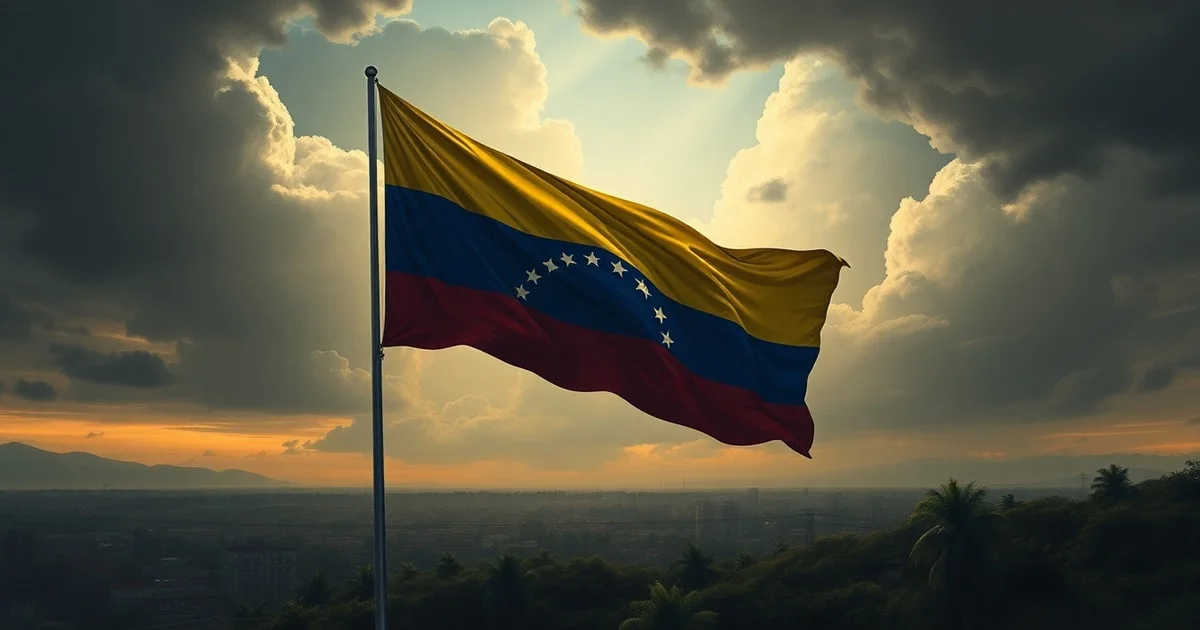
The ongoing complexities within Venezuela have brought the nation to a critical juncture, compelling observers worldwide to ponder its future trajectory. As the country grapples with profound economic hardship, social unrest, and a deeply entrenched political divide, the discussion around how a Post-Maduro Venezuela Navigates Political Shift has gained significant urgency. Understanding the multifaceted dynamics at play, from internal pressures to international influences, is essential for comprehending the potential pathways a changing Venezuela might embark upon and the profound implications for its citizens and the broader region. This exploration delves into the historical context, current challenges, and prospective scenarios for the nation's future.
- Historical Context of Venezuela's Political Landscape
- Deepening Crisis: Economic Woes and Social Impact
- The Opposition and International Scrutiny
- Navigating the Path Forward: Post-Maduro Venezuela Navigates Political Shift
- Potential Scenarios for Transition and Stability
- Conclusion: Venezuela's Pivotal Moment
- Frequently Asked Questions
- Further Reading & Resources
Historical Context of Venezuela's Political Landscape
Venezuela's modern political history is characterized by periods of democratic rule punctuated by military coups and populist movements. The rise of Hugo Chávez in 1999 marked a significant ideological shift, introducing "Bolivarian Revolution" socialist policies that reshaped the country's economic and social structures. Initially fueled by vast oil revenues, these policies saw significant social spending and nationalization programs. However, the subsequent decline in oil prices exposed underlying vulnerabilities, leading to severe economic contraction and social upheaval. For insights into similar regional populist movements in Latin America, exploring comparative histories can offer valuable context.
Nicolás Maduro, Chávez’s successor, inherited a country already facing considerable challenges. His presidency has been marked by a deepening humanitarian crisis, hyperinflation, and a mass exodus of citizens. The government has also faced accusations of authoritarianism, including suppression of dissent and democratic backsliding. These internal struggles have been met with increasing international pressure, sanctions, and widespread condemnation from various global bodies and nations. The legacy of the Chávez and Maduro administrations forms the bedrock upon which any future political shift will inevitably be built, carrying with it deeply ingrained societal divisions and institutional challenges.
Deepening Crisis: Economic Woes and Social Impact
Venezuela's economic collapse is one of the most severe in modern history. Years of mismanagement, corruption, and the global decline in oil prices have decimated the nation's once-booming petroleum industry, which accounts for the vast majority of its export earnings. The state oil company, PDVSA, once a pillar of national wealth, has seen its production capacity plummet due to lack of investment, maintenance failures, and a brain drain of skilled workers. This catastrophic decline in oil output has directly fueled the resulting hyperinflation, which has rendered the national currency almost worthless, eroding purchasing power and plunging a significant portion of the population into extreme poverty. Basic services, including electricity, water, and healthcare, have severely deteriorated, exacerbating the humanitarian crisis. Understanding managing humanitarian crises in post-conflict zones offers parallels to the complex needs facing Venezuela.
The social impact of this economic devastation is profound. Millions of Venezuelans have fled the country, creating one of the largest displacement crises in the world. These migrants and refugees have sought asylum in neighboring countries and beyond, placing immense strain on regional resources and social services. Inside Venezuela, those who remain face pervasive food and medicine shortages, a collapsed public health system, and rampant crime. The breakdown of social cohesion and the erosion of trust in public institutions present formidable hurdles for any future government aiming to rebuild the nation.
The Humanitarian Emergency
The United Nations and various international aid organizations continue to highlight the severe humanitarian emergency in Venezuela. Access to clean water, food, and essential medical supplies remains critically limited for millions. Children are particularly vulnerable to malnutrition and preventable diseases due to the collapse of healthcare infrastructure and widespread poverty. The scale of the crisis underscores the urgent need for a stable political environment that can facilitate international aid efforts and implement sustainable solutions to address the population's basic needs.
Deterioration of Public Services
Beyond the immediate shortages, the foundational infrastructure of public services has crumbled. Power outages are frequent and prolonged, disrupting daily life and economic activity. Water scarcity is a constant struggle for many communities. Public transportation systems are in disarray, and the education system faces severe challenges with teacher shortages and dilapidated facilities. Restoring these essential services will require massive investment, technical expertise, and a comprehensive national plan, all of which depend on a functional and legitimate government.
The Opposition and International Scrutiny
The Venezuelan political opposition has been a fragmented but persistent force against the Maduro government. Comprising various parties and leaders, the opposition has historically struggled to present a united front, a factor that has often played into the hands of the ruling party. Internal disagreements over leadership, strategy, and the timing of elections have frequently hampered their collective impact. Despite winning a majority in the National Assembly in 2015, their legislative powers were significantly curtailed by government actions, including the creation of the controversial Constituent Assembly.
International pressure on the Maduro regime has been extensive. Many countries, including the United States, members of the European Union, and several Latin American nations, have refused to recognize the legitimacy of Maduro's 2018 re-election, citing irregularities and a lack of free and fair conditions. Sanctions targeting Venezuelan officials and state entities have been imposed, aimed at pressuring the government towards democratic reforms and accountability. However, these sanctions have also been criticized for potentially exacerbating the economic crisis and disproportionately affecting the civilian population, leading to ongoing debates about their effectiveness and humanitarian impact. For a broader view, consider the impact of international sanctions on national economies.
Divided Opposition Strategies
The Venezuelan opposition has experimented with various strategies, from electoral participation to street protests and calls for international intervention. However, internal divisions regarding tactics, leadership, and the ultimate path to transition have often hampered their effectiveness. Some factions advocate for dialogue and negotiations with the government, while others insist on maximalist pressure tactics, leading to a perception of disunity that the Maduro government has frequently exploited. This lack of a cohesive, unified strategy remains a significant obstacle in their efforts to challenge the ruling party effectively and present a credible alternative for the Venezuelan populace.
Global Diplomatic Engagements
The international community's engagement with Venezuela has ranged from diplomatic condemnation to humanitarian aid initiatives. The Lima Group, comprising several Latin American nations and Canada, was formed to address the Venezuelan crisis and promote a peaceful, democratic solution. The European Union has also maintained a firm stance, imposing sanctions and supporting efforts to restore democracy. Conversely, countries like Russia, China, and Cuba have largely supported the Maduro government, providing economic and political backing, which complicates international efforts to isolate the regime and achieve a consensus-driven resolution.
Navigating the Path Forward: Post-Maduro Venezuela Navigates Political Shift
The concept of a Post-Maduro Venezuela Navigates Political Shift encapsulates the profound challenges and opportunities that would arise should a leadership transition occur. Such a shift would not merely involve a change in personnel but would necessitate a fundamental reorientation of the country's political, economic, and social structures. The immediate priority would be to stabilize the humanitarian situation, restore public services, and rebuild the collapsed economy. This would require substantial international cooperation, investment, and debt restructuring.
Politically, a transition would likely involve establishing conditions for free and fair elections, restoring independent institutions, and ensuring the rule of law. Reconciling deeply divided political factions and fostering national unity would be paramount, requiring a delicate balance between justice for past abuses and the need for broad societal consensus. The military's role in a post-Maduro scenario would also be a critical factor, given its historical influence in Venezuelan politics and its current ties to the existing regime, necessitating careful negotiation to ensure a peaceful transition of power. Addressing issues of justice and accountability for human rights abuses and corruption would be essential for establishing credibility and trust, both domestically and internationally.
Economic Reconstruction Challenges
Rebuilding Venezuela's economy would be an immense undertaking. It would involve revitalizing the oil industry through foreign investment and expertise, diversifying the economy beyond oil, and implementing sound macroeconomic policies to control inflation and attract investment. The country would also need to address its massive external debt and negotiate with creditors. Successfully navigating this economic reconstruction would require a transparent, stable, and predictable legal framework to encourage both domestic and international confidence, alongside programs to support small businesses and agricultural development.
Institutional Reform and Democratic Revival
A genuine political shift would necessitate deep institutional reforms. This includes strengthening the independence of the judiciary, restoring the credibility of the National Electoral Council, and ensuring the autonomy of legislative bodies. A critical aspect would be to re-establish a robust system of checks and balances to prevent the concentration of power that has characterized recent decades. Fostering a pluralistic political environment where diverse voices can be heard and represented would be central to a democratic revival, underpinned by reforms that protect freedom of expression and assembly.
Potential Scenarios for Transition and Stability
The pathways to a political shift in Venezuela are complex and fraught with uncertainty. Several scenarios are often discussed in analytical circles. One scenario involves a negotiated transition, possibly facilitated by international mediators, leading to elections and a power-sharing arrangement. Another could involve internal pressure from within the government or military, though this remains speculative and dependent on unpredictable factors. A third, less desirable, scenario involves continued stagnation and further deterioration, with the current political impasse persisting and potentially escalating social unrest.
Regardless of the specific path, the involvement of civil society organizations, humanitarian actors, and international partners will be crucial. These entities can play vital roles in monitoring human rights, providing essential services, advocating for democratic principles, and supporting the reconstruction efforts once a transition begins. The stability of the entire Latin American region is intricately linked to Venezuela's future, making a peaceful and democratic resolution a high priority for its neighbors and the global community.
The Role of Civil Society
Venezuelan civil society groups, despite operating under difficult circumstances, have been instrumental in documenting human rights abuses, providing aid, and advocating for democratic change. In a transitional period, their role would expand significantly, becoming crucial partners in reconstruction, reconciliation, and the establishment of transparent governance. Empowering these local organizations will be essential for ensuring that the needs and voices of the Venezuelan people are central to any future plans and that reforms are genuinely reflective of their aspirations.
Regional and International Cooperation
The complexities of Venezuela's potential political shift demand sustained regional and international cooperation. Neighboring countries, particularly those grappling with the refugee crisis, have a vested interest in a stable Venezuela. International financial institutions, multilateral organizations, and donor countries would be vital for providing the necessary financial and technical support for economic recovery and institutional rebuilding. A coordinated approach, emphasizing diplomacy, human rights, and humanitarian assistance, will be key to fostering a positive outcome and ensuring long-term stability in the region.
Conclusion: Venezuela's Pivotal Moment
Venezuela stands at a pivotal moment in its history. The challenges facing the nation are immense, encompassing a humanitarian crisis, economic collapse, and deep-seated political divisions. As discussions continue about how a Post-Maduro Venezuela Navigates Political Shift, the international community watches closely, hoping for a peaceful and democratic resolution. The path forward will undoubtedly be arduous, requiring sustained effort from both internal and external actors. A successful transition would not only alleviate the suffering of millions of Venezuelans but also bring much-needed stability to the region. The commitment to rebuilding institutions, fostering economic recovery, and ensuring justice and reconciliation will be paramount in charting a new course for the nation and its people as they grapple with their political shift.
Frequently Asked Questions
Q: What are the main challenges Venezuela faces in a post-Maduro era?
A: Economic reconstruction, providing humanitarian aid, achieving political reconciliation, and restoring democratic institutions are primary hurdles for any future Venezuelan government.
Q: What role does the international community play in Venezuela's future?
A: International support is crucial for Venezuela, encompassing humanitarian aid, foreign investment, debt restructuring, and mediating political transitions to foster stability.
Q: What is the outlook for Venezuela's oil industry after a political shift?
A: Revitalizing Venezuela's severely deteriorated oil industry would require substantial foreign investment, technical expertise, and transparent management to restore its production capacity.