Quantum Leap: US-China Tech Race Heats Up in Semiconductors
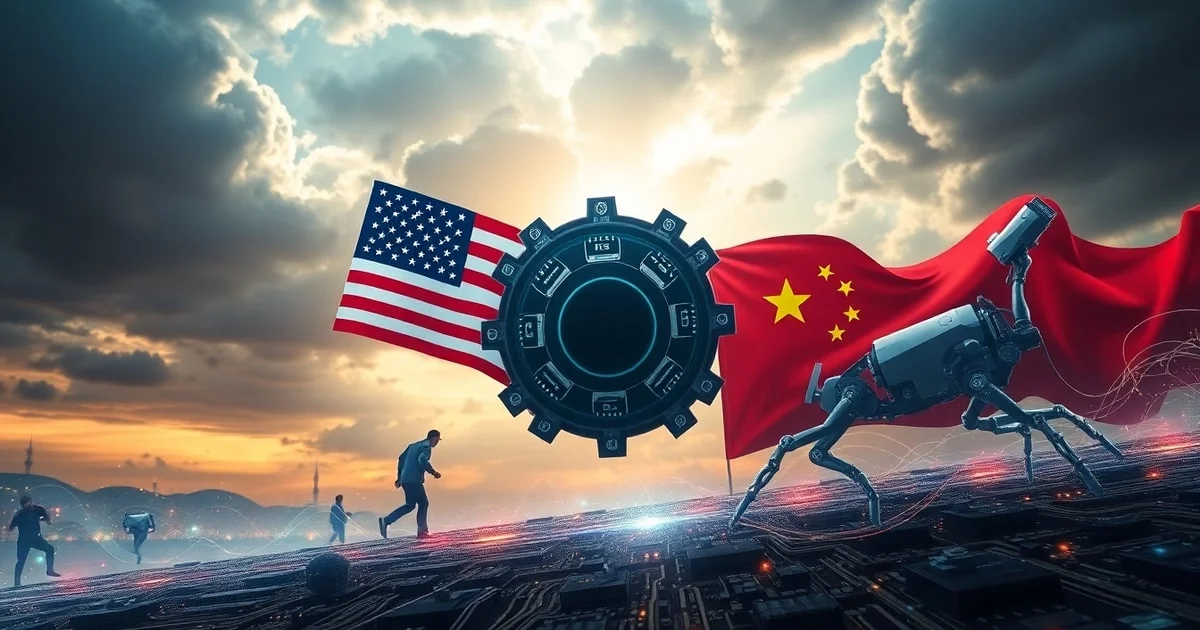
The geopolitical stage is set for an intense competition as the United States and China engage in a technological rivalry, driving a Quantum Leap: US-China Tech Race Heats Up across crucial sectors like artificial intelligence, quantum computing, and advanced semiconductors. This escalating tech race is not merely an economic contest but a strategic struggle for global dominance, with profound implications for future innovation and international relations. The United States and China are locked in a sophisticated competition, pushing the boundaries of scientific discovery and engineering prowess in a bid to secure their technological futures.
- The Escalating Stakes of Technological Supremacy
- Historical Context: From Cooperation to Competition
- The Core Battlegrounds: Semiconductors, AI, and Quantum Computing
- Expert Perspectives on the Intensifying Rivalry
- Global Implications and the Future Landscape
- Conclusion: A Defining Era of Tech Rivalry
- Frequently Asked Questions
- Further Reading & Resources
The Escalating Stakes of Technological Supremacy
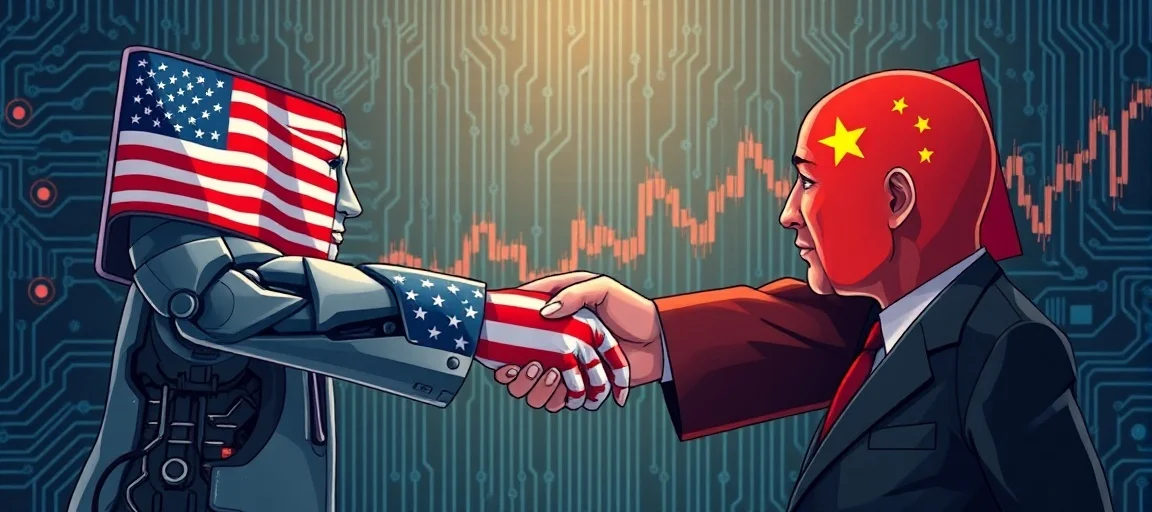
The current technological rivalry between the United States and China is unprecedented in its scope and intensity, extending far beyond traditional economic competition. Both nations recognize that leadership in cutting-edge technologies translates directly into economic power, national security, and geopolitical influence. This understanding fuels a relentless pursuit of innovation and control over critical supply chains. The race is fundamentally about who will define the technological standards and capabilities of the 21st century, influencing everything from defense systems to everyday consumer electronics.
The United States has historically led in many foundational technologies, benefiting from a robust ecosystem of research institutions, private companies, and venture capital. However, China has made significant strides in recent decades, driven by massive state investments, ambitious industrial policies, and a vast talent pool. This convergence has led to a direct confrontation in areas deemed vital for national interest, creating a complex web of cooperation and contention.
Historical Context: From Cooperation to Competition
The relationship between the US and China concerning technology has evolved dramatically over the past few decades. For many years, a degree of technological cooperation and interdependence characterized their interactions. US companies invested heavily in China, transferring technology and manufacturing expertise, while China benefited from access to global markets and advanced know-how. This period fostered rapid economic growth in China and provided American consumers with affordable goods.
However, concerns began to mount in the US regarding intellectual property theft, forced technology transfers, and the potential military applications of Chinese technological advancements. The perception shifted from China as a rising economic partner to a strategic competitor, especially under the leadership of former President Donald Trump and further intensified under President Joe Biden. This shift marked the beginning of a more confrontational approach, characterized by export controls, investment restrictions, and a push for technological decoupling.
Early Warning Signs and Policy Shifts
The initial signs of a hardening stance from the US emerged with actions against specific Chinese technology companies, citing national security concerns. Huawei, a global leader in telecommunications equipment, became a focal point, facing severe restrictions on its access to US technology and markets. This move signaled a broader intent to limit China's progress in critical infrastructure and next-generation technologies, particularly in 5G development. The US government also increased scrutiny of Chinese investments in American tech companies and tightened visa policies for Chinese researchers and students in sensitive fields, particularly those in STEM. These policy shifts were designed not only to protect American technological advantages but also to prevent the leakage of dual-use technologies that could benefit China's military modernization efforts, effectively creating strategic chokepoints in key supply chains.
The Core Battlegrounds: Semiconductors, AI, and Quantum Computing
The current tech race is primarily concentrated in three interconnected and highly strategic domains: advanced semiconductors, artificial intelligence (AI), and quantum computing. These technologies are foundational, meaning advancements in one often accelerate progress in the others, creating a virtuous cycle of innovation for the leading nation.
The Semiconductor Scramble: The New Oil
Semiconductors, or microchips, are the backbone of modern technology, powering everything from smartphones and data centers to advanced weaponry and AI systems. The ability to design and manufacture cutting-edge chips is paramount, and this is where the Quantum Leap: US-China Tech Race Heats Up most intensely. The US, while strong in chip design, relies heavily on East Asian manufacturers, particularly Taiwan's TSMC, for fabrication. China, despite significant investment, lags behind in advanced manufacturing processes and critical equipment.
The US has implemented stringent export controls to prevent China from acquiring advanced semiconductor manufacturing equipment and design software. These measures aim to cripple China's ability to produce high-end chips domestically and slow its progress in AI and other advanced technologies. This strategy has forced China to redouble its efforts towards self-sufficiency, pouring billions into its domestic semiconductor industry and accelerating research into alternative manufacturing techniques.
The global semiconductor supply chain is incredibly complex and interdependent, making a complete decoupling challenging and potentially disruptive for both sides. The scramble for control over this "new oil" is driving massive investments and strategic alliances worldwide, as nations seek to strengthen the resilience of global supply chains.
Artificial Intelligence: The Intelligence Frontier
Artificial intelligence is another critical battleground, with both the US and China vying for leadership in AI research, development, and application. AI's potential to transform industries, enhance military capabilities, and reshape daily life makes it a top strategic priority. China has declared ambitious goals to become the world leader in AI by 2030, leveraging its vast data resources, large talent pool, and significant government backing.
The US maintains a lead in foundational AI research, particularly in areas like deep learning and natural language processing, often driven by its powerful tech companies and university research. However, China's rapid application of AI in areas like facial recognition, smart cities, and autonomous systems demonstrates its practical prowess. The competition extends to ethical frameworks, data governance, and the integration of AI into military decision-making, raising complex questions about the future of AI ethics.
Quantum Computing: The Ultimate Leap
Quantum computing represents the next frontier in technological innovation, promising computational power far exceeding classical computers. Such power could revolutionize drug discovery, materials science, cryptography, and complex problem-solving. While still in its nascent stages, both the US and China are investing heavily in quantum research, understanding that whoever achieves a practical quantum computer first will gain an unparalleled strategic advantage.
China has made significant investments in quantum communication networks and quantum computing research centers, publishing a substantial number of papers in the field. The US, through initiatives like the National Quantum Initiative Act, is also pouring resources into building a robust quantum ecosystem. The race here is less about immediate commercial applications and more about securing a long-term strategic edge in a technology that could fundamentally alter the balance of power. This includes ensuring robust quantum security protocols are developed in parallel.
Expert Perspectives on the Intensifying Rivalry
Experts largely agree that the technological competition between the US and China is here to stay and will likely intensify. Dr. James Harrington, a leading analyst in geopolitical technology, emphasizes the dual-use nature of these technologies. "Every advancement in AI or quantum computing has both civilian and military applications. This inherent duality means the tech race is inseparable from national security concerns, making compromise incredibly difficult," Dr. Harrington states. "The drive for self-sufficiency on both sides will inevitably lead to parallel technological ecosystems, which could fragment global innovation in the long run."
Analysts at the Center for Strategic and International Studies (CSIS) often highlight the strategic dilemma faced by allied nations. "Countries caught between the US and China are under increasing pressure to choose sides, particularly regarding critical infrastructure and supply chains," a recent CSIS report noted. This pressure is evident in debates over 5G technology, where many US allies have had to weigh economic ties with China against security concerns raised by Washington.
The consensus among economists is that this decoupling, while aimed at national security, will incur economic costs. Fragmenting supply chains and duplicating research efforts will likely lead to higher prices and potentially slower global innovation, even as individual nations achieve greater self-reliance in specific sectors.
Global Implications and the Future Landscape
The escalating US-China tech race has far-reaching global implications, affecting international trade, supply chains, and the future of technological governance. The push for technological decoupling risks creating a bifurcated global tech ecosystem, where different standards, hardware, and software may emerge in US-aligned and China-aligned blocs. This fragmentation could hinder global interoperability, increase costs for businesses, and complicate international collaboration on global challenges.
Economic Repercussions
Economically, the race is prompting nations to re-evaluate their supply chain vulnerabilities. Many countries are now seeking to "friend-shore" or "near-shore" production of critical components, moving away from an over-reliance on any single nation. This diversification could lead to a more resilient, albeit potentially more expensive, global manufacturing landscape.
For multinational corporations, navigating the complexities of export controls, investment restrictions, and differing technological standards presents a significant challenge. Companies operating in both markets are forced to make difficult strategic decisions, often leading to distinct product lines or operational structures for each region.
Geopolitical Realignment
Geopolitically, the tech race is reshaping alliances and diplomatic strategies. The US is actively working with allies, such as Japan, South Korea, Taiwan, and European nations, to coordinate policies aimed at limiting China's technological advancements in sensitive areas. Initiatives like the Indo-Pacific Economic Framework for Prosperity (IPEF) aim to build stronger supply chain resilience and technological cooperation among like-minded nations.
China, in turn, is strengthening its own technological partnerships, particularly with nations in Southeast Asia and Africa, and doubling down on its domestic innovation efforts. The competition for influence through technological leadership is becoming a defining feature of 21st-century diplomacy. The outcome of this race will significantly impact which nations hold sway over emerging technologies and, by extension, the global economic and security order.
Conclusion: A Defining Era of Tech Rivalry
The intense technological competition between the United States and China, manifesting as a Quantum Leap: US-China Tech Race Heats Up, represents a defining feature of the contemporary geopolitical landscape. The pursuit of supremacy in semiconductors, artificial intelligence, and quantum computing is not merely a contest of innovation but a fundamental struggle for economic leadership and national security. While the path ahead is fraught with challenges, including potential economic decoupling and geopolitical fragmentation, the relentless drive for technological advantage will continue to shape global dynamics for decades to come. The world watches as these two technological giants race towards the future, each vying to lead the next era of innovation.
Frequently Asked Questions
Q: What is the primary focus of the US-China tech race?
A: The race primarily centers on advanced semiconductors, artificial intelligence (AI), and quantum computing. These foundational technologies are crucial for economic power, national security, and global influence, driving intense competition between the two nations.
Q: Why are semiconductors so critical in this competition?
A: Semiconductors are essential components for almost all modern technology, powering everything from smartphones and data centers to advanced military systems. Control over their design and manufacturing is seen as a key to technological independence and strategic dominance in the global economy.
Q: How does this tech race impact the global economy?
A: The competition is leading to significant supply chain re-evaluations, potential technological decoupling, and the creation of parallel tech ecosystems. This could result in higher costs, fragmented global innovation, and a realignment of international trade relationships as nations prioritize self-reliance.
Further Reading & Resources
- US-China Tech Rivalry: The Global Scramble for Semiconductors
- The Semiconductor Supply Chain: What It Is, Why It Matters, and How It's Shaped by the US-China Tech Race
- Understanding the US-China Tech Rivalry
- Quantum Computing: A Geopolitical Perspective
- Artificial Intelligence and the US-China Strategic Competition