China Flexes Naval Might: Liaoning Drills in Pacific Underscore Regional Shifts
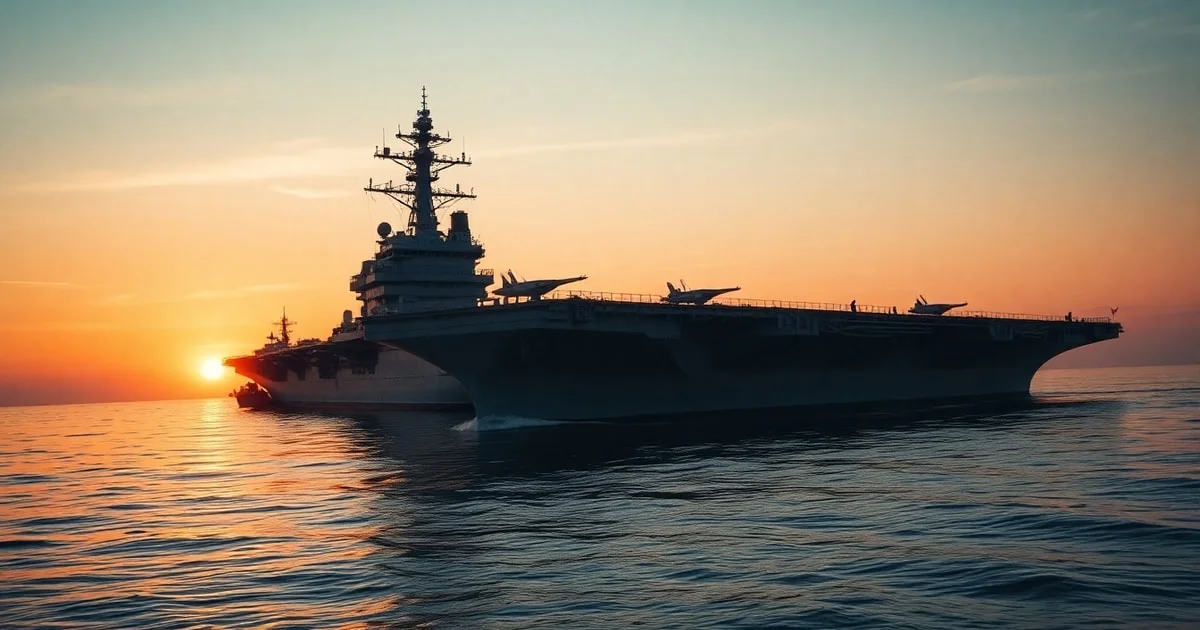
Recent extensive exercises by the Chinese aircraft carrier Liaoning and its strike group in the Pacific Ocean signal a significant development in Beijing's naval ambitions and its growing projection of power far beyond its coastal waters. This potent display of military capability, characterized by the deployment of the country's first operational aircraft carrier, underscores China's strategic intent to reshape the regional security architecture and assert its presence across crucial international sea lanes. The drills, involving a complex array of naval assets, are closely watched by global powers, particularly those with vested interests in Indo-Pacific stability. They highlight a clear trend: China Flexes Naval Might: Liaoning Drills in Pacific serve as a compelling indicator of the nation's increasing maritime strength and its readiness to operate in distant waters, sparking crucial conversations about the future of naval dominance and regional balances.
- China's Naval Ascent: A Strategic Overview
- Liaoning's Pacific Drills: China Flexes Naval Might and Strategic Objectives
- Geopolitical Implications and Regional Reactions
- Expert Analysis and Future Projections
- Operational Challenges and Limitations
- Conclusion: A New Era of Pacific Naval Dynamics
- Frequently Asked Questions
- Further Reading & Resources
China's Naval Ascent: A Strategic Overview
China's rapid naval modernization program is one of the most significant geopolitical developments of the 21st century. Over the past two decades, the People's Liberation Army Navy (PLAN) has transformed from a largely coastal defense force into a formidable blue-water navy, capable of sustained operations far from mainland China. This expansion is not merely about increasing the number of ships; it encompasses advancements in technology, training, and strategic doctrine. The introduction and subsequent operational deployments of aircraft carriers like the Liaoning are central to this transformation, allowing China to project air power and influence across vast oceanic expanses.
The Role of Aircraft Carriers in Chinese Strategy
Aircraft carriers are the ultimate symbols of naval power projection, enabling a nation to extend its military reach and influence far beyond its borders. For China, the Liaoning, a retrofitted Soviet-era Kuznetsov-class carrier, served as a crucial training platform to develop the complex operational procedures required for carrier-based aviation. Its successor, the domestically built Shandong, and subsequent carriers under construction, represent further steps in China's ambition to operate multiple carrier strike groups. These carriers are designed to provide air defense for naval formations, conduct maritime interdiction operations, and support amphibious assaults, thus enhancing China's capacity for expeditionary warfare and safeguarding its expanding global interests.
Liaoning's Pacific Drills: China Flexes Naval Might and Strategic Objectives
The recent deployment of the Liaoning carrier strike group to the Pacific Ocean represents a calculated and significant maneuver by the PLAN. These drills are not isolated events but rather part of a broader, sustained effort to enhance the operational readiness and capabilities of China's naval forces. The exercises typically involve a diverse array of vessels, including destroyers, frigates, supply ships, and submarines, all working in concert to simulate realistic combat scenarios.
Geographic Scope and Intensity
The Liaoning's drills have often taken it through critical waterways, including the Miyako Strait (between Okinawa and Miyako Island) and into the Philippine Sea, demonstrating its ability to break out into the wider Pacific. These maneuvers are carefully monitored by regional powers like Japan and Taiwan, as well as the United States, which often deploy surveillance assets to track the Chinese fleet's movements. The intensity of these drills has reportedly increased over time, with more complex air defense exercises, anti-submarine warfare simulations, and joint operations involving various naval assets. The consistent presence and increasingly sophisticated drills in these areas underscore China's intent to normalize its large-scale naval operations in international waters considered strategically vital.
Stated Objectives of the PLAN
The official objectives articulated by the PLAN for these drills typically focus on enhancing operational readiness, improving coordination among different naval units, and validating new tactics and technologies. From China's perspective, such exercises are routine training necessary for a modern navy to protect its national interests and contribute to regional stability. However, analysts widely interpret these deployments as serving several broader strategic aims. They allow the PLAN to gain invaluable experience in blue-water operations, test its logistical capabilities, and demonstrate its growing capacity to project power far from its mainland bases.
Geopolitical Implications and Regional Reactions
The repeated deployment of the Liaoning to the Pacific carries profound geopolitical implications, reshaping perceptions of naval power in the Indo-Pacific and beyond. These exercises are meticulously observed by various nations, each interpreting China's intentions through the lens of its own national security interests and regional alliances. The implications range from direct impacts on neighboring states to broader shifts in the global balance of power.
Reactions from Neighboring States
Countries like Japan, Taiwan, and the Philippines, which share maritime borders or have territorial disputes with China, view these drills with heightened concern. Japan, in particular, has consistently tracked the Liaoning strike group as it transits through international waters near its territory, often scrambling fighter jets and deploying patrol vessels for surveillance. Taiwan also closely monitors these movements, viewing them as potential precursors or rehearsals for future military action. The increased frequency and scale of these Chinese naval exercises contribute to a sense of unease and a perceived escalation of military presence in an already tense region.
The United States' Perspective
The United States, as the preeminent naval power in the Pacific and a key security guarantor for many regional allies, watches China's naval expansion with a blend of concern and strategic calculation. The Liaoning's operations are seen as a direct challenge to the long-standing U.S. naval dominance and its "free and open Indo-Pacific" strategy. U.S. Navy assets, including aircraft carriers and surveillance planes, often operate in proximity to Chinese drills, asserting freedom of navigation and gathering intelligence. The U.S. response typically involves reinforcing alliances, conducting joint exercises with partners, and reiterating its commitment to maintaining stability in the region.
Impact on Regional Alliances and Security Architectures
China's expanding naval capabilities and assertive drills are undeniably prompting a recalibration of regional security architectures. Alliances like the Quad (Australia, India, Japan, and the United States) and AUKUS (Australia, United Kingdom, and United States) are, in part, responses to China's growing military might. These groupings aim to enhance interoperability, share intelligence, and collectively bolster deterrence capabilities in the Indo-Pacific. The Liaoning drills thus serve as a catalyst for deeper security cooperation among nations seeking to balance China's rise and preserve a rules-based international order.
Expert Analysis and Future Projections
Military strategists and geopolitical analysts worldwide are actively dissecting the patterns and implications of China's naval deployments, particularly those involving its carrier strike groups. Their insights offer valuable perspectives on Beijing's long-term objectives and the potential trajectory of maritime competition in the Pacific.
Strategic Intentions Behind the Drills
Experts generally agree that the Liaoning drills serve multiple strategic purposes beyond mere training. Firstly, they demonstrate China's growing capacity to conduct sustained, complex naval operations in distant waters, moving beyond coastal defense into true blue-water power projection. Secondly, these exercises are a clear signal to regional rivals and global powers, particularly the United States, that China intends to challenge and potentially redefine the existing maritime order in the Indo-Pacific. They are a display of resolve and capability, aimed at deterring intervention in areas China considers its vital interests, such as Taiwan or the South China Sea. Finally, these drills are crucial for the PLAN to refine its doctrines, improve inter-service coordination, and integrate new technologies, all essential for maturing its carrier operations.
Projections for China's Carrier Fleet Development
Looking ahead, analysts project that China will continue to rapidly expand and modernize its carrier fleet. The experience gained from operating the Liaoning has been foundational for the development of subsequent, more advanced, domestically built carriers like the Type 002 (Shandong) and the Type 003 (Fujian). The Fujian, equipped with an electromagnetic catapult system, represents a significant leap forward, allowing for the launch of heavier aircraft with more ordnance and fuel, dramatically increasing combat effectiveness. Future projections indicate that China aims to operate at least six carrier strike groups by the mid-2030s, potentially rivaling the U.S. in terms of carrier numbers, though not necessarily in operational experience or overall combat power. This ambitious expansion underscores China's long-term vision for global naval reach.
Operational Challenges and Limitations
Despite the impressive displays of naval might during the Liaoning drills, China's carrier operations still face significant operational challenges and limitations compared to more experienced navies, particularly the United States Navy. Understanding these constraints is crucial for a balanced assessment of China's true naval power.
Developing Carrier-Based Air Power
One of the most complex aspects of carrier operations is developing proficient carrier-based air wings. Launching and recovering aircraft from a moving deck, especially in adverse weather conditions, requires extensive training, highly skilled pilots, and robust aircraft maintenance. The J-15 "Flying Shark" fighter, currently used on China's carriers, is a capable aircraft but has limitations in terms of range and payload compared to its Western counterparts. China is actively working on developing next-generation carrier-based fighters, including stealth aircraft, but this process takes time and significant investment. The lack of extensive combat experience in carrier operations also means the PLAN is still in the early stages of refining its tactical doctrines and procedures for integrating air power into naval battle groups effectively.
Logistical and Support Infrastructure
Sustaining a carrier strike group in distant waters requires a vast logistical and support infrastructure, including a network of resupply vessels, overseas naval bases, and robust repair capabilities. While China has been expanding its logistical footprint, notably with facilities like the one in Djibouti, it still lags behind the global reach of the U.S. Navy. Operating continuously for extended periods far from home ports presents significant challenges in terms of fuel, ammunition, spare parts, and crew welfare. The ability to conduct complex at-sea replenishments and maintain a high operational tempo in challenging environments is an area where the PLAN is still gaining experience.
Anti-Submarine Warfare (ASW) Capabilities
A carrier strike group is vulnerable to submarine attacks, making strong anti-submarine warfare (ASW) capabilities essential for its protection. While the PLAN has been investing heavily in modern submarines, destroyers, and maritime patrol aircraft equipped with ASW capabilities, the overall proficiency and integration of these assets in a deep-ocean, multi-threat environment are still evolving. Detecting and neutralizing advanced enemy submarines in vast ocean expanses remains one of the most difficult challenges for any navy, and it is an area where China continues to build expertise and refine its tactics during drills.
Conclusion: A New Era of Pacific Naval Dynamics
The sustained and increasingly sophisticated Liaoning drills in the Pacific represent more than just routine naval exercises; they are a clear manifestation of China's strategic intent to project power globally and redefine the balance of influence in the Indo-Pacific. As China Flexes Naval Might: Liaoning Drills in Pacific continue to evolve, they compel regional and global powers to reassess their own defense postures and cooperative security frameworks. The ongoing development of China's carrier fleet and its growing blue-water capabilities signal a new era of naval dynamics, where competition and cooperation will both play critical roles in shaping the future of international maritime security. The world watches closely as these powerful vessels chart a course for China's expanding role on the global stage, forever altering the geopolitical seascape.
Frequently Asked Questions
Q: Why is China expanding its naval power?
A: China's naval expansion aims to protect its growing global economic interests, secure vital sea lanes, and project power in the Indo-Pacific region. It also seeks to challenge existing maritime hierarchies and deter potential interventions in areas like Taiwan or the South China Sea.
Q: What is the significance of the Liaoning aircraft carrier?
A: The Liaoning, China's first operational aircraft carrier, serves as a crucial training platform for developing complex carrier-based aviation operations. It allows the PLAN to gain invaluable experience in blue-water deployments and is foundational for future, more advanced domestic carrier development.
Q: How do other countries react to China's naval drills?
A: Neighboring countries like Japan and Taiwan view the drills with concern, often deploying surveillance. The United States sees them as a challenge to its naval dominance, prompting reinforced alliances and freedom of navigation operations to maintain regional stability.