NEET-UG Exam Scandal: Nationwide Protests Mount in India
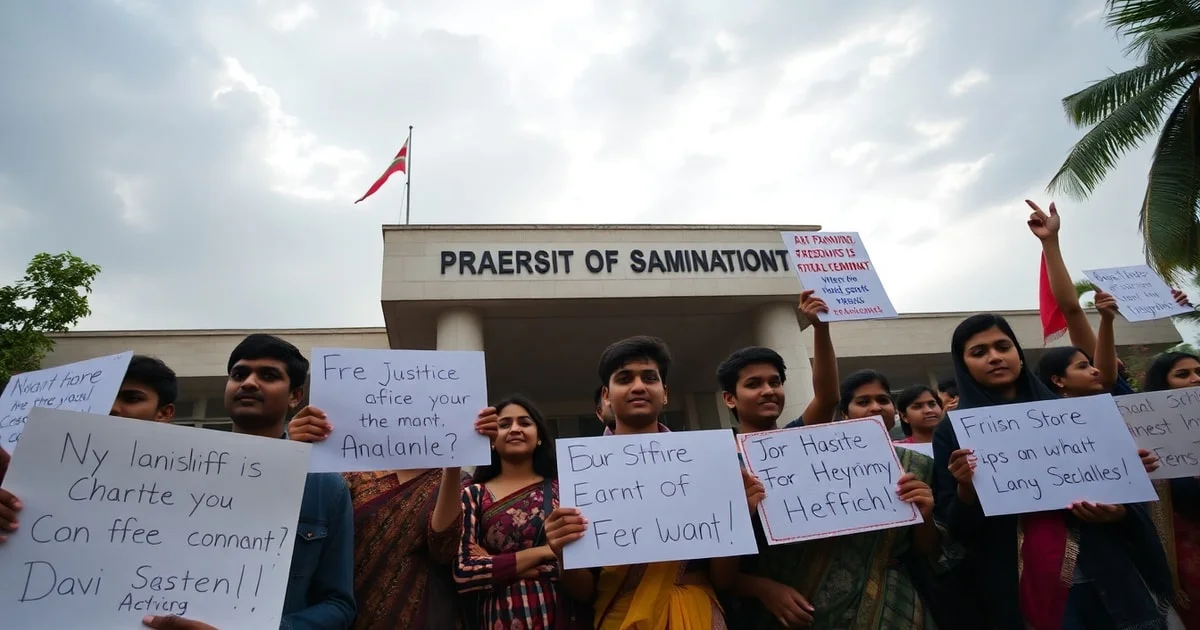
In a development that has sent shockwaves across the nation, India is currently grappling with the widespread fallout of the NEET-UG Exam Scandal: Nationwide Protests Mount in India. The National Eligibility cum Entrance Test (Undergraduate), or NEET-UG, which serves as the sole gateway for admission to undergraduate medical and dental courses in the country, has come under intense scrutiny following numerous allegations of irregularities, including question paper leaks and discrepancies in awarded marks. This controversy has ignited fervent nationwide protests, with thousands of aspiring medical students and their families demanding justice and a re-evaluation of the examination process. The integrity of this critical medical entrance examination is now seriously questioned, casting a shadow over the future of millions of young aspirants across India.
- Understanding the NEET-UG Examination
- Genesis of the Scandal: Allegations and Discrepancies
- NEET-UG Exam Scandal: Nationwide Protests Mount and Student Demands
- Government and Judicial Response
- Impact on Students and the Future of Medical Aspirants
- Broader Implications and Call for Reforms
- Conclusion
- Frequently Asked Questions
- Further Reading & Resources
Understanding the NEET-UG Examination
The National Eligibility cum Entrance Test (NEET-UG) is a pivotal examination for aspiring medical and dental students in India. Conducted by the National Testing Agency (NTA), an autonomous organization under the Ministry of Education, Government of India, NEET-UG replaced multiple state-level and college-specific entrance exams in 2013, aiming to establish a standardized, merit-based selection process for medical education. Approximately 2.4 million candidates appeared for the examination on May 5, 2024, competing for over 100,000 spots in various government and private medical colleges. The examination is held in a pen-and-paper mode across 13 languages, ensuring accessibility for a diverse student population.
Genesis of the Scandal: Allegations and Discrepancies
The 2024 NEET-UG controversy began with allegations of question paper leaks on May 5, 2024, the day of the exam. While the NTA initially denied these claims, local police investigations in various states suggested otherwise.
Paper Leak Allegations
Reports of question paper leaks emerged from multiple locations, notably Patna in Bihar and Godhra in Gujarat. In Patna, police arrested 13 individuals, including four examinees, who allegedly paid between ₹30 lakh and ₹50 lakh to obtain the question paper beforehand. The Economic Offences Unit (EOU) of Bihar Police took over the case on May 11, 2024, uncovering the involvement of organized gangs. The Central Bureau of Investigation (CBI) later reported that burned scraps of the NEET-UG 2024 question paper, with a serial number linked to Oasis Public School in Hazaribagh, Jharkhand, were found in Patna, suggesting the leak originated from there.
In Godhra, Gujarat, a raid at the Jai Jalaram School examination center uncovered a teacher, also the deputy superintendent, instructing students to leave certain questions unanswered, promising to fill them in later. Five individuals were arrested in connection with this alleged cheating, revealing a network of candidates from multiple states.
Grace Marks Controversy
Further fueling the discontent were the examination results, declared on June 4, 2024, ten days earlier than scheduled. The results showed an unusually high number of top rankers, with 67 students achieving a perfect score of 720 out of 720, a significant increase compared to previous years. Critics highlighted that some students received scores like 718 and 719, which are mathematically improbable under the NEET marking scheme, where each question carries four marks and incorrect answers incur negative marking.
The NTA explained this anomaly by stating that compensatory or "grace marks" were awarded to 1,563 candidates due to a loss of examination time at certain centers in states like Meghalaya, Haryana, and Chhattisgarh. This decision, however, was heavily criticized as there was no defined policy for awarding grace marks in the NEET bulletin, and the methodology was not initially disclosed.
NEET-UG Exam Scandal: Nationwide Protests Mount and Student Demands
The culmination of these alleged irregularities and the NTA's responses sparked a wave of NEET-UG Exam Scandal: Nationwide Protests Mount in India. Students, parents, and various student organizations have taken to the streets, social media, and legal channels to voice their outrage and demand accountability.
Forms of Protest
Protests have been widespread and diverse:
- Marches and Demonstrations: Student unions, including the National Students' Union of India (NSUI), Students' Federation of India (SFI), All India Students' Federation (AISF), and Bharat Rashtra Samithi Vidhyarthi (BRSV), organized marches and demonstrations in various cities. The Congress party also announced nationwide protests, calling for justice for students.
- Social Media Campaigns: Students extensively used social media platforms to highlight discrepancies, share personal grievances, and call for collective action.
- Legal Petitions: Numerous petitions were filed in High Courts and the Supreme Court, challenging the exam results, the grace marks policy, and demanding a re-test.
- Calls for Investigation: Protestors have consistently demanded a high-level investigation into the alleged corruption and mismanagement by the NTA, often calling for Supreme Court supervision.
Key Demands from Protesting Students
The primary demands from the students and their supporters include:
- Cancellation of the NEET-UG 2024 Exam: Many students demanded a complete cancellation of the exam and a re-examination, arguing that the integrity of the process was severely compromised.
- Independent Probe: A thorough, time-bound investigation into the alleged paper leaks and irregularities, preferably under the supervision of a retired Supreme Court judge or the CBI.
- Accountability from NTA: Students called for accountability from NTA officials responsible for the alleged lapses and mismanagement.
- Transparency in Grace Marks: Full disclosure of the criteria and methodology used for awarding grace marks, along with the original and revised scores of affected candidates.
Government and Judicial Response
The government and judiciary have actively responded to the escalating crisis, albeit with varying degrees of action and outcomes.
National Testing Agency's Stance and Actions
Initially, the NTA denied widespread paper leaks, terming early allegations as "completely baseless". They did, however, acknowledge an "incorrect distribution of papers" at one center in Sawai Madhopur, Rajasthan, which they classified as an isolated incident. The NTA also clarified that the increased number of top scorers was partly due to changes in NCERT textbooks and the awarding of grace marks for lost time.
Following mounting pressure, the NTA, with the Ministry of Education, announced the formation of a four-member committee to investigate the results of the 1,563 students who received grace marks. The NTA has also stated it has taken actions in cases of unfair means, including canceling candidatures and debarring individuals from future exams.
Supreme Court's Involvement
The Supreme Court of India has played a crucial role in addressing the petitions filed by aggrieved students.
- Grace Marks Cancellation and Re-test: On June 13, 2024, the Centre informed the Supreme Court that the grace marks awarded to 1,563 candidates would be canceled. These students were given the option to appear for a re-test on June 23, 2024, with results to be declared by June 30. If students chose not to re-appear, their original scores without grace marks would be considered.
- Rejection of Widespread Cancellation: On July 23, 2024, the Supreme Court refused to cancel the entire NEET-UG 2024 examination and order a re-test, stating that there was insufficient evidence to prove a "systemic leak" or widespread irregularities beyond isolated incidents. The Court acknowledged that at least 155 students directly benefited from the paper leak but found no indication of an overall systemic failure.
- Direction for Transparency and Reforms: The Supreme Court directed the NTA to publish center-wise results. It also approved the formation of a seven-person committee, headed by Dr. K. Radhakrishnan (former ISRO chairperson), to strengthen the NTA's exam conducting processes and recommend reforms. The government has also replaced the chief of the NTA and formed a committee to review and improve its functioning.
- Ongoing Hearings: The Supreme Court continued to hear petitions concerning the alleged paper leaks and malpractices, with hearings adjourned to dates like July 18, 2024, to allow parties to file responses.
Government's Pledge
Union Education Minister Dharmendra Pradhan has assured students that their concerns would be addressed fairly and that no student would be at a disadvantage. He stated that the government takes the irregularities seriously and would take strong action against any NTA functionaries found guilty, emphasizing the need for significant improvement within the NTA. The government also expressed openness to a fresh NEET-UG for all if directed by the Supreme Court.
Impact on Students and the Future of Medical Aspirants
The NEET-UG exam scandal has had a profound and unsettling impact on millions of students across India, extending beyond the immediate examination results.
Psychological and Emotional Toll
The uncertainty surrounding the results, the allegations of cheating, and the prolonged legal battles have caused immense stress, anxiety, and despair among students who have dedicated years to preparing for this high-stakes exam. Many feel betrayed by the system designed to ensure fair competition. The mental health implications for these young aspirants, who face immense pressure to secure a medical seat, are significant. The trust in the purity and sanctity of such critical examinations has been severely eroded, leading to cynicism and a sense of injustice.
Academic Uncertainty and Delayed Admissions
The controversy has led to delays and uncertainty in the medical admission counseling process. While the Supreme Court allowed counseling to proceed without staying it, the re-test for grace mark recipients and ongoing legal challenges have created a convoluted pathway for admissions, potentially impacting the academic calendar for medical colleges. This uncertainty affects students' planning for their higher education and future careers.
Eroding Trust in the Examination System
The repeated allegations of paper leaks and irregularities in competitive exams, including NEET-UG, have significantly damaged public confidence in the National Testing Agency and India's broader examination system. This erosion of trust poses a serious challenge to the credibility of educational institutions and the fairness of selection processes, raising questions about the future of competitive examinations in the country. Calls for robust reforms and enhanced security measures are now louder than ever to restore faith in these crucial gateways to professional careers.
Broader Implications and Call for Reforms
The NEET-UG Exam Scandal: Nationwide Protests Mount in India has brought to light systemic vulnerabilities in the conduct of large-scale examinations, prompting a national conversation about necessary reforms.
Strengthening Examination Integrity
The controversy underscores the urgent need for strengthening the integrity of public examinations. This includes implementing more stringent security protocols to prevent paper leaks, enhancing transparency in the marking and result declaration processes, and ensuring robust grievance redressal mechanisms. The formation of a committee to review and overhaul the NTA's functioning is a step in this direction, with recommendations aimed at minimizing outsourcing of staff and bolstering security measures like GPS-tracked question papers, biometric verification, and AI-assisted CCTV monitoring.
Accountability and Deterrence
The arrests made in connection with the paper leaks in Bihar and Gujarat, and the subsequent transfer of cases to the CBI, indicate a push for accountability. The Public Examination (Prevention of Unfair Means) Act, 2024, introduced to impose tougher penalties, aims to act as a deterrent against malpractices, with students found using unfair means facing exclusion from NTA exams and potential criminal proceedings.
Restoring Student Confidence
Ultimately, the challenge for the authorities is to restore the confidence of millions of students and their parents in the fairness and transparency of the examination system. This will require not just punitive actions but also clear communication, visible reforms, and a commitment to ensuring that every aspirant has an equal and untainted opportunity to pursue their dreams. The impact of the 2024 scandal has already led to increased security and procedural changes for future exams, with a strengthened emphasis on fairness to instill confidence.
Conclusion
The NEET-UG exam scandal of 2024 has unleashed a wave of discontent, with nationwide protests mounting in India and echoing the deep-seated concerns of aspiring medical professionals. The twin issues of alleged paper leaks and the arbitrary awarding of grace marks have exposed significant vulnerabilities within the national medical entrance examination system. While the Supreme Court has provided some clarity by allowing re-tests for grace mark recipients and declining a nationwide re-examination in the absence of systemic leak proof, the underlying issues of trust, transparency, and accountability remain paramount. The ongoing legal proceedings, governmental pledges for reform, and the establishment of expert committees highlight the seriousness with which this crisis is being addressed. For the millions of students whose futures hang in the balance, a robust, transparent, and fair examination system is not merely a preference but an absolute necessity for upholding the foundational principles of merit and equal opportunity in India's competitive educational landscape. The long-term implications of this scandal will undoubtedly shape the future conduct of high-stakes examinations across the country.
Frequently Asked Questions
Q: What is the NEET-UG Exam Scandal about?
A: The NEET-UG Exam Scandal involves allegations of question paper leaks and discrepancies in grace marks awarded to students for the 2024 medical entrance examination in India. These issues led to widespread protests and legal challenges across the country.
Q: What actions has the government and judiciary taken in response?
A: The Supreme Court cancelled grace marks for 1,563 candidates, offering a re-test. It also refused a full exam cancellation but directed the NTA to improve processes. The government replaced the NTA chief and formed a committee for reforms.
Q: How has the scandal impacted students?
A: The scandal caused significant psychological stress, academic uncertainty, and delays in admissions for millions of students. It also eroded trust in the national examination system, prompting calls for urgent and robust reforms to ensure fairness.