South Korea's First Female PM to Lead AI: A New Era Dawns
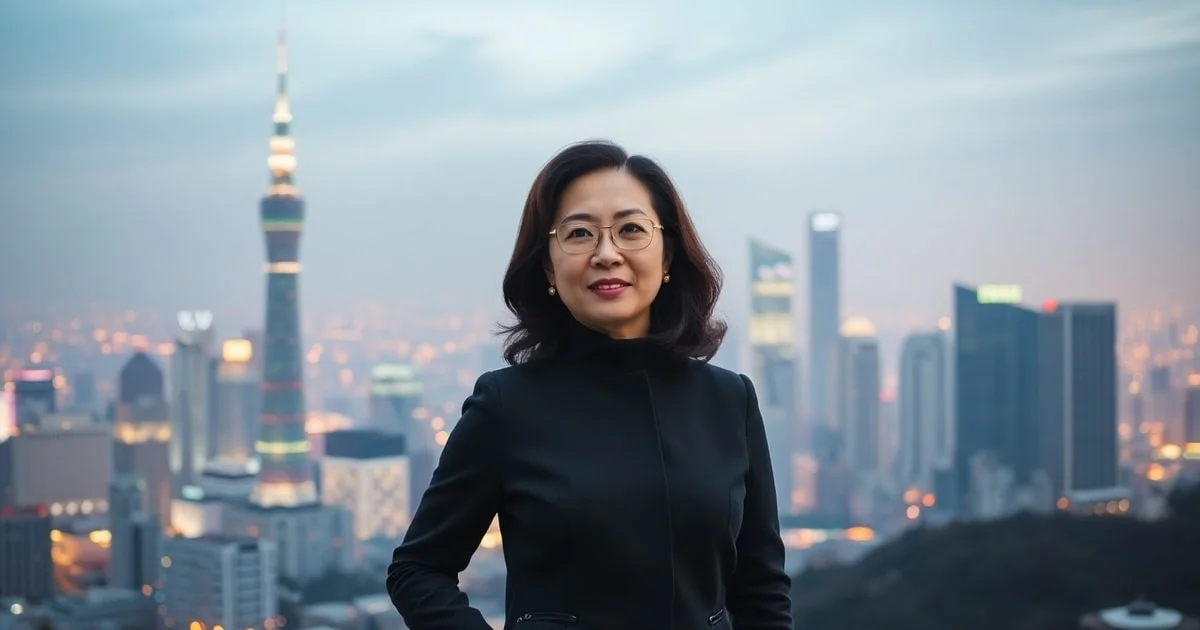
The global technology landscape is abuzz with the recent nomination of Han Seong-sook as South Korea's next Prime Minister, signaling a pivotal moment for the nation's ambitious artificial intelligence agenda. This significant development marks a new era as Han Seong-sook is set to become South Korea's First Female PM to Lead AI transformation, bringing an unprecedented level of tech expertise to the country's highest political office in decades. Her appointment underscores President Lee Jae Myung's commitment to embedding advanced technology at the core of national policy, aiming to solidify South Korea's position as a global leader in AI innovation. This strategic move is expected to profoundly influence the nation's economic trajectory and its approach to digital advancement, setting a compelling precedent on the international stage.
- A Historic Nomination with a Clear Mandate for AI
- South Korea's First Female PM to Lead AI: Vision and Strategy
- Challenges and Opportunities on the Horizon
- The Broader Impact of a Technocratic Leader
- Looking Ahead: The Future of South Korea's AI Trajectory
- Frequently Asked Questions
- Further Reading & Resources
A Historic Nomination with a Clear Mandate for AI
President Lee Jae Myung's nomination of Han Seong-sook as Prime Minister, announced on June 7, 2026, has garnered significant attention both domestically and internationally. If confirmed by the National Assembly, Han will become only the second woman to hold the premiership in South Korea's history, and the first in nearly two decades since Han Myeong-sook served from 2006 to 2007. More importantly, her selection comes with a clear and emphatic mandate: to spearhead South Korea's comprehensive artificial intelligence transformation. This focus elevates a technocrat, with a profound understanding of the digital realm, directly into one of the country's most powerful political roles, highlighting a strategic shift in governance.
Han Seong-sook's background is notably distinguished by her extensive experience in the technology sector. She served as the CEO of Naver Corp., often referred to as South Korea's equivalent of Google, from 2017 to 2022. During her tenure at Naver, she was instrumental in expanding the company's revenue streams beyond its foundational search engine model to encompass e-commerce, fintech, and content creation. This period saw Naver achieve its highest stock prices, coinciding with a global surge in internet service usage driven by the pandemic. Her leadership at such a prominent tech firm provides her with invaluable practical insights into developing and scaling AI-driven products for a large population.
Her transition into government began in 2024, and prior to her prime ministerial nomination, she held the position of Minister of SMEs and Startups since July 2025. In this capacity, she actively championed digital transformation initiatives, particularly those aimed at integrating AI-powered tools into small and medium-sized businesses across the country. This consistent focus on technology and its application in national development makes her a uniquely qualified candidate to lead the nation's AI agenda. The Blue House, South Korea's presidential office, explicitly stated that Han's blend of leadership in a major tech company and her government experience makes her ideally suited to oversee what it terms a "national shift focused on artificial intelligence and digital advancement".
South Korea's First Female PM to Lead AI: Vision and Strategy
South Korea has long harbored ambitious goals to establish itself as a global powerhouse in artificial intelligence, semiconductors, and digital infrastructure. The government's proactive stance is evident in its "AI for All" initiative, a comprehensive program designed to position the nation among the top three global AI powers. To understand more about regional efforts in this domain, you can read our analysis on Asia's AI Superpowers. This commitment is backed by substantial financial investment, with the government's 2026 budget allocating approximately 10.1 trillion Korean Won (roughly $7.3 billion USD) specifically for AI infrastructure and industry adoption.
Han Seong-sook's appointment is a critical component of this overarching strategy. As Prime Minister, her primary role will involve overseeing the coordination of the national AI strategy across various government ministries. This comprehensive approach is designed to ensure that AI development is integrated into all facets of the economy and society, from industrial applications to public services. Her unique position is expected to serve as a vital bridge between government policymaking and the dynamic private sector innovation efforts. The integration of her private-sector tech expertise at the highest political level is intended to accelerate the country's AI push and bring operational insight to policy formulation.
Strategic Imperatives for AI Transformation
The focus of South Korea's AI transformation under Han Seong-sook is multi-faceted. Key areas include:
- Accelerating Innovation: Han has explicitly stated her intention to "spur the country's AI transformation and focus on accelerating innovation, amid industrial restructuring accelerated by AI and a complex global crisis". This involves fostering an environment conducive to rapid technological advancement and adopting cutting-edge AI solutions across industries.
- Inclusive Growth: A central theme of her agenda is ensuring that the benefits of AI development are widely distributed, leading to "shared opportunities and growth for all people". This addresses concerns about economic inequality, particularly regarding the concentration of growth in limited sectors.
- Bridging Public and Private Sectors: Her background is expected to facilitate better collaboration between government entities, research institutions, and private tech companies. This synergy is crucial for translating advanced AI research into practical applications and commercial successes.
- Regulatory Frameworks: During her time as Minister, Han championed regulatory frameworks aimed at attracting venture capital into Korea's digital economy while simultaneously enhancing user protections. This balance between fostering innovation and ensuring responsible development will be critical in the AI space.
The nomination signals a strong desire to bring a "technocrat" to the forefront, moving away from traditional political appointments to leverage specialized expertise in navigating complex technological shifts. This reflects a growing global trend where governments are increasingly turning to private-sector talent to manage and direct technological change, seeking to balance innovation with necessary regulation.
Challenges and Opportunities on the Horizon
While Han Seong-sook's nomination has been met with optimism, her path to leading the AI transformation is not without its challenges. The parliamentary approval process remains a critical hurdle. Although the ruling party reportedly holds a majority in the 300-member National Assembly, political negotiations and potential ethical concerns or scandals could still influence the confirmation process.
One pressing issue Han will need to address as premier is the perceived inequity surrounding substantial bonuses in the chip industry. This concern highlights that economic growth may be overly concentrated in a limited sector, with benefits not adequately reaching the broader population. The Democratic Party, the governing party, has expressed confidence that Han will help extend the advantages of the semiconductor and export-led boom to small businesses and local merchants, while also advancing the government's AI agenda.
Furthermore, Han faces scrutiny over her asset declaration, including ownership of multiple homes, which has drawn attention given President Lee's previous warnings against speculative real estate practices. Successfully navigating these political and public perception challenges will be crucial for her to effectively implement her AI vision.
Despite these hurdles, the opportunities presented by her leadership are immense. With her at the helm, South Korea could significantly streamline regulatory approval for AI-driven products, potentially accelerating their commercial deployment. This would allow the nation to quickly capitalize on emerging AI technologies and maintain a competitive edge in the global AI race. Her focus on "discovery of global super-gap growth engines" indicates a proactive strategy to identify and nurture areas where South Korea can achieve a distinct advantage in AI.
The Broader Impact of a Technocratic Leader
The appointment of a leader with a deep technological background, particularly one focused on artificial intelligence, represents a significant shift in governmental priorities. It signals a recognition that AI is not merely an industry sector but a foundational technology that will reshape economies, societies, and international relations. South Korea, under Han's leadership, aims to set a global example for how nations can strategically integrate AI into their national fabric for sustainable growth and societal benefit.
This move is also symbolic for gender representation in leadership. While she would be the second female Prime Minister, her role as a prominent female figure in a high-tech government position can inspire future generations and challenge existing gender disparities in both politics and technology. For deeper insights into this topic, explore Women at the Forefront of Global Leadership. The continuous underrepresentation of women in influential positions in South Korea, compared to other developed countries, makes Han's elevation even more significant.
The global community will be closely observing South Korea's approach under Han Seong-sook. Her leadership in coordinating AI strategy across ministries, bridging the public and private sectors, and addressing the social implications of AI, such as potential job displacement and ethical considerations, will provide valuable lessons for other nations grappling with similar challenges. Her commitment to investing the gains from AI transformation into advanced industries, future source technologies, and social safety nets demonstrates a holistic approach to technological progress.
Looking Ahead: The Future of South Korea's AI Trajectory
The nomination of Han Seong-sook to become South Korea's First Female PM to Lead AI initiatives marks a defining moment for the country. Her extensive expertise in technology, coupled with her commitment to inclusive growth, positions her to drive an impactful national AI agenda. While political challenges and the need to address economic disparities remain, her leadership offers a promising path for South Korea to achieve its ambition of becoming a top global AI power. Learn more about Ethical Considerations in AI Development. The world watches as this new era in South Korean governance and technological advancement unfolds, with Han Seong-sook at its helm, poised to navigate the complex opportunities and challenges presented by the age of artificial intelligence.
Frequently Asked Questions
Q: Who is Han Seong-sook and what is her new role?
A: Han Seong-sook is the former CEO of Naver Corp. and the current nominee for South Korea's Prime Minister. If confirmed, she will be tasked with leading the nation's comprehensive artificial intelligence transformation and digital advancement initiatives.
Q: What is South Korea's vision for AI under her leadership?
A: Under Han Seong-sook's leadership, South Korea aims to accelerate AI innovation across industries, ensure inclusive growth and shared opportunities for all citizens, foster collaboration between the public and private sectors, and establish robust regulatory frameworks to become a top global AI power.
Q: What challenges might Han Seong-sook face as Prime Minister?
A: Han Seong-sook faces hurdles including the parliamentary approval process, potential public scrutiny over her asset declarations, and the significant challenge of extending economic benefits from the booming tech sector to a broader segment of society and local businesses.