US-China AI Governance Debate at UN General Assembly Intensifies

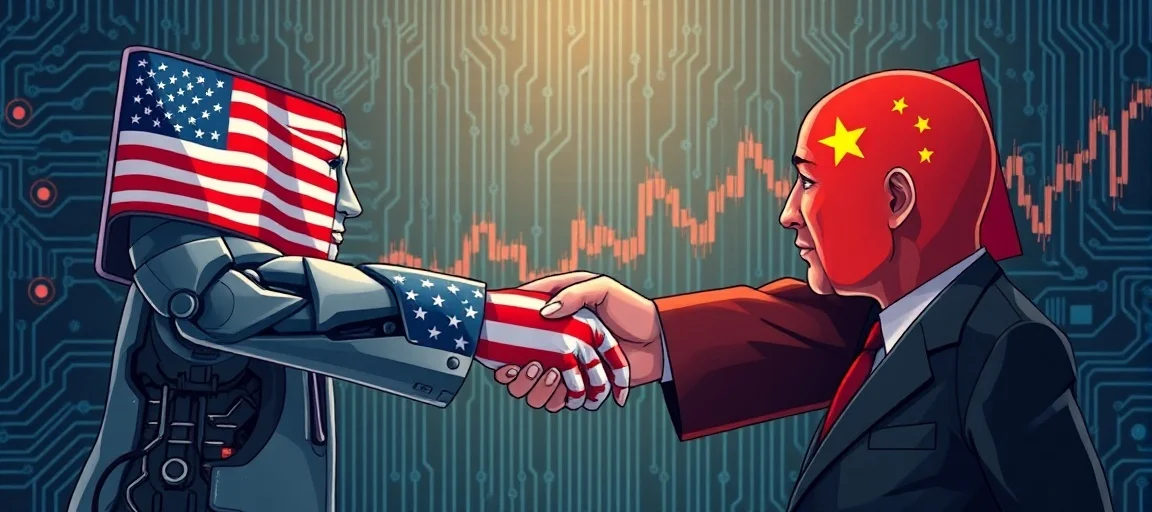
The US-China AI governance debate at the UN General Assembly has become a focal point of this year's session, underscoring the escalating competition and divergent philosophies between the two global powers on regulating artificial intelligence. As AI technologies advance at an unprecedented pace, the international community grapples with establishing frameworks that ensure safety, ethics, and equitable access. This critical debate at the General Assembly reflects profound geopolitical considerations, shaping the future of AI's development and its impact on global stability.
- The Escalating Stakes of AI Governance
- Background to the US-China AI Governance Debate
- Key Contentions at the UN General Assembly
- Expert Opinions and Diplomatic Maneuvers
- Impact on Global AI Development and Future Relations
- Conclusion: Navigating the Future of AI Cooperation
- Frequently Asked Questions
- Further Reading & Resources
The Escalating Stakes of AI Governance
The rapid proliferation of artificial intelligence across various sectors, from defense to healthcare and economic development, has brought forth an urgent need for global governance. Both the United States and China recognize AI's transformative potential but approach its regulation from fundamentally different perspectives. This divergence creates a complex diplomatic challenge, particularly within multilateral forums like the United Nations, where universal norms are sought.
The discussions at the UN General Assembly are not merely technical; they are deeply intertwined with national security interests, economic competitiveness, and ideological values. Establishing a common ground for AI governance could prevent future conflicts, ensure ethical development, and foster international cooperation on issues such as AI safety and responsible innovation. Conversely, a failure to reach consensus risks a fragmented global landscape, potentially leading to a dangerous technological divide.
Background to the US-China AI Governance Debate
The concept of international AI governance has been gaining traction for several years, with various nations and organizations proposing different models. The United States, often emphasizing a multi-stakeholder approach, advocates for frameworks that prioritize innovation, human rights, and democratic values. Its proposals frequently highlight the importance of transparency, accountability, and the responsible use of AI in military applications, often through voluntary codes of conduct and collaboration with private industry. The US government has historically been cautious about overly stringent governmental regulation that might stifle technological progress, preferring a flexible, risk-based approach.
China, on the other hand, has a more centralized approach to AI governance, with the state playing a significant role in guiding development and deployment. Beijing's proposals often focus on national sovereignty, data security, and the prevention of AI weaponization, while also emphasizing the use of AI for economic development and social stability. China has a strong track record of integrating AI development with national strategic goals, issuing comprehensive national AI plans and regulations that guide everything from data collection to algorithmic ethics within its borders. The Chinese government has also been vocal about the need for a global, UN-led framework that prevents any single nation from dominating AI development or weaponizing the technology.
Prior to the current UN General Assembly session, both countries had engaged in bilateral and multilateral dialogues on AI, often revealing the depth of their disagreements. Despite some areas of overlap, such as the shared interest in preventing autonomous weapons from spiraling out of control, fundamental differences in approach to data privacy, censorship, and the role of the state in technological innovation continue to create hurdles for comprehensive agreements. The UN, through its various bodies and initiatives, has been attempting to bridge these gaps, but the challenge remains substantial.
Previous UN Initiatives and Engagements
The United Nations has been actively involved in exploring AI governance for several years. The UN Secretary-General has consistently highlighted the need for international cooperation to harness AI's benefits while mitigating its risks. Initiatives such as the Secretary-General's High-Level Panel on Digital Cooperation and more recently, discussions within the Security Council and the General Assembly's First Committee (Disarmament and International Security), have laid the groundwork for the current debate. These efforts aim to develop a common understanding of AI's implications and to forge principles that can guide its development globally. The creation of ad-hoc expert groups and the convening of specialized conferences have also contributed to building expertise and fostering dialogue among member states on this complex subject.
Furthermore, several UN agencies, including UNESCO, ITU, and UNIDIR, have published reports and recommendations on AI ethics, responsible innovation, and arms control related to AI. UNESCO, for instance, adopted a Recommendation on the Ethics of Artificial Intelligence in 2021, providing a global standard for ethical AI development. These foundational efforts underscore the UN's commitment to playing a central role in shaping the future of AI governance.
Key Contentions at the UN General Assembly
This year's UN General Assembly has seen intensified discussions on AI governance, with both the US and China presenting their preferred frameworks and articulating their concerns. The core of the debate revolves around several key areas:
-
Defining "Responsible AI": The US stresses AI that respects human rights, democratic principles, and privacy, advocating for frameworks that allow for open innovation with ethical guardrails. They often point to collaborative efforts between government, industry, and civil society as the most effective path forward. China emphasizes AI that serves national stability and economic development, with a greater focus on state oversight and control to ensure societal benefits and prevent misuse.
-
Military Applications of AI: This is a particularly contentious area. The US, while acknowledging the need for responsible use, has generally resisted outright bans on specific AI military applications, preferring discussions on confidence-building measures and transparency. They advocate for ensuring human control over critical decisions. China, in contrast, has strongly pushed for a legally binding international treaty to prevent the weaponization of AI, particularly autonomous lethal weapons systems, fearing an AI arms race.
-
Data Governance and Privacy: Divergent views on data collection, storage, and cross-border data flows are central. The US emphasizes individual privacy rights and open data exchange with appropriate safeguards. China prioritizes national data sovereignty and strict state control over data, often citing national security concerns. These differences impact global standards for AI training data and privacy protection.
-
Ethical Principles and Implementation: While both countries agree on the need for ethical AI, the practical implementation differs. The US often promotes "explainable AI" and bias mitigation through technical standards and corporate responsibility. China emphasizes ensuring AI aligns with "socialist core values" and prevents social disruption, often through robust regulatory frameworks and state-led initiatives.
Proposals and Counter-Proposals
During the current General Assembly session, the US delegation reiterated its call for a "Coalition of the Willing" among like-minded nations to develop common principles for responsible AI, emphasizing non-binding guidelines and capacity building in developing nations. They proposed a UN working group focused on sharing best practices and promoting private sector engagement.
China countered with a proposal for a new UN specialized agency or a robust mandate for an existing body to draft a legally binding international treaty on AI governance, with a particular focus on prohibiting certain military applications and establishing clear rules for cross-border data flows. They also advocated for a greater voice for developing countries in shaping global AI norms, suggesting that current frameworks disproportionately favor technologically advanced nations.
The European Union, often positioned as a "third way" in the AI debate, has also actively participated, pushing for a global framework inspired by its own comprehensive AI Act, which combines a risk-based approach with strong regulatory oversight and fundamental rights protection. This adds another layer of complexity to the US-China dynamic, as the EU's position sometimes aligns with, and sometimes diverges from, both major powers.
Expert Opinions and Diplomatic Maneuvers
Diplomatic experts and AI ethicists are closely watching the US-China AI governance debate at the UN General Assembly, recognizing its profound implications. Many analysts believe that while a comprehensive, legally binding treaty might be premature given the rapid evolution of AI, establishing universal guiding principles is critical.
"The chasm between the US and Chinese approaches to AI governance is not just about technology; it's about fundamental differences in political philosophy and state-society relations," stated Dr. Lena Hansen, a senior fellow at the Global Technology Policy Institute. "The UN's role is to find pragmatic pathways for cooperation, perhaps starting with areas of shared concern like preventing accidental escalation from AI-driven systems or ensuring humanitarian use of AI."
Other experts highlight the danger of a fragmented global AI landscape. "If the world devolves into competing AI blocs, it will undermine efforts to address global challenges like climate change or pandemics, where AI could be a powerful tool," noted Professor Kenji Tanaka from the University of Tokyo's Department of International Relations. "The current UNGA debate is a test of whether major powers can prioritize collective good over narrow national interests in a rapidly evolving technological domain."
Behind the public statements, intense diplomatic maneuvering is taking place. Both the US and China are actively lobbying other member states, particularly those in the Global South, to garner support for their respective visions. Developing nations, often caught between the technological rivalry of the major powers, are seeking frameworks that protect their interests, prevent digital colonialism, and ensure access to AI's benefits without exacerbating existing inequalities. As discussed in recent global economic outlook 2026: navigating geopolitical tensions reports, the ripple effects of such technology debates are significant for emerging markets.
The Role of Smaller States and the Global South
Smaller states and nations from the Global South are increasingly vocal in the US-China AI governance debate. Many are wary of a future where AI standards are set solely by the dominant technological powers. They advocate for inclusive processes that consider diverse cultural, economic, and social contexts. There is a strong push for capacity building, technology transfer, and funding to ensure they can develop and regulate AI effectively, rather than simply being passive recipients of technologies and norms dictated by others. Their collective voice at the UN General Assembly is crucial in shaping a truly global framework, potentially acting as a balancing force between the US and Chinese proposals.
Impact on Global AI Development and Future Relations
The outcome of the US-China AI governance debate at the UN General Assembly will have far-reaching consequences for global AI development and the future of international relations.
-
Regulatory Fragmentation: A failure to establish common ground could lead to a fragmented international regulatory environment. This would complicate cross-border AI operations, hinder data exchange, and potentially create incompatible technological ecosystems. Businesses operating globally would face a labyrinth of differing rules, increasing compliance costs and stifling innovation.
-
AI Arms Race: If trust and cooperation erode, the competition over military AI applications could intensify, leading to an uncontrolled arms race. This would increase geopolitical instability and the risk of autonomous weapons systems being deployed without adequate safeguards.
-
Digital Divide: The debate's resolution will also impact the digital divide. If AI governance disproportionately favors technologically advanced nations, it could widen the gap between countries that can leverage AI for development and those that cannot. Equitable access to AI technologies and the knowledge to govern them is crucial for inclusive global progress.
-
Shaping Global Norms: The UN General Assembly serves as a critical forum for norm-setting. The principles established, or the lack thereof, will influence national AI policies worldwide, affecting everything from privacy laws to ethical guidelines for autonomous systems. The very nature of future multilateral cooperation on technology will be tested by this debate.
The ongoing discussions are not just about AI; they reflect the broader strategic competition between the US and China. How these two powers navigate this complex technological frontier will be a bellwether for their ability to cooperate on other global challenges. As referenced in discussions on AI sector billions in investment, key policy debates unfold globally, the capital involved in this sector makes the need for a stable regulatory environment essential for investors and states alike.
Conclusion: Navigating the Future of AI Cooperation
The US-China AI governance debate at the UN General Assembly highlights a critical juncture in international relations and technological development. While both nations acknowledge the transformative power of AI, their divergent approaches to regulation, ethics, and military applications present significant challenges to achieving a unified global framework. The General Assembly serves as an essential forum for these discussions, allowing for the articulation of national interests while also seeking pathways for multilateral cooperation.
Moving forward, finding common ground will likely require a pragmatic approach, focusing initially on areas of shared concern such as AI safety, preventing unintended escalation, and ensuring human oversight in critical applications. The involvement of other key players, including the European Union and the Global South, will be crucial in shaping an inclusive and effective governance model that safeguards humanity's future in an increasingly AI-driven world. The success of this debate will not only determine the trajectory of AI but also set a precedent for future international cooperation on emerging technologies.
Frequently Asked Questions
Q: Why is the UNGA a key venue for AI policy?
A: The UNGA provides a platform for global powers to negotiate norms that prevent technological fragmentation and an unchecked AI arms race.
Q: What is the main disagreement between the US and China?
A: The US favors decentralized, industry-led innovation, while China promotes state-led, centralized governance focused on national sovereignty and security.
Q: What is the perspective of the Global South?
A: Developing nations demand inclusive processes that ensure technology transfer and prevent a digital divide dominated by the interests of major powers.