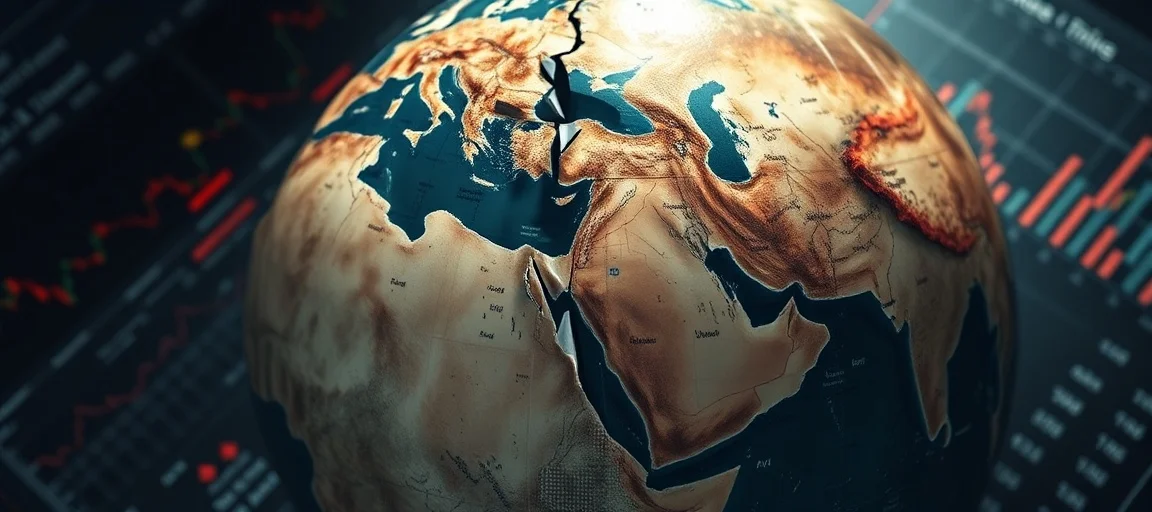
Global Economic Outlook 2026: Navigating Geopolitical Tensions Ahead
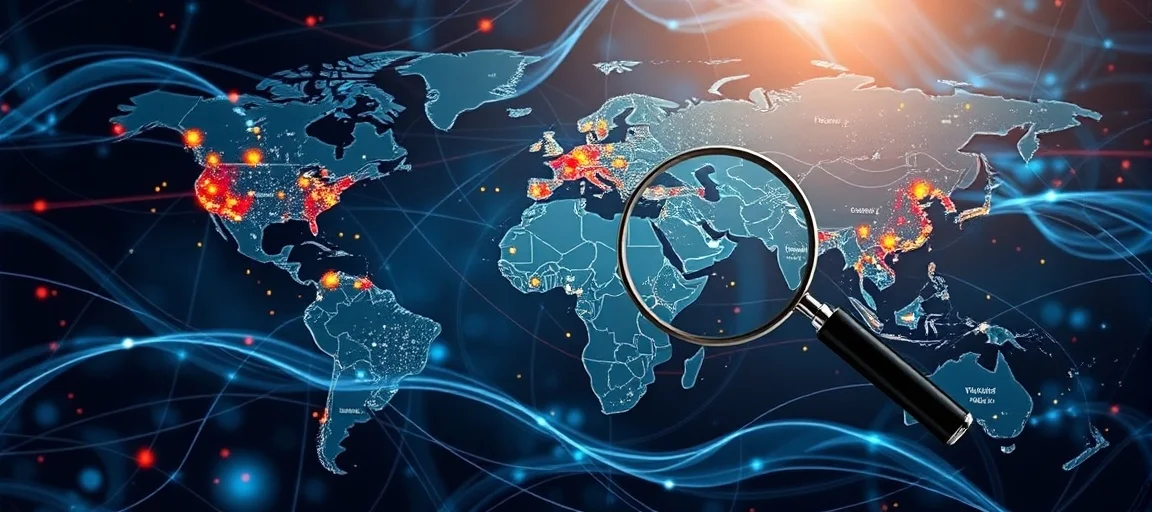
The global economic landscape in 2026 is poised at a critical juncture, facing complex challenges that demand keen foresight and strategic adaptation. As nations grapple with persistent inflation, evolving monetary policies, and technological shifts, the overarching theme defining the year will undoubtedly be the Global Economic Outlook 2026: Navigating Geopolitical Tensions. This analysis will explore the intertwined dynamics of international relations and their profound implications for global trade, investment flows, and overall economic stability, providing a clear perspective for the general reader interested in current events.
- The Interplay of Geopolitics and Global Economics
- Key Geopolitical Tensions Shaping the 2026 Economic Landscape
- The Role of Technology and Innovation
- Adapting to the New Global Economic Outlook 2026: Navigating Geopolitical Tensions
- Frequently Asked Questions
- Further Reading & Resources
- Conclusion: Preparing for 2026 and Beyond
The Interplay of Geopolitics and Global Economics
The world economy has always been susceptible to geopolitical shifts, but the current era presents a particularly intricate web of interdependencies and rivalries. In 2026, the global economy is expected to continue its path of moderate growth, albeit one highly influenced by an array of geopolitical flashpoints, trade disputes, and strategic competition among major powers. This environment necessitates a nuanced understanding of how political decisions and international conflicts translate into economic consequences for businesses, consumers, and governments worldwide. Understanding these dynamics is crucial for navigating the uncertainties ahead and identifying potential opportunities amidst the challenges.
Persistent Inflation and Monetary Policy
Central banks worldwide have been engaged in a prolonged battle against inflation, a trend that began in the post-pandemic recovery period. While many economies have seen inflation cool from its peaks, the risk of resurgence remains a significant concern for 2026. Geopolitical tensions, particularly those affecting energy and food supplies, can directly fuel inflationary pressures, complicating the already delicate balance central banks must maintain. The European Central Bank, for instance, has indicated its commitment to keeping inflation at its target level, recognizing the potential for external shocks and the risk of imported inflation from commodity price volatility. Similarly, the International Monetary Fund (IMF) projects a gradual decline in global headline inflation, from an estimated 5.9% in 2024 to 4.5% in 2025, but warns that ongoing geopolitical fragmentation, particularly disruptions in crucial shipping lanes or energy production, poses a significant upside risk to these forecasts. Should these risks materialize, central banks may face renewed pressure to maintain tighter monetary conditions for longer, potentially dampening economic activity. The U.S. Federal Reserve's interest rate trajectory, in particular, will continue to dictate global capital flows, influencing borrowing costs and investment decisions across both developed and emerging markets.
The policy decisions of major central banks, such as the U.S. Federal Reserve, the European Central Bank, and the Bank of Japan, will continue to exert substantial influence on global interest rates, capital flows, and currency valuations. Any divergence in their approaches, driven by differing national economic conditions or responses to geopolitical events, could introduce volatility into financial markets.
Global Growth Projections and Regional Variances
The overall global economic growth for 2026 is projected to remain subdued compared to pre-pandemic averages. The IMF's World Economic Outlook, updated in April 2025, forecasted global growth at 3.2% for both 2024 and 2025. While specific 2026 projections were not detailed in the available snippets, the trend suggests a continuation of this moderate expansion, with variations across regions. Advanced economies are expected to see more modest growth, whereas some emerging market and developing economies may exhibit stronger, albeit more volatile, expansion. The resilience of the U.S. economy, for example, has been noted as a significant factor in global growth, with its domestic demand remaining robust, fueled by a strong labor market. In contrast, the Eurozone faces a more cautious outlook, grappling with structural challenges and direct exposure to the Eastern European conflict, which impacts energy costs and trade relationships. Emerging markets like India and some Southeast Asian nations are projected to be growth engines, driven by young populations, increasing urbanization, and ongoing technological adoption, though they too are vulnerable to global capital shifts and commodity price fluctuations.
However, these projections are inherently vulnerable to shifts in the geopolitical landscape. Regional conflicts, trade restrictions, and diplomatic disagreements can quickly derail economic forecasts by disrupting supply chains, deterring investment, and eroding consumer and business confidence.
Key Geopolitical Tensions Shaping the 2026 Economic Landscape
Several areas of geopolitical tension are expected to have a pronounced impact on the Global Economic Outlook 2026: Navigating Geopolitical Tensions. These include ongoing conflicts, strategic competition between major powers, and the increasing weaponization of economic tools.
Eastern Europe and Energy Markets
The conflict in Eastern Europe continues to be a major source of global instability, with direct and indirect economic repercussions. While Europe has largely diversified its energy sources away from traditional suppliers, the lingering effects of the conflict, coupled with potential escalations, could still trigger spikes in global energy prices. Disruptions to oil and gas flows, even if indirect, can cascade through global markets, affecting manufacturing costs, transportation, and consumer prices worldwide. Furthermore, the extensive sanctions regimes in place have fundamentally reshaped global trade routes and commodity flows, creating new winners and losers in the energy and raw materials sectors.
The search for new energy supplies and the acceleration of green energy transitions are also direct outcomes of these tensions. Investments in renewable energy technologies and infrastructure are surging, driven by both climate concerns and energy security imperatives.
US-China Strategic Competition
The strategic competition between the United States and China remains a defining feature of the international system and a primary driver of global economic trends. This rivalry extends beyond traditional trade disputes to encompass technology supremacy, intellectual property, and influence in international institutions. In 2026, we can anticipate continued "de-risking" efforts by many nations, aiming to reduce dependence on either power in critical supply chains. This could lead to further fragmentation of global trade and investment patterns.
Areas of particular focus include:
- Technology Decoupling: Restrictions on semiconductor exports, advanced computing, and artificial intelligence technologies are likely to intensify, creating dual supply chains and potentially slowing innovation in some sectors.
- Trade Tariffs and Non-Tariff Barriers: While direct tariff wars might ease or shift, the use of subsidies, export controls, and regulatory hurdles will continue to shape trade flows.
- Currency Dynamics: The role of the U.S. dollar as the dominant reserve currency may face ongoing challenges from efforts to internationalize other currencies, though its primacy is unlikely to be overthrown quickly.
Middle East Instability and Oil Prices
The Middle East remains a volatile region, and any significant escalation of conflicts there could send shockwaves through global oil markets. Although the direct dependence of many Western economies on Middle Eastern oil has diminished, the region still plays a crucial role in global supply. Disruptions to shipping lanes, production facilities, or pipeline infrastructure could trigger rapid price increases, impacting inflation and economic growth worldwide. The Strait of Hormuz, a critical chokepoint for global oil transit, highlights the fragility of these supply lines.
The broader geopolitical implications, including humanitarian crises and refugee flows, also contribute to global instability and can place strain on international aid and resources.
Supply Chain Resilience and Reshoring
The vulnerabilities of global supply chains were starkly exposed during the pandemic and have been further exacerbated by geopolitical tensions. In 2026, businesses and governments are expected to continue prioritizing supply chain resilience through diversification, reshoring, and friend-shoring initiatives. This shift aims to reduce reliance on single points of failure or politically sensitive regions. While these efforts enhance security, they can also lead to higher production costs and potentially less efficient global resource allocation in the short term. The European Union, for example, has been actively pursuing strategies to strengthen its supply chains and reduce dependencies on external actors.
Rise of Protectionism and Trade Bloc Dynamics
Geopolitical competition often fuels protectionist policies, as nations seek to safeguard domestic industries and critical technologies. The formation and strengthening of regional trade blocs, while offering benefits to member states, can simultaneously lead to increased barriers for those outside. In 2026, we might observe a further entrenchment of existing blocs and the emergence of new alliances, reshaping the global trading system into a more fragmented, multi-polar structure. This trend could challenge the principles of free trade and open markets that have underpinned globalization for decades.
The Role of Technology and Innovation
Technology continues to be both a driver of economic growth and a focal point of geopolitical competition. Advances in artificial intelligence (AI), quantum computing, biotechnology, and renewable energy will offer immense opportunities for economic expansion, productivity gains, and societal improvement. However, control over these cutting-edge technologies is also a source of intense geopolitical rivalry, leading to strategic export controls, investment restrictions, and heightened cybersecurity concerns. Nations are increasingly viewing technological leadership not just as an economic advantage but as a critical component of national security, fueling a global race for innovation and intellectual property. This competition can sometimes lead to duplication of efforts and inefficiencies, but also spurs rapid advancements, particularly in areas deemed strategically vital.
Cyber Warfare and Economic Disruption
The threat of cyber warfare and state-sponsored cyberattacks targeting critical infrastructure, financial systems, and intellectual property is a growing concern. Such attacks can cause significant economic disruption, erode trust in digital systems, and lead to substantial financial losses. In 2026, nations will likely invest more heavily in cybersecurity defenses and international cooperation to mitigate these risks, recognizing their potential to undermine economic stability.
Adapting to the New Global Economic Outlook 2026: Navigating Geopolitical Tensions
For businesses, investors, and policymakers, understanding and adapting to the complex interplay of economics and geopolitics is paramount. Proactive strategies will be essential for mitigating risks and capitalizing on opportunities in a rapidly changing world.
Key considerations include:
- Diversification: Spreading investments across different regions and asset classes to reduce exposure to specific geopolitical risks.
- Scenario Planning: Developing robust plans for various geopolitical eventualities, from trade disruptions to regional conflicts.
- Resilient Supply Chains: Investing in redundant and geographically diversified supply chains to ensure continuity of operations.
- Geopolitical Intelligence: Maintaining a keen awareness of international developments and their potential economic implications.
- Strategic Partnerships: Forming alliances that can provide stability and access to markets in an increasingly fragmented world.
Frequently Asked Questions
Q: How will geopolitical tensions primarily affect the global economy in 2026?
A: Geopolitical tensions will mainly impact the global economy by disrupting supply chains, causing volatility in energy and commodity prices, deterring foreign investment, and fostering protectionist trade policies. This will likely lead to higher inflation and more fragmented global markets.
Q: Which regions are most vulnerable to these geopolitical risks?
A: Regions heavily reliant on specific commodity imports (especially energy and food), those directly involved in conflicts, or economies deeply integrated into global supply chains facing "de-risking" efforts are most vulnerable. This includes parts of Europe, emerging markets, and nations caught between major power rivalries.
Q: What strategies can businesses adopt to navigate this uncertain outlook?
A: Businesses can enhance resilience through supply chain diversification, scenario planning for various geopolitical disruptions, investing in localized production, and maintaining strong geopolitical intelligence. Strategic partnerships and flexible operational models will also be crucial.
Further Reading & Resources
- International Monetary Fund (IMF)
- World Bank
- European Central Bank (ECB)
- Council on Foreign Relations
Conclusion: Preparing for 2026 and Beyond
The year 2026 promises a global economic landscape shaped profoundly by an intricate dance of geopolitical forces. From persistent inflationary pressures exacerbated by regional conflicts to the strategic competition for technological supremacy, nations and businesses face an environment demanding agility and foresight. The Global Economic Outlook 2026: Navigating Geopolitical Tensions underscores the critical need for a holistic approach that integrates economic strategy with geopolitical realities. By understanding these dynamics and building resilience, stakeholders can better position themselves to mitigate risks and harness opportunities in an increasingly complex and interconnected world.
Disclaimer: This article is based on publicly available information and general economic trends as of late 2025/early 2026. Future events and data may alter the outlook presented.
Note: The information provided in this article is for general informational purposes only and does not constitute financial or investment advice.