UK Bans West Bank Settlement Trade in Major Shift
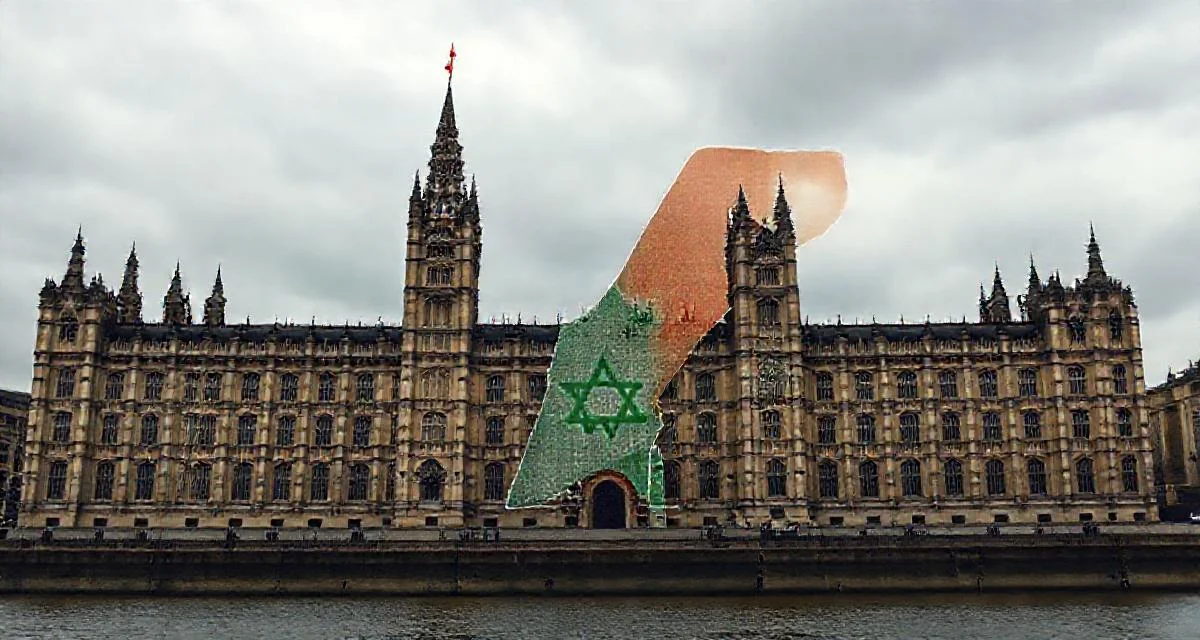
The United Kingdom has announced a groundbreaking decision to prohibit trade with Israeli settlements in the occupied West Bank, marking a significant shift in its long-standing foreign policy. This move, which has been under consideration for some time, positions the UK more firmly in alignment with international legal consensus regarding the illegality of these settlements. The UK Bans West Bank Settlement Trade in Major Shift is expected to have far-reaching diplomatic and economic implications, sending a clear message about the international community's stance on the Israeli-Palestinian conflict and the future of a two-state solution.
- Background and Context of West Bank Settlements
- The UK's Stance: A UK Bans West Bank Settlement Trade in Major Shift
- International Reactions and Diplomatic Implications
- Economic Impact and Future Prospects
- Conclusion: A Significant Move in UK Bans West Bank Settlement Trade in Major Shift
- Frequently Asked Questions
- Further Reading & Resources
Background and Context of West Bank Settlements
The issue of Israeli settlements in the West Bank has been a central and contentious point in the Israeli-Palestinian conflict for decades. These settlements, established by Israel in territories captured during the 1967 Six-Day War, are home to hundreds of thousands of Israeli citizens. Their expansion has been consistently criticized by the international community as a major impediment to peace, encroaching upon land that Palestinians envision as part of their future independent state. The continuous growth of these settlements has created a complex network of communities, infrastructure, and bypass roads that further fragment Palestinian territory, making the vision of a contiguous and viable Palestinian state increasingly difficult to achieve. This has a profound impact on the daily lives of Palestinians, affecting their freedom of movement, access to resources, and overall socio-economic development.
The international community, including the United Nations and the European Union, largely considers these settlements to be illegal under international law. This view is primarily based on the Fourth Geneva Convention, which prohibits an occupying power from transferring its own population into occupied territory. Critics argue that the continued growth of settlements fragments Palestinian territory, undermines the viability of a contiguous Palestinian state, and complicates any future peace negotiations. Moreover, the argument is often made that settlement expansion pre-empts the outcome of final status negotiations, making a two-state solution based on the 1967 borders increasingly unattainable.
International Law and Previous Stances
Numerous UN Security Council resolutions have affirmed the illegality of Israeli settlements. Resolution 2334, adopted in 2016, reaffirmed that the establishment of settlements by Israel in the Palestinian territory occupied since 1967, including East Jerusalem, "has no legal validity and constitutes a flagrant violation under international law and a major obstacle to the achievement of the two-State solution." This resolution explicitly called upon all states "to distinguish, in their relevant dealings, between the territory of the State of Israel and the territories occupied since 1967," thereby laying the groundwork for policies such as the UK's recent ban. Beyond UN resolutions, legal scholars and international bodies often cite the Rome Statute of the International Criminal Court, which defines the transfer by the Occupying Power of parts of its own civilian population into the territory it occupies as a war crime, further strengthening the international legal basis against settlements.
Historically, the UK has maintained a policy that views Israeli settlements as illegal under international law and an obstacle to peace. However, its actions have largely been confined to diplomatic statements and voting patterns in international forums. Until this recent announcement, the UK, like many other nations, did not have specific legislation directly prohibiting trade with goods and services originating from these settlements. The new policy represents a tangible step beyond rhetorical condemnation, aiming to translate its long-held position into concrete economic action. This distinction between the UK's previous diplomatic stance and its current legislative action highlights the significance of the recent policy change, moving from advisory warnings to direct economic disengagement.
The UK's Stance: A UK Bans West Bank Settlement Trade in Major Shift
The UK's decision to ban trade with West Bank settlements represents a clear departure from its previous, less direct approach. This policy shift underscores a renewed commitment to upholding international law and promoting the prospects for a two-state solution. By targeting economic ties, the UK aims to exert pressure that aligns with its stated foreign policy objectives.
This proactive measure goes beyond merely discouraging settlement activity; it directly seeks to undermine the economic viability of these settlements by cutting off a market for their products. The British government has framed this decision as a principled stand, consistent with its long-held view that settlements are illegal and detrimental to peace. The move is also seen by some as an attempt to bolster the UK's international standing as a proponent of international law, especially in the wake of other global geopolitical shifts. This strategic decision by the UK Bans West Bank Settlement Trade in Major Shift is designed to have a tangible impact on the ground and to send a strong message to both Israelis and Palestinians, as well as the wider international community.
Legislative Details and Implementation
The new policy is expected to be implemented through specific legislative or regulatory measures designed to prevent UK individuals and entities from engaging in trade, investment, and other economic activities that directly benefit Israeli settlements in the West Bank. While the exact details of the legislation are still being finalized, it is anticipated to include robust provisions for customs enforcement, requiring clear and verifiable labeling of goods to distinguish between those produced within Israel's internationally recognized borders and those from the settlements. This will be a complex undertaking, necessitating advanced origin tracing methods and potentially digital verification tools to prevent circumvention.
This legislative framework will likely impose significant penalties for non-compliance, ensuring that businesses and individuals adhere to the new ban. The government will also need to establish robust mechanisms for verification to prevent circumvention of the rules, potentially involving stricter import controls, enhanced due diligence requirements for companies operating in the region, and even third-party audits. The complexity of global supply chains originating from the region will necessitate clear and comprehensive guidelines for businesses to ensure they are not inadvertently supporting settlement economies, putting the onus on importers and retailers to demonstrate compliance.
Previous UK Policy vs. New Stance
Historically, the UK's policy regarding Israeli settlements in the West Bank has been consistent in its condemnation, viewing them as illegal under international law. However, this condemnation rarely translated into direct economic sanctions or trade restrictions. Previous actions included issuing official guidance to British businesses about the ethical, financial, and legal risks of operating in or with settlements, and encouraging consumers to be aware of the origin of products through voluntary labeling schemes. These measures were largely advisory and relied on the discretion of businesses and consumers.
The new ban signifies a substantial escalation from these advisory roles. Instead of merely cautioning against engagement, the UK is now actively prohibiting certain economic activities. This shift moves the UK from a position of passive disapproval to active enforcement, aligning its economic policy more closely with its long-standing diplomatic position. It also distinguishes the UK's approach from that of some other nations that have either maintained a purely advisory stance or focused solely on labeling requirements without outright bans. The ban marks a clear line in the sand, indicating a more assertive and interventionist foreign policy regarding this specific aspect of the Israeli-Palestinian conflict, reflecting a deeper commitment to its stated principles.
International Reactions and Diplomatic Implications
The UK's decision is likely to elicit a range of strong reactions from various international actors, reflecting the deeply entrenched and often polarized views surrounding the Israeli-Palestinian conflict. This move will undoubtedly be a topic of intense discussion in diplomatic circles globally.
The immediate impact will be observed in bilateral relations, particularly with Israel and Palestine. The decision could also prompt other nations to reconsider their own policies regarding trade with settlements, potentially creating a domino effect or at least intensifying the debate within international forums like the UN and the EU. This action by a major global power like the UK holds significant weight and is poised to reshape aspects of the broader international discourse on the conflict.
Reactions from Israel and Palestine
The reaction from Israel is expected to be one of strong condemnation. Israeli officials have historically viewed attempts to boycott or sanction settlement products as discriminatory and unhelpful to peace efforts, often labeling them as anti-Israel or even antisemitic. They are likely to argue that such a ban unfairly targets Israeli citizens and businesses, and could potentially harm the livelihoods of Palestinians who work in settlement industries, thereby undermining economic coexistence. Israel might also view the move as an unwarranted interference in its internal affairs and a concession to Palestinian demands without reciprocal gestures. Diplomatic protests, recalling ambassadors, and potential retaliatory measures, though perhaps limited in scope, cannot be ruled out.
Conversely, Palestinian authorities and advocacy groups are expected to welcome the UK's decision as a significant victory and a validation of their long-standing legal arguments. They will likely hail it as a courageous step towards upholding international law and holding Israel accountable for its occupation policies. This ban could be seen as providing much-needed leverage for Palestinians in future negotiations and reinforcing their claims to statehood based on pre-1967 borders. Palestinian leaders will likely urge other nations, particularly within the EU, to follow suit, using the UK's action as a precedent to build a broader international coalition against settlement trade and investment.
Responses from the EU and US
The European Union, which has a diverse membership with varying degrees of alignment on the Israeli-Palestinian conflict, has generally upheld a policy of distinguishing between Israel and the settlements. While the EU requires goods from settlements to be clearly labeled to inform consumers of their origin, it has not, as a bloc, implemented an outright ban on trade. The UK's move could put significant pressure on the EU to review its own policies, potentially reigniting debates among member states about a more unified and robust approach to settlement products. Some EU members might see the UK's action as a positive example to emulate, while others might express concerns about its economic or diplomatic implications for relations with Israel or the overall peace process.
The United States, historically Israel's closest ally, has often taken a different approach. While successive US administrations have generally considered settlements an obstacle to peace, official US policy has not typically supported boycotts or sanctions against Israel or its settlements, instead often focusing on security assistance and facilitating direct negotiations. The US might express reservations about the UK's unilateral action, fearing it could complicate efforts to restart peace negotiations, destabilize the region, or be perceived as punitive against an ally. However, given the current complex geopolitical landscape and the varying approaches taken by different US administrations, the exact nature of the US response could range from mild disagreement to more significant diplomatic engagement aimed at understanding or mitigating the impact of the UK's decision.
Economic Impact and Future Prospects
The UK's ban on West Bank settlement trade is poised to have a multifaceted economic impact, primarily affecting businesses operating within the settlements and potentially influencing the broader economic landscape of the region. Beyond immediate financial consequences, the policy carries significant implications for the long-term prospects of peace and stability in the Middle East.
The economic ramifications extend beyond direct trade figures, touching upon investment, supply chains, and consumer choices. The success and reach of the ban will depend on its enforcement, the reactions of other international actors, and how businesses adapt to the new regulatory environment. This economic pressure is intended to be a tool for political change, prompting a re-evaluation of settlement policies and their economic sustainability.
Potential Economic Consequences for Settlements
The direct economic impact on Israeli settlements will depend on the volume of trade they currently conduct with the UK. While the UK might not be the largest market for settlement products globally, the ban could still be significant for specific sectors. Settlement-based businesses, particularly those in agriculture (e.g., dates, herbs), cosmetics, and high-tech services, will face the loss of a market and potentially higher operational costs as they seek alternative trade routes and partners in less restrictive markets. The reputational damage alone could be substantial, affecting brand perception globally.
This ban could also deter future investment in settlement enterprises, as investors perceive increased political and economic risk. Financial institutions, including banks and insurance companies, might become more cautious about facilitating transactions linked to settlements to avoid legal and reputational risks, leading to a de-facto financial isolation. Over time, this cumulative pressure could make it less economically attractive to establish or expand businesses within the settlements, potentially slowing their growth and undermining their economic self-sufficiency. Furthermore, the ban could create a ripple effect, encouraging other countries or corporations to implement similar restrictions or divestment policies, amplifying the economic isolation of the settlements from global supply chains.
Broader Implications for the Peace Process
The UK's ban carries substantial symbolic and practical weight for the Israeli-Palestinian peace process. From the Palestinian perspective, it is a crucial step towards implementing international law and creating conditions conducive to statehood, particularly by challenging the "facts on the ground" created by settlement expansion. It could empower Palestinian negotiators by demonstrating that the international community is willing to take concrete steps to challenge the occupation and potentially alter the power dynamics at the negotiating table. This could provide a much-needed morale boost and validation for their struggle for self-determination.
For Israel, the ban could serve as a wake-up call, signaling that the international community's patience with settlement expansion is dwindling and that there are tangible consequences for policies perceived as undermining peace. It might prompt a re-evaluation within Israeli political circles about the long-term costs of continuing settlement growth and the potential for further international isolation. However, it could also harden positions among some Israeli factions, leading to accusations of bias and counter-productive measures that only serve to alienate Israel. Ultimately, the success of this move in fostering peace will depend on whether it genuinely shifts dynamics towards a two-state solution rather than simply escalating tensions. It represents a significant diplomatic tool, but its effectiveness will require sustained international engagement and a willingness from both Israeli and Palestinian leaderships to re-engage in meaningful, good-faith negotiations, complemented by a broader political strategy.
Conclusion: A Significant Move in UK Bans West Bank Settlement Trade in Major Shift
The United Kingdom's recent decision to implement a ban on trade with West Bank settlements marks a pivotal moment in its foreign policy and in the broader international discourse on the Israeli-Palestinian conflict. This decisive action, which has seen the UK Bans West Bank Settlement Trade in Major Shift, transcends mere rhetoric, translating a long-held legal and political position into tangible economic measures. By aligning its economic policy more closely with international law, the UK has sent a clear message regarding the illegality of these settlements and their detrimental impact on the prospects for a lasting peace. This move will undoubtedly face scrutiny and criticism, particularly from Israel, while being welcomed by Palestinians and their supporters. Its broader implications could include prompting other nations to re-evaluate their own stances on settlement trade, potentially altering investment flows, and intensifying diplomatic pressures on both sides of the conflict. As the world watches, the full extent of this policy's impact on regional stability and the elusive pursuit of a two-state solution will unfold.
Frequently Asked Questions
Q: What exactly does the UK ban on West Bank settlement trade mean?
A: The ban prohibits the import and export of goods and services produced in Israeli settlements in the occupied West Bank to and from the United Kingdom. This aligns with the UK's long-standing stance that these settlements are illegal under international law and an obstacle to peace.
Q: How will this ban be enforced and what are its immediate effects?
A: Enforcement is anticipated through new legislative or regulatory measures, including stricter customs enforcement, clear labeling requirements, and potentially penalties for non-compliance. Immediately, businesses currently trading with the UK from settlements will need to cease operations or find alternative markets, leading to direct economic pressure.
Q: What is the broader diplomatic significance of the UK's decision?
A: This decision underscores a renewed UK commitment to upholding international law and promoting the two-state solution. It may set a precedent for other nations, intensifying global pressure on Israel regarding settlement expansion and potentially influencing future peace negotiations by altering the diplomatic calculus.