Thailand Faces Severe Flooding, 24 Provinces Under Alert
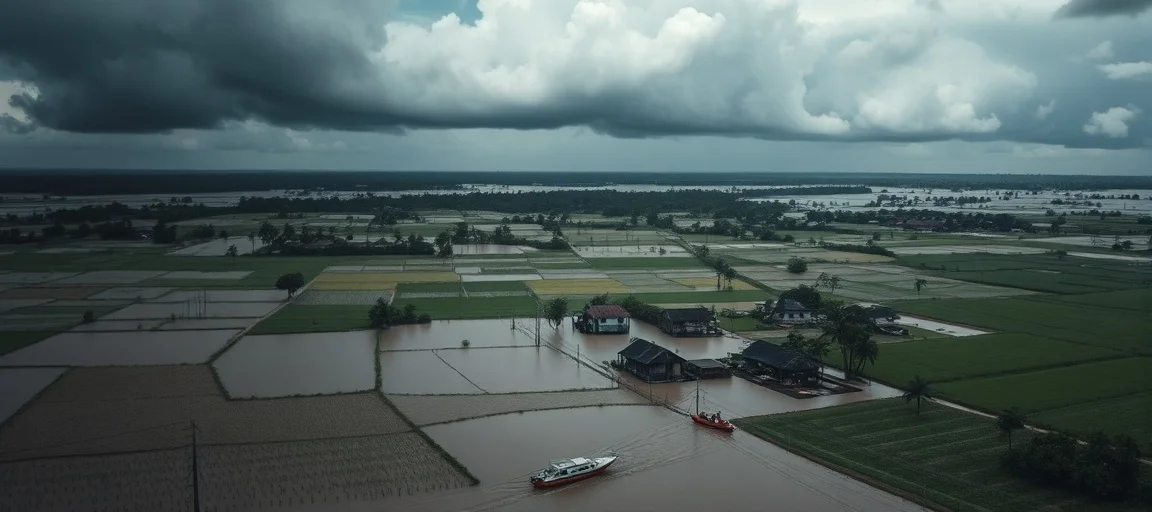
Thailand is currently experiencing significant natural disaster challenges as the nation grapples with severe widespread flooding, prompting authorities to declare Thailand Faces Severe Flooding, 24 Provinces Under Alert. Intense monsoon rains have led to flash floods, rising river levels, and the ever-present threat of landslides across numerous regions. The critical situation has necessitated urgent advisories from national meteorological and water resource offices, urging residents in affected areas to remain vigilant and prepare for potential evacuations as the persistent rainfall is expected to continue. This ongoing weather phenomenon underscores the vulnerability of the region to the annual monsoon season's intensity.
Widespread Warnings as Monsoons Intensify
The current flood crisis in Thailand escalated in early September 2026, with multiple government agencies issuing urgent warnings. The National Water Resources Office (NWR) initially issued a flash flood warning for 24 provinces, effective from September 4 to 8, 2026. This alert specifically targeted the northern, northeastern, and eastern regions of the country, also cautioning against potential waterlogging in low-lying areas. The NWR attributed this heightened risk to a monsoon trough actively traversing the North and upper Northeast, compounded by a moderate southwest monsoon system covering the Andaman Sea, mainland Thailand, and the Gulf of Thailand. The combination of these two meteorological systems has resulted in the accumulation of heavy to very heavy rainfall across the designated watch period.
Further amplifying concerns, the Thai Meteorological Department (TMD) issued its own advisories, forecasting heavier rainfall and an elevated flood risk across Thailand from September 8 to 13, 2026. This period was marked by predictions of widespread heavy rain and isolated very heavy downpours, initially concentrating in the Northeast before spreading to other regions. The TMD's warning, advisory 193/2569, specifically urged residents to prepare for flash floods and rapid runoff stemming from intense downpours and accumulated precipitation. The department highlighted September 9-11 as a particularly critical period for the lower Northeast, the Central region (including Bangkok and its surrounding provinces), the East, and the upper South.
Regions on High Alert
The list of provinces initially placed under the NWR's flash flood warning is extensive, encompassing eleven provinces in the North: Mae Hong Son, Tak, Chiang Mai, Chiang Rai, Phrae, Phayao, Nan, Uttaradit, Phitsanulok, Sukhothai, and Phetchabun. The Northeast saw an equal number of provinces affected, including Chaiyaphum, Nong Khai, Bueng Kan, Sakon Nakhon, Nakhon Phanom, Kalasin, Mukdahan, Yasothon, Roi Et, Amnat Charoen, and Ubon Ratchathani. Additionally, two provinces in the East, Chanthaburi and Trat, were included in the initial alert.
Beyond these initial 24 provinces, the scope of concern widened as the Department of Disaster Prevention and Mitigation (DDPM) placed a total of 71 provinces, alongside the capital city of Bangkok, on alert for various flood-related dangers through September 13. This broader alert from the DDPM specifically warned of flash floods, forest runoff, landslides, and general flooding. For instance, on September 12, the TMD issued a warning for isolated very heavy rain in four southern provinces: Prachuap Khiri Khan, Chumphon, Ranong, and Phang Nga, with heavy rain also expected in the lower Northeast, the Central region (including Bangkok), and the East.
Moreover, specific alerts were issued for provinces along the Mekong River. Four northeastern provinces—Nong Khai, Bueng Kan, Nakhon Phanom, and Mukdahan—were placed on high flood alert through September 6, 2026, due to predicted significant increases in Mekong River levels. This highlights the multi-faceted nature of the flooding, affecting both smaller waterways and major river systems.
Immediate Impacts and Rising Concerns
The escalating rainfall has already led to tangible and disruptive impacts across the country. A prominent example occurred on September 10, 2026, when heavy rain and strong winds lashed Pattaya for over two hours, resulting in widespread flooding and severe traffic congestion throughout the city. Floodwaters in some areas of Pattaya rose to between 10 and 60 centimeters, particularly impacting regularly inundated roads like the railway road between Soi Khao Talo and Soi Wat Tham Samakkhi, both sides of Soi Wat Boon Samphan, and parts of Sukhumvit Road. This event caused significant disruption for commuters, leading to multi-kilometer traffic jams and even damaging vehicles whose engines became waterlogged.
The immediate consequences extend beyond mere inconvenience. Many communities are grappling with direct inundation, impacting homes, businesses, and critical infrastructure. The consistent warnings of flash flooding and runoff from forest areas indicate a severe threat to both urban and rural settlements, potentially displacing residents and necessitating emergency relief efforts. The severity of the rainfall can quickly overwhelm drainage systems, turning streets into rivers and making travel treacherous, if not impossible.
Beyond Inundation: Landslides and Runoff
The dangers posed by the intense monsoon season in Thailand are not limited to standing water and flooded urban centers. A significant concern across the alerted provinces, especially those with mountainous or hilly terrain, is the increased risk of flash floods, forest runoff, mudslides, and landslides. These phenomena can be particularly destructive, capable of obliterating homes, roads, and agricultural land in mere moments, often with little to no warning.
The TMD explicitly warned that heavy and accumulated rainfall could trigger these rapid events, particularly on foothill slopes, near waterways, and in low-lying areas. Residents in such vulnerable communities are constantly advised to exercise extreme caution and to be prepared for swift action should conditions deteriorate. The Department of Disaster Prevention and Mitigation (DDPM) highlighted that areas receiving over 90 millimeters of rain within a 24-hour period face a substantially greater risk of these devastating events. The combination of saturated ground and continuous heavy precipitation creates unstable conditions, making areas previously deemed safe susceptible to sudden geological shifts.
Government Mobilizes Comprehensive Response
In response to the escalating crisis, the Thai government, through its various departments, has mobilized a comprehensive and multi-faceted response to mitigate the impact of the severe weather conditions. The National Water Resources Office (NWR) and the Thai Meteorological Department (TMD) have been at the forefront, consistently issuing timely warnings and advisories regarding rainfall forecasts, flood risks, and affected regions. These crucial updates help inform both the public and local authorities, enabling better preparedness and response. The ongoing situation means Thailand Faces Severe Flooding, 24 Provinces Under Alert is an evolving challenge requiring sustained government action.
The Department of Disaster Prevention and Mitigation (DDPM) has played a central role in coordinating emergency responses and public safety measures. Their alerts, covering 71 provinces and Bangkok, guide local agencies in preparing for various flood-related scenarios. Local governments are actively involved in on-the-ground efforts. For instance, in Pattaya, city officials deployed personnel and resources to assist stranded motorists, blocked dangerously high floodwater areas with barriers, and advised drivers on safe routes during the recent inundation. Similarly, in Nong Khai, municipal crews proactively constructed over two kilometers of flood barriers along low-lying riverbanks and installed large drainage pumps to manage potential flash flooding from monsoon rainfall, anticipating rising Mekong River levels. This swift, localized action is critical for protecting vulnerable urban areas.
Preparedness and Public Advisories
Authorities are continuously emphasizing the importance of public preparedness. The DDPM has advised residents in vulnerable communities to prepare essential supplies, meticulously plan their travel routes, and be ready to evacuate immediately if instructed by local officials. This proactive approach aims to minimize casualties and provide immediate relief.
The TMD has also issued specific recommendations, urging people to avoid routes repeatedly affected by flooding, especially low-lying roads where water could accumulate rapidly. For those near natural attractions like caves and waterfalls, strict adherence to official advisories and avoiding declared unsafe locations is paramount. To facilitate information dissemination, official warnings are readily available through the THAI DISASTER ALERT application. Furthermore, the DDPM operates a 24-hour hotline (1784) and a LINE account for reporting emergencies and requesting assistance, reinforcing the commitment to public safety and support. Mariners in the Andaman Sea and Gulf of Thailand have also been urged to navigate cautiously and avoid thunderstorms due to moderate winds and waves.
Seasonal Patterns and Climate Context
Thailand experiences a tropical monsoon climate, characterized by distinct seasons, with the rainy season typically extending from May to October. September and October generally mark the heavier rainy season, when storms become more frequent and unpredictable, often lasting for hours or even days. This period is historically associated with an increased likelihood of flooding in low-lying areas and potential disruptions to transportation, particularly in major urban centers like Bangkok and Chiang Mai, and also on islands.
The timing and intensity of rainfall can vary significantly across Thailand due to its elongated geography and exposure to different monsoon patterns. For example, while the Andaman Coast (Phuket, Krabi) experiences its wet season from late May to mid-October with intense afternoon showers and rough seas, the Gulf of Thailand islands like Koh Samui are influenced by a different monsoon pattern, often enjoying drier weather during this time. The country's weather is governed by a complex interplay of monsoon troughs, southwest monsoons, and high-pressure systems moving down from China, all contributing to the severity of precipitation events.
Historically, this "green season," as locals sometimes call it, transforms the countryside into lush, vibrant landscapes, with waterfalls at their most powerful. However, it also brings with it the inherent risks that authorities are currently addressing. The consistency of these seasonal patterns, exacerbated by potential shifts in global climate, underscores the ongoing need for robust disaster preparedness and mitigation strategies.
The Broader Ecological and Economic Landscape
The impact of widespread flooding in Thailand extends far beyond immediate human safety and infrastructure damage. The agricultural sector, a cornerstone of the Thai economy, is particularly vulnerable. Submerged rice paddies, damaged crops, and disruptions to supply chains can lead to significant economic losses for farmers and potentially affect national food security. While specific figures for the current 2026 flooding are still emerging, past severe floods have consistently demonstrated these profound agricultural repercussions.
The tourism industry, another vital component of Thailand's economy, also faces challenges during the peak rainy season. While many tourists still visit, particularly taking advantage of lower prices and fewer crowds, heavy rainfall and rough sea conditions can limit outdoor activities, reduce diving visibility, and even lead to the temporary suspension of ferry services to islands. Events like the Pattaya flooding, leading to traffic chaos, can deter visitors and negatively impact local businesses that rely on consistent tourist flow. The long-term effects of repeated flooding can also degrade ecosystems, alter river courses, and impact biodiversity, further complicating recovery efforts and future resilience.
Navigating the Crisis: Resources for Those Affected
For residents and visitors in Thailand currently navigating the severe flooding, access to timely and accurate information is paramount. The Department of Disaster Prevention and Mitigation (DDPM) strongly advises individuals to keep abreast of official weather forecasts and warnings issued by the Thai Meteorological Department (TMD). These updates provide critical insights into expected rainfall, flood levels, and areas at specific risk.
Key resources for assistance and information include:
- THAI DISASTER ALERT Application: This mobile application provides official warnings and real-time updates directly to users, offering a crucial tool for staying informed during emergencies.
- DDPM LINE Account: The official LINE messaging account for the DDPM offers another avenue for receiving alerts and information, as well as a channel to report emergencies or request assistance.
- Disaster Prevention and Mitigation Hotline 1784: This 24-hour hotline is available for direct communication with emergency services, allowing individuals to report incidents or seek immediate aid.
Residents in vulnerable areas are also encouraged to:
-
Prepare an emergency kit: This should include essential supplies such as non-perishable food, drinking water, first-aid items, medications, a flashlight, and a power bank for mobile devices.
-
Monitor local water levels: Especially for those living near rivers, canals, or in low-lying areas, observing changes in water levels can provide crucial early warning signs.
-
Identify safe evacuation routes: Knowing the quickest and safest path to higher ground or designated shelters is vital for a swift response.
-
Protect important documents and valuables: Store these items in waterproof containers and keep them ready for quick transport if evacuation becomes necessary.
-
Share information: Help disseminate official warnings and preparedness advice to family, friends, and neighbors, particularly those in at-risk communities.
Frequently Asked Questions
Q: Which regions are most affected by the flooding in Thailand?
A: The northern, northeastern, and eastern regions are currently under the most severe alerts. Additionally, provinces along the Mekong River and some central and southern areas, including Bangkok, face significant risks.
Q: What are the main dangers associated with the heavy monsoon rains?
A: Beyond widespread inundation, the primary dangers include flash floods, forest runoff, and landslides, especially in mountainous or hilly terrain. Rapidly rising river levels also pose a major threat.
Q: How can residents stay informed and seek assistance during the flood crisis?
A: Residents should use the THAI DISASTER ALERT app, follow the DDPM LINE account, and call the 24-hour hotline 1784 for official warnings, updates, and emergency assistance.
Further Reading & Resources
- Thai Meteorological Department (TMD) - English
- National Water Resources Office (NWRO) - Thai Water Info
- Bangkok Post - Thailand News
- ReliefWeb - Thailand Floods
- UNDRR PreventionWeb - Thailand Profile
Conclusion
As Thailand navigates the complexities of its intense monsoon season, the nation continues to face significant challenges. The extensive alerts across 24 provinces, coupled with the persistent heavy rainfall, underscore the severity of the situation. From the flash floods in northern and northeastern regions to the urban inundation witnessed in places like Pattaya, the immediate impacts are evident, affecting livelihoods, infrastructure, and daily life. The coordinated efforts of the National Water Resources Office, the Thai Meteorological Department, and the Department of Disaster Prevention and Mitigation are crucial in providing timely warnings and coordinating comprehensive responses.
While the current focus remains on emergency management and public safety, the recurring nature of these events highlights the need for long-term strategies in flood mitigation and climate resilience. The challenges faced today, where Thailand Faces Severe Flooding, 24 Provinces Under Alert, serve as a stark reminder of the country's vulnerability to natural disasters and the ongoing importance of preparedness, adaptive infrastructure, and community awareness in safeguarding its people and economy against the forces of nature. Continued vigilance and adherence to official advisories will be paramount as the country moves through the remainder of the monsoon season.