Europe Marks International Safe Abortion Day Amidst Shifting Rights Landscape
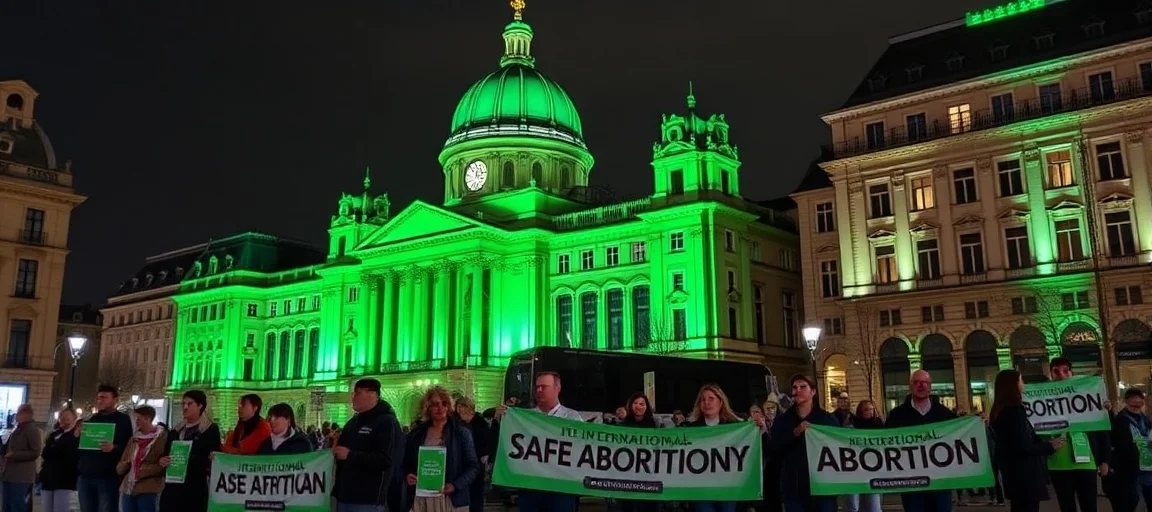
Europe Marks International Safe Abortion Day Amidst Shifting Rights Landscape
As the calendar turns to September 28, Europe Marks International Safe Abortion Day, a crucial moment for reflection and advocacy on reproductive autonomy. Across the continent, this day serves as a powerful reminder of both hard-won progress and the persistent challenges in ensuring equitable access to safe and legal abortion services. The European landscape of reproductive rights is currently witnessing significant shifts, with several nations strengthening protections while others face ongoing threats to established access. This year's observance highlights a collective effort to safeguard fundamental health rights for all, emphasizing that access to safe abortion is not only a matter of public health but also a fundamental human right.
- Understanding International Safe Abortion Day
- Europe Marks International Safe Abortion Day with Renewed Calls for Access
- The Current Landscape of Abortion Rights in Europe
- Key Advocacy Efforts and Organizations
- The Importance of Comprehensive Reproductive Healthcare
- Global Context and Solidarity
- Conclusion: Continuing the Fight for Reproductive Autonomy
- Frequently Asked Questions
- Further Reading & Resources
Understanding International Safe Abortion Day
International Safe Abortion Day, observed annually on September 28, has its origins in Latin America and the Caribbean. It began in 1990 as a regional day of action for the decriminalization of abortion by the Campaña 28 Septiembre. The date itself commemorates the passing of Brazil's Law of Free Birth on September 28, 1871, a significant legal reform aimed at providing freedom for children born to enslaved people. In 2011, the Women's Global Network for Reproductive Rights (WGNRR) expanded its observance to an international level, recognizing the global struggle for safe and legal abortion.
The day serves as a global call to action, drawing attention to the disparities in access to safe and legal abortion worldwide. It underscores the profound harms caused by restrictive abortion laws and the myriad barriers to care, urging decision-makers to uphold and advance reproductive rights as human rights. Activists, governments, and civil society organizations use this day to demand timely, affordable, and quality abortion care for everyone, everywhere. The growing momentum behind this day reflects an international commitment to ensuring that every individual can exercise their reproductive autonomy without fear or discrimination.
Europe Marks International Safe Abortion Day with Renewed Calls for Access
This year, as Europe Marks International Safe Abortion Day, the continent is abuzz with coordinated efforts and renewed calls for universal access to safe and legal abortion. A notable initiative for 2026 is the "Europe Goes Green" campaign, where landmarks across several European cities are illuminated in green as a visual statement of support for abortion rights. This symbolic gesture, drawing inspiration from Latin America's "La marea verde" or "The Green Wave," unifies the global movement and demonstrates a strong public stance on reproductive freedom. Cities like Barcelona, Brussels, Dublin, Edinburgh, Geneva, and Paris are participating, with city halls and prominent public landmarks glowing green.
The widespread illumination of iconic sites across Europe on September 28, 2026, signals a powerful public statement from municipalities and cultural institutions alike. This coordinated display aims to visibly demonstrate solidarity with all who need abortion care and to highlight the ongoing need for protective measures and expanded access across the continent. Beyond the symbolic, recent legislative developments underscore a progressive trend in many parts of Europe, even as challenges persist in others.
The Current Landscape of Abortion Rights in Europe
The legal and policy framework surrounding abortion in Europe is dynamic, marked by both significant advancements and persistent restrictions. Overall, the dominant legal trend across Europe remains one of reform, with many countries continuing to liberalize laws, remove access barriers, and strengthen constitutional protections for abortion rights. As of September 2026, 43 out of 49 European countries allow abortion on request, at least in early pregnancy.
Recent Legislative Progress
Several European nations have made notable strides in enhancing abortion access. In June 2026, Luxembourg became the second country in the region, following France in 2024, to explicitly enshrine the freedom to access abortion in its Constitution. This constitutional protection is seen as a crucial safeguard against future rollbacks, with similar reform efforts underway in Belgium, Sweden, and Spain.
In April 2026, England and Wales repealed criminal law provisions that penalized women for seeking abortion care outside legal pathways, and also pardoned those previously convicted. This move reflects a broader trend, as 29 European countries no longer criminalize women in relation to their own abortions. Furthermore, in March 2026, Jersey passed reforms legalizing abortion on request before 22 weeks and decriminalizing women seeking abortions. The Faroe Islands also adopted landmark reforms in December 2025, legalizing abortion on request up to 12 weeks and replacing a restrictive legal framework dating back to 1956. Over the past decade alone, 21 European countries have enacted meaningful reforms to improve abortion access, including legalizing abortion on request, extending timeframes, removing procedural barriers, expanding access to medication abortion, repealing criminal penalties, and removing financial hurdles.
Persistent Barriers and Restrictive Laws
Despite this progressive trend, access to abortion in Europe remains uneven and faces considerable obstacles in several areas. Five countries, namely Andorra, Liechtenstein, Malta, Monaco, and Poland, retain highly restrictive abortion laws, with Andorra having a total ban. Malta, while easing its total ban in 2023, and Poland, which tightened access following a 2020 constitutional tribunal ruling, still permit the procedure only in exceptional circumstances.
Beyond outright bans, many countries maintain "outdated legal and policy barriers" that can delay, obstruct, or deny access to care. These include mandatory waiting periods, biased counseling requirements, restrictive time limits, and requirements for third-party authorization. For instance, 14 countries still impose mandatory waiting periods (ranging from 48 hours to 7 days), and 16 countries still require mandatory counseling prior to an abortion. Some countries, like Hungary, compel individuals to listen to the fetal heartbeat, and in Türkiye, married women over 18 legally require spousal consent within the 10-week limit. These barriers often force individuals to travel to other countries to access legal care, especially for vulnerable groups like migrants, minors, and low-income individuals.
A significant challenge also comes from "conscientious objection" clauses, which allow medical practitioners to refuse to perform abortions. While most EU member states permit this, it can severely limit availability and delay care, particularly in regions where a high percentage of gynecologists object, as seen in parts of Italy where objection rates exceed 60-70%.
Key Advocacy Efforts and Organizations
The strides made in abortion rights across Europe are largely attributed to the tireless work of advocacy groups and civil society organizations. These groups play a crucial role in challenging restrictive laws, informing decision-makers, and providing support to individuals seeking abortion care.
One significant recent achievement is the "My Voice, My Choice" European Citizens' Initiative (ECI). Launched in April 2024, this grassroots campaign garnered over 1.1 million verified signatures across Europe, demanding that the EU establish a financing mechanism for cross-border access to abortion. In December 2025, the European Parliament adopted a text calling on the European Commission to propose new legislation based on this initiative.
Responding to this immense public pressure, in February 2026, the European Commission announced a landmark decision allowing member states to use existing European Social Fund Plus (ESF+) funds to finance safe abortions and improve access. This means ESF+ funds, with a massive budget of €142.7 billion for 2021-2027, can now cover medical treatments, travel, and accommodation for people seeking abortion care, whether within their own country or across borders. This decision marks a significant commitment to protecting reproductive rights and expanding access, especially for marginalized groups in countries with highly restrictive laws like Poland and Malta.
Organizations like the Center for Reproductive Rights have been working for over 25 years in Europe, collaborating with national civil society groups and regional partners to drive legislative change, shape jurisprudence, and prevent rollbacks. Similarly, Supporting Abortions for Everyone (S.A.F.E.), launched in February 2023, focuses on resourcing grassroots activists across Europe who are working to overcome governmental and healthcare system failures in providing abortion access. These groups provide knowledge, funding, infrastructure, and training to amplify the impact of local movements.
The Importance of Comprehensive Reproductive Healthcare
Access to safe and legal abortion is an indispensable component of comprehensive reproductive healthcare. Denying or restricting access to abortion has profound implications for individuals' health, autonomy, and overall societal well-being. The World Health Organization (WHO) estimates that nearly 45% of all induced abortions globally are unsafe, predominantly occurring in countries with restrictive legal frameworks. These unsafe procedures contribute significantly to maternal mortality and morbidity worldwide. Conversely, where abortion is legal, approximately 90% of procedures in high-income countries are conducted safely.
Comprehensive reproductive healthcare extends beyond abortion to include contraception, prenatal care, safe childbirth, and post-abortion care, including counseling. When abortion is treated as a crime rather than healthcare, it creates a climate of fear, stigma, and discrimination, pushing individuals towards unsafe options and jeopardizing their lives and health. International human rights bodies have consistently affirmed that barriers to accessing abortion can violate rights to health, privacy, humane treatment, and non-discrimination.
Addressing Barriers to Safe Abortion Access
Efforts to ensure true access to safe abortion must address the multifaceted barriers that persist across Europe. These include not only legal restrictions but also practical challenges that hinder individuals from obtaining timely and quality care.
1. Geographical Barriers: In large, rural areas or countries with limited providers due to conscientious objection, geographical distance can make access difficult. The European Commission's decision to allow ESF+ funds to cover travel costs aims to mitigate this.
2. Financial Barriers: Even where abortion is legal, financial costs can be prohibitive. While 21 European countries provide abortion care free of charge or covered by mandatory health insurance, affordability remains an issue in others. The "My Voice, My Choice" initiative specifically highlighted the financial strain on marginalized individuals.
3. Legal and Procedural Barriers: Mandatory waiting periods, biased counseling, and restrictive time limits create unnecessary delays and can influence personal decisions, going against WHO guidelines. Only 8 EU Member States still impose a mandatory waiting period, and only 2 still mandate directive counseling aimed at discouraging the procedure.
4. Stigma and Discrimination: The criminalization of abortion, even if only for providers, fuels stigma, leading to shame and fear for those seeking care. This hostile environment can deter individuals from seeking necessary medical attention. Public opinion in Europe, however, largely supports legal abortion, with a median of 66% across 27 surveyed places believing it should be legal in all or most cases. In countries like Sweden and France, support is even higher, at 95% and 82% respectively.
The Role of Public Opinion and Political Will
Public opinion in Europe overwhelmingly supports the legality of abortion. In nearly every European country surveyed, at least 75% of adults believe abortion should be legal, with a significant portion advocating for legality in all cases. This widespread support provides a strong foundation for political action.
The success of campaigns like "My Voice, My Choice" demonstrates that when citizens mobilize, political will can be generated. The European Parliament has increasingly engaged with sexual and reproductive health and rights (SRHR), adopting resolutions affirming access to safe and legal abortion as a fundamental right and calling for its inclusion in the EU Charter of Fundamental Rights. These political developments are critical in ensuring that legislative frameworks evolve to match public sentiment and international human rights standards.
Global Context and Solidarity
Europe's actions regarding safe abortion resonate globally. The progress seen in constitutional protections in countries like France and Luxembourg, and the decriminalization efforts in England and Wales, set important precedents. These advancements demonstrate that even in the face of global pressures and anti-rights movements, progress is achievable when lawmakers, courts, and civil society work together.
International Safe Abortion Day itself, with its roots in Latin America, highlights a global solidarity movement. The "Green Wave" symbol, originating from Latin American activism, has become a unifying force for abortion rights worldwide. European advocacy groups often collaborate with international partners, sharing strategies and amplifying voices to counter misinformation and attacks on reproductive healthcare. The ongoing struggle for reproductive justice is interconnected, and gains in one region can inspire and empower activists in others.
Conclusion: Continuing the Fight for Reproductive Autonomy
As Europe Marks International Safe Abortion Day, it is evident that the fight for reproductive autonomy is far from over. While recent legislative victories and increased financial support from the European Commission signal a positive trajectory, significant disparities and challenges persist. The "Europe Goes Green" initiative this year powerfully symbolizes the continent's collective commitment to safe and legal abortion, echoing a widespread public demand for accessible care. Continued vigilance, sustained advocacy, and strong political will are essential to dismantle remaining barriers and ensure that access to safe and legal abortion becomes a reality for every individual across Europe, upholding the fundamental human right to bodily autonomy and comprehensive reproductive healthcare.
Frequently Asked Questions
Q: What is International Safe Abortion Day?
A: It is an annual event on September 28 advocating for safe, legal abortion access as a fundamental human right.
Q: Why do landmarks glow green?
A: Green is the symbol of the global movement for abortion rights, known as The Green Wave or La marea verde.
Q: Is abortion legal across Europe?
A: Most European countries allow abortion on request in early pregnancy, though barriers like waiting periods exist in some nations.