India Banks Open to Avert Nationwide Strike: Crucial Talks Conclude
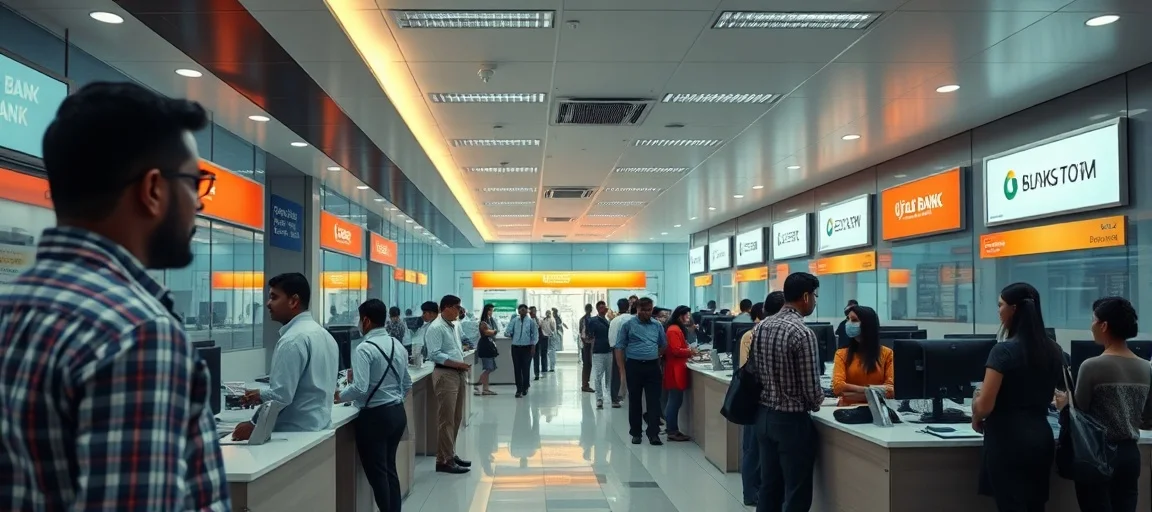
The Indian banking sector breathed a collective sigh of relief this week as pivotal negotiations successfully concluded, leading to a decision that will see India banks open to avert a nationwide strike. This critical development ensures the continuity of essential financial services across the country, mitigating potential widespread disruption to the economy and daily life for millions of citizens. The averted strike, which threatened to paralyze public and private sector banks, highlights the delicate balance between employee demands and the imperative of maintaining national economic stability.
- Background to the Impending Strike
- Intense Negotiations: How India Banks Open to Avert Nationwide Strike
- The Agreement Reached and Its Immediate Impact
- Broader Implications for India's Financial Sector
- Expert Opinions and Analyst Insights
- Conclusion: Averting Disruption for India's Economy
- Frequently Asked Questions
- Further Reading & Resources
Background to the Impending Strike
The specter of a nationwide banking strike had loomed large over India for several weeks, driven by long-standing grievances of bank employee unions. These unions, representing a vast workforce across various public and some private sector banks, had called for industrial action to press for significant improvements in their working conditions, wage structures, and other benefits. The potential disruption was immense, given the banking sector's pivotal role in India's economy, from facilitating daily transactions to supporting large-scale industrial activities.
Understanding the Demands of Bank Unions
The primary demands put forth by the various bank unions, often consolidated under umbrella organizations like the United Forum of Bank Unions (UFBU), typically revolve around several key areas. Foremost among these is the demand for a comprehensive wage revision, often delayed or deemed inadequate by the unions. They argue that existing pay scales have not kept pace with inflation and the increased workload faced by employees, especially post-pandemic and with the growing adoption of digital banking.
Pension-related issues, including updates to the pension scheme and medical benefits for retired staff, also form a significant part of their charter of demands. Furthermore, unions frequently advocate for regularization of contract employees, improved staffing levels, and a halt to what they perceive as detrimental merger policies or privatization drives within the public sector banking space.
The unions emphasize that their demands are not merely for the benefit of their members but also to ensure a robust and motivated workforce capable of serving the nation's financial needs effectively. They believe that adequate compensation and better working conditions are crucial for attracting and retaining talent in a competitive financial landscape, which is essential as we look at India's Economic Growth: A Look at FY2026 Projections Unpacked.
Historical Precedents of Banking Strikes in India
Banking strikes are not an unfamiliar phenomenon in India. Historically, various banking unions have resorted to industrial action to highlight their concerns and push for negotiations with the Indian Banks' Association (IBA), the representative body of management of banks. These strikes, ranging from one-day protests to multi-day shutdowns, have often had a noticeable impact on daily banking operations.
Past strikes have led to temporary closures of branches, disruption of cheque clearances, and delays in various financial transactions. Such actions, while impactful, are generally a last resort, undertaken when negotiations with the management bodies reach an impasse. The memory of previous disruptions often serves as a strong motivator for both unions and management to find common ground and avoid a complete breakdown of services. The current resolution reflects a concerted effort to learn from these past experiences and prioritize uninterrupted banking services.
Intense Negotiations: How India Banks Open to Avert Nationwide Strike
The recent resolution to prevent a nationwide banking strike was the culmination of intensive, high-stakes negotiations involving multiple stakeholders. For days, representatives from bank unions and the Indian Banks' Association (IBA) engaged in protracted discussions, often under the watchful eye of government mediators. The objective was clear: find a mutually acceptable solution that addresses employee grievances while safeguarding the stability of India's crucial financial infrastructure. The success of these talks meant that India banks open, rather than face closure.
Key Players at the Negotiating Table
The primary parties at the negotiating table were the United Forum of Bank Unions (UFBU), an umbrella organization representing nine major bank unions, and the Indian Banks' Association (IBA), which acts as the representative body for the management of most public sector banks and some private sector banks in India. The UFBU plays a crucial role in consolidating the demands of diverse employee groups, ranging from clerical staff to officers, ensuring a unified voice in negotiations.
The IBA, on the other hand, is tasked with balancing the financial implications of union demands with the operational viability and profitability of its member banks. In several instances, especially when negotiations reach a critical juncture, representatives from the Ministry of Finance or the Chief Labour Commissioner's office also participate, acting as conciliators. Their role is to facilitate dialogue, mediate disputes, and help both parties bridge gaps in their positions, ultimately aiming for a peaceful resolution that prevents industrial unrest.
The Core Issues Addressed During Discussions
The recent round of discussions honed in on several critical issues that had fueled the strike notice. A central point of contention was the demand for a fair and timely wage revision. Unions pressed for a substantial increase in basic pay, dearness allowance, and other components, arguing for a revision that genuinely reflects current economic realities and the increasing responsibilities of bank employees.
Another significant topic was the update to the existing pension scheme and improvements in medical insurance benefits for both serving and retired employees. Unions advocated for better post-retirement financial security and access to quality healthcare. Beyond financial remuneration, issues related to working hours, staffing patterns, job security amidst mergers and technological advancements, and the recognition of certain allowances also featured prominently in the extensive agenda. Each point required careful deliberation and compromise from both sides to achieve a comprehensive agreement.
The Role of Government Intervention
The Indian government, through its various ministries, plays a significant, albeit often behind-the-scenes, role in such large-scale labor disputes, especially in critical sectors like banking. The prospect of a nationwide banking strike can have severe repercussions for the national economy, impacting everything from trade and commerce to individual savings and investments. Therefore, the government's interest lies in ensuring a swift and peaceful resolution.
Government officials, often from the Ministry of Labour and Employment or the Department of Financial Services under the Ministry of Finance, engage with both parties to encourage dialogue and facilitate a conducive environment for negotiations. They may offer guidance, emphasize the broader economic implications of a strike, and sometimes even suggest frameworks for resolution. Their indirect but firm hand helps to push negotiations towards a constructive outcome, underscoring the national importance of keeping the India banks open.
The Agreement Reached and Its Immediate Impact
Following marathon negotiations, an agreement was finally reached, effectively averting the nationwide banking strike. This resolution marks a significant achievement for both the bank unions and the Indian Banks' Association, demonstrating a commitment to dialogue and stability within the financial sector. The immediate impact is a continuation of normal banking operations, sparing millions of customers and businesses from potential financial gridlock.
Key Provisions of the Settlement
While specific details of the wage revision settlement are often complex and multi-faceted, typical agreements following such intense negotiations usually include a percentage increase in the overall wage bill, distributed across various components like basic pay, special allowances, and provident fund contributions. The recent agreement is expected to incorporate a significant increase in the wages of bank employees, addressing a key demand of the unions.
Beyond salary hikes, the settlement is also likely to include enhancements in other benefits. This might involve improved medical insurance coverage, revisions in the leave policy, and potentially better provisions for retired employees, such as an increase in ex-gratia payments or adjustments to pension calculations. Furthermore, agreements often include commitments from management regarding staffing rationalization, training, and the implementation of technology in a manner that supports, rather than displaces, the workforce. These provisions collectively aim to improve employee welfare and morale across the banking sector.
Union Leaders' Perspectives on the Outcome
Union leaders, while acknowledging that not all demands can be met entirely, generally expressed satisfaction with the outcome of the negotiations. They often view such settlements as a testament to the collective strength of their membership and the efficacy of structured dialogue. Leaders typically highlight the gains made in terms of wage increases and improved working conditions as significant victories for the banking fraternity.
However, their statements often balance satisfaction with a forward-looking perspective, emphasizing that while the immediate crisis is averted, the struggle for better terms and conditions for bank employees is an ongoing process. They reiterate their commitment to continue advocating for their members' rights and to engage in constructive dialogue with management to address future challenges and evolving industry landscapes.
Maintaining Public Confidence in Banking Services
The successful aversion of a major strike is crucial for maintaining public confidence in the Indian banking system. A widespread strike would have not only caused immediate inconvenience but could also have eroded trust in the reliability and accessibility of financial services. By ensuring that India banks open their doors as usual, the settlement sends a strong message of stability and continuity.
Customers can continue to access their funds, conduct transactions, and utilize banking services without interruption, which is vital for daily economic activity. Businesses can proceed with their operations, including salary disbursements, vendor payments, and loan processing, without fear of delays. This seamless operation reinforces the perception of a robust and dependable financial infrastructure, which is foundational to economic growth and investor confidence in a world dealing with issues like Global Economic Outlook 2026: Navigating Geopolitical Tensions Ahead.
Broader Implications for India's Financial Sector
The resolution of the potential banking strike carries significant broader implications for India's financial sector beyond the immediate relief for employees and customers. It underscores the critical role of harmonious labor relations in a sector that is the backbone of the economy, influencing everything from individual savings to national economic projections.
Ensuring Business Continuity and Economic Stability
The primary broader implication of averting the strike is the guaranteed business continuity across India's vast banking network. Had the strike proceeded, the disruption to financial transactions, credit flows, and government treasury operations would have been substantial. Such an interruption could have cascaded through various economic sectors, potentially impacting Gross Domestic Product (GDP) growth and investor sentiment.
The successful negotiation ensures that the wheels of commerce continue to turn unimpeded. This stability is paramount for India, which relies heavily on its banking system to facilitate economic development, fund infrastructure projects, and support small and medium-sized enterprises (SMEs). The absence of a strike means that the focus can remain on growth initiatives, financial inclusion, and navigating global economic challenges rather than managing internal disruptions.
Lessons Learned for Future Labor Relations
The process of averting this strike offers valuable lessons for future labor relations not just within the banking sector but across other vital industries. It highlights the importance of proactive engagement, continuous dialogue, and transparent communication between management and employee representatives. Relying solely on last-minute negotiations under duress can be risky; establishing ongoing mechanisms for grievance redressal and collective bargaining can foster a more stable industrial environment.
Furthermore, it emphasizes the need for flexibility and a willingness to compromise from both sides. The government's facilitative role also demonstrates the benefit of neutral mediation in resolving complex disputes. These learnings can help in developing more resilient frameworks for labor-management interactions, aiming to prevent future standoffs and ensure that critical services remain operational.
The Evolving Landscape of Indian Banking
The resolution also comes at a time when the Indian banking sector is undergoing significant transformation. Rapid digitization, the rise of fintech, increasing competition from non-banking financial companies (NBFCs), and government-led reforms are reshaping how banks operate. These changes often bring new challenges for the workforce, including demands for new skills, potential job redefinitions, and concerns about automation.
The successful negotiation of this wage revision and other demands must be viewed in this broader context. It sets a precedent for how employee welfare and concerns will be integrated into the ongoing modernization of the banking sector. A satisfied and well-compensated workforce is better equipped to adapt to new technologies and contribute effectively to the sector's evolution, ensuring that India's banks remain competitive and relevant in a dynamic global financial environment.
Expert Opinions and Analyst Insights
The resolution of the impending banking strike has drawn considerable attention from financial experts and economic analysts. Their insights often provide a deeper understanding of the implications of such agreements on the wider economy and market sentiment.
Economists Weigh in on the Resolution
Economists generally lauded the successful resolution, emphasizing its positive impact on economic predictability. Dr. Rima Sharma, a prominent economist specializing in public finance, stated, "The aversion of this strike is a significant win for economic stability. A banking shutdown, even for a few days, could have shaved off a considerable percentage from our quarterly growth projections, disrupting supply chains and consumer confidence." She further noted that timely wage revisions, while adding to operational costs, are essential for maintaining employee morale and productivity, which ultimately benefits the economy through better service delivery.
Another analyst pointed out that such settlements prevent capital flight and maintain investor trust. "In an increasingly interconnected global economy, any hint of industrial unrest in a key sector like banking can make international investors wary. This resolution sends a reassuring signal about India's stability and its ability to manage internal challenges effectively," remarked Mr. Alok Singh, a senior financial markets strategist.
Market Reaction and Investor Sentiment
The financial markets typically react sensitively to news concerning major economic sectors. The announcement that the banking strike had been averted was generally met with a positive response. Banking stocks, which might have seen a dip in anticipation of the strike, experienced a period of stability or modest gains. This reflects investor confidence that the core financial infrastructure remains robust and operational.
Investor sentiment is heavily influenced by predictability and risk reduction. The resolution effectively removed a significant near-term risk factor for the Indian economy. While the immediate market reaction might be subtle, the long-term impact of avoiding disruption contributes to a more favorable investment climate, encouraging both domestic and foreign investment into various sectors reliant on banking services. It ensures that the focus remains on growth opportunities rather than potential impediments.
Conclusion: Averting Disruption for India's Economy
The successful conclusion of negotiations that saw India banks open, rather than face a crippling nationwide strike, marks a critical moment for the nation's financial landscape. This decisive action has not only prevented widespread inconvenience for millions of citizens and businesses but has also underscored the imperative of harmonious industrial relations within essential economic sectors. The agreement reached, addressing key demands of banking unions regarding wages and working conditions, reflects a pragmatic approach by all stakeholders to prioritize stability and continuity.
The averted strike reinforces the understanding that a robust and uninterrupted banking system is fundamental to India's economic growth trajectory and its global standing. As the country continues its journey of development and digital transformation, the lessons learned from these negotiations will undoubtedly inform future dialogues, fostering an environment of mutual respect and collective progress. The resolution ensures that India's economy remains resilient, with its banking sector poised to support the nation's aspirations without interruption.
Frequently Asked Questions
Q: Why did banks consider a strike?
A: Unions demanded wage revisions, better pension schemes, and improved working conditions.
Q: What happens now that the strike is off?
A: Banking operations continue normally across the country.
Q: Who mediated the negotiations?
A: The Indian Banks Association and government ministry officials facilitated the deal.