EU Approves New Cancer Treatment for MM: Sarclisa's On-Body Injector Marks Milestone
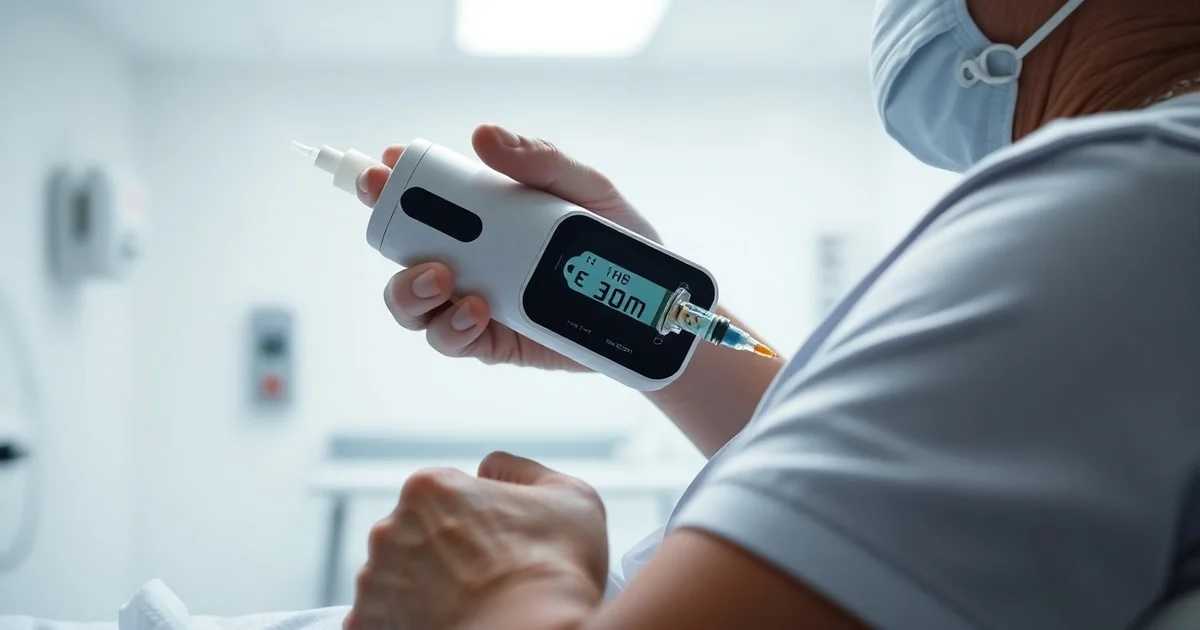
The European Union has marked a significant milestone in oncology, with the recent approval of a new cancer treatment for Multiple Myeloma (MM) that promises to revolutionize patient care and ease the burden on healthcare systems. This pivotal development involves the subcutaneous formulation of isatuximab (Sarclisa), now approved for administration via an innovative on-body injector. This approval offers greater flexibility and convenience for patients battling this complex blood cancer, moving some treatments from clinic-only intravenous infusions to potential at-home administration. The EU approves new cancer treatment for MM with an eye toward improving quality of life and treatment accessibility for a vulnerable patient population.
- EU Approves New Cancer Treatment for MM: A New Era of Accessibility and Convenience
- Understanding Multiple Myeloma: The Disease and Its Challenges
- Sarclisa and the On-Body Injector: A Deep Dive into the Innovation
- The EU Approval Process: Rigor and Responsibility
- Impact on Patients and Healthcare Systems
- Expert Perspectives and Future Outlook
- Conclusion: A Step Forward in Combating Multiple Myeloma
- Frequently Asked Questions
- Further Reading & Resources
EU Approves New Cancer Treatment for MM: A New Era of Accessibility and Convenience
The European Commission's recent decision on June 8, 2026, greenlights the subcutaneous (under the skin) formulation of isatuximab (Sarclisa) across all existing indications for its intravenous (IV) counterpart. This groundbreaking approval also includes the use of the CirCLIQ® on-body injector, positioning it as the first anticancer treatment in the EU to be delivered via such a device. This shift from traditional hospital-based infusions to a more flexible, potentially outpatient or even home-based administration method, represents a substantial leap forward in patient-centered care for multiple myeloma.
Multiple myeloma is an incurable blood cancer, with over 35,000 new cases diagnosed annually in the European Union in 2022. Patients often require repeated and prolonged clinic visits for treatment, which can be physically and emotionally draining. The introduction of the on-body injector seeks to alleviate this burden, offering a less intrusive and more convenient treatment option.
Understanding Multiple Myeloma: The Disease and Its Challenges
Multiple myeloma is a cancer of plasma cells, a type of white blood cell found in the bone marrow. These cancerous plasma cells accumulate in the bone marrow, crowding out healthy blood cells and producing abnormal proteins that can damage organs. The disease is characterized by periods of remission and relapse, often requiring multiple lines of therapy over a patient's lifetime. Each subsequent line of therapy is typically associated with lower response rates and shorter treatment-free intervals, underscoring the critical need for effective and accessible new options.
Historically, treatment for multiple myeloma has relied on a combination of chemotherapy, corticosteroids, immunomodulatory drugs (IMiDs), and proteasome inhibitors (PIs). While significant advancements have improved patient outcomes, many patients eventually relapse, necessitating new therapeutic approaches. The emergence of targeted therapies and immunotherapies, like monoclonal antibodies and CAR T-cell therapies, has transformed the treatment landscape, offering new hope for patients with relapsed or refractory disease.
The Unmet Need in Patient Care
The conventional intravenous administration of many myeloma treatments, including earlier formulations of isatuximab, demands significant time commitment from patients and their caregivers. These infusions require hospital visits, often several hours long, adding to the psychological and logistical stress of managing a chronic cancer. This burden can impact a patient's quality of life, their ability to work, and their overall well-being. Furthermore, the constant demand for clinic space and healthcare personnel for infusions places considerable pressure on healthcare systems.
The drive for innovation in drug delivery systems, such as the on-body injector, directly addresses these unmet needs. By enabling administration outside the traditional clinic setting, it aims to enhance patient autonomy and optimize healthcare resource utilization.
Sarclisa and the On-Body Injector: A Deep Dive into the Innovation
Isatuximab, marketed as Sarclisa by Sanofi, is a monoclonal antibody that targets the CD38 protein, which is highly expressed on the surface of multiple myeloma cells. By binding to CD38, isatuximab works in two primary ways: it directly induces the death of myeloma cells (apoptosis) and activates the immune system to identify and destroy these cancer cells. It has been approved in the EU for several indications in combination with other agents, including for newly diagnosed patients and those with relapsed or refractory disease.
The recent approval by the European Commission focuses on a new formulation and delivery method that fundamentally changes the patient experience. The subcutaneous formulation, delivered via the CirCLIQ® on-body injector, offers several key advantages:
- Reduced Administration Time: Intravenous infusions can take hours, whereas the on-body injector allows for a much quicker administration, freeing up patient and healthcare provider time.
- Increased Convenience: Patients may receive treatment in outpatient settings or, where appropriate and with proper training, even at home. This significantly reduces the need for frequent hospital visits.
- Improved Quality of Life: The flexibility offered by the on-body injector can allow patients to maintain more normal daily routines, reducing disruption caused by their treatment schedule.
- Potential for Healthcare System Efficiency: Less time spent on infusions in hospitals can free up valuable clinic resources, beds, and nursing staff, allowing healthcare facilities to cater to more patients or reallocate resources more effectively.
The approval of the subcutaneous formulation of isatuximab followed positive results from the IRAKLIA phase 3 study and additional supporting studies. This research demonstrated that the on-body injector displayed non-inferior outcomes compared to the intravenous solution, maintaining comparable objective response rates. Importantly, patient preference studies also showed a strong inclination towards the on-body injector due to its convenience.
Broader Advancements: Other Recent EU Approvals for MM
While the Sarclisa on-body injector represents a significant step in patient convenience, other recent approvals are expanding treatment options for multiple myeloma across Europe, demonstrating the dynamism in this therapeutic area.
One notable development is the expanded marketing authorization for ciltacabtagene autoleucel (Carvykti® or cilta-cel), a CAR T-cell therapy. On June 9, 2026, the European Commission approved its use in earlier lines of therapy for patients with relapsed and refractory multiple myeloma. Previously, cilta-cel was approved for patients who had received at least three prior therapies; this extension means it can now be used after just one prior treatment, including an immunomodulatory agent and a proteasome inhibitor, for patients whose disease has progressed and are refractory to lenalidomide. This earlier accessibility for a highly effective, personalized cell therapy offers a substantial benefit, potentially improving long-term outcomes by targeting the disease at an earlier stage of relapse.
Another promising advancement comes from a positive recommendation by the European Medicines Agency's (EMA) Committee for Medicinal Products for Human Use (CHMP) on June 26, 2026. The CHMP recommended the approval of an indication extension for teclistamab (Tecvayli®) in combination with daratumumab for adult patients with relapsed or refractory multiple myeloma who have received at least one prior therapy. Teclistamab is a bispecific antibody that redirects T-cells to attack myeloma cells by targeting both BCMA and CD3 proteins. This combination therapy holds potential as a new standard of care, with clinical trials showing a significant reduction in the risk of disease progression or death.
Furthermore, in July 2025, the EU approved new combinations for belantamab mafodotin (Blenrep) for relapsed/refractory multiple myeloma, offering more options for patients who have already undergone previous treatments. Also, Sanofi's Sarclisa received approval in July 2025 in combination with bortezomib, lenalidomide, and dexamethasone (VRd) for transplant-eligible newly diagnosed multiple myeloma patients, and in January 2025 for transplant-ineligible newly diagnosed patients. These approvals underscore a growing arsenal of treatments aimed at different stages and patient profiles of multiple myeloma.
The EU Approval Process: Rigor and Responsibility
The journey of any new medical treatment, or a new formulation of an existing one, to market in the European Union is a rigorous and multi-step process overseen by the European Medicines Agency (EMA) and ultimately ratified by the European Commission. This ensures that all medicines are safe, effective, and of high quality.
The process typically involves:
- Pre-submission Interactions: Developers engage with the EMA to discuss their development plans and regulatory strategy.
- Marketing Authorization Application (MAA): Companies submit comprehensive data from clinical trials, manufacturing processes, and quality control.
- Scientific Assessment by CHMP: The Committee for Medicinal Products for Human Use (CHMP) conducts a thorough scientific evaluation of the MAA. This committee is composed of experts from across the EU member states. For Sarclisa's subcutaneous formulation, the CHMP issued a favorable recommendation in March 2026, based on the IRAKLIA phase 3 study results.
- Opinion Adoption: Based on the CHMP's assessment, a positive or negative opinion is adopted.
- European Commission Decision: Following a positive CHMP opinion, the European Commission makes the final, legally binding decision on whether to grant marketing authorization, valid across all EU member states. This typically occurs within 67 days of the CHMP's opinion.
The approval of Sarclisa's on-body injector demonstrates the EMA's commitment not only to approving novel therapies but also to fostering innovations in drug delivery that can significantly improve patient experience and logistical aspects of treatment.
Impact on Patients and Healthcare Systems
The approval of the Sarclisa on-body injector for multiple myeloma is poised to have a profound impact across various facets of healthcare.
For Patients:
- Improved Quality of Life: By reducing the need for frequent and lengthy hospital visits, patients gain more control over their schedules and can potentially receive treatment in a more comfortable and familiar environment. This can significantly reduce treatment-related stress and fatigue.
- Greater Autonomy: The option for self-administration, where appropriate and after proper training, empowers patients and their caregivers, fostering a sense of involvement in their own care.
- Reduced Travel Burden: For patients living in rural areas or those with mobility issues, minimizing trips to treatment centers can be life-changing.
For Healthcare Systems:
- Resource Optimization: Shifting some administrations away from infusion centers can alleviate the strain on hospital capacity, freeing up beds, chairs, and specialized nursing staff for other critical needs. This is particularly important in an era of increasing healthcare demands and potential staff shortages.
- Cost Efficiency (Potential): While the initial cost of innovative drugs can be high, streamlining administration processes and reducing hospital overheads associated with long infusion times could lead to long-term cost efficiencies.
- Enhanced Patient Flow: Faster and more flexible administration options can improve overall patient flow within oncology departments, potentially reducing waiting times for other treatments.
While the approval by the European Commission is a crucial step, access to these new treatments often requires subsequent funding decisions by national health authorities in individual EU member states. This means that while the treatment is licensed for use, its availability to patients across the diverse healthcare systems of Europe will still depend on national-level reimbursement policies. Advocacy groups like Myeloma Patients Europe continue to engage with stakeholders to ensure equitable access to such vital innovations.
Expert Perspectives and Future Outlook
The medical community has widely welcomed such advancements. Dr. Mohamad Mohty, Professor of Hematology at Sorbonne University, highlighted the need for innovative approaches to ease the treatment journey for multiple myeloma patients. He noted that the ability to administer an anti-CD38 monoclonal antibody via an on-body injector "represents a meaningful step forward" for patient-centered care and can "reduce pressure on health care systems".
The continuous evolution in multiple myeloma treatment strategies reflects a growing understanding of the disease's biology and the development of highly targeted therapies. Beyond the convenience of delivery, the focus remains on novel agents that offer deeper and more durable responses, particularly for patients with relapsed and refractory disease. The expanded approval of CAR T-cell therapies like cilta-cel into earlier lines of treatment is a testament to this, aiming to intercept disease progression more effectively.
Looking ahead, research continues into bispecific antibodies, which can engage T-cells to kill cancer cells, and other immunotherapies. The pipeline for multiple myeloma treatments remains robust, promising further improvements in patient survival and and quality of life. The trend towards personalized medicine, where treatments are tailored to a patient's specific disease characteristics, will also continue to shape the future of oncology.
Conclusion: A Step Forward in Combating Multiple Myeloma
The recent decision by the European Union to approve the subcutaneous formulation of isatuximab (Sarclisa) with an on-body injector marks a significant leap forward in the treatment paradigm for Multiple Myeloma. This innovation not only reinforces the efficacy of an established anti-CD38 monoclonal antibody but also fundamentally redefines the patient experience by offering unprecedented convenience and flexibility in drug administration. Coupled with the expanded approval of CAR T-cell therapies like cilta-cel for earlier treatment lines and other recent therapeutic advancements, the future for patients battling this complex blood cancer appears brighter. The continued dedication to both novel therapies and improved delivery mechanisms highlights a collective commitment to not only extending lives but also enhancing the quality of life for those living with Multiple Myeloma. This milestone truly exemplifies how the EU approves new cancer treatment for MM to deliver tangible benefits to patients across the continent.
Frequently Asked Questions
Q: What is Sarclisa's on-body injector?
A: Sarclisa's on-body injector is a new subcutaneous delivery system for isatuximab, a monoclonal antibody used in treating multiple myeloma. It allows for quicker, more convenient administration, potentially enabling treatment outside of a traditional hospital setting, thereby improving patient quality of life.
Q: How does this approval impact patients with multiple myeloma?
A: This approval offers significant benefits, including reduced time spent in clinics for infusions, increased flexibility in where and when treatment can be administered, and greater patient autonomy. Ultimately, it aims to lessen the physical and emotional burden associated with managing a chronic cancer.
Q: What other recent advancements have been made in MM treatment in the EU?
A: Beyond the Sarclisa on-body injector, the EU has also expanded approvals for highly effective CAR T-cell therapies like ciltacabtagene autoleucel (cilta-cel) into earlier lines of treatment. Additionally, combination therapies such as teclistamab with daratumumab have received positive recommendations for approval.