Sec. Rubio Begins Key South America Diplomatic Tour for Regional Stability
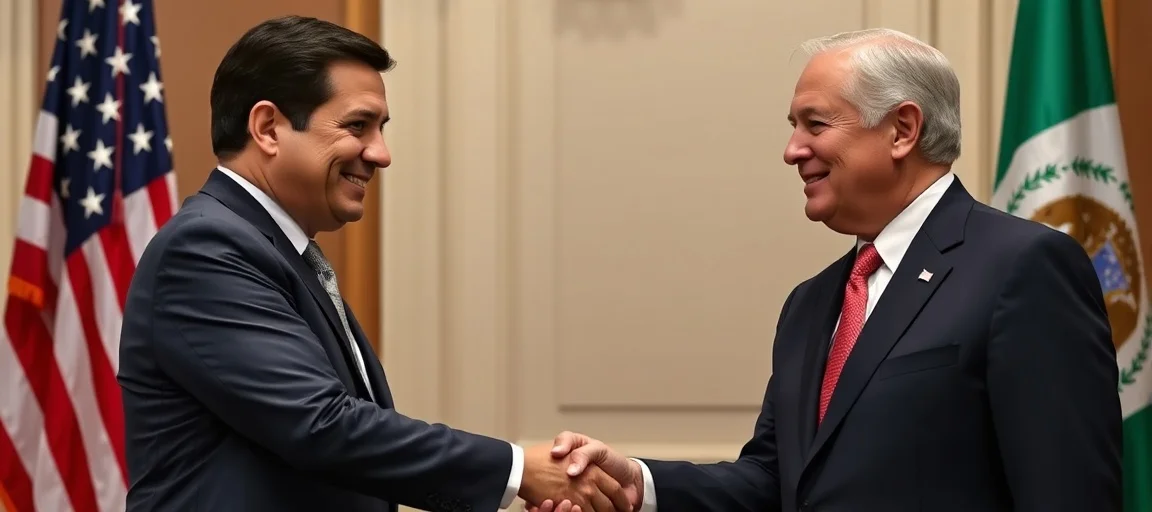
U.S. Secretary of State Marco Rubio recently concluded a pivotal Sec. Rubio Begins Key South America Diplomatic Tour that saw him visit three strategic nations: Colombia, Ecuador, and Peru. This high-stakes diplomatic tour, spanning from September 8 to September 10, 2026, aimed to reinforce Western Hemisphere alliances and address urgent regional challenges, including combating transnational organized crime, strengthening economic partnerships, and countering growing foreign influence to ensure regional stability. The tour underscored the Trump administration's concerted push to deepen security agreements and economic cooperation across the region, particularly with newly elected, ideologically aligned conservative governments.
A Strategic Push for Hemispheric Alignment
Secretary Rubio's recent diplomatic foray into South America represents a significant strategic pivot by the U.S. administration, prioritizing stability and hemispheric alignment in its immediate neighborhood. This three-nation tour to Colombia, Ecuador, and Peru was designed to leverage the recent political shift towards right-wing, U.S.-aligned governments in the region, creating a conducive environment for deeper cooperation on geopolitical goals. Washington seeks to not only deepen security ties but also to attract selective U.S. private investment in strategic sectors, thereby reinforcing critical supply chains and bolstering economic partnerships.
The timing of this tour is particularly noteworthy, following a period where many Latin American nations had tilted leftward, leading to strained relations with previous U.S. administrations. With new leaders in Bogotá, Quito, and Lima expressing strong support for U.S. policies, Secretary Rubio's visit was framed as an opportunity to "restore" ties and cement new alliances. The discussions focused on a broad spectrum of issues, from coordinated defensive strategies against transnational organized crime and drug trafficking networks to expanding commercial cooperation and bilateral trade. This proactive engagement signals a robust commitment from the United States to reaffirm its influence and partnerships in a region of critical importance.
Colombia: Reinforcing a Critical Partnership
Secretary Rubio's first stop was Barranquilla, Colombia, where he met with the newly inaugurated President Abelardo de la Espriella. This meeting was crucial for "restoring" ties after a period of strained relations under the previous administration. President de la Espriella, a self-described Trump-aligned leader, has made rebooting bilateral ties a cornerstone of his foreign policy. Discussions centered heavily on enhanced security cooperation, particularly in counter-narcotics efforts, with Colombia's new leader pledging to aggressively combat drug trafficking.
A significant outcome of this meeting was the signing of a civil nuclear cooperation deal and a critical minerals agreement, signaling a broader economic and strategic alignment between the two nations. Furthermore, Secretary Rubio coordinated the delivery and long-term deployment of U.S. humanitarian assistance and disaster relief funds following a devastating earthquake that recently struck Colombia. This humanitarian gesture underscored the U.S. commitment to supporting Colombia beyond security matters. The visit also saw Colombia join the "Shield of the Americas," a U.S.-led anti-drug coalition aimed at sharing intelligence and coordinating military operations against drug cartels. This move is expected to significantly bolster the country's efforts against armed groups vying for control of drug trafficking territories.
Ecuador: An Aggressive Partner in Counter-Drug Efforts
Following his engagements in Colombia, Secretary Rubio made a crucial stop in Quito, Ecuador, to meet with President Daniel Noboa. Ecuador has emerged as a particularly "aggressive" partner in the U.S. counter-drug push, steadily increasing its counternarcotics operations with the U.S. military. During the visit, Secretary Rubio pledged substantial new security funding, including 10 million initiative specifically targeting illegal gold mining, gang recruitment, and illicit finance.
In a tangible display of support, the U.S. committed to providing Ecuador with a Coast Guard cutter and five interceptor vessels for its navy, adding to the seven already delivered earlier this year. This support is vital for strengthening Ecuador's maritime domain awareness and its capacity to disrupt transnational criminal organizations (TCOs). A pivotal development was the U.S. designation of Los Tiguerones, an Ecuador-based gang, as a foreign terrorist organization, accompanied by sanctions against seven former officials accused of bribery. This move signifies a hardened stance against organized crime and underscores the depth of U.S.-Ecuadorian security cooperation.
Peru: Deepening Economic and Security Ties
The final leg of Secretary Rubio's tour brought him to Lima, Peru, where he engaged with the country's new right-wing President, Keiko Fujimori. This visit aimed to reinforce the enduring partnership between the United States and Peru, particularly as the two nations commemorate 200 years of diplomatic relations. A significant outcome was Peru's decision to join the "Shield of the Americas" (also known as the Americas Counter Cartel Coalition), signaling its commitment to a more aggressive, U.S.-led approach against crime in the Americas. President Fujimori highlighted Peru's past struggles with terrorism, emphasizing the difficulty of confronting criminality today, making the alliance particularly valuable.
Beyond security, the discussions focused on deepening economic ties, migration management strategies, and Pacific trade initiatives. The U.S. expressed its commitment to supporting Peru in managing the consequences of the "El Niño" phenomenon, including the dispatch of a hospital ship. Economic cooperation was a significant theme, with the U.S. and Peru already conducting $29 billion in bilateral trade in goods and services in 2025. The United States reaffirmed its position as a trusted partner for Peru's investment and infrastructure needs, advancing discussions on U.S. investment through the Army Corps of Engineers in the Naval Base of the Port of Callao.
Furthermore, the visit saw the signing of a Memorandum of Understanding on Artificial Intelligence, indicating expanding cooperation in critical technological fields. The U.S. also intends to provide $20 million in FY 2026 Foreign Military Financing to support Peru's F-16 program, reflecting the strength of the U.S.-Peru military-to-military partnership. A key aspect of Rubio's engagement in Peru was encouraging the country to reconsider its economic ties with China, with Rubio openly accusing China of "predatory practices" in the Western Hemisphere, particularly regarding Peru's Chinese-built Port of Chancay mega-project.
Key Objectives of Sec. Rubio's Diplomatic Tour
The diplomatic tour undertaken by Sec. Rubio Begins Key South America Diplomatic Tour was meticulously planned around several core objectives, each designed to strengthen U.S. interests and partnerships in the Western Hemisphere. These objectives reflect a comprehensive approach to regional challenges, balancing security imperatives with economic growth and democratic stability.
Combating Transnational Organized Crime and Narcoterrorism
A central pillar of Secretary Rubio's tour was the intensified fight against transnational organized crime (TCOs) and narcoterrorism. The "Shield of the Americas," or the Americas Counter Cartel Coalition (ACCC), emerged as a focal point, with both Colombia and Peru joining the U.S.-led alliance. This coalition advocates for a more militarized stance, involving intelligence sharing and coordinated military operations against drug cartels and other illicit networks. The administration has increasingly pivoted U.S. foreign policy towards expanding military operations on land and at sea to degrade "narco-terrorist" groups, including the ten designated foreign terrorist organizations operating in the Andean countries.
The U.S. support for special vetted police units in Peru, working closely with law enforcement experts from the FBI, Homeland Security Investigations, and the DEA, exemplifies this commitment. However, this aggressive approach has not been without controversy. In Colombia, President de la Espriella's hardline stance, which includes ending peace talks and expanding bombings on armed groups, has drawn criticism over civilian deaths and the public display of bodies of alleged criminals. This raises human rights concerns amidst the expanded U.S. counter-narcotics campaign, highlighting the complex challenges of such operations.
Countering Foreign Influence and Strengthening Economic Partnerships
Another critical objective was to counter the growing influence of "adversarial economic actors" and strengthen U.S. economic partnerships in the region. Secretary Rubio's tour aimed to challenge the "long-term economic leverage gained by foreign competitors," particularly China, whose economic and infrastructural footprints, such as Peru's Chinese-built Port of Chancay, are rapidly expanding. The U.S. seeks to offer an alternative, promoting U.S. investments, securing critical mineral supply chains, and boosting bilateral trade.
The aspiration to finalize "good, solid trade deals" with Colombia, Ecuador, and Peru was explicitly stated by Rubio, indicating a desire to formalize and expand commercial ties. The discussions involved securing supply chain resilience and critical mineral access, which are key priorities for the Trump administration. By leveraging bilateral trade incentives and diplomatic outreach, Washington aims to create a positive environment for U.S. companies and encourage regional governments to prioritize strategic projects with American partners.
Bolstering Democratic Institutions and Migration Management
Beyond security and economics, the tour also focused on strengthening democratic institutions and promoting open-market economies across South America. The U.S. is engaging with ideologically aligned governments to foster greater stability and governance in the region. This includes supporting new leaders who embrace conservative policies on issues like immigration.
A key aspect of this was aligning on shared migration management strategies. In Colombia, for instance, President de la Espriella has vowed to deport thousands of migrants without residence permits, primarily Venezuelans, aligning with the Trump administration's efforts to reduce illegal migration across the Western Hemisphere. Secretary Rubio reiterated the administration's commitment to these efforts, viewing them as crucial for regional stability and security.
Regional Reception and Geopolitical Implications
The reception to Secretary Rubio's diplomatic tour across South America was nuanced, reflecting the complex political landscapes of the host nations and the broader geopolitical currents at play. While the U.S. administration lauded the tour as a success in bolstering alliances with conservative-led countries, the visit also sparked protests and drew criticism in certain quarters.
In Peru, for instance, the visit of U.S. Secretary of State Marco Rubio was met with protests in Lima. This demonstrates a segment of the population's apprehension or disagreement with U.S. policies or the new government's alignment. Similarly, in Colombia, former presidential candidate Iván Cepeda, an ally of the previous progressive administration, criticized Rubio's visit as an "act of surrendering strategic aspects of our sovereignty". This criticism was particularly directed at the signing of agreements concerning the country's mineral and energy wealth and discussions on national security, suggesting a perceived imbalance in the benefits of these new partnerships.
Despite these dissenting voices, regional governments largely expressed mixed expectations, weighing the opportunities for increased U.S. investment and infrastructure backing against the complex diplomatic pressures regarding international alignment and trade policies. The Atlantic Council highlighted that the U.S. is "placing its bets" on Ecuador, pledging significant security funding and military assets, underscoring Washington's strategic priorities. For Peru, U.S. support for combating organized crime and managing the "El Niño" phenomenon is seen as a significant political boost for President Fujimori's nascent administration.
The tour also served as an early audition for Secretary Rubio, whose potential run for president in 2028 is keenly watched. His efforts to shore up his image across the hemisphere, amidst increased scrutiny over a controversial oil deal in Venezuela, underscore the high personal and political stakes involved in such diplomatic endeavors. Analysts like Lee Schlenker from Responsible Statecraft have observed that Rubio's "LatAm pep rally shows the limits of the Donroe Doctrine," suggesting that while political alignment is sought, it doesn't automatically translate into a structural realignment of regional supply chains or unquestioning adherence to U.S. foreign policy dictates.
The Path Forward for U.S.-South America Relations
The recent diplomatic tour led by Secretary Rubio signals a resolute U.S. commitment to re-engaging and strengthening its presence in South America. The emphasis on security cooperation, particularly against narcoterrorism and transnational organized crime, is likely to intensify, backed by material support and intelligence sharing through initiatives like the "Shield of the Americas". This push aims to cement a regional coalition against common security threats, with the U.S. positioning itself as the indispensable partner in these efforts.
Economically, the tour laid the groundwork for enhanced trade deals and strategic investments, particularly in critical minerals and infrastructure. The U.S. administration's goal is to diversify supply chains and offer an alternative to growing Chinese economic influence, though success in fundamentally altering long-standing economic ties will require sustained effort and competitive offerings. The signing of agreements like the civil nuclear cooperation deal with Colombia and the MOU on AI with Peru suggests a broader, long-term vision for technological and strategic partnership.
The tour also highlighted the challenges of balancing bilateral partnerships with broader regional dynamics and sovereign concerns. While the U.S. seeks to bolster democratic institutions and alignment on issues like migration, the varied political reactions, including protests and criticisms of sovereignty, underscore the need for nuanced diplomacy. The long-term impact of this extensive diplomatic tour, initiated by Sec. Rubio Begins Key South America Diplomatic Tour, will depend on the U.S. administration's ability to maintain these alliances, address regional grievances, and demonstrate tangible benefits that resonate beyond ideological alignment.
Frequently Asked Questions
Q: What were the primary objectives of Secretary Rubio's South America tour?
A: Secretary Rubio's diplomatic tour primarily aimed to reinforce U.S. alliances, intensify the fight against narcoterrorism, strengthen economic partnerships, and counter growing foreign influence in the region. The goal was to ensure regional stability and alignment with U.S. geopolitical interests.
Q: Which countries did Secretary Rubio visit during his diplomatic tour?
A: During his three-day diplomatic tour, U.S. Secretary of State Marco Rubio visited three strategic nations in South America: Colombia, Ecuador, and Peru. These visits were crucial for engaging with newly elected, ideologically aligned conservative governments.
Q: How did the tour aim to counter foreign influence in South America?
A: The tour explicitly sought to challenge the "long-term economic leverage gained by foreign competitors," particularly China. Rubio promoted U.S. investments, secured critical mineral supply chains, and discussed trade deals as alternatives to counter what he termed "predatory practices" by other nations.