Sec. Rubio Begins Key South America Diplomatic Tour: Stability Focus
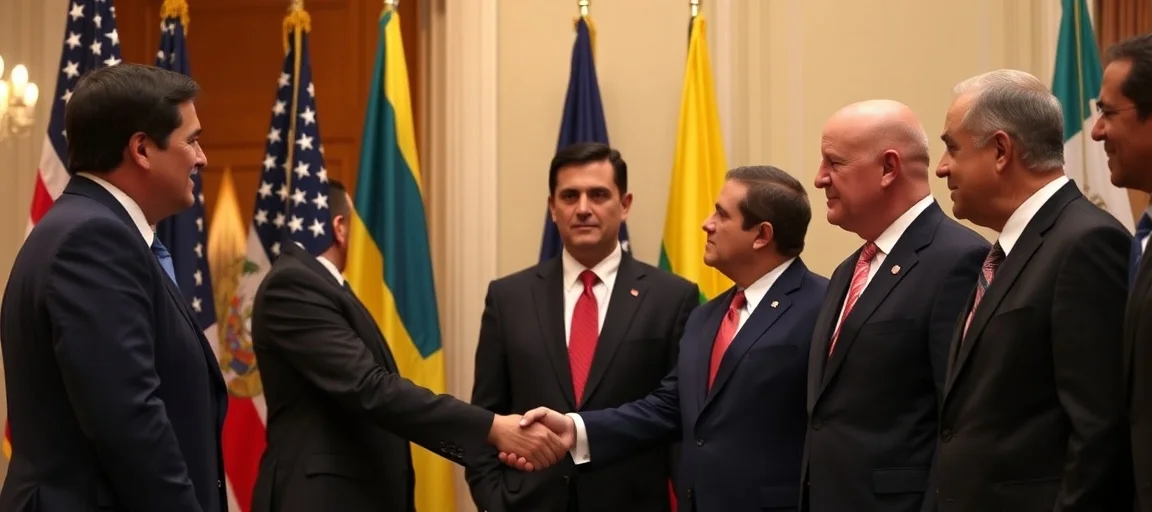
Secretary of State Marco Rubio recently concluded a pivotal diplomatic tour across South America, underscoring the Trump administration's unwavering commitment to strengthening regional alliances and advancing U.S. interests in the Western Hemisphere. The multi-nation visit, encompassing Colombia, Ecuador, and Peru, aimed to reinforce regional stability, bolster democratic governance, expand economic opportunity, and intensify security cooperation against various transnational threats. This intensive engagement highlights how Sec. Rubio Begins Key South America Diplomatic Tour at a critical juncture for U.S. foreign policy, focusing intensely on achieving stability and shared prosperity.
- Sec. Rubio Begins Key South America Diplomatic Tour: Strategic Engagement Across the Continent
- Rebuilding and Strengthening Bilateral Ties
- Countering Extra-Hemispheric Influence: China and Russia
- The "Shield of the Americas" and Enhanced Security Cooperation
- Economic Opportunities and Critical Minerals Diplomacy
- Expert Analysis and Regional Perspectives
- Conclusion: Charting a Course for Hemispheric Stability
- Frequently Asked Questions
- Further Reading & Resources
Sec. Rubio Begins Key South America Diplomatic Tour: Strategic Engagement Across the Continent
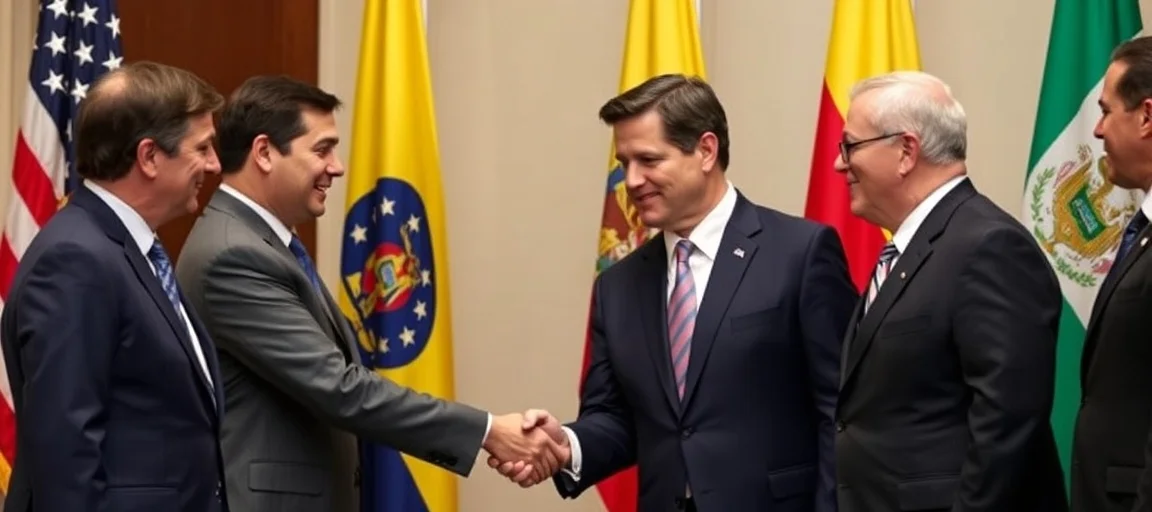
Secretary of State Marco Rubio embarked on a comprehensive three-day, three-country tour from September 8-10, 2026, visiting key U.S.-aligned nations: Colombia, Ecuador, and Peru. The overarching goals of this high-level diplomatic initiative were multifaceted, centering on bolstering counter-narcotics efforts, enhancing regional security, facilitating robust trade and economic engagement, and strategically countering the growing influence of extra-hemispheric actors like China and Russia. This tour represents a clear manifestation of the Trump administration's "muscular approach" to the region, reasserting U.S. dominance and seeking to convert political alignment into enduring regional cooperation.
Rubio's itinerary was carefully calibrated to engage with recently elected conservative leaders who have expressed support for President Trump's foreign policy stances. The diplomatic push sought to solidify existing partnerships and forge new avenues for collaboration on issues ranging from combating illicit trafficking and illegal immigration to securing critical mineral supplies and promoting economic growth. This tour builds on a broader strategy to ensure hemispheric stability, which the U.S. views as a direct driver of its national security outcomes.
Rebuilding and Strengthening Bilateral Ties
Each stop on Secretary Rubio's tour yielded significant announcements and reaffirmed robust bilateral relationships crucial to U.S. foreign policy objectives.
Strengthening Bonds with Colombia
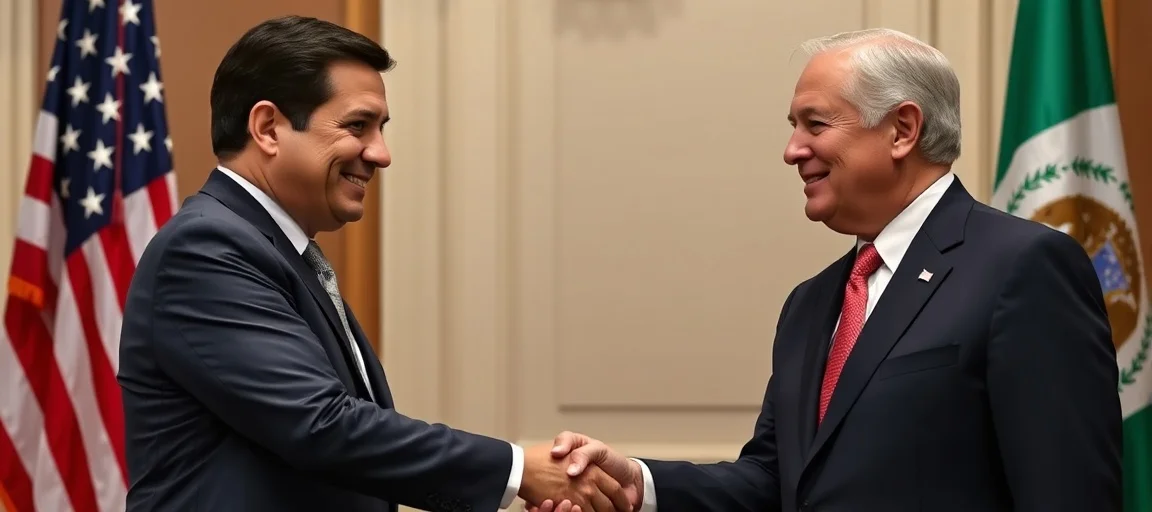
In Colombia, Secretary Rubio met with President Abelardo de la Espriella in Barranquilla on September 8. This meeting was pivotal in signaling that the U.S.-Colombia relationship is "back on track" after a period of strained ties under the previous Colombian government. President de la Espriella has made rebooting bilateral relations a cornerstone of his foreign policy, aligning closely with U.S. priorities on drugs, immigration, and energy.
Discussions primarily focused on combating drug trafficking and enhancing security cooperation. Colombian Foreign Minister Omar Bula emphasized that Rubio's visit marked the beginning of "rebuilding a strategic alliance" with the United States, focusing on security, trade, and the defense of "shared values." A significant outcome of this visit was the signing of agreements to deepen cooperation on civil nuclear energy and critical minerals, with plans to accelerate projects through public and private financing. President de la Espriella also brought Colombia into the "Americas Counter Cartels Coalition," a U.S.-led initiative to confront transnational criminal organizations.
Bolstering Security in Ecuador
Secretary Rubio made a brief but impactful stop in Quito, Ecuador, where he met with President Daniel Noboa. Ecuador has become a crucial partner in U.S. counter-narcotics operations, with its government steadily increasing cooperation with the U.S. military. Rubio underscored the U.S. commitment to strengthening Ecuador's security capabilities, pledging to seek $45 million in new security funding from Congress.
Further commitments included the transfer of a Coast Guard cutter and five interceptor vessels for Ecuador's navy, adding to the seven already delivered in 2026. Demonstrating a firm stance against organized crime, the U.S. designated Los Tiguerones, an Ecuador-based gang, as a foreign terrorist organization and sanctioned seven former officials accused of bribery, barring them from entering the United States. Rubio characterized Ecuador as one of the United States' closest security partners in the region, indicating a desire for expanded economic and military opportunities.
Solidifying Partnership with Peru
The final stop on the tour was Lima, Peru, where Secretary Rubio met with the country's new right-wing president, Keiko Fujimori, marking 200 years of diplomatic relations between the two nations. A landmark announcement from this visit was Peru's decision to join the "Shield of the Americas," also known as the Americas Counter Cartel Coalition. President Fujimori lauded this opportunity, recognizing the challenges of confronting criminal organizations that disregard national borders.
The U.S. reinforced its enduring partnership through a comprehensive security assistance package for Peru. This included the transfer of two King Air 360ER Beechcraft aircraft to the Peruvian Navy, a 20 million in FY 2026 Foreign Military Financing to support Peru's F-16 program, building on its recent Major Non-NATO Ally designation. Beyond security, discussions encompassed U.S. investment through the Army Corps of Engineers in the Naval Base of the Port of Callao, unlocking new opportunities in Peru's critical minerals sector, and advancing space cooperation and technology innovation, including the signing of a Memorandum of Understanding on artificial intelligence.
Addressing Venezuela's Political Transition and Energy Interests
A significant aspect of the Trump administration's broader South America strategy, which Secretary Rubio has been instrumental in shaping, involves Venezuela. Just prior to his South America tour, Secretary Rubio defended a massive U.S. oil deal with Venezuela, announced by President Trump, which granted rights to the private company North American Blue Energy Partners (NABEP) over 17 Venezuelan oil fields with estimated reserves exceeding 65 billion barrels. Rubio asserted that this agreement would benefit the Venezuelan people by generating royalties and income, ultimately through a democratically elected government, and would directly address the inefficiency of previous operators, including Chinese and Russian companies.
This energy deal follows a U.S. military operation in January 2026 that resulted in the capture of then-leader Nicolás Maduro and the installation of Delcy Rodríguez as acting president, with the U.S. playing an active role in facilitating a democratic transition. Secretary Rubio has been tasked with managing relations and leading talks with the Venezuelan government, announcing in July that a process of democratic transition would begin in early August. He emphasized that the U.S. role is to support and facilitate a peaceful democratic transition, not to dictate political outcomes. Key to this transition are the establishment of independent electoral authorities, a free and open press, and secure elections, all crucial for rebuilding democratic institutions after years of authoritarian rule.
Countering Extra-Hemispheric Influence: China and Russia
A consistent theme throughout Secretary Rubio's diplomatic engagements was the U.S. strategy to limit and counter the expanding "malign influence" of China and Russia in the Western Hemisphere. Rubio explicitly pointed to Venezuela's oil fields, noting their previous domination by Chinese and Russian entities, which he argued "never turned them into anything." The new U.S. oil deal, therefore, is positioned as a direct challenge to this influence, aiming to redirect resources and benefits towards the Venezuelan populace rather than adversaries.
The Trump administration's "Trump Corollary" to the Monroe Doctrine, outlined in the 2026 National Defense Strategy, explicitly reasserts U.S. dominance in the hemisphere, with a clear aim to push out Chinese economic influence and crush narco-terrorist networks. The U.S. seeks to promote itself as a trusted partner, offering credible economic alternatives to China's dual-use infrastructure strategy, particularly in strategic sectors like ports, telecommunications, energy, and logistics. This involves not only direct U.S. investment but also supporting partner capacity building to secure critical infrastructure and supply chains against foreign interference.
The "Shield of the Americas" and Enhanced Security Cooperation
A cornerstone of the U.S. security strategy in the region, heavily promoted during Rubio's tour, is the "Shield of the Americas," also known as the Americas Counter Cartel Coalition (ACCC). This alliance, formed in March 2026, involves 13 countries in the Americas committed to undertaking intelligence, security, and even military actions against transnational criminal organizations. Peru's decision to join this multilateral coalition was a significant development during Rubio's visit to Lima.
The coalition's mission is to confront formidable threats posed by narco-terrorist organizations, which in many cases possess more financial resources and better military equipment than the states they operate within. President Trump has urged regional leaders to "unleash the power" of their militaries against these cartels, framing them as a national security threat that traditional law enforcement alone cannot handle. The U.S. commitment extends to providing partners with equipment, intelligence, and specialized training, while also maintaining the ability to take decisive unilateral action if necessary.
Economic Opportunities and Critical Minerals Diplomacy
Beyond security, Secretary Rubio's tour placed a strong emphasis on expanding economic opportunities and deepening trade relations across South America. The signing of critical minerals agreements with both Colombia and Peru highlights a strategic push to secure vital resources and diversify supply chains away from adversarial nations. These agreements call for financing mining and processing projects and supporting them through loans, insurance, equity investments, and streamlined permitting.
The U.S. is also advancing discussions on significant infrastructure investments, such as through the Army Corps of Engineers in Peru's Naval Base of the Port of Callao. This not only reinforces security ties but also positions the United States as a trusted partner for regional investment and infrastructure development. Furthermore, initiatives like the 29 billion in bilateral trade in 2025.
Expert Analysis and Regional Perspectives
Foreign policy experts have weighed in on the significance of Secretary Rubio's tour, acknowledging the administration's concerted effort to leverage political alignment with new governments in Latin America into tangible regional cooperation. Analysts from institutions like the Atlantic Council noted that the visits aimed to advance shared priorities and signal that relationships with countries like Colombia are "back on track." The pledge of new security funding for Ecuador and Peru's entry into the Shield of the Americas are seen as concrete steps toward strengthening regional stability.
However, the tour was not without its critics. Some regional observers and former U.S. diplomatic officials suggested that Rubio might be "avoiding the hardest issues" in the region, such as the controversies surrounding the U.S. oil deal with Venezuela. Questions have also been raised regarding the legitimacy of the Venezuela deal, negotiated with an interim government following a U.S. military operation. In Colombia, some opposition figures voiced concerns that agreements on mineral and energy wealth, alongside security matters, could represent an "act of surrendering strategic aspects of our sovereignty." Despite these criticisms, the overall sentiment points to a renewed U.S. focus on Latin America, aiming to secure interests and counter rival influences.
Conclusion: Charting a Course for Hemispheric Stability
Secretary of State Marco Rubio's diplomatic tour across Colombia, Ecuador, and Peru underscores the Trump administration's strategic prioritization of the Western Hemisphere. The visit solidified critical security and economic partnerships, advanced the fight against transnational criminal organizations through initiatives like the "Shield of the Americas," and laid the groundwork for enhanced trade and investment. By actively engaging with U.S.-aligned leaders and addressing pressing regional challenges, from Venezuela's political transition to countering Chinese and Russian influence, the United States is charting a course for greater hemispheric stability and prosperity. The outcomes of this tour will undoubtedly have lasting implications for the region, reinforcing the enduring significance of how Sec. Rubio Begins Key South America Diplomatic Tour.
Frequently Asked Questions
Q: What was the primary objective of Sec. Rubio's South America tour?
A: The tour aimed to reinforce regional stability, strengthen democratic governance, expand economic cooperation, and intensify security efforts against transnational threats, particularly countering drug trafficking and extra-hemispheric influence.
Q: Which countries did Secretary Rubio visit on this diplomatic tour?
A: Secretary Rubio visited three key U.S.-aligned nations in South America: Colombia, Ecuador, and Peru, engaging with their respective presidents and foreign ministers.
Q: How did the tour address the influence of China and Russia in the region?
A: The tour emphasized countering their "malign influence" by promoting the U.S. as a trusted economic and security partner, offering alternatives to Chinese investment, and reasserting U.S. dominance in the hemisphere.