Iran Announces 'Exclusion Zone' in Strait of Hormuz: A New Maritime Standoff
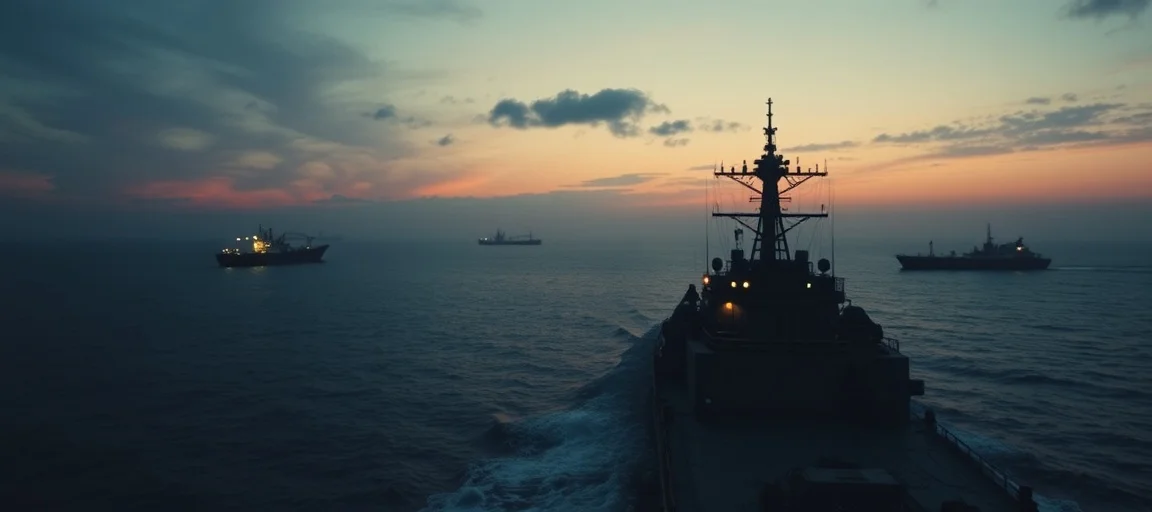
In a move set to significantly escalate regional tensions and potentially reshape global maritime dynamics, Iran Announces 'Exclusion Zone' in Strait of Hormuz, a critical choke point for international oil shipments. This declaration, made by Tehran's Revolutionary Guard Corps, has immediately drawn sharp international reactions and raised concerns among major world powers and shipping entities. The announcement of a new maritime standoff in this vital waterway underscores the volatile geopolitical landscape of the Middle East and its far-reaching implications for global trade and energy security.
- Understanding the Strait of Hormuz
- Iran Announces 'Exclusion Zone' in Strait of Hormuz: Key Details of the Announcement
- International Reactions and Diplomatic Fallout
- Implications for Global Shipping and Oil Markets
- Historical Precedents and International Law
- Potential Ramifications and Future Outlook
- Conclusion
- Frequently Asked Questions
- Further Reading & Resources
Understanding the Strait of Hormuz
The Strait of Hormuz is one of the world's most strategically important waterways, connecting the Persian Gulf with the Arabian Sea and beyond. For decades, this narrow stretch of water, approximately 21 miles (33 kilometers) wide at its narrowest point, has been a critical artery for global energy markets. A substantial portion of the world's seaborne oil and liquefied natural gas (LNG) transits through the Strait, making any disruption a matter of international concern. Its geographical position, bordered by Iran to the north and Oman and the United Arab Emirates to the south, inherently places it at the center of regional power dynamics.
Geographical and Economic Significance
Geographically, the Strait is a bottleneck, presenting inherent challenges for navigation, especially for large tankers. The internationally recognized shipping lanes, known as the Traffic Separation Scheme (TSS), dictate the movement of vessels through the Strait to prevent collisions. Economically, its significance cannot be overstated. Roughly one-fifth of the world's total petroleum liquids consumption and about one-third of the world's LNG trade passed through the Strait in recent years. This includes nearly all oil exports from Saudi Arabia, Iran, Iraq, Kuwait, Qatar, and the United Arab Emirates. Any threat to the free flow of navigation through this Strait therefore has immediate and profound implications for global energy prices and the stability of the world economy.
Historical Context of Tensions
The Strait of Hormuz has a long history of geopolitical friction. During the Iran-Iraq War in the 1980s, it became a battleground, leading to the "Tanker War" where both sides attacked commercial shipping. More recently, tensions have flared periodically, often linked to international sanctions against Iran, its nuclear program, and regional proxy conflicts. Incidents involving the seizure of tankers, alleged attacks on shipping, and military exercises by Iran have repeatedly highlighted the Strait's vulnerability and its role as a flashpoint. The presence of naval forces from various international powers, including the U.S. Fifth Fleet, further underscores its strategic importance and the continuous efforts to ensure safe passage.
Iran Announces 'Exclusion Zone' in Strait of Hormuz: Key Details of the Announcement
The recent declaration by Iran establishes what it terms a "maritime exclusion zone" within its territorial waters in the Strait of Hormuz. While specific coordinates and enforcement protocols are still emerging, initial reports suggest that the zone would require prior notification and potentially authorization for certain types of vessels intending to traverse Iranian-claimed waters. The commander of Iran's Revolutionary Guard Corps (IRGC) Navy, Admiral Alireza Tangsiri, stated that the move is intended to enhance national security and ensure stability in the region, particularly in response to what Iran perceives as provocative foreign military presence.
Stated Justifications by Tehran
Tehran's official justification for establishing the exclusion zone centers on its sovereign right to control its territorial waters and protect its national interests. Iranian officials have frequently voiced concerns over the presence of non-regional military forces, particularly those of the United States, in the Persian Gulf, characterizing their presence as destabilizing. They argue that the exclusion zone is a defensive measure aimed at preventing unauthorized entry into sensitive areas and deterring potential threats. Furthermore, Iran often frames such actions as necessary responses to perceived external pressures and sanctions, asserting its ability to project power and secure its maritime borders.
Ambiguity and Lack of Specificity
A critical aspect of the announcement is the current ambiguity surrounding its precise implementation. Details such as the exact geographical boundaries of the exclusion zone, the types of vessels affected, the notification procedures, and the consequences for non-compliance remain largely unclarified. This lack of specificity has added to the international community's concern, as it leaves room for interpretation and potential miscalculation. It is unclear if the zone would apply to all international shipping or specifically target military vessels, and how it would interact with existing international maritime law, particularly the right of transit passage through international straits.
International Reactions and Diplomatic Fallout
The announcement has triggered a swift and largely condemnatory response from the international community. Major maritime powers, including the United States, the United Kingdom, and several European Union member states, have expressed serious concerns regarding the legality and potential implications of Iran's declaration.
Responses from Key Global Powers
The United States Department of Defense issued a statement affirming its commitment to freedom of navigation in international waters and warning against any attempts to impede lawful commerce. U.S. officials reiterated that the Strait of Hormuz is an international waterway, crucial for global trade, and that any unilateral declaration attempting to restrict passage would be a violation of international law. The United Kingdom's Foreign Office also condemned the move, calling it an unacceptable escalation that undermines regional and global stability. Concerns were also raised by China and Russia, though their reactions were more nuanced, urging all parties to exercise restraint and resolve disputes through dialogue.
Impact on Regional Allies and Neighbors
For regional allies and neighbors, particularly Saudi Arabia and the United Arab Emirates, the announcement is seen as a direct threat to their economic interests and security. Both nations rely heavily on the Strait for their oil exports and have historically viewed Iranian actions in the waterway with deep suspicion. The declaration could exacerbate existing rivalries and potentially lead to further militarization of the Gulf region. Diplomatic channels between these nations and Iran, already strained, are likely to face increased pressure. Oman, which shares control of the Strait with Iran, is in a particularly delicate position and is expected to play a mediating role, urging de-escalation.
Implications for Global Shipping and Oil Markets
The establishment of an exclusion zone, even if selectively enforced, introduces a new layer of uncertainty and risk for global shipping and has immediate repercussions for oil markets. Shippers now face the prospect of navigating a more complex and potentially hazardous environment, leading to increased insurance premiums and operational costs.
Potential Disruptions to Oil Flow
The primary concern is the potential for disruptions to the flow of oil. Any significant impediment to transit through the Strait of Hormuz could send shockwaves through the global energy market. Even a perceived threat of disruption can cause oil prices to spike, impacting economies worldwide. Major oil importers, particularly in Asia, are highly dependent on reliable passage through the Strait, making them vulnerable to such geopolitical maneuvers. Diversion of shipping routes, while possible for some cargo, is largely impractical for the sheer volume of oil and gas transiting the Strait, and would entail significantly increased costs and transit times.
Increased Insurance Premiums and Shipping Costs
In response to heightened risk, marine insurance providers typically increase premiums for vessels operating in areas deemed hazardous. The declaration of an "exclusion zone" is almost certain to trigger such increases for all shipping passing through the Strait of Hormuz. These additional costs would ultimately be passed on to consumers, contributing to higher prices for goods and energy globally. Shipping companies may also consider re-routing vessels, if feasible, to avoid perceived risks, leading to longer journeys and further operational expenses. The cumulative effect could place significant strain on supply chains and global trade networks.
Historical Precedents and International Law
Understanding the legality of Iran's declaration requires examining historical precedents and principles of international maritime law. The Strait of Hormuz is governed by the United Nations Convention on the Law of the Sea (UNCLOS), which guarantees the right of "transit passage" through straits used for international navigation.
The Right of Transit Passage
UNCLOS Article 38 defines "transit passage" as the exercise of freedom of navigation and overflight solely for the purpose of continuous and expeditious transit between one part of the high seas or an exclusive economic zone and another part of the high seas or an exclusive economic zone. This right applies to all ships and aircraft, including warships and military aircraft, and cannot be suspended. Coastal states bordering such straits are permitted to adopt laws and regulations relating to transit passage, but these must not hamper, impair, or suspend transit passage. Iran, while not a signatory to UNCLOS, has historically adhered to many of its provisions as customary international law. Its past actions and statements have often acknowledged the principle of freedom of navigation in the Strait.
Previous Exclusion Zones and Their Repercussions
Historically, states have declared various types of zones for national security or environmental protection, such as naval exercise zones or fishing exclusion zones. However, declaring an "exclusion zone" in an international strait, especially one vital for global commerce, is highly contentious under international law. While a state has full sovereignty over its territorial waters (typically up to 12 nautical miles from its baseline), the right of transit passage through international straits is a fundamental exception to this sovereignty. Previous attempts by states to unilaterally restrict passage in such vital waterways have met with strong international condemnation and often failed to gain widespread recognition or enforcement without significant international friction.
Potential Ramifications and Future Outlook
The current situation carries several potential ramifications, ranging from diplomatic stalemates to possible military confrontations, and will undoubtedly shape the future outlook for regional security.
Escalation Scenarios
One of the most immediate concerns is the potential for miscalculation and accidental escalation. With increased military presence and heightened tensions, the risk of an incident – a collision, a perceived hostile maneuver, or an accidental discharge – rises significantly. Such an incident could quickly spiral into a broader confrontation, drawing in regional and international actors. The declaration of an exclusion zone creates a legal ambiguity that could be exploited or misinterpreted, further increasing the potential for conflict.
Diplomatic Avenues and Negotiations
Despite the strong condemnations, diplomatic avenues are likely to be pursued in parallel with military posturing. International bodies, such as the United Nations, and regional forums may become platforms for negotiation. Oman, with its historical role as a mediator between Iran and Western powers, could again play a crucial part in defusing tensions. The goal of such diplomatic efforts would be to seek clarification from Iran, establish agreed-upon protocols for navigation, and ultimately ensure the continued unimpeded flow of international commerce through the Strait. However, given the deep-seated mistrust and differing strategic objectives, these negotiations are likely to be protracted and challenging.
Impact on Regional Stability
Beyond the immediate concerns for shipping, the declaration of an exclusion zone could have lasting impacts on regional stability. It could embolden other actors to assert similar claims in strategically important waterways, leading to a fragmentation of international maritime norms. It also reinforces the perception of Iran as a disruptive force in the region, potentially leading to increased military buildups by its neighbors and a renewed arms race. The long-term stability of the Persian Gulf, a region already prone to conflict, hangs in the balance.
Conclusion
The unilateral decision by Iran Announces 'Exclusion Zone' in Strait of Hormuz marks a significant and potentially destabilizing development in global geopolitics. While Iran asserts its sovereign rights and security concerns, the international community views this move as a direct challenge to the fundamental principle of freedom of navigation through a vital international strait. The implications for global energy markets, international shipping, and regional stability are profound, demanding a careful and coordinated international response. As the situation unfolds, diplomatic efforts will be crucial to de-escalate tensions and prevent any miscalculations from spiraling into a broader conflict, while safeguarding the critical flow of commerce through the world's most important oil transit choke point.
Frequently Asked Questions
Q: What is the Strait of Hormuz and why is it important?
A: The Strait of Hormuz is a narrow waterway linking the Persian Gulf and Arabian Sea, vital for global energy trade. It carries about 20% of seaborne oil and 33% of LNG, making it a critical choke point for international commerce and energy security.
Q: What does Iran's 'exclusion zone' declaration mean?
A: Iran's declaration creates a "maritime exclusion zone" in its Strait of Hormuz territorial waters, possibly requiring prior vessel notification. This aims to assert sovereignty and deter foreign military, facing international legal challenges under UNCLOS.
Q: How might this impact global shipping and oil prices?
A: The declaration raises uncertainty and risk, likely increasing insurance premiums and shipping costs. Any disruption or threat could cause global oil prices to spike, impacting economies due to the Strait's critical role in energy supply.