US Envoys in Moscow for Ukraine Peace Push: A Diplomatic Gamble
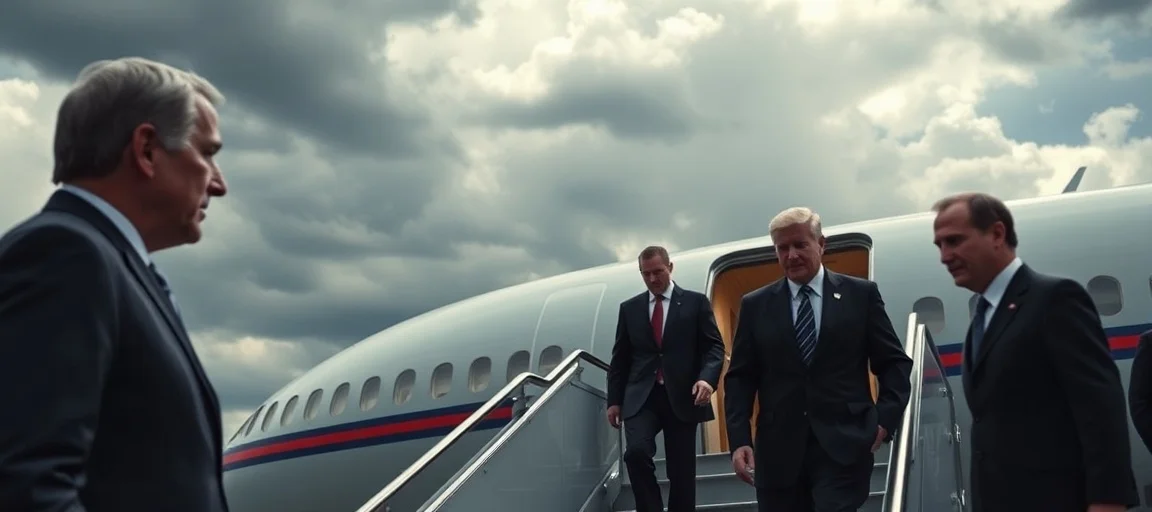
In a pivotal moment for international diplomacy, US envoys in Moscow for Ukraine peace push have arrived, signaling a renewed push by Washington to broker an end to the protracted conflict. Special representatives Steve Witkoff and Jared Kushner landed in the Russian capital on Saturday, September 5, 2026, embarking on a diplomatic gamble aimed at revitalizing stalled peace talks. This high-stakes visit underscores a persistent effort by the United States to navigate the complex geopolitical landscape and seek a resolution to the war, now entering its fifth year. The envoys carry with them a fresh proposal, the specifics of which remain undisclosed, but the mission itself represents a significant diplomatic initiative to bring the warring nations closer to a cessation of hostilities.
- Background and Escalation of the Conflict
- Previous Diplomatic Efforts and Their Stalling
- Key Objectives of the Moscow Talks
- Participants and Their Roles
- International Reactions and Expectations
- The Critical Role of US Envoys in Moscow for Ukraine Peace Push
- Conclusion
- Frequently Asked Questions
- Further Reading & Resources
Background and Escalation of the Conflict
The Russia-Ukraine conflict has ravaged Eastern Europe for over four years, resulting in immense human suffering and widespread destruction. Since Russia's full-scale invasion in 2022, the war has seen periods of intense fighting, territorial shifts, and numerous, often fruitless, attempts at diplomatic resolution. The ongoing hostilities have drawn in global powers, with the United States and its allies providing substantial support to Ukraine, while simultaneously seeking avenues for a peaceful settlement. The current diplomatic landscape is particularly fraught, characterized by deep mistrust and escalating military actions from both sides.
The Protracted Nature of the War
The conflict, now in its fifth year, has witnessed a brutal grinding war with significant casualties reported by both sides. Estimates of killed or wounded range from 1.3 million to 1.8 million, with millions more displaced from their homes, creating one of Europe's largest refugee crises since World War II. The humanitarian toll includes widespread infrastructure damage, food insecurity, and a severe impact on mental health across the region. Economically, the conflict has disrupted global supply chains, particularly for energy and agricultural products, contributing to inflation and economic instability worldwide. Russia currently controls approximately 20 percent of Ukrainian territory, and neither side appears to be on the cusp of an outright military victory, leading to a grim stalemate on the front lines. This prolonged struggle, characterized by trench warfare and missile barrages, has intensified the urgency for a diplomatic breakthrough, as the human and economic costs continue to mount with no clear end in sight.
Recent Escalations Prior to the Visit
Leading up to the envoys' arrival, there has been a notable escalation in aerial attacks. On Friday, September 4, 2026, Russia conducted overnight strikes on Kyiv's two airports and a civilian target in the Dnipro region, killing five people. Ukrainian President Volodymyr Zelenskyy openly accused Russia of these strikes, suggesting they were an attempt to disrupt the impending visit of the US envoys. Furthermore, a Russian drone reportedly struck the headquarters of Ukraine's Security Service (SBU) in Kyiv, a high-profile target, injuring nine individuals. Ukraine, in turn, has continued its long-range strikes deep inside Russian territory, targeting military facilities, oil refineries, and e-commerce hubs in an effort to degrade Russia's war effort and economy. These actions highlight the volatile environment in which the latest diplomatic efforts are being made, underscoring the deep-seated animosity and ongoing military tit-for-tat.
Previous Diplomatic Efforts and Their Stalling
Efforts to mediate a peace deal have been ongoing, with various high-level meetings held over the past year. In January and February 2026, US-mediated talks took place in Abu Dhabi and Geneva, involving delegations from the United States, Ukraine, and Russia. These trilateral meetings, which included Steve Witkoff and Jared Kushner, aimed to address critical issues such as a ceasefire, territorial disputes, and security guarantees for Ukraine. Despite intensive discussions, little concrete progress was made, revealing the profound chasm between the warring parties. For a deeper look into these past attempts, readers can explore the history of diplomatic failures.
Challenges and Setbacks
Despite these previous rounds of negotiations, significant breakthroughs remained elusive. Russian Foreign Minister Sergey Lavrov indicated that the negotiations were far from complete, rejecting "over-enthusiastic perceptions" of progress and dismissing a US-Ukraine 20-point peace plan. The primary sticking points have consistently revolved around Ukraine's territorial integrity and its potential future membership in NATO, issues on which both sides hold firm, seemingly irreconcilable, positions. Ukraine insists on the full restoration of its internationally recognized borders, including Crimea, while Russia has annexed several Ukrainian regions, declaring them Russian territory.
Adding to the complexities, US attention had been significantly diverted over the past six months by a separate conflict: a war with Iran. This shift in focus led to a pause in formal negotiations between Russia and Ukraine, with the two tracks of diplomacy — Middle East stability and European security — seemingly colliding and consuming critical diplomatic bandwidth. The last known visit by Witkoff and Kushner to Moscow before this current trip was in January 2026, signifying a period of diplomatic dormancy in the Ukraine conflict.
Key Objectives of the Moscow Talks
The current visit by US envoys Steve Witkoff and Jared Kushner to Moscow represents a direct attempt to inject new momentum into the stalled peace process. The primary objective is to present a fresh proposal aimed at ending the war, although the details of this plan have not been publicly disclosed.
The US Proposal and Presidential Support
President Donald Trump confirmed sending Witkoff and Kushner, whom he described as "two great negotiators," to "see whether or not we can get something done". Trump expressed optimism, stating, "We have an idea for peace," and affirmed his desire to see an end to the conflict and the losses sustained by both sides. This direct presidential endorsement highlights the significance Washington places on this latest diplomatic initiative. However, Trump also previously suggested that a "personality problem" between President Zelenskyy and President Putin, noting that "They truly hate each other," was a significant impediment to peace, underscoring the delicate nature of the envoys' task.
Ensuring De-escalation During the Visit
A crucial element of the envoys' visit is the effort to de-escalate hostilities, at least temporarily. Ukrainian President Volodymyr Zelenskyy publicly proposed a reciprocal ceasefire for the duration of the American officials' trip, pledging that Ukraine would halt its airstrikes. In a positive, albeit limited, response, Russian President Vladimir Putin ordered a 72-hour pause in strikes on Kyiv, commencing at midnight on Saturday. This temporary lull in attacks is intended to create a conducive environment for discussions, though it remains a fragile arrangement that could easily be disrupted by any perceived provocation or breakdown in trust.
Participants and Their Roles
The diplomatic mission involves key figures from the US, Russia, and Ukraine, each with distinct roles and perspectives that shape the negotiation process.
The US Delegation
Steve Witkoff, the US Special Envoy for peace negotiations, and Jared Kushner, President Trump's son-in-law and a special representative, lead the American contingent. Both have been involved in previous diplomatic efforts related to the conflict and other geopolitical challenges, such as ceasefires in Gaza and Iran. Their presence signifies a direct line to the US presidency and its commitment to finding a resolution, granting them significant authority and leverage in discussions.
The Russian and Ukrainian Leaders
In Moscow, Witkoff and Kushner were met by Russian Presidential Envoy Kirill Dmitriev upon their arrival at Vnukovo International Airport. They are scheduled to meet with Russian President Vladimir Putin later on Saturday. Following their talks in Moscow, the US envoys are expected to travel to Kyiv on Sunday to meet with Ukrainian President Volodymyr Zelenskyy. This direct engagement with both leaders is critical for conveying proposals and understanding each side's positions firsthand, bridging the communication gaps often exacerbated by the conflict itself.
International Reactions and Expectations
The renewed US diplomatic push has garnered attention from the international community, with cautious optimism mixed with significant skepticism given the deep-seated nature of the conflict. Nations across Europe, Asia, and beyond are closely monitoring the developments, hopeful for a sign of de-escalation but wary of previous failures.
Global Perspectives on Peace
Various international actors have consistently called for a peaceful resolution to the Russia-Ukraine war. Russian President Putin himself acknowledged that a number of countries, including the US and China, are ready to support a peace settlement, although he stressed that the ultimate solution must come from Russia and Ukraine themselves. Ukrainian Foreign Minister Andrii Sybiha also expressed hopes for a "new dynamic in the peace efforts". However, the international community is acutely aware of the substantial obstacles that remain, recognizing that mere calls for peace are insufficient without concrete shifts in positions.
Hurdles to Peace
The path to peace is fraught with significant hurdles, many of which stem from fundamental disagreements over sovereignty and security. A major sticking point is Russia's "unshakeable" demand that Ukraine cede the entire territory of four regions claimed by Russia and abandon its plan to join NATO. This position is considered "intolerable" by Ukraine, which has repeatedly ruled out ceding any territory, viewing it as a violation of its sovereignty and a betrayal of its people. Ukraine also seeks firm security guarantees against future Russian aggression, potentially including the deployment of Western peacekeeping forces or ironclad commitments from allies, a complex issue to negotiate. The stark contrast in these fundamental demands, coupled with deep historical grievances and ongoing military actions, presents an immense challenge for negotiators trying to find common ground.
Furthermore, reports from Western intelligence officials suggest that Russian President Vladimir Putin may be more inclined to escalate the conflict than de-escalate it in the near term. This skepticism is fueled by Russia's continued military objectives, including its slow but persistent efforts to take the whole of Ukraine's Donbas region, indicating a strategic rather than purely tactical approach to the war.
Potential Outcomes of the Talks
The immediate outcomes of these talks are uncertain. While a full peace agreement is a long shot, the visit could potentially lead to interim steps. These might include extended ceasefires, discussions on prisoner exchanges, or the establishment of new diplomatic channels that could pave the way for future, more substantial negotiations. Any progress, however small, would be a welcome development in a conflict that has defied previous mediation efforts. The success of this diplomatic gamble hinges on the envoys' ability to bridge the profound differences and find common ground where previous attempts have failed, potentially setting a precedent for future evolving global security dynamics.
The Critical Role of US Envoys in Moscow for Ukraine Peace Push
The presence of the US envoys in Moscow is not merely symbolic; it represents a direct and high-level engagement to explore possibilities for de-escalation and a lasting peace. Their mission extends beyond simply delivering a proposal.
Facilitating Bilateral Discussions
The envoys serve as critical interlocutors, capable of directly conveying messages between President Trump and the leaders of Russia and Ukraine. This direct channel is particularly important given President Trump's assessment of the personal animosity between President Putin and President Zelenskyy, which he views as a hindrance to progress. Witkoff and Kushner's role is to gauge whether progress is possible towards peace and to bridge the communication gaps that may exist. They have engaged in contact with Russian presidential envoy Kirill Dmitriev throughout previous pauses in their visits, indicating a maintained line of communication that could prove vital in crisis situations.
Broader Implications for Geopolitics
The outcome of these talks carries significant implications for broader geopolitics. A successful diplomatic effort could redefine the dynamics of global security, demonstrate the potential for major powers to resolve complex conflicts, and potentially stabilize the volatile Eastern European region. Conversely, a failure could further entrench the conflict, embolden further military action, and deepen geopolitical divisions, impacting alliances and global economic stability. The US's commitment to finding a resolution, even amidst its other international engagements, signals the enduring importance it places on European stability and its role as a global mediator. Experts like George Beebe of the Quincy Institute emphasize that neither Russia nor Ukraine can achieve the necessary assurances to end the fighting without a central role from the United States in negotiations. This reinforces the critical nature of the US envoys' current mission and its global reverberations. For a comprehensive understanding, consider delving into understanding the protracted conflict.
Conclusion
The arrival of US envoys in Moscow for Ukraine peace push marks a crucial juncture in the ongoing Russia-Ukraine conflict. With Steve Witkoff and Jared Kushner leading the diplomatic charge, the United States is making a determined effort to find a path to peace in a war now in its fifth year. While significant obstacles, including Russia's firm territorial demands and the recent escalation of hostilities, remain, the mere act of high-level engagement offers a glimmer of hope. The success of this diplomatic initiative hinges on the ability of all parties to overcome deep-seated mistrust and personal animosities, demonstrating a genuine commitment to de-escalation and a lasting resolution for the millions affected by this devastating conflict. The world watches keenly as these envoys embark on their challenging mission, hoping for a breakthrough that can bring an end to the prolonged suffering.
Frequently Asked Questions
Q: What is the primary goal of the US envoys' visit?
A: The US envoys, Steve Witkoff and Jared Kushner, aim to revive stalled Ukraine peace talks. Their mission is to present a fresh proposal to end the conflict and de-escalate hostilities, with direct backing from President Trump.
Q: Who are the US envoys involved in these talks?
A: The American delegation is led by Steve Witkoff, the US Special Envoy for peace negotiations, and Jared Kushner, President Trump's son-in-law and a special representative. Both have prior experience in diplomatic efforts concerning this and other geopolitical issues.
Q: What are the main obstacles to peace in the Russia-Ukraine conflict?
A: Key hurdles include Russia's demands for Ukraine to cede annexed territories and abandon its NATO aspirations, which Ukraine considers intolerable. Additionally, deep mistrust between President Putin and President Zelenskyy further complicates negotiation efforts.
Further Reading & Resources
- DAWN.COM: Trump envoys land in Moscow for Russia-Ukraine peace push
- ITV News: Putin orders a 72-hour pause in strikes on Kyiv as US envoys arrive in Moscow
- CBS News: Trump's envoys Witkoff and Kushner in Moscow with proposal to end war in Ukraine
- The Moscow Times: U.S. Envoys Witkoff, Kushner Arrive in Moscow for Peace Talks
- The Guardian: Steve Witkoff and Jared Kushner land in Moscow aiming to revive Ukraine talks