Delhi Building Collapse: Arrests & Inquiry Ordered – A Full Report
The city of Delhi is once again grappling with the aftermath of a devastating structural failure, following a recent Delhi building collapse that has shaken its residents and prompted swift action from authorities, leading to arrests and an inquiry ordered. In the wake of this tragic incident, the Delhi Building Collapse: Arrests & Inquiry Ordered have been made as officials vow to hold those responsible accountable. This comprehensive report delves into the specifics of the collapse, the immediate rescue efforts, the legal proceedings initiated, and the broader implications for urban planning and construction safety in the bustling metropolis.
- A Sunday Tragedy in Satya Niketan
- Immediate Response and Rescue Operations
- Delhi Building Collapse: Arrests & Inquiry Ordered
- Judicial Intervention and High-Level Directives
- Background: A Recurring Hazard in Delhi
- Government's Stance and Future Measures
- The Human Cost and Community Impact
- Frequently Asked Questions
- Further Reading & Resources
A Sunday Tragedy in Satya Niketan
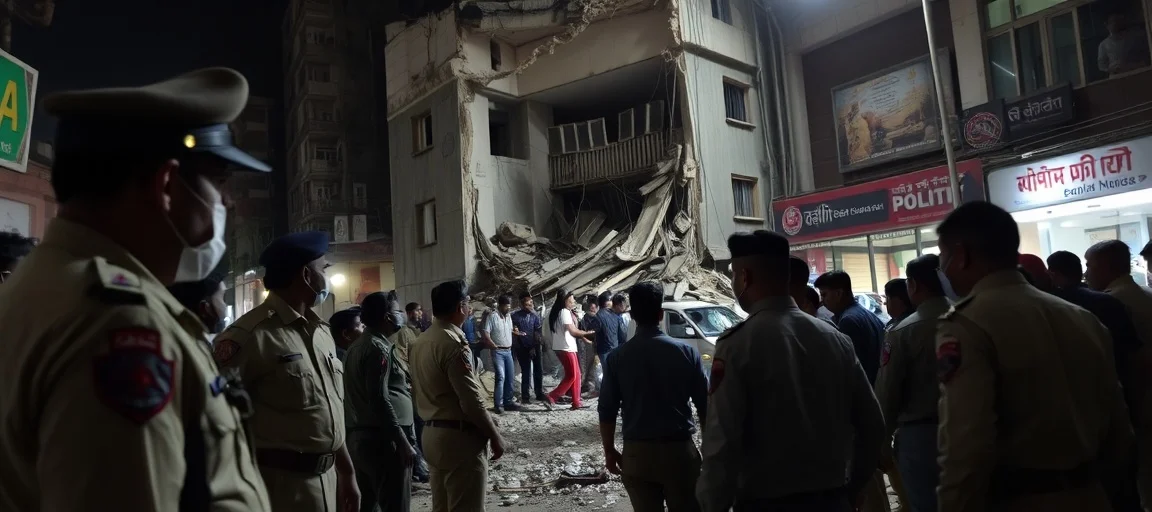
On Sunday, September 6, 2026, at approximately 1:30 PM, a five-storey building in South Delhi’s densely populated Satya Niketan area tragically collapsed, sending shockwaves through the community. The structure, estimated to be between 30 and 50 years old, served as a paying guest (PG) accommodation for male students, located conveniently near Delhi University’s South Campus. The sudden collapse trapped numerous individuals under a mountain of debris, triggering an immediate and frantic rescue operation. Initial reports indicated that several dozen people were living in the building at the time of the incident, raising fears of a high casualty count.
The collapse occurred while repair work was reportedly underway in the building’s basement, a factor now under intense scrutiny. Eyewitnesses and preliminary investigations suggest that accumulated water in the basement, combined with the ongoing construction, may have severely compromised the already aged structure. The building was also alleged to lack proper pillars and beams, with additional floors potentially added without necessary structural reinforcements, contributing to its vulnerability.
Immediate Response and Rescue Operations
Following the catastrophic event, a multi-agency rescue operation was swiftly launched. Teams from the National Disaster Response Force (NDRF), Delhi Police, fire department, and medical services converged on the site, working tirelessly to extract survivors from the rubble. Earthmovers were deployed to clear debris, while rescuers communicated with trapped individuals by phone, offering hope amidst the devastation. The coordinated efforts involved cutting through twisted metal, shoring up unstable sections, and employing specialized canine units to detect signs of life beneath the heavy concrete slabs.
The rescue efforts continued for over 24 hours, culminating in the recovery of 12 individuals who were pulled from the wreckage. Sadly, the death toll from the collapse rose to seven by Monday, September 7, 2026, with post-mortem examinations conducted at AIIMS to identify the deceased. Several of the rescued were hospitalized, with some initially in critical condition. The incident has left families and friends of the victims grappling with immense grief and uncertainty, highlighting the profound human cost of such disasters. Relief efforts included providing temporary shelter and psychological support to those affected, alongside financial aid for the victims' families.
Delhi Building Collapse: Arrests & Inquiry Ordered
In a decisive move to ensure accountability and prevent future tragedies, Delhi authorities moved quickly, issuing the Delhi Building Collapse: Arrests & Inquiry Ordered. The Delhi Police launched a massive search operation, deploying ten teams to apprehend the building’s owner, Hariram Gupta. He was eventually located and arrested in Bhiwadi, Rajasthan, after allegedly attempting to evade capture by switching off his mobile phone and leaving the city.
Further investigations revealed that the property was registered in the name of Hariram Gupta's wife, Urmila Gupta, and was managed and operated by both Hariram and their son, Mahesh Gupta. Consequently, all three—Hariram Gupta (81), Urmila Gupta (75), and Mahesh Gupta (52)—were apprehended and arrested in connection with the case. An FIR was registered against them and others under charges including culpable homicide, negligence in the upkeep of a structure, and endangering the safety of others. The ongoing legal process aims to uncover the full extent of responsibility, including potential conspiracies or systemic failures that allowed such a dangerous structure to operate.
Beyond the immediate arrests, Chief Minister Rekha Gupta underscored the government’s commitment to addressing systemic failures. Within hours of her visit to the collapse site, five officials from the Municipal Corporation of Delhi (MCD) South Zone were placed under suspension. Those suspended include Deputy Commissioner Rakesh Kumar, Superintending Engineer (SE) Ranvir Singh, Executive Engineer (EE) Lalit Kumar Goel, Assistant Engineer (AE) Sunil Chauhan, and Junior Engineer (JE) Ashish Kumar. This swift administrative action signals a clear intention to hold not only private individuals but also government officials accountable for potential negligence. This also indicates a broader crackdown on corruption and dereliction of duty within the civic administration.
Judicial Intervention and High-Level Directives
The gravity of the Satya Niketan collapse quickly drew the attention of the Delhi High Court. On Monday, September 7, 2026, the court expressed deep concern over the safety of students residing in paying guest accommodations and hostels across the capital. The High Court observed that responsibility for such incidents extends beyond building owners to include the concerned authorities who are mandated to discharge statutory duties. Had these duties been properly fulfilled, such tragedies might have been averted. The court emphasized the need for a paradigm shift in how urban safety regulations are perceived and enforced, moving from a reactive to a proactive approach.
In response, the Delhi High Court directed the Municipal Corporation of Delhi to conduct a comprehensive audit of all PG hostels under its jurisdiction within one week. The court also ordered a "high-level" inquiry into the Satya Niketan collapse itself, emphasizing the need for a thorough investigation at the highest executive level of the MCD. Delhi University has also been asked to provide details regarding the number of outstation students and available hostel facilities, highlighting the broader housing crisis that often compels students to seek private, sometimes unregulated, accommodations. This judicial oversight provides an essential layer of accountability, pushing civic bodies to act decisively and transparently.
Background: A Recurring Hazard in Delhi
Building collapses are unfortunately not isolated incidents in India, particularly in rapidly urbanizing areas like Delhi. The period between 2020 and 2024 saw 169 deaths in building collapses across Delhi, part of a national total of 7,874 fatalities. These incidents are frequently attributed to a confluence of factors including poor construction practices, the use of substandard materials, inadequate building designs, structural overloading due to unauthorized additions, and a pervasive lack of regulatory enforcement. Often, buildings are constructed with a disregard for architectural blueprints, leading to compromised load-bearing capacities. The use of inferior quality cement, steel, and aggregates significantly shortens a structure's lifespan and dramatically increases its vulnerability to external stressors.
Often, old structures, like the one in Satya Niketan, undergo unauthorized modifications or additions, such as extra floors, without proper structural assessment. These alterations, driven by economic pressures and a booming demand for housing, place immense strain on original foundations not designed for such loads. Combined with factors like heavy rain and waterlogging during the monsoon season, which can weaken foundations and accelerate the corrosion of rebar, these conditions create a perilous environment. This cycle of illegal construction, neglected maintenance, and environmental stress culminates in catastrophic failures, repeatedly highlighting the urgent need for robust adherence to building codes and rigorous oversight by civic bodies. Without addressing these root causes, Delhi risks facing similar tragedies in the future, perpetuating a cycle of grief and public outrage.
Regulatory Framework and Enforcement Challenges
The Municipal Corporation of Delhi (MCD) is responsible for implementing and enforcing the Delhi Building Bye-Laws, which govern everything from building height and ground coverage to fire safety and structural integrity. However, the effectiveness of these regulations is often hampered by significant challenges in enforcement, leading to widespread illegal construction and modifications that compromise public safety. The sheer volume of unauthorized construction, coupled with a chronic shortage of trained inspection personnel, makes it nearly impossible for the MCD to monitor all developments effectively.
Compounding this issue is the prevalence of corruption, where builders and owners often circumvent regulations through illicit means, undermining the very system designed to protect citizens. Political interference also frequently hampers the demolition of illegal structures or the prosecution of offenders, creating an environment of impunity. Outdated inspection methods, often reliant on visual checks rather than advanced structural assessments, further contribute to the problem. Just weeks before the Satya Niketan tragedy, in late August 2026, the Delhi government had notified amendments to the Delhi Fire Service Rules, introducing an 18-point fire safety framework and clarifying the responsibilities of various authorities, including the MCD and Delhi Development Authority (DDA), for structural audits. While these amendments aim to improve safety, the Satya Niketan collapse highlights that gaps in implementation and enforcement remain a critical concern, indicating a significant disconnect between policy formulation and on-the-ground reality.
Government's Stance and Future Measures
In the aftermath of the collapse, Chief Minister Rekha Gupta issued a strong warning, stating that "anyone found guilty or responsible will not be spared". Beyond the immediate suspensions and arrests, the Delhi government has ordered a city-wide enforcement drive, specifically targeting and sealing all buildings with unauthorized fifth floors. This directive is a direct response to the common practice of illegal vertical expansion that often contributes to structural instability, particularly in older buildings never designed to bear such weight. The enforcement drive will involve detailed surveys and quick action against non-compliant properties, aiming to dismantle the culture of unchecked expansion.
Furthermore, CM Gupta announced that a new policy is being formulated to make periodic structural audits and safety certifications mandatory for all buildings used for public activities. This includes PGs, nursing homes, schools, and other institutions, with a strict mandate that no public activity will be permitted in any such building until its safety is duly certified. This policy aims to create a robust, preventative mechanism, shifting the burden of proof for safety onto building owners and operators. The MCD has also started identifying neighboring structures that may be dangerous, including issuing a three-day demolition notice for an adjacent property found to be in "ruinous and dangerous condition". These comprehensive measures represent a concerted effort to address the root causes of building collapses and enhance urban safety standards across the capital, signifying a serious commitment to preventing future tragedies.
The Human Cost and Community Impact
Beyond the statistics and legal proceedings, the Satya Niketan collapse represents a profound human tragedy. Students, many of whom had moved to Delhi from other parts of the country to pursue their education, found their aspirations shattered. The incident highlights the precarious living conditions many students face in the capital due to a shortage of affordable and safe accommodation options, often forcing them into unregulated and unsafe PGs. The emotional and psychological toll on survivors, families of the deceased, and the wider community is immense, leaving scars that will take years to heal.
The broader community in Satya Niketan and across Delhi is left to grapple with questions of trust in civic governance and the safety of their own homes and workplaces. The incident has sparked protests, with groups like the Cockroach Janta Party (CJP) and ABVP demanding accountability and comprehensive safety audits of all PG hostels. Such collapses erode public confidence and underscore the urgent need for transparency, stringent regulations, and unwavering enforcement to protect lives and livelihoods. The ripple effect of this tragedy extends to property values, local businesses, and the overall sense of security for Delhi's residents, emphasizing that urban development must prioritize human safety above all else.
Frequently Asked Questions
Q: Who was arrested in connection with the Delhi building collapse?
A: The building's owner, Hariram Gupta, his wife Urmila Gupta, and their son Mahesh Gupta were all arrested. Additionally, five officials from the Municipal Corporation of Delhi (MCD) South Zone were suspended for negligence in their duties regarding the upkeep and regulation of such structures.
Q: What caused the Satya Niketan building collapse?
A: Preliminary investigations suggest the collapse was due to a combination of factors, including the building's advanced age (30-50 years), reported ongoing repair work in the basement, accumulated water, and alleged lack of proper structural reinforcements, possibly from unauthorized additional floors. These factors collectively compromised its integrity.
Q: What measures are Delhi authorities taking to prevent future collapses?
A: Authorities have ordered a city-wide enforcement drive targeting unauthorized fifth floors and are formulating a new policy for mandatory periodic structural audits and safety certifications for all buildings used for public activities like PGs and schools. The Delhi High Court also mandated a comprehensive audit of all PG hostels to identify unsafe structures.