US-China AI & Trade Dialogue Continues Amidst Geopolitical Tensions
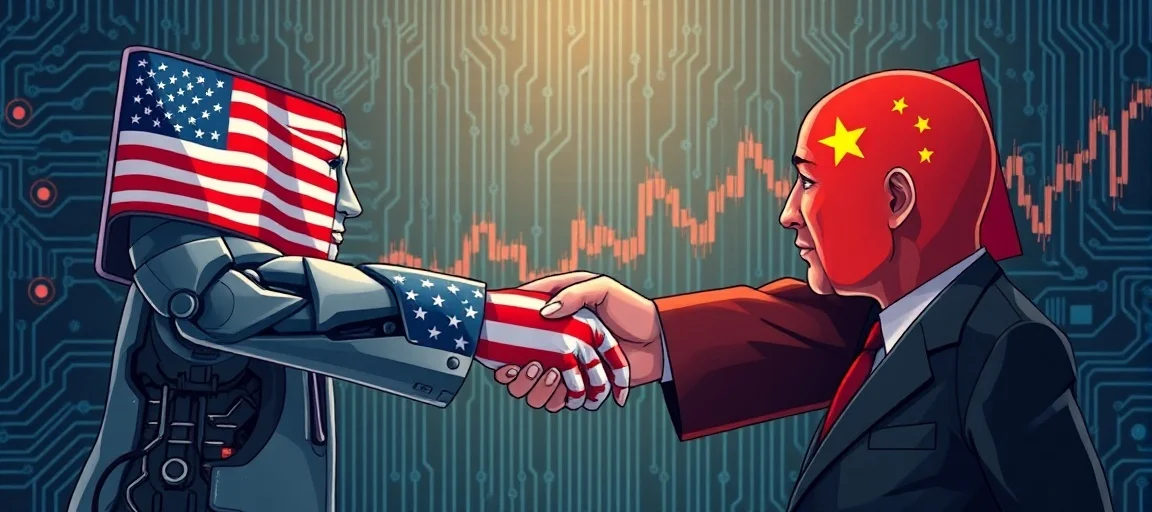
The intricate relationship between the United States and China, marked by both intense competition and necessary cooperation, remains a focal point on the global stage, especially concerning advanced technologies and economic policies. As geopolitical tensions simmer, the US-China AI & Trade Dialogue Continues, reflecting ongoing efforts to manage strategic rivalries and prevent miscalculation in critical sectors. These crucial discussions navigate a complex landscape of national security interests, economic interdependence, and the burgeoning ethical considerations surrounding artificial intelligence, directly impacting global supply chains and technological advancements.
- Navigating the Geopolitical Landscape: The Importance of Dialogue
- Key Areas of Discussion in US-China AI & Trade Dialogue
- Expert Perspectives on the Ongoing Dialogue
- Impact on Global Technology and Trade
- The Path Forward: Challenges and Opportunities
- Conclusion
- Frequently Asked Questions
- Further Reading & Resources
Navigating the Geopolitical Landscape: The Importance of Dialogue
The continuation of high-level dialogue between the United States and China, despite pervasive strategic competition, underscores the recognition by both superpowers of the critical need to manage their relationship responsibly. Discussions frequently encompass a broad spectrum of issues, ranging from trade imbalances and intellectual property rights to human rights and regional security concerns. However, the rapidly evolving field of Artificial Intelligence (AI) has emerged as a particularly sensitive and strategically vital area within these bilateral exchanges. For a broader look at the global landscape, consider our analysis on Geopolitical Risks of the Next Decade.
AI's dual-use nature, with profound implications for both economic growth and military capabilities, makes it a central pillar of national power in the 21st century. Consequently, both nations are keen to assert dominance while simultaneously seeking guardrails to prevent escalatory competition. The ongoing dialogue attempts to balance these competing objectives, aiming for a degree of predictability and stability in a highly unpredictable technological race.
Historical Context of US-China Economic Relations
Historically, the economic relationship between the United States and China has been characterized by deep interdependence, with China serving as a major manufacturing hub and the US as a primary consumer market. This symbiotic relationship propelled global economic growth for decades. However, the last decade has seen a shift, with increasing concerns in the US regarding trade deficits, intellectual property theft, forced technology transfers, and what it perceives as unfair trade practices. These concerns have led to tariffs and other restrictive measures, initiating a period of significant trade friction.
The initial phases of the trade dialogue primarily focused on goods and market access. Over time, as technology became more intertwined with economic and national security, the scope of these discussions broadened significantly. The rise of advanced technologies, particularly semiconductors and AI, has transformed the nature of the debate, injecting new layers of complexity and urgency.
Key Areas of Discussion in US-China AI & Trade Dialogue
The current US-China AI & Trade Dialogue Continues to grapple with several complex and interconnected issues. These discussions are multifaceted, often involving different government agencies and experts from both sides.
Semiconductor Technology and Supply Chains
One of the most critical aspects of the dialogue revolves around semiconductor technology. Semiconductors are the foundational components for all advanced electronics, including AI systems. The US has implemented stringent export controls on advanced semiconductor manufacturing equipment and certain high-end chips to China, citing national security concerns and a desire to curb China's military modernization efforts. This dynamic is a key aspect of what some refer to as the global semiconductor race.
China, in response, has intensified its efforts to achieve self-sufficiency in semiconductor production, pouring vast resources into its domestic industry. The dialogue often addresses the implications of these policies, including their impact on global supply chains, the potential for technological decoupling, and the broader economic ramifications for both nations and their trading partners. Both sides are keenly aware that control over this technology is paramount for future economic and military power.
Data Governance and Digital Sovereignty
Another increasingly important topic is data governance and digital sovereignty. As AI systems rely heavily on vast datasets, the rules and regulations surrounding data collection, storage, transfer, and usage are paramount. The US generally advocates for a more open and interoperable global internet, with an emphasis on data free flow with trust. China, conversely, has implemented stricter data localization laws and cybersecurity regulations, emphasizing national control over data within its borders.
These differing approaches create challenges for businesses operating internationally and raise questions about data security, privacy, and potential government access to sensitive information. The dialogue aims to explore possible common ground or mechanisms for managing these differences to facilitate cross-border data flows while addressing legitimate security concerns.
Ethical Frameworks and Responsible AI Development
Beyond economic and security concerns, the ethical implications of AI are gaining prominence in bilateral discussions. Both the US and China are developing national strategies and frameworks for responsible AI development, addressing issues such as algorithmic bias, transparency, accountability, and the potential for autonomous weapons systems.
While there are differences in philosophical and political approaches, there is also a shared recognition of the need to prevent AI from causing societal harm or leading to unintended consequences. Engaging in dialogue on AI ethics could potentially lead to shared understandings or even collaborative initiatives on certain aspects, though significant challenges remain due to differing values and political systems. Both nations are exploring how to ensure AI serves humanity rather than undermining it, a topic further explored in our piece on the future of AI governance.
Intellectual Property Rights and Technology Transfer
The protection of intellectual property rights (IPR) remains a perennial issue in US-China trade and technology discussions. The US has long expressed concerns about the theft of trade secrets, patent infringement, and forced technology transfers to Chinese companies as a condition for market access. These issues are particularly salient in the high-tech sector, where innovation is a key driver of economic competitiveness.
The dialogue often includes discussions on strengthening IPR enforcement, ensuring a level playing field for foreign companies in China, and addressing systemic issues that may contribute to technology transfer pressures. Progress on these fronts is seen by the US as crucial for fostering trust and encouraging further technological collaboration.
Expert Perspectives on the Ongoing Dialogue
Experts widely acknowledge the complexity and strategic importance of the US-China AI and trade discussions. Many emphasize that while outright decoupling is neither feasible nor desirable for either economy, managing the "de-risking" process and establishing clear boundaries is paramount.
Managing Competition:
Many analysts, such as Dr. Elizabeth Economy of Stanford University, highlight that the dialogue is less about reconciliation and more about "managing an intensely competitive relationship." The goal, she suggests, is to prevent competition from spiraling into conflict, particularly in areas like AI where military applications are significant. The continuous exchange, even if contentious, provides a channel for communication and reduces the risk of miscalculation.
Economic Interdependence vs. National Security:
Others, like Dr. Brad Setser of the Council on Foreign Relations, point to the inherent tension between economic interdependence and national security objectives. He notes that while certain technological restrictions are deemed necessary for national security by the US, they inevitably carry economic costs for both sides and global markets. The dialogue thus becomes a critical forum for both countries to articulate their red lines and explore potential areas where economic interests can align without compromising perceived security.
The Future of AI Governance:
On the AI front, experts like Professor Graham Allison from Harvard Kennedy School often discuss the need for "responsible competition". He argues that a complete absence of dialogue on AI could lead to a dangerous arms race or the development of AI systems without sufficient safeguards. While a comprehensive global AI governance framework might be a distant goal, bilateral discussions lay the groundwork for understanding each other's intentions and potential areas for cooperation on ethical principles. The challenge lies in translating these discussions into concrete, verifiable actions.
The Role of Multilateral Forums
While bilateral dialogue is crucial, many experts also stress the importance of multilateral forums in shaping the future of AI and trade. Organizations like the World Trade Organization (WTO), although facing challenges, provide a framework for addressing trade disputes. Similarly, various international bodies and initiatives are starting to explore global norms for AI governance. The bilateral US-China dialogue often informs, and is in turn influenced by, these broader international conversations, highlighting the interconnectedness of global governance efforts.
Impact on Global Technology and Trade
The outcomes of the US-China AI & Trade Dialogue have profound implications far beyond the two nations involved, significantly shaping the global landscape of technology and trade.
Reshaping Global Supply Chains
The ongoing discussions and resulting policy decisions, particularly concerning semiconductors and other critical technologies, are actively reshaping global supply chains. Companies worldwide are reassessing their reliance on single points of failure and exploring diversification strategies, often referred to as "friendshoring" or "reshoring". This push for supply chain resilience can lead to higher costs in the short term but aims to enhance national security and economic stability in the long run.
The shift impacts industries from consumer electronics to automotive manufacturing, as companies adjust to new trade restrictions and incentives for domestic or allied production. The dialogue's ability to foster stability or exacerbate tensions directly influences the pace and direction of these global supply chain transformations.
Innovation and Technological Competition
The intense technological competition between the US and China, frequently addressed in the dialogue, is a powerful driver of innovation. Both countries are investing heavily in research and development, particularly in AI, quantum computing, and biotechnology. This competition can accelerate technological breakthroughs, but it also raises concerns about potential fragmentation of global technology standards and the creation of separate technological ecosystems.
The dialogue offers a platform to discuss the boundaries of this competition, exploring whether certain foundational research or standards can remain collaborative, or if national security concerns will lead to increasingly divergent technological paths. The balance struck in these conversations will determine whether competition leads to beneficial innovation for all or creates barriers to global scientific progress.
Economic Implications for Developing Nations
Developing nations are particularly vulnerable to the ripple effects of the US-China trade and technology dynamics. They often find themselves caught between the two economic giants, pressured to align with one side or the other, or facing the economic consequences of trade disputes. Restrictions on technology transfer or access to certain markets can impede their own technological development and economic growth.
The dialogue's ability to reduce trade barriers or establish clear, predictable rules can provide a more stable environment for developing economies to thrive. Conversely, an escalation of tensions or a deepening of technological divides could force difficult choices upon these nations, impacting their long-term development trajectories.
The Path Forward: Challenges and Opportunities
The US-China AI & Trade Dialogue Continues to be a critical mechanism for managing one of the most consequential bilateral relationships in the world. While significant challenges persist, the very act of sustained engagement presents both challenges and opportunities.
Persistent Challenges
- Deep-seated Distrust: Fundamental differences in political systems, values, and strategic ambitions fuel a deep-seated distrust that complicates all aspects of the dialogue.
- National Security Imperatives: Both nations prioritize national security, which often dictates policies that clash with economic interdependence and open collaboration, especially in critical technologies like AI.
- Lack of Transparency: Issues like intellectual property enforcement and state subsidies remain opaque, making it difficult to establish a truly level playing field.
- Rapid Technological Advancement: The sheer pace of AI development means that policy and regulatory frameworks often struggle to keep up, adding another layer of complexity to discussions.
Opportunities for Cooperation
Despite these hurdles, opportunities for cooperation, particularly in areas of shared global concern, can still emerge:
- AI Safety and Ethics: Discussions on AI safety, risk mitigation, and ethical guidelines could lead to common principles, especially concerning areas like autonomous weapons or widespread misuse of AI.
- Climate Change and Global Health: These are areas where AI can play a crucial role in solutions, and collaborative efforts, perhaps facilitated by the dialogue, could yield significant global benefits.
- Crisis Management Mechanisms: Continuing dialogue, even on contentious issues, can help establish and refine crisis management mechanisms, reducing the risk of accidental escalation.
- Economic Stability: Finding ways to de-escalate trade tensions and ensure predictable economic environments can benefit both nations and the global economy.
Conclusion
The US-China AI & Trade Dialogue Continues as an indispensable, albeit challenging, endeavor in an increasingly complex geopolitical landscape. These high-stakes discussions, encompassing everything from advanced semiconductor technology to the ethical implications of artificial intelligence, underscore the profound interdependence and strategic competition defining the relationship between the world's two largest economies. While significant divergences remain across national security, human rights, and governance models, the sustained commitment to dialogue provides a vital channel for managing rivalry, preventing miscalculation, and exploring nascent opportunities for cooperation. The outcomes of these ongoing conversations will not only shape the future trajectories of the United States and China but will also profoundly influence the global technological landscape, international trade norms, and geopolitical stability for decades to come.
Frequently Asked Questions
Q: Why is the US-China AI & Trade Dialogue so important?
A: It's crucial because it manages strategic competition between the world's two largest economies, particularly in rapidly evolving and sensitive areas like AI and trade. It aims to prevent miscalculation, ensure global economic stability, and address national security concerns.
Q: What are the main topics discussed in these dialogues?
A: Key areas include semiconductor technology and supply chains, data governance, intellectual property rights, and the ethical development of artificial intelligence. These discussions cover both economic cooperation and strategic rivalry.
Q: How do these dialogues impact global supply chains?
A: The outcomes directly influence global supply chains by prompting companies to reassess dependencies, diversify production, and adapt to new trade restrictions or incentives. This can lead to reshaped manufacturing landscapes and increased resilience.