Blue Octopus Discovered Off Galapagos: A Deep-Sea Marvel Unveiled
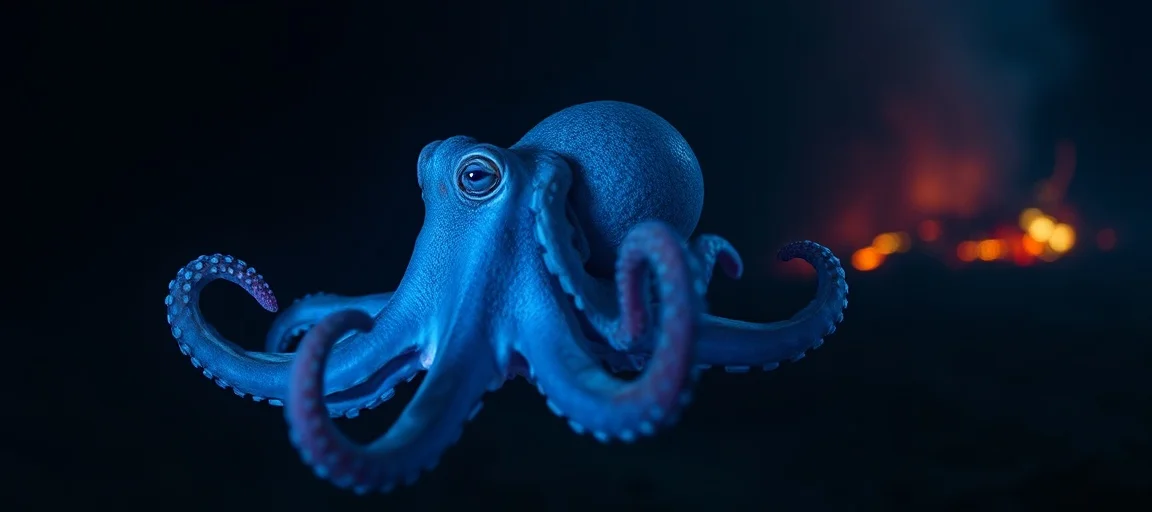
The depths of the Pacific Ocean continue to yield astounding secrets, with marine biologists recently unveiling one of its most captivating finds: a tiny, strikingly blue octopus discovered off the coast of the Galápagos Islands. This remarkable creature, formally identified as Microeledone galapagensis, has stunned the scientific community, not only for its ethereal appearance but also for challenging long-held classifications of its family. The announcement that scientists discover new blue octopus off Galapagos underscores the immense biodiversity still hidden within our planet's deep-sea ecosystems and the critical importance of continued exploration and conservation efforts in these pristine environments. The incredible moment when scientists discovered this new blue octopus was captured on camera, revealing a golf ball-sized cephalopod moving gracefully across the ocean floor near an underwater mountain.
- A Glimpse into the Abyssal Unknown: Scientists Discover New Blue Octopus off Galapagos
- Unraveling the Mystery: The Scientific Process
- A Revision to the Rulebook: Microeledone galapagensis's Unique Classification
- The Deep Sea: A Frontier of Discovery
- Implications for Conservation and Future Research
- Frequently Asked Questions
- Further Reading & Resources
A Glimpse into the Abyssal Unknown: Scientists Discover New Blue Octopus off Galapagos
The initial encounter with this enigmatic blue octopus occurred during a 2015 deep-sea expedition aboard the exploration vessel E/V Nautilus. Researchers from the Charles Darwin Foundation (CDF) and the Galápagos National Park Directorate were utilizing a Remotely Operated Underwater Vehicle (ROV) to investigate the seafloor near Darwin Island, situated at the northern edge of the Galápagos archipelago. At an astonishing depth of nearly 5,800 to 6,000 feet (approximately 1,773 meters) below the ocean surface, the ROV’s cameras transmitted live footage back to the amazed team.
The immediate reactions from the scientists onboard, preserved in expedition audio recordings, perfectly encapsulated the wonder of the moment: "He's tiny!" and "It's blue!". This small, vibrant cephalopod stood out dramatically against the dark, featureless abyssal plain, instantly signaling to the researchers that they had stumbled upon something truly extraordinary. The team successfully collected one female specimen using the ROV, while also managing to record video footage of two other individuals believed to be of the same species, suggesting a localized population rather than a solitary wanderer. This initial sighting marked the beginning of a years-long scientific endeavor to formally identify and describe this captivating new species.
The Enchanting Appearance of Microeledone galapagensis
The Microeledone galapagensis lives up to its name, captivating observers with its distinctive characteristics. This tiny creature is roughly the size of a golf ball, making it one of the more diminutive residents of the deep sea. Its most striking feature, undoubtedly, is its brilliant blue coloration, a hue considered to be among the rarest in nature. This vibrant pigment is not merely an aesthetic marvel; scientists hypothesize it may serve as a crucial survival strategy in its deep-sea environment, though the exact mechanism is still under investigation.
Beyond its captivating color, Microeledone galapagensis possesses several unique morphological traits that differentiate it from other known octopuses. It has a squat, compact body with notably short, stubby arms, each featuring only a single row of suckers. Its skin is remarkably smooth, lacking the typical texture or patterns seen in many other octopus species. These physical attributes, combined with its lack of an ink sac – a common defensive mechanism among cephalopods – initially perplexed researchers trying to classify it. The specific combination of these features ultimately played a vital role in its identification as a distinct and novel species, challenging existing paradigms within cephalopod taxonomy.
Unraveling the Mystery: The Scientific Process
The journey from initial sighting to formal scientific description is often a protracted and meticulous one, especially for deep-sea organisms where specimens are scarce and access is challenging. After the 2015 expedition, the collected specimen and footage were brought to the Charles Darwin Research Station in the Galápagos for initial examination alongside dozens of other deep-sea samples. However, the unusual characteristics of the little blue octopus stumped the local researchers. Recognizing its unique nature, photographs of the specimen were sent to renowned octopus expert Dr. Janet Voight, curator emerita of invertebrates at the Field Museum of Natural History in Chicago.
Dr. Voight immediately recognized the significance of the find, noting, "Right away, I knew it was something really special. I'd never seen anything like it". This marked the beginning of a collaborative effort involving Dr. Voight, marine scientist Salome Buglass (a former researcher at the Charles Darwin Foundation and co-author), and other experts to meticulously analyze and describe the species. The partnership between the Charles Darwin Foundation and the Galápagos National Park Directorate was instrumental in facilitating this crucial research, underscoring the collaborative nature of deep-sea science.
Groundbreaking Technology: CT Scans Reveal Secrets
A significant challenge in describing new species, particularly those with only a single known specimen, is the need to examine internal anatomy without destroying the sample. Traditional methods often require dissection, which would have been an unacceptable loss for such a rare find. Fortunately, modern technology provided a solution: micro-computed tomography (CT) scanning.
Working with Stephanie Smith, the Field Museum's X-ray CT laboratory manager and a co-author on the study, the team was able to create thousands of X-ray images of the octopus. These images were then digitally compiled to construct a detailed 3D model of the creature, revealing its internal organs, including its mouth, beak, and teeth, without ever needing to cut the specimen open. This non-destructive technique proved invaluable, allowing scientists to gather all the necessary data to formally declare Microeledone galapagensis a new species and understand its phylogenetic placement. As Smith eloquently put it, "There's nothing like spending the day looking at something no other human has ever seen". This technological innovation not only preserved a priceless specimen but also exemplified the cutting-edge approaches now vital for deep-sea biodiversity research.
A Revision to the Rulebook: Microeledone galapagensis's Unique Classification
Perhaps one of the most profound impacts of the discovery of Microeledone galapagensis lies in how it challenges existing scientific classifications. The new species belongs to the family Megaleledonidae, a group of octopuses traditionally characterized by their large body size and an exclusive habitat in the cold, remote waters of the Southern Ocean. The tiny, warm-water dwelling, blue Microeledone galapagensis dramatically deviates from both of these defining traits.
This incongruity forces a significant revision of the textbook definition of the Megaleledonidae family. Dr. Voight highlighted this unusual aspect, noting that the closest known octopus of a similar shape typically lives off the coast of Uruguay, in an entirely different ocean on the other side of South America. The presence of this small, tropical member of a predominantly large, Antarctic-associated family indicates a more complex evolutionary history for cephalopods than previously understood. This discovery opens new avenues for research into octopod evolution, biogeography, and adaptation to diverse deep-sea environments. For Dr. Janet Voight, this was a particularly momentous discovery, as it marks the first new octopus species she has officially led a team in describing over her four-decade career studying octopus evolution.
The Deep Sea: A Frontier of Discovery
The discovery of Microeledone galapagensis serves as a powerful reminder of how much of our planet remains unexplored, particularly the vast and enigmatic deep ocean. Scientists estimate that a significant portion of the ocean floor, especially at great depths, has yet to be thoroughly investigated. As Dr. Voight aptly noted, "If you took all the land on Earth and pieced it together, you would not cover the Pacific Ocean. The oceans are so big, and there's so much left to explore".
Deep-sea expeditions, often employing advanced technologies like ROVs and manned submersibles, are constantly uncovering new species and ecosystems, expanding our understanding of marine biodiversity. These discoveries are not isolated incidents; new species of octopus, fish, and invertebrates are regularly found in these hidden realms, highlighting the rich tapestry of life thriving beyond the reach of sunlight. Each new finding contributes a piece to the larger puzzle of global biodiversity, offering insights into evolutionary processes and the resilience of life in extreme conditions. The ongoing efforts to map and explore these abyssal plains are vital for comprehending the full scope of Earth's natural heritage.
The Galapagos: A Hotbed of Endemism and Evolution
The Galápagos Islands are globally renowned as a hotspot of biodiversity, a living laboratory whose unique species famously inspired Charles Darwin's theory of evolution by natural selection. Located off the coast of Ecuador, the archipelago is influenced by a confluence of major ocean currents, including nutrient-rich upwellings of deep water, creating a unique environment where tropical and temperate species coexist. This geographical and oceanographic uniqueness has led to an unparalleled level of endemism, with over a thousand plant and animal species found nowhere else on Earth.
The Galápagos Marine Reserve, established in 1998, protects a vast expanse of ocean surrounding the islands, safeguarding its extraordinary marine life, which includes giant tortoises, marine iguanas, and a high abundance of sharks. The discovery of Microeledone galapagensis adds another incredible chapter to the Galápagos' legacy of unique species. It also demonstrates that even in one of the most studied and protected marine environments on Earth, significant portions of its deep-sea ecosystems remain a mystery, brimming with undiscovered life waiting to be found.
Implications for Conservation and Future Research
The discovery of Microeledone galapagensis carries profound implications for both marine conservation and future scientific endeavors. Firstly, it emphatically underscores the urgent need for continued, robust deep-sea exploration. With so much of the ocean still uncharted, every expedition holds the potential for groundbreaking discoveries that can reshape our understanding of life on Earth. These missions provide critical data on biodiversity, ecosystem functioning, and potential threats to these vulnerable environments.
Secondly, new species like the blue octopus act as powerful ambassadors for marine conservation. They highlight the intricate and often fragile nature of deep-sea ecosystems, which are increasingly threatened by human activities such as deep-sea mining, plastic pollution, and the impacts of climate change. Protecting these habitats, often far from human sight, requires global cooperation and informed policy decisions. The unique evolutionary position of Microeledone galapagensis within its family also emphasizes the importance of protecting genetic diversity in marine life. Future research will undoubtedly focus on understanding the ecology, behavior, and reproductive strategies of this new species, as well as conducting broader surveys to determine the extent of its population and the overall deep-sea biodiversity of the Galápagos. Continued investment in advanced deep-sea technologies and international scientific collaborations will be paramount to unveiling and safeguarding these hidden wonders.
In conclusion, the announcement that scientists discover new blue octopus off Galapagos, Microeledone galapagensis, represents a monumental achievement in marine biology. This tiny, golf ball-sized cephalopod, with its striking blue hue and unique characteristics, not only expands the known tapestry of marine life but also serves as a poignant reminder of the vast, unexplored frontiers beneath the waves. The dedication of researchers from the Charles Darwin Foundation, the Galápagos National Park Directorate, and institutions like the Field Museum, coupled with cutting-edge technology, has brought this deep-sea marvel into the light. As we celebrate this extraordinary find, it reinvigorates the call for continued deep-sea exploration and steadfast conservation efforts, ensuring that the ocean's countless remaining secrets, and the invaluable species they harbor, are protected for generations to come.
Frequently Asked Questions
Q: What is Microeledone galapagensis? A: It's a newly discovered, tiny, strikingly blue octopus, roughly golf-ball sized, found in the deep-sea off the Galápagos Islands. It belongs to a family typically characterized by large, cold-water octopuses, making its discovery particularly significant.
Q: How was the blue octopus discovered?
A: It was first sighted in 2015 by researchers from the Charles Darwin Foundation and Galápagos National Park Directorate during a deep-sea expedition using a Remotely Operated Underwater Vehicle (ROV) near Darwin Island. A single female specimen was collected for study.
Q: Why is the discovery of this species important?
A: Its discovery highlights the vast unexplored biodiversity of the deep ocean and challenges existing classifications of the Megaleledonidae octopus family. It also underscores the importance of deep-sea conservation and continued scientific exploration in unique environments like the Galápagos.