Understanding the Physics of Planetary Orbits: Deep Motion
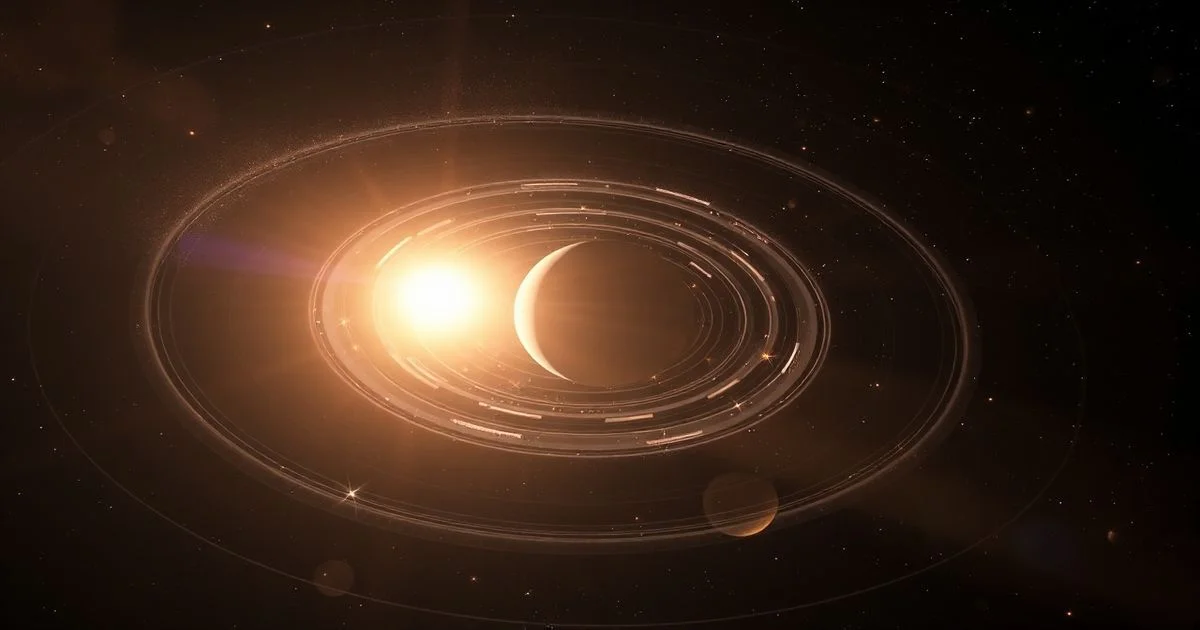
When observing the night sky, we witness a delicate dance where the physics of planetary orbits governs every motion of celestial bodies across the vast vacuum of space. Understanding the physics of planetary orbits requires a deep dive into how gravity and planetary inertia interact to create stable, recurring paths through the cosmos. By analyzing these complex orbits through the lens of classical and modern mechanics, we can begin to appreciate the rigorous mathematical framework that keeps the solar system from collapsing or flying apart. This journey into orbital mechanics is not merely an academic exercise; it is the foundation upon which all space exploration, satellite communication, and our understanding of the universe is built.
- The Historical Evolution of Orbital Theory
- The Core Mechanics of Orbital Motion
- Kepler’s Three Laws of Planetary Motion
- Newton’s Synthesis and the Gravitational Constant
- Modern Frameworks for Understanding the Physics of Planetary Orbits
- Energy and Orbital Transitions
- Perturbations and the N-Body Problem
- Real-World Applications: From GPS to Gravity Assists
- The Future of Orbital Mechanics
- Frequently Asked Questions
- Conclusion
- Further Reading & Resources
The Historical Evolution of Orbital Theory
Before we can master the modern equations that define celestial motion, we must understand the historical context that led us here. For millennia, humanity viewed the heavens as a series of perfect circles. This geocentric model, championed by Ptolemy, suggested that the Earth sat stationary at the center of the universe. However, as astronomical observations became more precise, the circular "perfection" began to fail, leading to increasingly complex systems of "epicycles" to explain the retrograde motion of planets.
The transition to a heliocentric model, proposed by Nicolaus Copernicus in the 16th century, was the first major step in the right direction. But even Copernicus clung to the idea of circular orbits, which still did not perfectly match observational data. It wasn't until Johannes Kepler analyzed the meticulous observational data of Tycho Brahe that the truth emerged. Kepler realized that planets do not move in circles, but in ellipses. This realization was hard-won, as it required Kepler to abandon the deeply ingrained philosophical belief in the "perfect circle."
This shift was revolutionary. It moved astronomy from a philosophical endeavor into a hard science based on empirical data and geometry. Kepler’s findings laid the groundwork for Isaac Newton to later unify the motion of an apple falling on Earth with the motion of the Moon orbiting our planet. This unification, famously sparked by Newton's observations of gravity, remains the cornerstone of classical mechanics.
The Core Mechanics of Orbital Motion
To grasp how a planet remains in a stable path, one must understand the balance between two competing forces: gravity and inertia. If gravity were the only force at play, every planet would eventually spiral into the sun. If inertia were the only factor, every planet would fly off into the deep dark of interstellar space in a straight line.
Gravity: The Invisible Tether
Gravity is the fundamental force of attraction between any two masses. In the context of planetary orbits, the Sun—possessing 99.8% of the mass in our solar system—exerts a massive gravitational pull on every other object. This pull acts as a centripetal force, constantly drawing planets toward the center of the system. This massive concentration of mass is what defines the gravitational landscape of our system, a concept often visualized as a "gravity well" in spacetime.
According to Newton’s Law of Universal Gravitation, the force () is proportional to the product of the masses ( and ) and inversely proportional to the square of the distance () between them. This inverse-square law is the fundamental reason why planets closer to the sun experience much higher speeds and shorter orbital periods than those further away.
F = G * (m1 * m2) / r^2
In this equation, is the gravitational constant (). This relationship is critical. If a planet's distance from the sun doubles, the gravitational pull it experiences drops to one-fourth of its previous value. This rapid drop-off is why the outer planets, like Neptune, move so slowly in their orbits compared to Mercury.
Inertia and Tangential Velocity
While gravity pulls the planet inward, the planet's own inertia—the tendency of an object to remain in motion—wants it to continue moving in a straight line at its current velocity. This is known as tangential velocity. When the inward pull of gravity is perfectly balanced with the forward momentum of the planet, the result is a continuous "fall" that never hits the ground—an orbit.
Imagine throwing a ball horizontally. Eventually, gravity pulls it to the ground. If you throw it faster, it travels further before hitting the ground. If you could throw it fast enough (approximately 7.9 km/s for Earth), the curve of the ball's fall would match the curve of the Earth's surface. The ball would effectively fall "around" the Earth forever. While orbits occur in the vacuum of space, they provide a stark contrast to the fundamentals of aerodynamics where air resistance is a primary factor in maintaining flight.
Kepler’s Three Laws of Planetary Motion
Johannes Kepler’s work provides the mathematical foundation for understanding the physics of planetary orbits. His three laws describe the kinematics of how planets move without necessarily explaining why they move.
The Law of Ellipses
Kepler’s First Law states that every planet’s orbit is an ellipse with the Sun at one of the two foci. An ellipse is defined by its semi-major axis () and its eccentricity ().
Key Terms:
- Perihelion: The point in an orbit closest to the Sun. At this point, the planet is moving at its maximum orbital velocity.
- Aphelion: The point in an orbit farthest from the Sun. At this point, the planet is moving at its minimum orbital velocity.
- Eccentricity: A measure of how much an orbit deviates from a perfect circle (where ).
Most planets in our solar system have low eccentricities, meaning their orbits are nearly circular. However, objects like Pluto or various comets have highly elongated, eccentric orbits that bring them very close to the sun before swinging them out into the Kuiper Belt.
The Law of Equal Areas
Kepler’s Second Law describes the speed at which a planet travels. It states that a line segment joining a planet and the Sun sweeps out equal areas during equal intervals of time. This implies that planets do not move at a constant speed throughout their journey.
As a planet approaches perihelion, the gravitational pull increases, causing the planet to accelerate. As it moves toward aphelion, it slows down. This conservation of angular momentum ensures that the "area" swept by the orbital path remains constant regardless of where the planet is in its cycle. This principle is why Mercury has such a volatile orbital speed compared to the more steady progress of Jupiter.
The Law of Harmonies
The Third Law is the most mathematically rigorous. It establishes a relationship between the distance of a planet from the Sun and its orbital period. Specifically, the square of the orbital period () is proportional to the cube of the semi-major axis () of its orbit.
T^2 ∝ a^3
This law allows astronomers to calculate the distance of a planet from the Sun simply by measuring how long it takes to complete one revolution. It also demonstrates that the further a planet is from the Sun, the slower its overall orbital velocity. For instance, Mercury zips around the Sun in 88 days, while Neptune takes 165 years. Understanding how massive stars exert these forces is also key to understanding the lifecycle of stars and their gravitational evolution.
Newton’s Synthesis and the Gravitational Constant
While Kepler described how planets moved, Isaac Newton explained the underlying physics. By applying his laws of motion and his law of universal gravitation, Newton was able to derive Kepler's laws from first principles, proving that the heavens were not governed by "divine" circles but by the same physics as terrestrial objects.
Newton realized that the same force that caused an object to fall on Earth was responsible for the motion of the planets. He expanded Kepler's Third Law to include the masses of the objects involved, creating a universal formula that could be applied to any two orbiting bodies, whether they were moons around a planet or stars in a binary system.
T^2 = (4π^2 / G(M + m)) * a^3
Variables:
- T: Orbital period
- G: Universal gravitational constant
- M: Mass of the central body (e.g., the Sun)
- m: Mass of the orbiting body (e.g., a planet)
- a: Semi-major axis
Because the Sun is so much more massive than the planets, the term is often negligible when calculating planetary orbits. This synthesis was a turning point in human history, proving that the laws of physics are universal and apply to both the terrestrial and the celestial realms. It eventually led scientists to understand even more extreme gravitational environments, such as those discussed in the guide to black holes explained.
Modern Frameworks for Understanding the Physics of Planetary Orbits
When aerospace engineers plan missions to Mars or position satellites in geostationary orbit, they rely on a set of six parameters known as Keplerian elements. These elements define the size, shape, and orientation of an orbit in three-dimensional space.
-
Semi-major Axis (a): Defines the size of the orbit. This is the average distance from the planet to the focal points. It determines the total energy of the orbit and the period of revolution.
-
Eccentricity (e): Defines the shape of the orbit. A value of 0 is a circle, while values between 0 and 1 represent an ellipse. A value of 1 represents a parabolic escape trajectory, which is no longer a closed orbit.
-
Inclination (i): The vertical tilt of the orbit with respect to a reference plane. For the solar system, this is usually the ecliptic plane. Satellites in polar orbits around Earth have an inclination of approximately 90 degrees.
-
Longitude of the Ascending Node (Ω): Defines the horizontal orientation of the orbit. It identifies where the orbit passes from the southern to the northern hemisphere across the reference plane.
-
Argument of Periapsis (ω): Defines the orientation of the ellipse within the orbital plane. It identifies where the "close point" (periapsis) of the orbit is located relative to the ascending node.
-
Mean Anomaly (M): Defines the position of the planet at a specific time. It acts as a timestamp for where the object is within its path relative to its periapsis.
Energy and Orbital Transitions
One cannot fully understand orbital physics without discussing energy. Every orbiting body possesses two types of energy: kinetic energy (due to its motion) and gravitational potential energy (due to its position in the gravity well).
The Conservation of Energy
The total mechanical energy of an orbit is the sum of its kinetic and potential energy. In a closed orbit, this total energy is constant.
E = (1/2)mv^2 - (GMm / r)
As a planet moves closer to the Sun (decreasing ), its potential energy decreases (becomes more negative). To keep the total energy constant, its kinetic energy—and thus its velocity ()—must increase. This is the physical explanation for Kepler's Second Law. The orbital velocity is highest when the potential energy is lowest.
Escape Velocity and Bound Orbits
To leave a planet's gravitational influence entirely, an object must reach escape velocity. This is the speed at which its kinetic energy is exactly equal to the magnitude of its gravitational potential energy, resulting in a total energy of zero.
For Earth, this velocity is approximately 11.2 km/s. If an object moves slower than this, it remains "bound" in an elliptical or circular orbit. If it moves faster, it enters a hyperbolic trajectory, meaning it has enough energy to leave the system forever and head into interstellar space.
Perturbations and the N-Body Problem
In a perfect world, our solar system would consist of one sun and one planet. In reality, every object in the solar system exerts a gravitational pull on every other object. These additional forces are called perturbations, and they make long-term orbital prediction incredibly difficult.
Common Perturbations include:
- Mutual Gravitational Interference: Jupiter’s massive gravity slightly tugs on Mars and Saturn, warping their perfect ellipses over millions of years. This can lead to orbital resonance, where planets exert a regular, periodic gravitational influence on each other.
- Oblateness: Planets are not perfect spheres; they are oblate spheroids. Earth’s equatorial bulge (the J2 effect) causes satellite orbits to "precess" or rotate over time, which must be accounted for in GPS satellite maintenance.
- Solar Radiation Pressure: Photons from the sun exert a tiny but measurable force on spacecraft and small asteroids. For long-duration missions, this can push a craft off its intended course.
- Relativistic Effects: Near very massive objects or at high precision, Newton's laws fail slightly. The precession of Mercury’s orbit was only explained when Albert Einstein introduced General Relativity, which describes gravity as the curvature of spacetime rather than just a force.
The "N-Body Problem" refers to the difficulty of predicting the individual motions of a group of celestial objects interacting with each other gravitationally. While two-body systems are mathematically "solved," systems with three or more bodies are often chaotic and require massive computer simulations to predict over long timeframes.
Real-World Applications: From GPS to Gravity Assists
The principles of orbital physics are not just theoretical; they are the backbone of modern technology and exploration.
Global Positioning System (GPS)
GPS satellites orbit Earth at an altitude of approximately 20,200 km. To provide accurate positioning, these satellites must maintain precise orbital paths within centimeters. Engineers must account for the Earth’s uneven gravity, the pull of the Moon and Sun, and even the effects of relativity—time actually moves slightly faster for the satellites than for people on the ground due to the weaker gravitational field.
The Hohmann Transfer Orbit
When we send a rover to Mars, we don't fly in a straight line. Instead, we use a Hohmann Transfer Orbit. This is an elliptical orbit used to transfer between two circular orbits of different radii. By firing the engines at the correct moment (at periapsis and apapsis), a spacecraft can "stretch" its orbit until it intersects with the target planet's path. This is the most fuel-efficient way to travel between planets, though it requires specific "launch windows."
Gravity Assists (Slingshot Maneuvers)
Spacecraft like Voyager and Cassini used "gravity assists" to reach the outer planets. By flying close to a planet like Jupiter, a spacecraft can "steal" a tiny bit of the planet's orbital momentum to accelerate itself. This allows probes to reach incredible speeds and change directions without using massive amounts of fuel, effectively using the planet's gravity as a cosmic slingshot.
The Future of Orbital Mechanics
As we look toward the future, our understanding of orbits is expanding to include more complex environments. We are now exploring "Halo Orbits" around Lagrange points—stationary points in space where the gravitational pull of two large bodies (like the Earth and Sun) cancels out the centripetal force felt by a smaller object.
The James Webb Space Telescope (JWST) currently sits in an orbit around the L2 Lagrange point. This allows it to stay in a stable position relative to the Earth while remaining far enough away to keep its sensitive infrared equipment cool and shielded from the Sun's heat.
Furthermore, as we move toward asteroid mining and Mars colonization, the management of "orbital debris" becomes a critical tech challenge. Thousands of pieces of "space junk" orbit Earth at speeds of 28,000 km/h. Tracking these orbits requires the same Newtonian physics developed centuries ago, but with modern computational power to handle the sheer volume of data and prevent catastrophic collisions in low Earth orbit.
Frequently Asked Questions
Q: What keeps a planet in orbit around the Sun?
A: A planet remains in orbit due to the delicate balance between its tangential velocity (inertia) and the Sun’s gravitational pull. Gravity pulls it inward, while inertia wants it to move in a straight line, resulting in a continuous curved path.
Q: Why are planetary orbits elliptical rather than perfectly circular?
A: Orbits are elliptical because any deviation from the specific velocity required for a perfect circle results in an ellipse. Ellipses are the generalized solution to the gravitational interaction between two bodies, as discovered by Johannes Kepler.
Q: Does a planet move at the same speed throughout its orbit?
A: No, according to Kepler's Second Law, a planet moves faster when it is closer to the Sun (perihelion) and slower when it is further away (aphelion) due to the conservation of angular momentum.
Conclusion
The universe operates like a grand machine, and understanding the physics of planetary orbits is the key to unlocking its secrets. From the simple beauty of Kepler's ellipses to the complex perturbations caused by general relativity, the study of celestial motion remains one of the most vibrant fields in science. We have come a long way from the ancient epicycles, moving toward a unified understanding that spans from the smallest satellites to the largest galaxies.
Whether it is launching a communications satellite or sending a probe into the heart of a distant nebula, we rely on these unchanging laws of gravity and motion. By mastering these principles, humanity has transformed from mere observers of the stars into active participants in the cosmic journey. As we continue to push the boundaries of space exploration, the fundamental physics of the orbit will remain our most important map, guiding us through the vast, silent reaches of the vacuum while ensuring we are always mastering the task of understanding the physics of planetary orbits.