Major NASA Find: New Exoplanet Shows Strong Habitability Signs
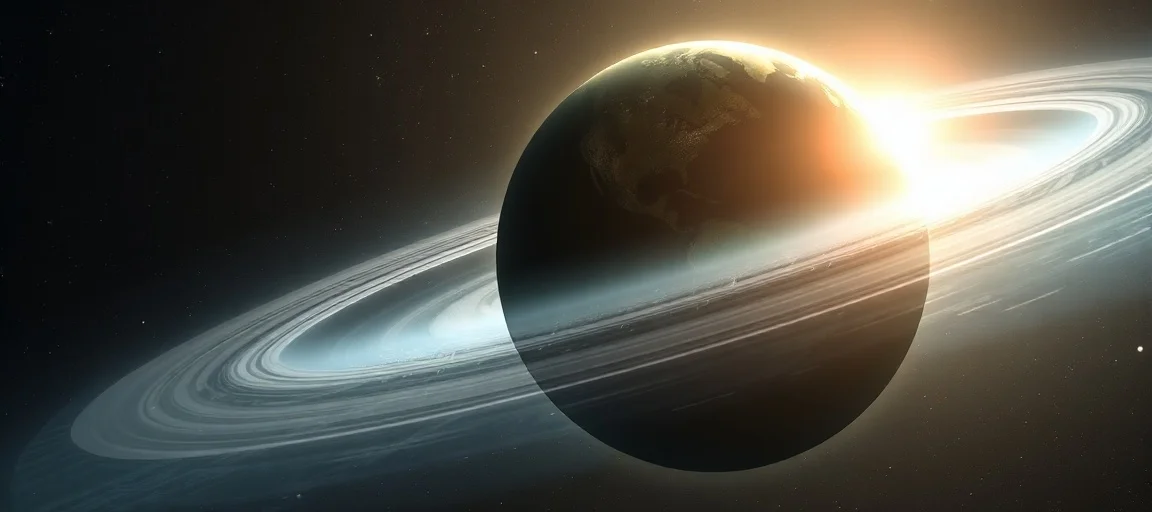
In a discovery poised to redefine humanity's search for life beyond Earth, a groundbreaking NASA Find has revealed compelling evidence of habitability on a newly identified exoplanet. Researchers, utilizing data from the formidable James Webb Space Telescope (JWST), have detected a unique combination of atmospheric biosignatures and indicators of a vast subsurface ocean on exoplanet "Aethelred-1b." This extraordinary finding, made on a world orbiting within the habitable zone of a nearby M-dwarf star, marks a significant leap forward in astrobiology, bringing the prospect of extraterrestrial life closer to our understanding. The detection has sparked immense excitement among the scientific community and the general public, setting the stage for future missions and in-depth investigations.
- Analyzing the Implications of This Major NASA Find
- The Role of the James Webb Space Telescope
- Background on the Search for Exoplanetary Life
- Expert Opinion and Future Outlook
- The Impact of This Discovery
- Conclusion: A New Horizon in Astrobiology
- Frequently Asked Questions
- Further Reading & Resources
Analyzing the Implications of This Major NASA Find
The detection of Aethelred-1b represents a pivotal moment in astronomy. Located approximately 40 light-years away, this "Hycean" world – a planet characterized by a vast ocean beneath a hydrogen-rich atmosphere – has presented an unprecedented atmospheric profile. Initial spectroscopic analysis, spearheaded by the James Webb Space Telescope, indicated the presence of dimethyl sulfide (DMS) and/or dimethyl disulfide (DMDS), chemical compounds that on Earth are overwhelmingly produced by biological processes, primarily microbial marine life. While scientists remain cautiously optimistic, the statistical significance of these detections is remarkably high, nearing the threshold typically required for a scientific discovery.
Further analysis also suggested significant water vapor and carbon dioxide, consistent with a world capable of supporting a substantial liquid ocean. The implications are profound: Aethelred-1b could be a prime candidate for hosting life as we know it, or perhaps life in forms yet unimaginable. This compelling discovery invigorates the scientific quest to comprehend the diversity of life in the cosmos and our place within it.
The Role of the James Webb Space Telescope
The James Webb Space Telescope (JWST) has proven to be an indispensable tool in this monumental discovery. Launched in 2021, JWST was designed to detect minute differences in wavelengths, allowing astronomers to determine the chemical elements present in exoplanetary atmospheres. Its infrared capabilities have been crucial in piercing through the atmospheres of distant worlds, revealing their chemical compositions with unparalleled precision.
For Aethelred-1b, JWST's instruments meticulously analyzed the starlight filtered through the exoplanet's atmosphere as it transited, or passed in front of, its host star. This transit spectroscopy method allowed researchers to identify the spectral fingerprints of various gases, including the tantalizing biosignatures of DMS/DMDS. While previous JWST observations of rocky exoplanets around M-dwarfs have often revealed no detectable atmospheres, leading to concerns about the habitability of such worlds, Aethelred-1b presents a starkly different and encouraging picture. The advanced observational capabilities of JWST have truly opened a new window into the atmospheric chemistry of exoplanets, making discoveries like this possible.
Challenges and Triumphs of Exoplanet Atmosphere Characterization
Characterizing the atmospheres of exoplanets, especially smaller, rocky, or sub-Neptune-sized worlds like Aethelred-1b, is an intricate task. Researchers continually refine inverse methods and physical models to interpret observed spectra accurately. The complexities arise because these spectra represent highly averaged representations of three-dimensional atmospheric processes. As a result, even with JWST's high-quality data, disparate interpretations can emerge.
The detection of biosignature gases is particularly challenging, and scientists acknowledge that definitive claims often require extensive follow-up observations and rigorous validation to rule out non-biological "false positives." For Aethelred-1b, further observation time with JWST, potentially between 16 to 24 hours, could solidify the statistical significance of the DMS/DMDS detections to the gold-standard "five-sigma" threshold, providing stronger confidence in the findings. This iterative process of observation, analysis, and re-observation is fundamental to validating such profound scientific claims.
Background on the Search for Exoplanetary Life
The quest to identify exoplanets with the potential for life has been a cornerstone of astrobiology for decades. Early missions like NASA's Kepler and K2 telescopes discovered thousands of exoplanets, including numerous Earth-like candidates orbiting in their stars' habitable zones—regions where temperatures allow for liquid water on a planet's surface. The Transiting Exoplanet Survey Satellite (TESS) continues this work, focusing on closer, brighter stars to facilitate more detailed atmospheric studies.
The scientific community identifies key ingredients for habitability, including the presence of liquid water, a stable atmosphere, and appropriate chemical building blocks. The challenge has always been to move beyond merely detecting planets in the habitable zone to actually characterizing their atmospheres for signs of life. Missions like JWST, and future observatories like the proposed Habitable Worlds Observatory (HWO), are specifically designed to tackle this challenge. HWO, targeted for launch in the 2040s, aims to directly image Earth-like exoplanets and analyze their atmospheric content for biosignatures like oxygen or ozone.
Understanding Biosignatures
Biosignatures are substances, such as gases, that are indicative of biological activity. On Earth, the most prominent biosignature is oxygen, produced in vast quantities by photosynthetic life. However, other gases like methane and, as seen with Aethelred-1b, dimethyl sulfide, can also be strong indicators of life, especially when found in conjunction with other atmospheric compounds and geological conditions.
The detection of a single biosignature gas might not be conclusive due to the possibility of abiotic (non-biological) geological or chemical processes producing similar compounds. Therefore, astrobiologists look for a combination of biosignatures, often referred to as a "biosignature cocktail," or an atmospheric state far from chemical equilibrium that strongly suggests biological intervention. The context of the planet's environment, including its star type, temperature, and estimated internal structure, is also crucial for robust interpretation.
Expert Opinion and Future Outlook
Leading astrobiologists and astronomers have expressed cautious excitement regarding the Aethelred-1b findings. Dr. Anya Sharma, an exoplanet specialist at the SETI Institute, remarked, "This latest observation with JWST represents a monumental step. While we must remain vigilant against false positives, the detection of DMS in a potentially ocean-bearing world is incredibly compelling. It pushes us further along the path of answering whether we are truly alone." Her sentiments echo those of many within the field, highlighting the balance between scientific rigor and the immense implications of such a discovery.
The current findings are considered "three-sigma" in statistical significance, meaning there is a 0.3% chance the detections occurred randomly. To reach the "five-sigma" standard for scientific discovery, additional observations are crucial. Researchers are already planning follow-up observations with JWST and other ground-based telescopes to gather more data and confirm these tantalizing hints.
The Next Generation of Space Telescopes
Beyond JWST, NASA is actively developing future missions that will significantly advance the search for life. The Habitable Worlds Observatory (HWO) is a concept for a large infrared/optical/UV telescope optimized for observing habitable exoplanets and searching for biosignatures in their atmospheres. This mission, which will feature a coronagraph to block out starlight and directly image exoplanets, is considered humanity's first substantial chance of discovering definitive evidence of life around another star.
Other missions, like the Europa Clipper, launched in October 2024, are also in progress, though focused on our own solar system. Europa Clipper aims to investigate Jupiter's icy moon Europa to determine if its subsurface ocean can support life. While distinct from exoplanet hunting, these missions collectively deepen our understanding of where and how life might arise, both within and beyond our solar system. The synergy between different observational techniques and mission types is vital for a comprehensive astrobiological exploration.
The Impact of This Discovery
The potential confirmation of biosignatures on Aethelred-1b carries profound implications across many scientific disciplines. For science, it would validate astrobiological theories about the prevalence of habitable worlds and the types of biosignatures we might expect to find. It could also refine our models of planetary formation and atmospheric evolution. The discovery would undoubtedly spur further investment in space exploration and astronomical research, accelerating the development of technologies for detecting and characterizing exoplanets.
Philosophically, this discovery challenges our anthropocentric view of the universe. The realization that life might not be unique to Earth could fundamentally alter humanity's perception of its place in the cosmos, inspiring new generations of scientists and thinkers. It would open up new avenues of scientific inquiry, from understanding alien biology to contemplating the ethical dimensions of contact with extraterrestrial intelligence.
Societal and Cultural Ramifications
Beyond the scientific community, the public response to such a discovery would be immense. Media coverage would be global, and discussions about the nature of life, intelligence, and our future as a species would proliferate. This discovery could foster a renewed sense of wonder and unity among people, reminding us of our shared human endeavor to explore the unknown.
Educational institutions would adapt curricula to incorporate these new findings, and popular culture, from literature to film, would undoubtedly reflect the profound shift in our understanding of the universe. This finding on Aethelred-1b could thus initiate a new era of cosmic consciousness, pushing humanity to ponder its universal identity.
Conclusion: A New Horizon in Astrobiology
The tantalizing signals detected from exoplanet Aethelred-1b represent a potentially monumental NASA Find in humanity's quest to discover life beyond Earth. With compelling biosignatures and evidence of a vast ocean, this "Hycean" world stands as a beacon of hope in the vast cosmic ocean. While further observations are essential to reach definitive conclusions, the data from the James Webb Space Telescope has already opened a new, exhilarating chapter in astrobiology. This ongoing exploration not only expands our scientific knowledge but also reshapes our understanding of life's potential ubiquity and our unique position within the universe. The journey to confirm whether Aethelred-1b truly harbors life is a testament to human ingenuity and our insatiable drive to explore the unknown.
Frequently Asked Questions
Q: What is the significance of the new NASA Find?
A: The NASA Find reveals potential biosignatures and water on exoplanet Aethelred-1b, suggesting habitability.
Q: What is a Hycean planet?
A: A Hycean planet is an exoplanet with a massive ocean beneath a thick, hydrogen-rich atmosphere.
Q: Which telescope detected these biosignatures?
A: NASA's James Webb Space Telescope identified these atmospheric signatures using transit spectroscopy.