NASA Mars Exploration: Latest Updates and Missions
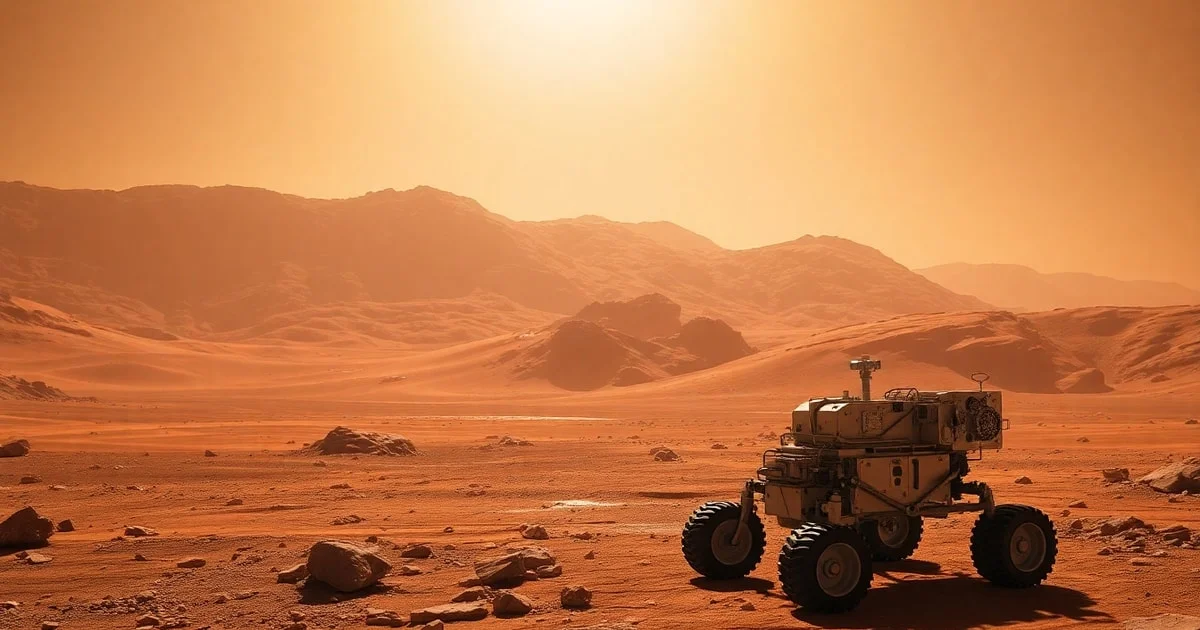
The latest updates on NASA Mars exploration missions reveal incredible progress in our scientific journey to the Red Planet. Humans have gazed at Mars for millennia, but only in the last few decades have we possessed the technology to scratch its dusty surface. Today, NASA Mars initiatives represent the pinnacle of deep-space robotics and planetary science, turning science fiction into daily operational reality. Through an international network of orbiters, landers, and rovers, humanity is systematically unraveling the geological history of our cosmic neighbor, searching for ancient biosignatures, and paving the way for eventual crewed expeditions.
Historical Background of Martian Exploration
NASA's interest in Mars dates back to the 1960s, with the agency's first Mars mission, Mariner 4, launched in 1964. Since then, NASA has sent numerous spacecraft to Mars, including orbiters, landers, and rovers. The Mars Exploration Program, established in 1993, aims to explore Mars through a series of robotic missions, with the ultimate goal of sending humans to the Red Planet. Over the decades, our understanding of Mars has shifted from viewing it as a dry, barren moon-like body to recognizing it as a dynamic world that once hosted liquid water and potentially habitable environments.
Early Missions
The path to Mars was paved by several pioneering spacecraft that overcame immense engineering challenges:
- Mariner 4 (1964): Provided the first close-up images of Mars, forever changing our view of the solar system.
- Viking 1 and 2 (1975): Landed on Mars and provided data on the planet's surface chemistry and searched for organic molecules.
- Mars Pathfinder (1996): Landed on Mars and deployed the Sojourner rover, proving the viability of mobile exploration.
- Spirit and Opportunity (2003): Twin rovers that explored opposite sides of the planet, discovering extensive evidence of past liquid water.
Current Robotic Missions on the Red Planet
NASA currently has several active Mars missions operating both on the surface and in orbit, creating an interconnected web of scientific discovery.
The Perseverance Rover
Exploring Jezero Crater since February 2021, the Perseverance rover is the cornerstone of NASA's current surface operations. Jezero Crater was chosen because it was once a bustling lake-and-delta system billions of years ago. Perseverance is equipped with a sophisticated suite of scientific instruments:
- Mastcam-Z: A multispectral stereoscopic imaging system that provides high-definition panoramas of the Martian terrain.
- SuperCam: Uses a pulsed laser to analyze the chemical and mineralogical composition of rocks from a distance.
- SHERLOC and PIXL: High-precision instruments mounted on the rover's robotic arm to search for organic molecules and micro-scale biosignatures.
- MOXIE (Mars Oxygen ISRU Experiment): A technology demonstration that successfully extracted breathable oxygen from the thin, carbon dioxide-dominated Martian atmosphere, proving a critical concept for future human missions.
The Curiosity Rover
Still active after landing in Gale Crater in August 2012, Curiosity continues to climb Mount Sharp. The rover's primary goal was to determine whether Mars ever had environmental conditions favorable for microbial life. Curiosity has analyzed dozens of rock and soil samples, finding evidence of ancient freshwater lakes, sulfur, nitrogen, oxygen, phosphorus, and carbon—the key chemical ingredients required for life.
Active Orbital Assets
To support surface missions, NASA maintains a robust fleet of orbital craft:
- Mars Reconnaissance Orbiter (MRO): Equipped with the HiRISE camera, MRO provides incredibly detailed imagery of the Martian surface, helping scientists track seasonal dust storms, shifts in sand dunes, and potential landing sites.
- Mars Odyssey: Operating since 2001, it is the longest-surviving continually active spacecraft in orbit around a planet other than Earth, mapping global chemical distributions.
- MAVEN (Mars Atmosphere and Volatile EvolutioN): Focuses on studying the upper atmosphere of Mars to understand how solar winds stripped the planet of its atmosphere and liquid water over billions of years.
Future Horizons for NASA Mars Exploration
The future of Martian exploration relies heavily on returning the pristine physical samples collected by Perseverance to Earth and building the infrastructure needed for human survival.
The Mars Sample Return Campaign
The Mars Sample Return (MSR) campaign is an incredibly complex joint initiative between NASA and the European Space Agency (ESA). Perseverance has been actively sealing soil and rock cores into ultra-pure titanium tubes and depositing them in strategic depots.
The planned architecture for retrieving these samples involves several steps:
- A Sample Retrieval Lander will touch down near the Jezero Crater delta.
- A specialized Mars Ascent Vehicle (MAV), a small rocket, will launch the cached samples into Mars orbit.
- An Earth Return Orbiter will rendezvous with the sample container in orbit and carry it back to Earth for comprehensive laboratory analysis.
This mission will allow scientists to utilize massive, state-of-the-art laboratory equipment on Earth that is far too heavy and complex to launch to Mars.
Human Missions to the Red Planet
NASA's long-term roadmap envisions sending astronauts to Mars in the late 2030s or early 2040s. This effort is tightly coupled with the Artemis program, which uses the Moon as a proving ground for deep-space technologies.
Key elements of this plan include:
- Space Launch System (SLS): The most powerful rocket ever built by NASA, designed to carry heavy payloads beyond low-Earth orbit.
- Orion Spacecraft: Designed to sustain astronauts during long-duration deep-space transit missions.
- Gateway: A planned lunar-orbiting space station that will serve as a staging point for Mars-bound transport vessels.
- Deep Space Transport: A reusable vehicle that will use a combination of chemical and electric propulsion to ferry crews to Mars orbit and back.
Scientific Analysis and Expert Insights
Planetary scientists view Mars as a cosmic laboratory that preserves the early history of terrestrial planets. Unlike Earth, which has tectonic plates that constantly recycle the crust and destroy ancient rocks, Mars has remained geologically quiet for billions of years. This preservation allows us to study the conditions that existed when life was first emerging on Earth.
Dr. Jim Green, NASA's former Planetary Science Director, has repeatedly emphasized that locating ancient habitable environments is only the first step. The true challenge is confirming whether those environments were ever actually inhabited. The chemical markers and microscopic structural variations preserved in Martian clay minerals are our best hope for answering the age-old question: "Are we alone in the universe?"
Global and Technological Impact
The technologies developed for Mars exploration have profound benefits on Earth. The miniature sensors, advanced robotics, autonomous navigation systems, and water purification technologies designed for deep space find immediate applications in terrestrial industries.
Technological Spin-offs
- Autonomous Navigation: The self-driving algorithms developed for Martian rovers have accelerated the development of terrestrial autonomous vehicles.
- Medical Imaging: Sensor technology developed for Mars-bound spectrometers has been adapted to improve medical diagnostic imaging.
- Resource Efficiency: Closed-loop life support systems designed for space travel are driving innovation in sustainable agricultural systems on Earth.
Frequently Asked Questions
Q: What is the main goal of the Perseverance rover?
A: The main goal of the Perseverance rover is to seek signs of ancient microbial life and collect rock and soil samples for future return to Earth. It also carries out key technology demonstrations like MOXIE to prepare for human missions.
Q: When does NASA plan to send humans to Mars?
A: NASA aims to send astronauts to Mars by the late 2030s or early 2040s. This timeline depends heavily on the technological milestones achieved during the Artemis lunar missions.
Q: How long does it take to travel to Mars?
A: A one-way trip to Mars typically takes about seven to nine months, depending on planetary alignment and propulsion technology. This travel window opens once every 26 months when Earth and Mars are closest.