Black Holes Explained: Formation and Cosmic Impact Guide
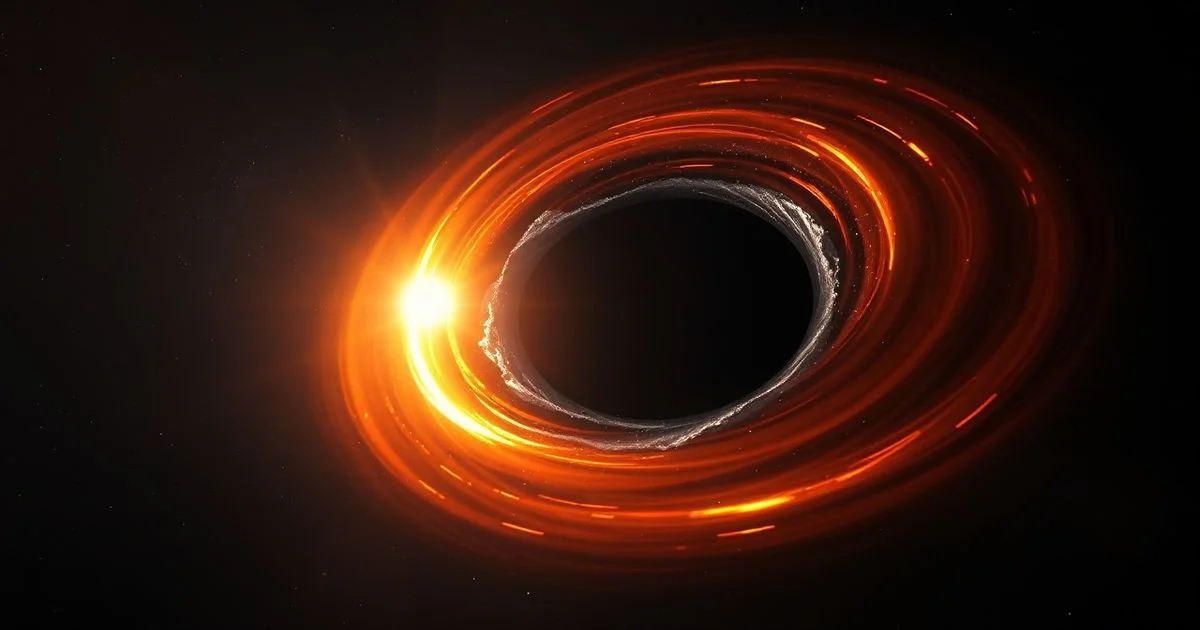
When we look at the night sky, we see light, but the most profound mysteries of the universe lie in the absolute dark. In this deep dive into Black Holes Explained: Formation and Cosmic Impact, we will explore how these gravitational titans shape the very fabric of our cosmic reality. Understanding the formation of these objects reveals the extreme impact they have on the evolution of galaxies and the fundamental laws of physics that govern our existence. From the collapse of massive stars to the supermassive giants lurking at the centers of galaxies, black holes represent the ultimate frontier of human knowledge, where general relativity and quantum mechanics collide in a spectacular display of celestial power.
- The Fundamentals of Gravitational Collapse
- The Formation of Black Holes and Their Cosmic Impact
- The Anatomy of a Singularity
- Classification by Mass
- Relativistic Effects and Time Dilation
- Detection and Observation Methods
- The Information Paradox and Hawking Radiation
- Influence on Galactic Evolution
- Future Outlook: The Next Decade of Discovery
- Conclusion
- Frequently Asked Questions
- Further Reading & Resources
The Fundamentals of Gravitational Collapse
To understand the universe, one must first come to terms with the most extreme density possible. A black hole is not simply a "hole" in space but an immense amount of matter packed into a very small area. Imagine taking the entire mass of the Earth and compressing it into the size of a marble. The resulting gravitational field would be so intense that not even light—the fastest thing in the universe—could escape its pull.
The boundary marking the point of no return is known as the event horizon. Once an object, or even a photon of light, crosses this threshold, the escape velocity required to leave exceeds the speed of light. Since nothing can travel faster than light, anything that enters the event horizon is effectively removed from the observable universe, destined to join the singularity at the center.
The Role of Gravity vs. Nuclear Fusion
Stars exist in a state of delicate equilibrium known as hydrostatic equilibrium. This is a constant tug-of-war between two opposing forces:
- Gravity: The inward pull that attempts to crush the star under its own immense weight.
- Nuclear Fusion: The outward pressure generated by the fusion of hydrogen into helium in the star's core.
As long as a star has fuel to burn, the outward radiation pressure balances the inward gravitational pull. However, for stars significantly more massive than our Sun, this balance eventually fails. Once the star exhausts its nuclear fuel, it can no longer support its own weight, leading to a catastrophic collapse that begins the journey toward becoming a black hole.
The Formation of Black Holes and Their Cosmic Impact
The process of black hole formation begins with the death of a high-mass star. While smaller stars like our Sun will eventually become white dwarfs, stars with at least 20 times the mass of the Sun face a much more violent end.
When such a star runs out of fuel, it begins to fuse heavier elements, eventually reaching iron. The fusion of iron, unlike lighter elements, consumes energy rather than releasing it. Without an outward force to counteract gravity, the core collapses in a fraction of a second. This collapse triggers a supernova—a massive explosion that ejects the star's outer layers into space while the core continues to shrink. For a more detailed look at the celestial journey of stars, refer to our guide on Understanding the Lifecycle of Stars: From Nebula to Supernova.
The Chandrasekhar and TOV Limits
Not every collapsed star becomes a black hole. The outcome depends entirely on the remaining mass of the core:
- White Dwarfs: If the core is less than 1.4 times the mass of the Sun (the Chandrasekhar Limit), it becomes a white dwarf, supported by electron degeneracy pressure.
- Neutron Stars: If the core is between 1.4 and roughly 3 solar masses, it collapses further into a neutron star, supported by neutron degeneracy pressure.
- Black Holes: If the core mass exceeds the Tolman-Oppenheimer-Volkoff (TOV) limit (approximately 3 solar masses), no known force in the universe can stop the collapse. The matter is crushed down to a point of infinite density: the singularity.
The Anatomy of a Singularity
The structure of a black hole is surprisingly simple, yet it defies our conventional understanding of physics. According to the "No-Hair Theorem," a black hole can be completely described by only three observable parameters: mass, electric charge, and angular momentum (spin).
The Event Horizon and Schwarzschild Radius
The event horizon is the "surface" of the black hole, though it is not a physical surface. It is a mathematical boundary defined by the Schwarzschild radius. For any non-rotating mass, the Schwarzschild radius () can be calculated using the following formula:
Rs = 2GM / c^2

Where:
G = Gravitational constant
M = Mass of the object
c = Speed of light
For a black hole with the mass of the Sun, the Schwarzschild radius is approximately 3 kilometers. For the supermassive black hole at the center of our galaxy, it is about 12 million kilometers.
The Ergosphere and Frame Dragging
Most black holes are not static; they rotate. These are known as Kerr black holes. Because they spin, they drag the very fabric of spacetime along with them—a phenomenon called "frame-dragging."
The region just outside the event horizon of a rotating black hole is called the ergosphere. In this region, it is impossible to remain still. Spacetime is moving so fast that an object would be forced to travel in the direction of the black hole's spin. Theoretically, an advanced civilization could "steal" energy from the black hole's rotation by entering the ergosphere and escaping with more velocity than they entered—a process known as the Penrose Process.
Classification by Mass
Black holes come in various sizes, each playing a different role in the cosmic landscape. Astronomers generally classify them into four categories:
-
Stellar-Mass Black Holes: These range from about 5 to 100 times the mass of the Sun. They are the most common type and are formed from the remnants of individual massive stars.
-
Supermassive Black Holes (SMBHs): Ranging from millions to billions of solar masses, these giants reside at the centers of almost all large galaxies. Their origin is still a subject of intense research, though they likely grew through the merger of smaller black holes and the accretion of vast amounts of gas.
-
Intermediate-Mass Black Holes (IMBHs): These are the "missing links" with masses between 100 and 100,000 solar masses. They are much harder to find, but recent observations of star clusters have provided evidence of their existence.
-
Primordial Black Holes: These are hypothetical black holes that may have formed in the high-density environment of the early universe, just moments after the Big Bang. If they exist, they could be as small as an atom or as large as a mountain.
Relativistic Effects and Time Dilation
One of the most mind-bending aspects of black holes is their effect on time. According to Einstein’s General Theory of Relativity, gravity is the warping of spacetime. The stronger the gravity, the more spacetime is curved, and the slower time passes.
Gravitational Time Dilation
If you were to watch a clock falling toward a black hole from a safe distance, you would see the clock's hands move slower and slower as it approached the event horizon. To you, the clock would appear to be frozen in time just before it crossed the threshold. However, from the perspective of the clock (or someone holding it), time would feel perfectly normal until the moment they were crushed by tidal forces.
Spaghettification
This refers to the "tidal effects" near a black hole. Because gravity follows an inverse-square law, the pull on your feet (if you were falling in feet-first) would be significantly stronger than the pull on your head. As you approach a stellar-mass black hole, this difference becomes so extreme that it would stretch your body into a thin, noodle-like strand of atoms. Interestingly, for supermassive black holes, the tidal forces at the event horizon are much weaker, and you could theoretically cross the horizon without even noticing—at least for a while.
Detection and Observation Methods
Since black holes emit no light, we cannot see them directly with traditional telescopes. Instead, we must rely on indirect evidence and high-tech imaging techniques to confirm their presence.
Accretion Disks and Quasars
As matter (gas, dust, or shredded stars) falls toward a black hole, it doesn't fall straight in. Instead, it orbits the black hole, forming a massive, glowing "accretion disk." Friction and magnetic forces within this disk heat the matter to millions of degrees, causing it to emit brilliant X-rays and visible light.
In the case of supermassive black holes, this process can create a Quasar—the most luminous object in the universe. A single quasar can outshine an entire galaxy of hundreds of billions of stars, powered solely by the gravity of a central black hole consuming matter.
Gravitational Waves (LIGO)
In 2015, the Laser Interferometer Gravitational-Wave Observatory (LIGO) made history by detecting ripples in the fabric of spacetime. These "gravitational waves" were caused by the collision and merger of two stellar-mass black holes 1.3 billion light-years away. This discovery opened a new window into the universe, allowing us to "hear" the cosmic impact of black hole interactions that are otherwise invisible. Just as we use advanced techniques to detect ripples in spacetime, scientists also apply similar precision to fields like The Fundamentals of Aerodynamics in Flight: Principles & Future to understand other complex physical phenomena.
The Event Horizon Telescope (EHT)
In 2019, the world saw the first-ever direct image of a black hole's shadow. By linking radio telescopes across the globe to create a "virtual telescope" the size of the Earth, the EHT collaboration captured the silhouette of the supermassive black hole at the center of the M87 galaxy. In 2022, they repeated this feat for Sagittarius A*, the black hole at the center of our own Milky Way.
Key EHT Data Points:
Target: M87* (Virgo A)
Distance: 55 million light-years
Mass: 6.5 billion Suns
Image feature: Asymmetric ring of light (lensed accretion disk)
The Information Paradox and Hawking Radiation
Black holes aren't just a challenge for astronomers; they are a nightmare for theoretical physicists. The central conflict lies between General Relativity (which describes the very large) and Quantum Mechanics (which describes the very small).
Hawking Radiation
Stephen Hawking famously proposed that black holes are not entirely black. Due to quantum effects near the event horizon, pairs of "virtual particles" are constantly being created and annihilated. Occasionally, one particle falls into the black hole while the other escapes. To a distant observer, the black hole appears to be emitting radiation. Over vast timescales, this "Hawking Radiation" causes the black hole to lose mass and eventually evaporate entirely.
The Information Paradox
The problem arises when we ask: what happens to the information about the objects that fell in? Quantum mechanics states that information can never be destroyed. However, if a black hole evaporates via Hawking radiation—which is thermal and contains no information about the matter that formed the black hole—the information appears to be lost forever. Resolving this "Information Paradox" is one of the "Holy Grails" of modern physics, potentially leading to a Unified Theory of Everything.
Influence on Galactic Evolution
Black holes are not just passive consumers of matter; they are active architects of the universe. The relationship between a supermassive black hole and its host galaxy is known as "co-evolution."
Feedback Loops
As a black hole accretes matter, it releases a tremendous amount of energy in the form of radiation and relativistic jets. These jets can extend for thousands of light-years, heating up the surrounding gas in the galaxy. By heating the gas, the black hole prevents it from cooling and collapsing into new stars. This "feedback" mechanism effectively regulates the growth of the galaxy, ensuring it doesn't grow too large or consume its fuel too quickly.
Galactic Mergers
When two galaxies collide, their central supermassive black holes eventually find each other. They sink to the center of the newly merged galaxy, forming a binary pair. Over millions of years, they spiral inward, eventually merging in a violent event that shakes the foundations of spacetime and releases more energy than all the stars in the observable universe combined for a brief moment.
Future Outlook: The Next Decade of Discovery
Our journey into the heart of darkness is only beginning. Several upcoming missions and technologies promise to revolutionize our understanding of black holes.
-
LISA (Laser Interferometer Space Antenna): A space-based gravitational wave detector scheduled for the 2030s. Unlike LIGO, LISA will be able to detect the "low-frequency" hum of supermassive black hole mergers, providing a timeline of how the universe's largest objects grew.
-
James Webb Space Telescope (JWST): While JWST is primarily an infrared telescope, it is already being used to peer through the dust of the early universe to find the "seeds" of the first supermassive black holes.
-
Next-Generation EHT (ngEHT): Upgrades to the Event Horizon Telescope will allow for real-time "movies" of black holes, showing how the accretion disk and jets change over hours and days.
Conclusion
The study of Black Holes Explained: Formation and Cosmic Impact serves as a bridge between the known and the unknown. These objects challenge our perceptions of time, space, and reality itself. While they began as mere mathematical curiosities in Einstein's equations, they have proven to be the most influential engines in our cosmos.
By studying the formation of these gravitational anomalies, we gain insight into the lifecycle of stars and the extreme limits of matter. Simultaneously, analyzing their cosmic impact allows us to understand why our galaxy looks the way it does and how the universe will ultimately end. As we continue to refine our technology and our theories, the black hole remains the ultimate laboratory—a place where the secrets of the universe are both hidden and waiting to be discovered. Whether they are the gateways to other dimensions or the final graveyard of all matter, black holes will continue to captivate the human imagination for generations to come.
Frequently Asked Questions
Q: What is a black hole?
A: A black hole is a region of spacetime where gravity is so strong that nothing, not even light, can escape. It forms from the remnants of massive stars that collapse under their own gravity, creating a point of infinite density called a singularity.
Q: Can black holes be seen?
A: No, black holes cannot be seen directly because they don't emit or reflect any light. Scientists detect them indirectly by observing their powerful gravitational effects on surrounding matter, such as glowing accretion disks, the motion of nearby stars, or through gravitational waves.
Q: What happens if you fall into a black hole?
A: If you fall into a stellar-mass black hole, you would experience "spaghettification," being stretched and torn apart by immense tidal forces. For a supermassive black hole, tidal forces at the event horizon are weaker, so you might cross it without immediate harm, only to inevitably reach the singularity.