Cambodia, Thailand Begin UN Maritime Talks: A New Era for Cooperation
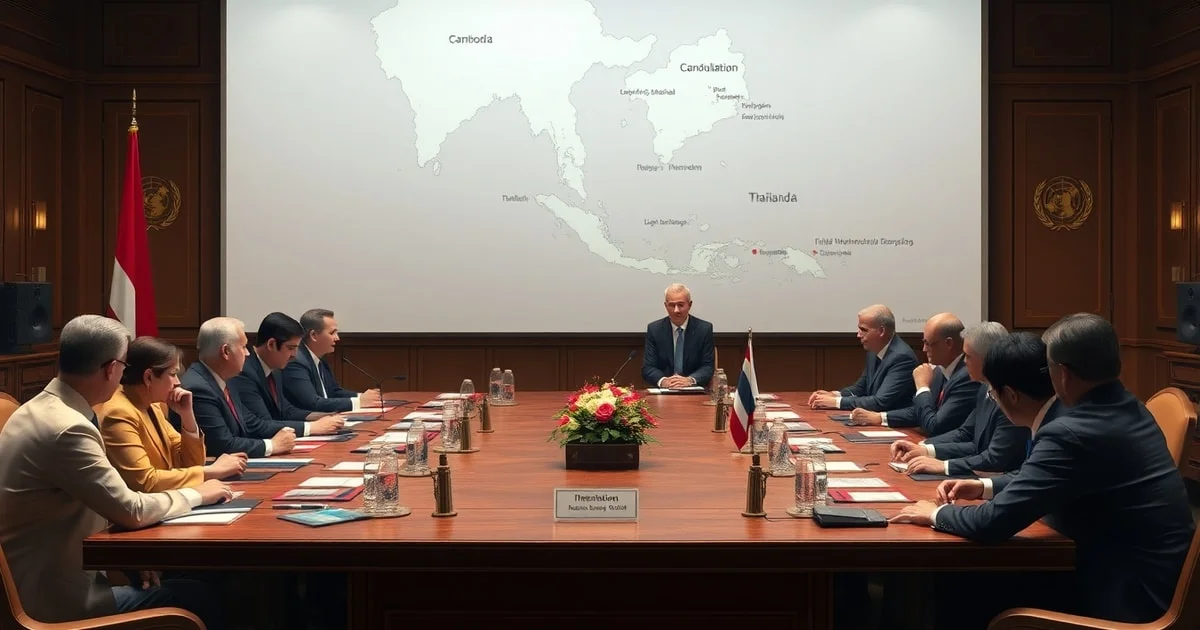
The Kingdom of Cambodia and the Kingdom of Thailand have embarked on a new, pivotal phase in their long-standing maritime boundary dispute. In a significant development, Cambodia, Thailand Begin UN Maritime Talks aimed at finding a peaceful resolution. This development comes after decades of unresolved claims in the resource-rich Gulf of Thailand, signaling a potential new era for cooperation and regional stability. The decision by Cambodia to initiate compulsory conciliation proceedings under the United Nations Convention on the Law of the Sea (UNCLOS) underscores a commitment to international law in addressing complex sovereignty issues.
Background to the Maritime Dispute
The maritime dispute between Cambodia and Thailand centers on a vast, approximately 26,000 to 27,000 square kilometer area in the Gulf of Thailand, known as the Overlapping Claims Area (OCA). This dispute has its roots in differing interpretations of historical treaties and the application of international maritime law. The potential energy wealth beneath these waters has fueled the urgency and complexity of the negotiations.
Historical Context of the Overlapping Claims
The origins of the dispute can be traced back to the early 1970s when both nations made unilateral claims to their continental shelves. Cambodia delineated its claim in the west in 1972, followed by Thailand's counterclaim in the east in 1973. These claims overlapped significantly, primarily due to differing interpretations of the equidistant line between Cambodia's coastline and Thailand's southern coast, as well as conflicting lateral boundary claims, notably around Thailand's Ko Kut island. The southern boundary of the OCA is defined by the 1991 Cambodian-Vietnam maritime border.
For decades, the issue remained largely unresolved, punctuated by periods of intensified diplomatic efforts and occasional flare-ups in tensions, including military confrontations along their shared land border.
Previous Attempts at Resolution
Over the years, various attempts have been made to resolve the overlapping claims. A key mechanism was the 2001 Memorandum of Understanding (MoU) between Thailand and Cambodia. This MoU outlined a framework for future discussions, agreeing to two parallel processes: negotiations on maritime boundary delimitation north of latitude 11°N and a joint petroleum development agreement south of latitude 11°N. Crucially, the document intended for these tracks to be treated as an "indivisible package."
However, despite this framework, little concrete progress was achieved over more than two decades. Political tensions, particularly related to land border demarcations around historical sites like the Preah Vihear temple, often overshadowed and stalled maritime discussions.
The situation dramatically shifted in May 2026, when Thailand's cabinet unilaterally approved the cancellation of the 2001 MoU. Thai Prime Minister Anutin Charnvirakul justified the decision by stating that the 25-year-old framework had yielded "zero progress." This move by Thailand effectively left no bilateral mechanism for resolving the issue, prompting Cambodia to invoke international legal options.
The Significance of UN Maritime Talks for Cambodia, Thailand
Cambodia's decision to initiate compulsory conciliation proceedings under UNCLOS marks a significant turning point. This formal step utilizes a peaceful legal mechanism provided by international law to address disputes that cannot be resolved through bilateral negotiations. Both Cambodia and Thailand are parties to UNCLOS, which provides a comprehensive legal framework for ocean governance.
The Role of the United Nations in Delimitation
UNCLOS establishes principles for the delimitation of the continental shelf and Exclusive Economic Zones (EEZ) between states with opposite or adjacent coasts. It mandates that states reach an agreement based on international law to achieve an "equitable solution." When bilateral negotiations fail, UNCLOS offers dispute settlement bodies, including compulsory conciliation.
Under the conciliation mechanism, a panel of independent experts reviews the dispute, allowing both countries to present their legal and technical arguments. The conciliation commission then issues recommendations, though these findings are generally not legally binding on either party. Nevertheless, the process provides an impartial platform and a structured approach to facilitate a mutually acceptable solution. Cambodia's Prime Minister Hun Manet emphasized that this process is intended to protect Cambodia's sovereignty and maritime rights in accordance with international law, and should not be viewed as an escalation of tensions, but rather a facilitated negotiation.
Economic Implications: Oil and Gas Reserves
A primary driver behind the urgency to resolve the dispute is the immense economic potential of the Overlapping Claims Area. The OCA is believed to contain vast reserves of natural gas and oil, with estimates ranging from nearly 11 to 12 trillion cubic feet of natural gas and hundreds of millions of barrels of oil. These resources are valued at approximately $300 billion.
For Cambodia, access to these reserves could be transformative, significantly boosting its energy security and reducing reliance on imported fuels. As one of the smaller economies in ASEAN, unlocking these resources could provide crucial revenue for development and create new job opportunities.
For Thailand, which already has numerous active petroleum exploration and production projects in its undisputed areas of the Gulf, these reserves could further strengthen its long-term energy security and support economic growth, especially in a volatile global energy market. Energy security has become an increasingly important strategic concern, intensifying pressure on both countries to determine the future of these resources.
Geopolitical Ramifications in Southeast Asia
The resolution of this dispute carries significant geopolitical weight for Southeast Asia. A peaceful and legally sound settlement would enhance regional stability and demonstrate the efficacy of international law in addressing complex sovereignty issues. Conversely, continued stalemate or escalating tensions could destabilize an already sensitive region, particularly given other ongoing maritime disputes in the South China Sea.
The involvement of the UN also reinforces multilateralism and the principles of peaceful dispute resolution, which are crucial for maintaining a rules-based international order. It sets a precedent for how similar disputes might be handled within the region, where several nations have overlapping maritime claims.
Key Players and Their Stances
Understanding the positions of Cambodia, Thailand, and the international community is essential for appreciating the complexities of the current UN maritime talks.
Cambodian Perspective on Sovereignty
Cambodia's stance is rooted in the protection of its sovereignty and maritime rights, as articulated by Prime Minister Hun Manet. The decision to initiate compulsory conciliation under UNCLOS was a direct response to Thailand's unilateral withdrawal from the 2001 MoU, which Cambodia viewed as rendering the bilateral framework unusable.
Phnom Penh has consistently advocated for a resolution based on international law and has historically been more open to international legal mechanisms to settle such disputes, contrasting with Thailand's preference for bilateral negotiations. Cambodia believes that a fair and lasting settlement, guided by independent international conciliators, will benefit both nations. Foreign Minister Prak Sokhonn has been appointed as Cambodia's representative for these proceedings, alongside international legal experts Peter Taksøe Jensen and Jean Marc Thouvenin.
Thailand's National Interests
Thailand's approach to the maritime dispute has often emphasized bilateral negotiations and national sovereignty. The unilateral cancellation of the 2001 MoU was reportedly influenced by domestic political considerations, including Prime Minister Anutin Charnvirakul's election platform which prioritized national sovereignty. Some Thai nationalist groups have also expressed concerns that negotiations under the 2001 agreement might compromise Thailand's sovereignty, particularly regarding Ko Kut island.
While Thai Prime Minister Anutin Charnvirakul initially stated he was not aware that Cambodia had initiated the conciliation process, Thailand has previously indicated it would use UNCLOS as a reference framework for negotiations. Thailand now has 21 days from Cambodia's notification to appoint its own two conciliators, who will then select a chair to form the conciliation commission. The appointment of these conciliators will be a critical indicator of Thailand's engagement with the UN process.
International Community's View
The international community, particularly states party to UNCLOS, generally supports the peaceful resolution of maritime disputes through established legal mechanisms. The UNCLOS framework is considered a cornerstone of international law governing the oceans. International organizations and legal scholars view the UNCLOS conciliation process as a legitimate and rules-based approach to address complex maritime boundary issues.
A successful resolution between Cambodia and Thailand through this process would be seen as a positive example of states adhering to international law and promoting regional stability. It could also encourage other nations with similar overlapping claims to utilize UNCLOS mechanisms, rather than resorting to unilateral actions that heighten tensions.
Potential Outcomes and Challenges
The compulsory conciliation process under UNCLOS offers a structured path forward, but its outcomes are not legally binding. This presents both opportunities and challenges for Cambodia and Thailand.
Scenarios for Resolution
Several scenarios could unfold from the UN maritime talks:
- Mutually Acceptable Recommendations: The conciliation commission could issue recommendations that both Cambodia and Thailand find agreeable, leading to a new bilateral agreement on boundary delimitation and joint development of the OCA. This would be the ideal outcome, unlocking the vast energy reserves and fostering long-term cooperation.
- Framework for Further Negotiations: Even if the recommendations are not fully accepted, they could provide a solid, impartial basis for renewed bilateral negotiations. The detailed expert analysis and proposals from the commission could help bridge existing gaps and offer creative solutions for revenue sharing and boundary demarcation.
- Partial Agreement: The countries might agree on certain aspects, such as a joint development zone for resource exploitation, while deferring the precise boundary delimitation to future talks or other mechanisms. This approach has been explored in past negotiations and by other neighboring states in the region.
- Continued Stalemate with Recommendations: If both parties reject the recommendations, the dispute could return to a protracted diplomatic impasse. However, the international scrutiny and the detailed legal arguments presented during conciliation would likely influence future discourse.
Obstacles to a Swift Agreement
Despite the potential for resolution, significant obstacles remain:
- Non-Binding Recommendations: The fact that the conciliation commission's recommendations are not legally binding means that either country can choose to reject them. This necessitates a strong political will and a spirit of compromise from both sides.
- Nationalist Sentiments: Strong nationalist sentiments in both countries, particularly concerning territorial integrity and the ownership of natural resources, can complicate political decision-making and make concessions difficult. Thailand's unilateral withdrawal from the 2001 MoU, for instance, was influenced by such sentiments.
- Competing Interpretations of Law and History: The differing interpretations of historical treaties, geographical considerations, and the application of UNCLOS principles have been a persistent challenge.
- Linkage to Land Disputes: The maritime dispute has historically been intertwined with unresolved land border issues, particularly around ancient temples. While theoretically separate, political tensions from one can easily spill over and hinder progress on the other. Recent border clashes underscore this fragility.
- Uncertainty of Resource Distribution: While the OCA is believed to be resource-rich, the precise distribution of oil and gas reserves within the overlapping area remains unexplored due to the dispute. This uncertainty can complicate revenue-sharing formulas.
The Path Forward
For the process to be successful, continuous diplomatic engagement and a pragmatic approach from both Cambodian and Thai leadership will be crucial. The appointment of their respective conciliators and their active participation in the proceedings will demonstrate their commitment to finding a peaceful way forward. Moreover, transparent communication with their respective publics about the process and its potential benefits could help manage nationalist pressures. The international community, including regional bodies like ASEAN, may also play a supportive role in encouraging dialogue and facilitating a constructive environment for the talks.
Conclusion: The Future of Maritime Cooperation
The initiation of UN maritime talks by Cambodia and Thailand represents a crucial diplomatic step towards resolving a decades-old dispute over their overlapping claims in the Gulf of Thailand. This move, triggered by Thailand's withdrawal from the 2001 MoU, underscores Cambodia's commitment to seeking a resolution through international law and peaceful mechanisms. The significant energy reserves at stake make a resolution vital for the economic prosperity and energy security of both nations, offering a potential path to unlock resources valued at hundreds of billions of dollars.
While the non-binding nature of the conciliation recommendations and persistent nationalist sentiments present challenges, the structured UNCLOS process provides a robust framework for expert review and facilitated negotiation. A successful outcome would not only unlock vast economic potential but also reinforce the principles of international law and diplomacy in Southeast Asia, paving the way for enhanced regional cooperation. The world watches keenly as Cambodia and Thailand begin UN maritime talks, hoping that this new chapter will lead to an equitable and lasting solution for their shared maritime future.
Frequently Asked Questions
Q: What is the primary issue in the Cambodia-Thailand maritime dispute?
A: The dispute centers on an Overlapping Claims Area (OCA) in the Gulf of Thailand, approximately 26,000-27,000 sq km, believed to hold significant oil and gas reserves. Both nations have differing interpretations of maritime boundaries and historical claims.
Q: Why did Cambodia initiate UN maritime talks?
A: Cambodia initiated compulsory conciliation under UNCLOS after Thailand unilaterally cancelled the 2001 Memorandum of Understanding, which had provided a framework for bilateral negotiations but yielded little progress. This move utilizes an international legal mechanism.
Q: Are the UN conciliation recommendations legally binding?
A: No, the recommendations issued by the UNCLOS conciliation commission are generally not legally binding. However, they provide an impartial, expert-driven framework intended to facilitate a mutually acceptable and equitable solution.