Middle East Tensions Escalate: Israel Strikes Lebanon Amid Volatile Ceasefire
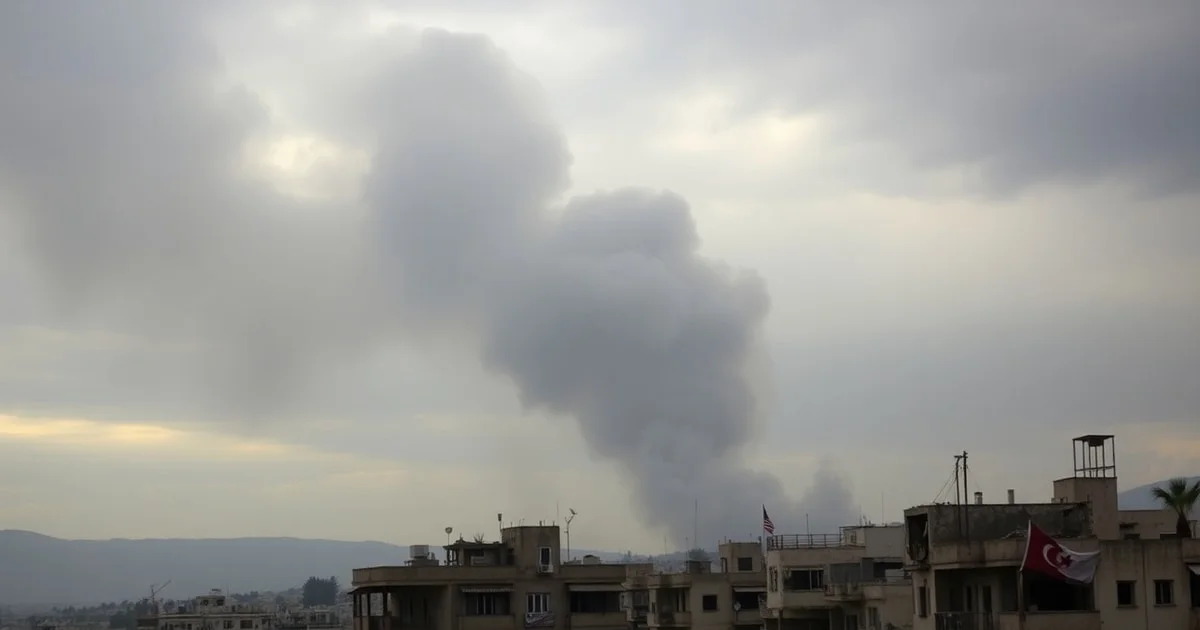
Recent days have witnessed a significant escalation of hostilities in the Middle East, particularly along the Israel-Lebanon border, as Middle East Tensions Escalate: Israel Strikes Lebanon despite ongoing international mediation efforts. The latest wave of Israeli drone strikes across southern Lebanon on Tuesday killed at least 17 people and injured dozens more, even as U.S. President Donald Trump indicated that Israel and Hezbollah had agreed to de-escalate fighting. This sudden surge in cross-border violence, coupled with Israel's deepest incursion into Lebanese territory in over two decades, threatens to unravel fragile ceasefires and plunge the region into a wider, more devastating conflict. The situation is compelling, demanding urgent global attention to prevent further deterioration of peace and stability.
- Renewed Hostilities: Middle East Tensions Escalate as Israel Strikes Lebanon
- Background to the Current Flare-Up
- Humanitarian Crisis and Civilian Impact
- International Reactions and Diplomatic Stalemate
- The Role of Key Actors
- Impact on Regional Stability
- Conclusion
- Frequently Asked Questions
- Further Reading & Resources
Renewed Hostilities: Middle East Tensions Escalate as Israel Strikes Lebanon
The latest escalation marks a perilous phase in the protracted conflict between Israel and the Iran-backed militant group Hezbollah. On Tuesday, June 2, 2026, Israeli drone strikes targeted multiple locations in southern Lebanon, including the towns of Burj al-Shamali, Abba, and Tebnine, killing 17 and injuring 64. Disturbingly, one strike near the Nabatieh–Khardali road killed a dentist, his son, and daughter. Another attack reportedly killed two Syrian workers at a plant nursery in Jebchit, while others targeted vehicles and residential areas. These attacks occurred despite claims by President Trump that a de-escalation agreement had been reached between Israel and Hezbollah.
Hezbollah, for its part, has continued to launch rockets and drones towards northern Israel. The Israeli military reported intercepting two projectiles fired from Lebanon overnight into northern Israel and identified a drone striking a military position in western Galilee, though no injuries were reported in these incidents. This exchange of fire underscores the deep-seated mistrust and continuous cycle of retaliation that has defined the border region for decades.
Adding to the complexity, Israeli ground forces have recently made their deepest incursion into southern Lebanon in 26 years, capturing the strategic Beaufort Castle near Nabatiyeh. This move, described by Israeli Prime Minister Benjamin Netanyahu as a "dramatic shift," aims to dismantle Hezbollah infrastructure and expand Israel's control over a security zone. The incursion has prompted calls for evacuation in areas like Nabatiyeh and Tyre, further exacerbating the humanitarian crisis.
Background to the Current Flare-Up
The current hostilities are rooted in a long history of conflict, with the most recent major fighting between Hezbollah and Israel commencing in late 2023. This conflict intensified significantly in March 2026, following a wider regional conflict linked to the Iran war, which began after Israel and the United States launched a war against Iran, including the assassination of Iranian supreme leader Ali Khamenei. Hezbollah responded to these regional developments by resuming rocket strikes on Israel, prompting a wave of Israeli airstrikes across Lebanon, including the capital Beirut.
A series of ceasefires and diplomatic efforts have attempted to quell the violence. An initial 60-day ceasefire was brokered in November 2024, which required Hezbollah fighters to move north of the Litani River and Israel to withdraw forces from southern Lebanon. However, violations by both sides quickly undermined this agreement, with Israel continuing daily attacks and Hezbollah rebuilding its militant infrastructure.
In April 2026, a temporary 10-day truce was agreed upon, mediated by the United States, followed by extensions. Most recently, on June 1, Israel and Hezbollah reportedly agreed to a ceasefire under a U.S. proposal, with Israel committing not to target Beirut's southern suburbs and Hezbollah vowing not to attack Israel. However, the events of June 2, 2026, clearly demonstrate the fragility of these agreements. Israeli Defense Minister Israel Katz stated that while Israel was holding off on broad strikes on Beirut following a U.S. request, operations in an expanding "security zone" in southern Lebanon would continue, and Dahiyeh (a Beirut suburb) would be struck if northern Israeli communities were targeted.
Humanitarian Crisis and Civilian Impact
The protracted and intensifying conflict has unleashed a severe humanitarian crisis in Lebanon. The Lebanese Ministry of Public Health reported a cumulative death toll of 3,468 people and 10,577 injured from Israeli military operations since March 2, 2026. These figures highlight the devastating human cost of the ongoing violence.
The conflict has also led to massive displacement. Over one million people in Lebanon, or one-fifth of the population, have been forced to flee their homes since March 2026. This makes Lebanon's displacement crisis one of the fastest-growing and most severe globally in recent years. Entire towns and villages in southern Lebanon have been emptied, with residents receiving evacuation orders that force them to seek refuge in safer areas, often with limited access to essential services.
Medical infrastructure has also been directly impacted. An Israeli airstrike on June 1 near the MSF-supported Jabal Amel Hospital in Tyre killed four people and injured 127, including 39 hospital staff. The attack caused extensive damage to the hospital's in-patient department, radiology department, and intensive care unit, severely reducing available medical services. A day prior, the nearby Hiram Hospital, also MSF-supported, was struck, injuring 13 healthcare workers. These repeated attacks on healthcare facilities have been condemned by Doctors Without Borders (MSF) as a grave failure to protect the medical mission.
The economic ramifications are equally dire. Lebanon was already grappling with a severe economic crisis since 2019, with over 70% of its population living in multidimensional poverty before the current hostilities. The ongoing conflict has exacerbated these vulnerabilities, particularly affecting livelihoods in the agricultural sector, which constitutes about 80% of southern Lebanon's GDP. Infrastructure, including crucial bridges, has been targeted, isolating communities and further hindering economic activity and humanitarian access.
International Reactions and Diplomatic Stalemate
The escalating tensions have drawn sharp international condemnation and calls for de-escalation. The United Nations Security Council convened a meeting at the request of France to discuss the deteriorating situation. While recognizing Israel's right to self-defense, France, along with other nations, has criticized the scale of Israel's operations in Lebanon as unjustified and a "major strategic mistake."
UN Secretary-General António Guterres has stressed the critical need for peacekeepers to remain in Lebanon beyond their mandate expiration at the end of 2026, proposing scenarios for expanded UNIFIL (United Nations Interim Force in Lebanon) presence. However, the UNIFIL mandate was subject to a U.S. push to end it, reflecting differing international perspectives on the role and effectiveness of peacekeeping forces in the region.
There is also significant debate regarding the scope of the broader ceasefire agreements. While U.S. President Trump announced a ceasefire with Iran and stated that Hezbollah had agreed to halt attacks on Israel, Israeli Prime Minister Netanyahu contradicted this, insisting that Israel's military operations in southern Lebanon would continue. Iran, through its Foreign Minister Abbas Araqchi, maintained that the U.S.-Iran truce was "unequivocally a ceasefire on all fronts, including in Lebanon," and that its violation in one area constituted a violation everywhere. This disagreement over the ceasefire's geographic application continues to fuel hostilities.
Countries like Pakistan, which mediated the initial U.S.-Iran ceasefire, affirmed that it included Lebanon. However, Israel explicitly stated that Lebanon was not part of that agreement, creating a dangerous diplomatic loophole that allows for continued military action. The international community, including Australia, Italy, and Egypt, has urged for Lebanon's inclusion in any ceasefire to prevent a wider regional crisis.
The Role of Key Actors
Israel's Strategic Objectives
Israel maintains that its operations in Lebanon are defensive, aimed at eliminating the threat posed by Hezbollah's rocket and drone capabilities. Prime Minister Netanyahu has emphasized that Israel will continue to fight until this threat is neutralized, either through military action or by the Lebanese government disarming Hezbollah. The recent ground incursions and capture of strategic locations like Beaufort Castle are seen as part of this strategy to establish a security zone and dismantle Hezbollah's military infrastructure in southern Lebanon. Israel has also threatened strikes on Beirut's southern suburbs, a Hezbollah stronghold, if attacks on northern Israeli communities persist.
Hezbollah's Response and Regional Alignment
Hezbollah, backed by Iran, views its actions as resistance against Israeli occupation and aggression. The group has consistently affirmed its "natural and legal right to resist the occupation and respond to its aggression." Despite calls for de-escalation, Hezbollah has launched a barrage of rockets and drones in response to Israeli strikes and incursions. The group's leadership has made it clear that it will not accept a "partial ceasefire" and warned of a "deeper and stronger response" if Beirut's southern suburbs are targeted. Hezbollah's close alignment with Iran means that tensions in the broader Middle East, particularly involving the U.S. and Iran, directly impact the Israel-Lebanon front.
International Mediation and Calls for Peace
The United States has played a central role in mediating ceasefires and facilitating negotiations between Israel and Lebanon. U.S.-brokered talks between Israel and Lebanon in Washington, the first in decades, face immense pressure amidst the escalating violence. President Trump's efforts to secure de-escalation, including direct communication with both Israeli and Hezbollah representatives, highlight the urgency of the situation.
However, the effectiveness of these diplomatic efforts is continuously challenged by ongoing hostilities and conflicting interpretations of ceasefire terms. The international community, including the UN and European nations, continues to urge for a comprehensive and respected ceasefire, protection of civilians, and renewed commitment to a peaceful resolution.
Impact on Regional Stability
The escalating conflict between Israel and Lebanon has far-reaching implications for broader regional stability. The direct involvement of Iran through its backing of Hezbollah means that the conflict is deeply intertwined with the wider U.S.-Israel-Iran dynamic. Any significant escalation along the Israel-Lebanon border risks triggering a wider regional confrontation, drawing in other state and non-state actors, potentially including Syria, Iraq, and various proxy groups across the Levant. This complex web of alliances and antagonisms means that local skirmishes can rapidly metastasize into broader regional conflagrations, with unpredictable global consequences. The humanitarian crisis, with massive displacement and destruction, puts immense strain on Lebanon, a country already struggling with economic collapse and political instability. This sustained instability not only threatens the fabric of Lebanese society but also creates fertile ground for extremist narratives, further destabilizing an already fragile region. Continued attacks on civilian infrastructure and healthcare facilities violate international humanitarian law, raising serious concerns among human rights organizations and exacerbating the suffering of innocent populations. Furthermore, the conflict's ripple effects extend beyond human suffering, impacting global energy markets and disrupting international trade routes, underscoring its far-reaching economic and geopolitical significance. The calls from world leaders for a comprehensive ceasefire that explicitly includes Lebanon underscore the critical importance of de-escalating this front to prevent a devastating domino effect across the Middle East.
Conclusion
The current situation where Middle East Tensions Escalate: Israel Strikes Lebanon represents a critical juncture in the volatile region. Despite ongoing diplomatic efforts and announced ceasefires, the cycle of violence persists, leading to tragic loss of life, widespread displacement, and severe damage to infrastructure. The international community's inability to enforce a comprehensive and mutually respected ceasefire allows for continued military action, threatening to plunge the Middle East into an even deeper and more widespread conflict. A durable solution requires not only an immediate cessation of hostilities but also robust diplomatic engagement, adherence to international law, and a genuine commitment from all parties to prioritize peace and stability over military confrontation. The imperative for de-escalation and comprehensive peace is more urgent than ever to safeguard civilian lives and prevent further regional destabilization.
Frequently Asked Questions
Q: What triggered the latest escalation of hostilities between Israel and Lebanon?
A: The current flare-up stems from a long history of conflict, significantly intensifying after a wider regional conflict linked to the Iran war in March 2026. Hezbollah responded by resuming rocket strikes on Israel, leading to retaliatory Israeli airstrikes and ground incursions across southern Lebanon.
Q: How has the conflict impacted civilians and the humanitarian situation in Lebanon?
A: The conflict has caused a severe humanitarian crisis, with over a million people displaced and thousands killed or injured. Essential infrastructure, including hospitals and bridges, has been extensively damaged, exacerbating an already dire economic situation and severely hindering humanitarian aid delivery.
Q: What is the international community's stance on the Israel-Lebanon conflict?
A: The international community, including the UN and various nations, has condemned the escalation and called for de-escalation and a comprehensive ceasefire. However, diplomatic efforts are challenged by differing interpretations of agreements and ongoing hostilities, with many nations pushing for Lebanon's explicit inclusion in any truce.