Mideast on Brink: Israel & Iran Exchange Fire Ignites New Fears
The Middle East finds itself once again at a critical juncture, with regional stability hanging precariously in the balance as the Mideast on Brink: Israel & Iran Exchange Fire ignites new fears across the globe. This dangerous escalation underscores the deep-seated hostilities and complex geopolitical dynamics that characterize the region, pushing the Mideast on Brink: Israel & Iran Exchange Fire once more into the global spotlight. The direct strikes come after months of simmering tensions and proxy confrontations, forcing international actors to renew calls for de-escalation amidst this perilous new phase.
- Background to Escalation: A Fragile Peace Shattered
- The Recent Exchange of Fire: Mideast on Brink: Israel & Iran Exchange Fire
- International Reactions and Calls for De-escalation
- Potential Regional Impacts
- Expert Analysis and Future Scenarios
- Conclusion
- Frequently Asked Questions
- Further Reading & Resources
Background to Escalation: A Fragile Peace Shattered
The recent direct confrontation on June 7th and 8th, 2026, did not emerge in a vacuum but rather within the context of an ongoing "Iran war" that commenced on February 28, 2026. This broader conflict began with a significant joint military operation by the United States and Israel, dubbed "Operation Epic Fury." These initial strikes targeted critical Iranian military infrastructure and leadership, notably resulting in the death of Iran's Supreme Leader, Ali Khamenei.
Historical Tensions and Proxy Warfare
The animosity between Iran and Israel is rooted in decades of political, ideological, and strategic divergences, intensifying significantly after the 1979 Iranian Revolution. Iran ceased recognizing Israel and adopted an openly hostile posture, viewing Israel's presence in the region as illegitimate. Conversely, Israel has consistently identified Iran as one of its most profound security threats, citing concerns over its nuclear program, ballistic missile development, and extensive network of regional proxies.
For years, this rivalry primarily unfolded through a complex web of proxy conflicts rather than direct military engagements. Iran has provided substantial support to various non-state actors, including Hezbollah in Lebanon and Palestinian groups like Hamas, enabling them to challenge Israeli interests and security. In response, Israel has engaged in covert operations, targeted airstrikes against Iranian-backed forces in Syria, and allegedly assassinated Iranian nuclear scientists. This "proxy-war" dynamic characterized the conflict for decades, albeit with increasing intensity in recent years.
Recent Provocations Leading to Direct Confrontation
The shift from proxy confrontations to direct military exchanges between Israel and Iran began to materialize in 2024. This period saw missile and drone exchanges, with Israel striking Iranian targets and Iran retaliating with attacks on Israeli territory. A "Twelve-Day War" in June 2025 further escalated tensions, involving Israeli strikes on Iranian military and nuclear facilities, which concluded with a temporary ceasefire.
The current "Iran war" of 2026 saw a significant escalation from its outset on February 28, with US-Israeli forces launching nearly 900 strikes in the first 12 hours alone. These attacks aimed to dismantle Iran's military capabilities and leadership, leading to widespread retaliatory strikes by Iran across the Middle East against US embassies, military installations, and oil infrastructure.
A fragile ceasefire, brokered by the U.S. and other mediators, had been in effect since April 8, 2026. However, this truce remained precarious, frequently tested by ongoing clashes between Israel and Hezbollah in Lebanon, and disagreements over frozen Iranian assets and sanctions relief. The events of early June 2026 ultimately proved too much for the ceasefire to withstand.
The Recent Exchange of Fire: Mideast on Brink: Israel & Iran Exchange Fire
The latest and most alarming phase of direct confrontation erupted over the weekend of June 7-8, 2026, marking a significant breach of the April ceasefire. This tit-for-tat exchange has dramatically heightened regional anxieties.
Israel's Retaliation in Beirut
The immediate trigger for the recent escalation was Israel's launch of airstrikes on Sunday, June 7, 2026, targeting what it described as suspected Hezbollah positions in Beirut's southern suburbs. These strikes resulted in two fatalities and 20 injuries, according to the Lebanese Ministry of Health. Israel's actions in Beirut were undertaken despite reported requests from Washington for restraint.
Iran's Barrage of Missiles
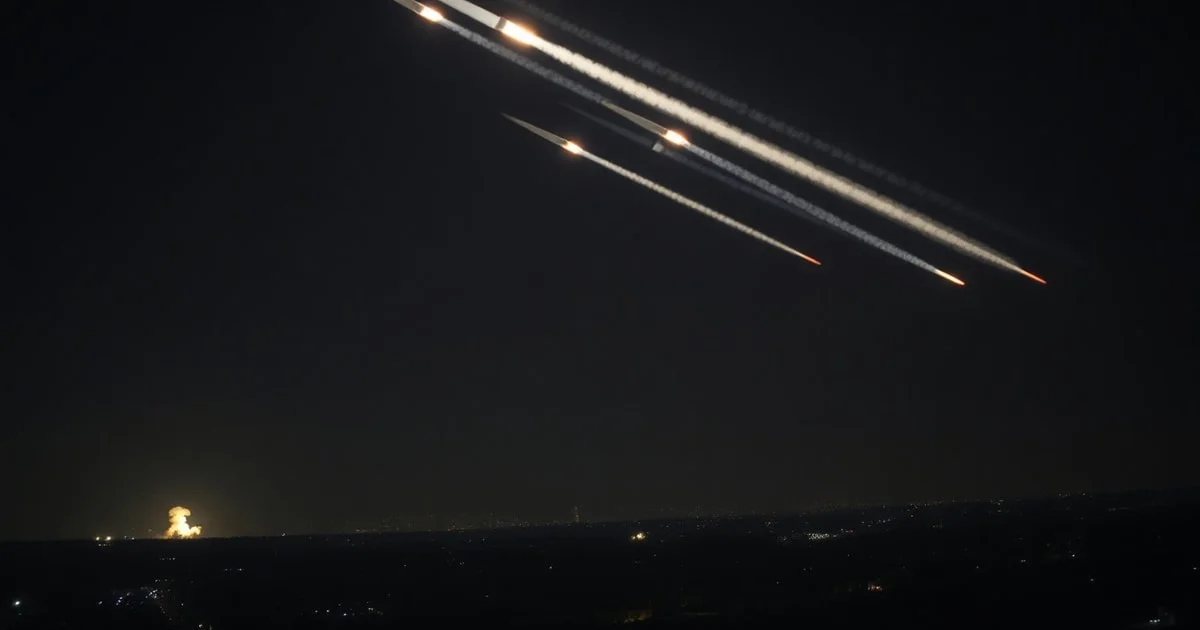
Hours after the Israeli strikes in Lebanon, Iran launched a significant barrage of missiles toward Israel on Sunday night, June 7, 2026. This marked the first direct missile attack by Iran against Israel since the April ceasefire had been established. The Israel Defense Forces (IDF) reported intercepting all incoming missiles, with sirens blaring across the country. However, reports indicated that earlier Iranian missile strikes during the broader 2026 conflict had caused casualties and damage in Israel, including nine Israeli civilians killed in Beit Shemesh in March. Iran's Islamic Revolutionary Guard Corps (IRGC) claimed responsibility for the Sunday attack, stating it targeted Ramat David Air Base in northern Israel, which it considered the "source" of aggression against southern Lebanon. The IRGC also issued a stern warning, stating that "tonight's operation was a warning, and if aggressions are repeated, the responses will be broader and will include all" U.S.-Israeli targets in the Middle East.
Israel's Counter-Strikes on Iranian Territory
In direct response to Iran's missile launch, Israel conducted retaliatory airstrikes early Monday, June 8, 2026. The Israeli Air Force struck military targets in western and central Iran, without providing specific details. Iranian state media reported hearing explosions in several cities, including Isfahan, Karaj, Tabriz, and Tehran, leading to Iran closing the airspace around Tehran's Imam Khomeini International Airport. An Israeli official, speaking anonymously, stated that "Israel will respond forcefully" and that "The Iranian terror regime made a grave mistake when it chose terror once again."
Further complicating the volatile situation, a missile reportedly launched from Yemen, home to the Iranian-backed Houthi rebels, also targeted Israel early Monday morning, triggering sirens across central Israel before being intercepted by the IDF. Simultaneously, Saudi Arabia reported missile alert sirens near an air base hosting U.S. forces, indicating the broad regional impact of the escalating tensions.
International Reactions and Calls for De-escalation
The rapid exchange of fire has drawn immediate and concerned reactions from the international community, highlighting the global apprehension over a wider regional conflagration.
Global Concerns and Calls for Restraint
World leaders have expressed deep concern over the escalating violence. President Donald Trump, in an interview, urged Israeli Prime Minister Benjamin Netanyahu not to retaliate after Iran's initial missile strike, stating, "Each of them had their fun. Israel had its strike, and Iran had its strike. We don't need another one." Trump reportedly called Netanyahu to directly press for restraint, believing he had convinced the Israeli leader to hold off. However, Israel's subsequent strikes in Iran suggest a defiance of these calls.
British Foreign Secretary Yvette Cooper also appealed for de-escalation, warning that renewed conflict between Iran and Israel would serve no one's interests and emphasized the need for all parties to return to diplomatic channels. The broader international community, including many European and Asian nations, has predominantly condemned the Iranian retaliatory strikes and called for peace, though some countries have also criticized the US-Israeli strikes.
Diplomatic Efforts and Stalled Negotiations
The latest round of hostilities severely complicates ongoing diplomatic efforts to broker a lasting peace deal and extend the fragile ceasefire that began in April. Washington and Tehran had reportedly been "close" to reaching a peace agreement in recent weeks, but the current escalation puts these negotiations in jeopardy.
One of the major sticking points in these diplomatic efforts has been the question of economic relief for Iran, with disagreements over frozen Iranian assets and sanctions. Iran has demanded "full compensation" for damages incurred during the conflict that began in February 2026. The ongoing clashes between Israel and Hezbollah in Lebanon, which Iran links to any lasting agreement, further complicate mediation. The U.S. Central Command reiterated that "U.S. forces across the Middle East remain vigilant and ready," while the U.S. Embassy in Israel advised employees to shelter in place. The United Nations Security Council, in March 2026, had already passed a resolution demanding an end to attacks by Iran and its proxies against Arab states.
Potential Regional Impacts
The direct exchange of fire between Israel and Iran carries profound implications for the entire Middle East, threatening to destabilize an already volatile region.
Impact on Neighboring States
The expansion of the conflict directly impacts neighboring states, many of whom host U.S. military forces. The missile alert sirens in Saudi Arabia near a U.S. air base serve as a stark reminder of the broader risks involved. Earlier in the "Iran war," Iran had launched retaliatory strikes against US military bases in Qatar, Kuwait, the UAE, and Bahrain, along with cities like Abu Dhabi, Doha, Kuwait City, and Riyadh, demonstrating Tehran's willingness to widen the conflict.
Lebanon, already grappling with internal complexities and the persistent presence of Hezbollah, is particularly vulnerable. Israel's strikes in Beirut further inflame tensions within the country, raising fears of a renewed, full-scale Israel-Hezbollah conflict. The involvement of Houthi rebels in Yemen, launching missiles towards Israel, also highlights the interconnectedness of regional conflicts and the potential for multiple fronts to ignite.
Economic Repercussions
A prolonged or escalating conflict between Israel and Iran would undoubtedly have significant global economic repercussions, especially concerning energy markets. The Strait of Hormuz, a crucial artery for global oil supplies, has been a focal point of tensions, with Iran previously threatening its closure. Disruptions to shipping routes in the Persian Gulf could lead to increased volatility in oil prices and impact global trade.
The initial "Iran war" in February 2026 already caused global economic disruption and a fuel crisis. Renewed hostilities threaten to exacerbate these issues, with experts warning of a "long drawn, devastating struggle with far reaching global economic consequences." The targeting of infrastructure, such as Iran's petrochemical facilities reported in the latest Israeli strikes, further indicates the economic dimension of this conflict.
Expert Analysis and Future Scenarios
Analysts are closely watching the situation, attempting to decipher the strategic calculations of all parties involved and project potential future scenarios.
Perspectives on Deterrence
The recent exchange of fire suggests a breakdown in deterrence, or at least a highly calibrated form of it, where each side feels compelled to respond to perceived aggressions. Iran's IRGC explicitly called its missile strike a "warning," indicating a desire to demonstrate capability and resolve without necessarily triggering all-out war immediately. However, Israel's quick retaliation signals its firm policy of not absorbing attacks without consequences.
Some experts argue that while Iran's central command has been significantly downgraded following the initial US-Israeli strikes in February, the country possesses "unique mechanisms for survival, rooted in historical tenacity." There's also a theory of "de-escalation through escalation," where intense but contained strikes are used to achieve strategic goals without spiraling out of control. However, the sheer unpredictability of such a strategy in a densely militarized region makes it inherently risky. The calculus is that by launching waves of less sophisticated drones and missiles, Iran can force adversaries to expend valuable air defense interceptors, potentially leaving cities and infrastructure vulnerable later.
Pathways to Stability or Further Escalation
The future trajectory of the conflict remains highly uncertain. One scenario involves a return to a fragile, uneasy ceasefire, potentially brokered by continued international diplomatic efforts. This would require significant concessions and a genuine commitment to de-escalation from both Israel and Iran, possibly driven by pressure from the United States and other global powers.
However, the current climate, marked by a defiance of international calls for restraint and the targeting of each other's territories, leans towards continued escalation. The ongoing "Iran war" is currently on its 100th day, and the underlying issues remain unresolved. Experts warn that the interplay between ancient identity and modern clerical authority within Iran, coupled with Israel's security imperatives, will be decisive in whether the nation consolidates or fractures, and whether the region moves towards stability or further conflict. The potential for miscalculation, given the high stakes and historical animosity, is enormous, threatening to plunge the Middle East into unprecedented regional instability.
Conclusion
The latest exchange of fire between Israel and Iran represents a dangerous and deeply concerning development in an already tumultuous region. The breaking of the April ceasefire and the direct targeting of each other's territories underscore the severe risks of a widening conflict with unpredictable consequences for regional and global stability. The Mideast on Brink: Israel & Iran Exchange Fire serves as a stark reminder of the urgent need for robust diplomatic engagement and genuine de-escalation efforts. Without concerted action from all parties and the international community, the potential for further escalation and devastating repercussions remains a grave and immediate threat. The path forward is fraught with peril, demanding cautious diplomacy and a commitment to preventing a full-scale regional war.
Frequently Asked Questions
Q: What triggered the latest exchange of fire between Israel and Iran?
A: Israel's airstrikes on suspected Hezbollah positions in Beirut triggered Iran's retaliatory missile barrage, which was then met with Israeli counter-strikes on Iranian territory, shattering the April ceasefire. This tit-for-tat escalation marked a significant breach of the fragile truce.
Q: What is the international community's reaction to the escalation?
A: World leaders, including the U.S. and UK, have expressed deep concern, urging restraint and de-escalation from both sides. Diplomatic efforts for a lasting peace agreement, which were reportedly close to completion, are now severely jeopardized by the renewed hostilities.
Q: What are the potential economic impacts of a prolonged conflict?
A: An escalating conflict threatens global energy markets, particularly through the crucial Strait of Hormuz, potentially causing oil price volatility and disrupting global trade. Such instability would exacerbate existing economic challenges worldwide, impacting multiple sectors beyond just energy.