Tiananmen Massacre Anniversary: Justice Demanded for Victims
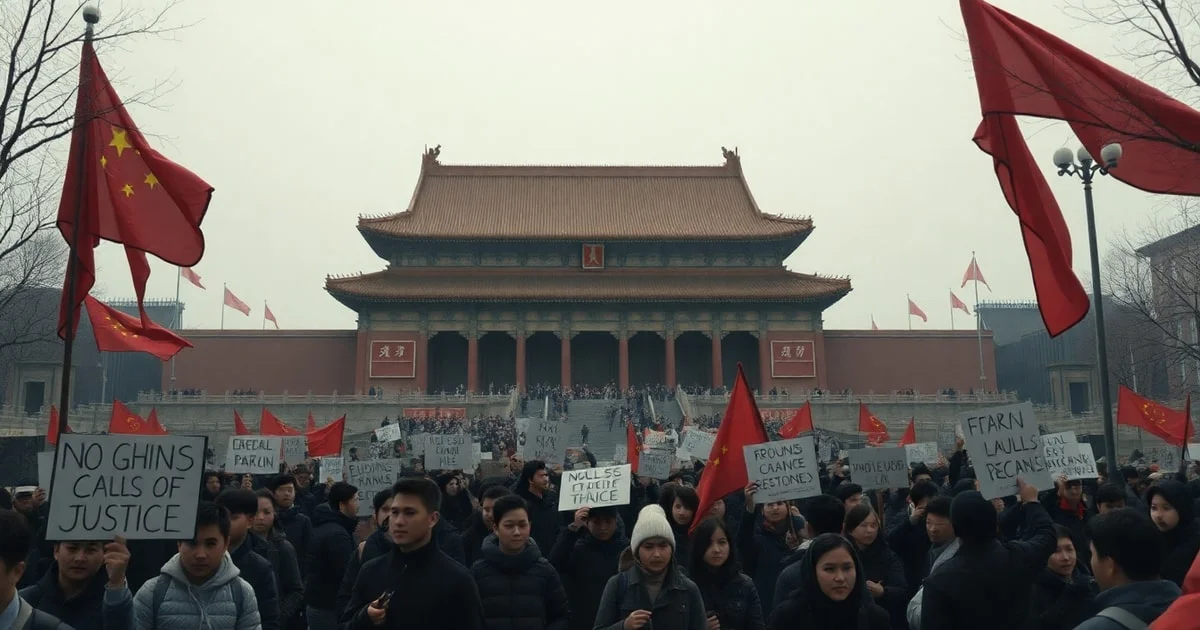
The annual remembrance of the Tiananmen Massacre Anniversary stirs global conscience, renewing impassioned calls for justice for the victims of the brutal crackdown that occurred on June 4, 1989. This pivotal moment in modern Chinese history saw the suppression of student-led pro-democracy demonstrations, leaving an indelible scar on the nation and sparking international outrage. As years turn into decades, the profound demand for accountability and recognition of the tragic events continues to resonate worldwide, challenging the persistent historical silence imposed by Beijing. The international community, human rights organizations, and survivors alike persist in their advocacy, ensuring the world does not forget the price paid for freedom and expression, making the call for justice more resonant with each passing year.
- The Spring of 1989: Seeds of Dissent
- Escalation and Growing Momentum
- June 4th, 1989: The Crackdown
- The Lingering Silence: China's Stance
- Global Condemnation and Calls for Accountability
- The Legacy and Future: Tiananmen Massacre Anniversary: Justice Demanded
- Frequently Asked Questions
- Further Reading & Resources
The Spring of 1989: Seeds of Dissent
The late 1980s in China were a period of immense social and economic transformation, marked by Deng Xiaoping's economic reforms. While these reforms brought prosperity, they also led to growing concerns about corruption, inflation, and a widening gap between the rich and the poor. Alongside economic grievances, there was a rising desire for greater political freedoms and democratic reforms, particularly among intellectuals and students. The limited political opening that accompanied economic liberalization inadvertently fueled these aspirations, creating an environment where calls for change could emerge.
The Student Movement Takes Shape
The death of Hu Yaobang, a reform-minded former General Secretary of the Communist Party who had been purged in 1987, served as a catalyst for the burgeoning student movement. Students mourned Hu Yaobang as a symbol of political honesty and reform, and his death on April 15, 1989, provided a focal point for their discontent. What began as a series of spontaneous memorial gatherings quickly evolved into large-scale demonstrations in Beijing's Tiananmen Square, attracting thousands of students and ordinary citizens.
Initially, student demands focused on combating corruption, promoting press freedom, and advocating for democratic governance. They called for dialogue with government leaders, hoping to influence policy from within the existing framework. However, as the protests grew in size and intensity, and official responses remained largely dismissive or accusatory, the students' resolve hardened, and their demands became more explicitly political, challenging the Party's authority.
Escalation and Growing Momentum
By mid-May 1989, the protests had swelled into the largest public demonstrations in the history of the People's Republic of China. Hundreds of thousands of students, workers, and citizens occupied Tiananmen Square, transforming it into a vibrant hub of dissent and a powerful symbol of popular aspiration. The iconic Goddess of Democracy statue, a towering figure modeled on the Statue of Liberty, was erected by art students, becoming a potent emblem of their calls for freedom and democracy.
The movement gained significant international attention, with global media broadcasting images of the peaceful demonstrations to the world. Sympathy and support poured in from various corners, further emboldening the protesters. The students' moral high ground, their organized approach, and their unwavering commitment to non-violence garnered widespread admiration, both domestically and internationally. Their presence in the heart of Beijing for weeks showcased a remarkable display of civil disobedience and collective will.
Hunger Strikes and Government Paralysis
A critical turning point arrived with the initiation of hunger strikes by thousands of students in mid-May. This drastic measure was intended to pressure the government into meaningful dialogue and to acknowledge the legitimacy of their movement. The hunger strikes intensified public sympathy and significantly raised the stakes, as the health of the students deteriorated rapidly. The government, caught between internal divisions and a desire to maintain control, struggled to formulate a coherent response.
Initial attempts at dialogue proved fruitless, often undermined by mutual distrust and the government's unwillingness to concede to key student demands. Premier Li Peng's stern stance and the declaration of martial law on May 20, 1989, signaled a significant shift towards a more repressive approach. This move, however, did not deter the protesters; instead, it further solidified their resolve and drew even more citizens into the square in defiance of the martial law decree. The situation had reached a critical impasse, with both sides unwilling to back down, setting the stage for the tragic events that would soon unfold.
June 4th, 1989: The Crackdown
The early hours of June 4, 1989, marked a brutal turning point in Chinese history. After weeks of peaceful demonstrations, the Chinese government deployed heavily armed troops and tanks of the People's Liberation Army (PLA) to clear Tiananmen Square and suppress the pro-democracy movement. The military advanced from multiple directions, meeting resistance from citizens who attempted to block their path.
The crackdown was swift and violent. Soldiers fired indiscriminately into crowds of unarmed students and citizens, and tanks rolled through the streets of Beijing, crushing barricades and, in some instances, people. Eyewitness accounts and reports from foreign journalists painted a grim picture of chaos, bloodshed, and terror. Hospitals were overwhelmed with casualties, and the scale of the violence shocked the international community.
Casualties and Aftermath
Precise casualty figures for the Tiananmen Massacre Anniversary remain a deeply contentious issue. The Chinese government has never released an official death toll, and figures vary widely. Estimates from various sources, including diplomatic cables, human rights organizations, and eyewitness accounts, suggest that hundreds, if not thousands, of lives were lost. Many more were injured, and countless individuals were arrested in the subsequent purge. The lack of transparency surrounding the events continues to be a major obstacle to achieving full truth and reconciliation.
In the immediate aftermath, the government imposed a harsh crackdown on dissent across the country. Leaders of the student movement were arrested, imprisoned, or forced into exile. Independent organizations were dismantled, and media censorship was intensified. The memory of Tiananmen Square was systematically erased from public discourse within China, becoming a taboo subject in textbooks, official histories, and online platforms. This widespread suppression aimed to prevent any future challenges to the Communist Party's authority.
The Lingering Silence: China's Stance
For over three decades, the Chinese government has maintained a steadfast and unyielding position regarding the events of June 4, 1989. Officially, the incident is referred to as the "political turmoil" or "counter-revolutionary rebellion" that was "correctly handled" to ensure stability and national development. This narrative asserts that the government's actions were necessary to restore order and prevent further chaos, thereby safeguarding China's future.
This official stance is enforced through extensive censorship and historical revisionism. Any public discussion, commemoration, or even subtle reference to the Tiananmen Massacre is strictly prohibited within mainland China. The Great Firewall actively blocks access to international news and information regarding the incident, while domestic websites, social media platforms, and educational materials are meticulously scrubbed of any related content. This systematic suppression has created a historical void, effectively preventing younger generations from having any direct memory or access to accurate information about what transpired. The government's absolute control over information ensures that the memory of the crackdown largely exists outside its borders, creating a stark generational divide in understanding this pivotal moment.
The absence of an official acknowledgment, apology, or independent investigation stands as a significant barrier to healing and reconciliation. For the victims' families, particularly the Tiananmen Mothers, a group of bereaved parents who have tirelessly campaigned for truth and justice, the government's silence is a source of profound anguish. Their annual pleas for accountability and the release of information are consistently met with indifference or increased surveillance, underscoring the formidable challenge of breaking the official narrative and seeking closure for their profound losses.
Global Condemnation and Calls for Accountability
The international community reacted with widespread condemnation to the brutal suppression of the Tiananmen protests. Governments worldwide expressed shock and outrage at the use of military force against unarmed civilians. Many nations imposed sanctions on China, including arms embargoes, restrictions on high-level exchanges, and reviews of economic aid programs. These measures reflected a global consensus that such human rights abuses could not go unaddressed.
Despite Beijing's consistent refusal to acknowledge wrongdoing, international pressure for truth and accountability has never fully abated. The European Union, for example, maintains an arms embargo on China, a direct consequence of the 1989 events. International bodies, including various UN human rights mechanisms, also regularly highlight concerns about China's human rights record, though concrete action is often challenging due to Beijing's veto power and diplomatic influence. Human rights organizations, such as Amnesty International and Human Rights Watch, have continuously documented the events, collected testimonies, and advocated for an independent investigation into the massacre. They regularly publish reports, urging governments to press China on the issue of human rights and to end its systemic censorship surrounding Tiananmen.
The calls for accountability are not merely historical; they are deeply intertwined with contemporary concerns about human rights in China. Critics argue that the government's unaddressed past at Tiananmen emboldens its current repressive policies, particularly concerning ethnic minorities in Xinjiang, democratic freedoms in Hong Kong, and suppression of dissent across the country. Therefore, for many, the demand for justice regarding the Tiananmen Massacre Anniversary is seen as a crucial step towards fostering greater respect for human rights and rule of law within China today.
Voices from Abroad: Activism and Remembrance
Outside mainland China, the memory of Tiananmen Square is kept alive through the tireless efforts of activists, survivors, and diaspora communities. Annual vigils, particularly in Hong Kong (prior to recent political changes, which have seen the public commemoration increasingly curtailed), London, New York, and other major cities, serve as poignant reminders of the events of June 4, 1989. These gatherings often feature candlelight ceremonies, speeches from survivors, and cultural performances aimed at educating new generations about the historical significance and ongoing relevance of the massacre. Digital activism, utilizing encrypted platforms and global networks, also strives to bypass China's censorship, ensuring that information about the massacre reaches a wider audience, albeit with significant challenges.
These commemorative events are crucial for several reasons. They provide a platform for victims' families and former student leaders, many of whom live in exile, to share their stories and maintain pressure on the Chinese government. They also ensure that the narrative of Tiananmen is not solely dictated by Beijing, offering an alternative historical record rooted in eyewitness accounts and verifiable facts. Through art, literature, documentaries, and academic research, the memory of Tiananmen continues to be explored and preserved, counteracting the extensive efforts to erase it. This sustained activism plays a vital role in upholding the international demand for justice.
The Legacy and Future: Tiananmen Massacre Anniversary: Justice Demanded
The Tiananmen Massacre remains a pivotal and unresolved chapter in modern Chinese history. Its legacy continues to shape China's domestic policies, particularly its approach to internal security, dissent, and control over information. The "stability above all else" mantra, often invoked by the Chinese Communist Party, can be directly linked to the aftermath of June 4, 1989, justifying stringent measures to prevent any perceived threats to its authority. This approach has led to increasingly sophisticated surveillance systems and pervasive censorship that defines the country's social and political landscape today.
Internationally, the memory of Tiananmen continues to influence how the world views China. For many, it serves as a stark reminder of the human cost of authoritarianism and the ongoing struggle for fundamental freedoms. It underscores the challenges of engaging with a powerful state that simultaneously seeks global integration while suppressing internal dissent and historical truth. The persistent calls for justice for the victims of the Tiananmen Massacre Anniversary highlight a fundamental divergence in values between the Chinese government and much of the global community.
As new generations emerge, the challenge lies in ensuring that the lessons of Tiananmen are not forgotten. Education, remembrance, and continued advocacy are crucial to keeping the demand for truth and justice alive. The hope remains that one day, the victims will be honored, the truth will be acknowledged, and China will come to terms with this painful part of its past. The enduring calls for justice reflect a universal aspiration for human dignity and accountability, a hope that transcends borders and generations, ensuring that the Tiananmen Massacre Anniversary remains a vital moment for reflection and remembrance.
Frequently Asked Questions
Q: What happened during the Tiananmen Massacre?
A: The Tiananmen Massacre refers to the brutal suppression of student-led pro-democracy protests by the Chinese military in Beijing on June 4, 1989. After weeks of peaceful demonstrations in Tiananmen Square, the government deployed armed troops and tanks, resulting in a violent crackdown on unarmed civilians.
Q: How many people died in the Tiananmen Massacre?
A: The exact number of casualties remains unknown as the Chinese government has never released official figures. Estimates from various international sources and eyewitness accounts range from several hundred to several thousand deaths, with many more injured and arrested.
Q: What is China's official stance on the Tiananmen Massacre?
A: The Chinese government officially refers to the events of June 4, 1989, as "political turmoil" or a "counter-revolutionary rebellion" that was "correctly handled" to ensure national stability. Public discussion or remembrance of the incident is strictly censored within mainland China.