How Ancient Civilizations Tracked Celestial Events Revealed
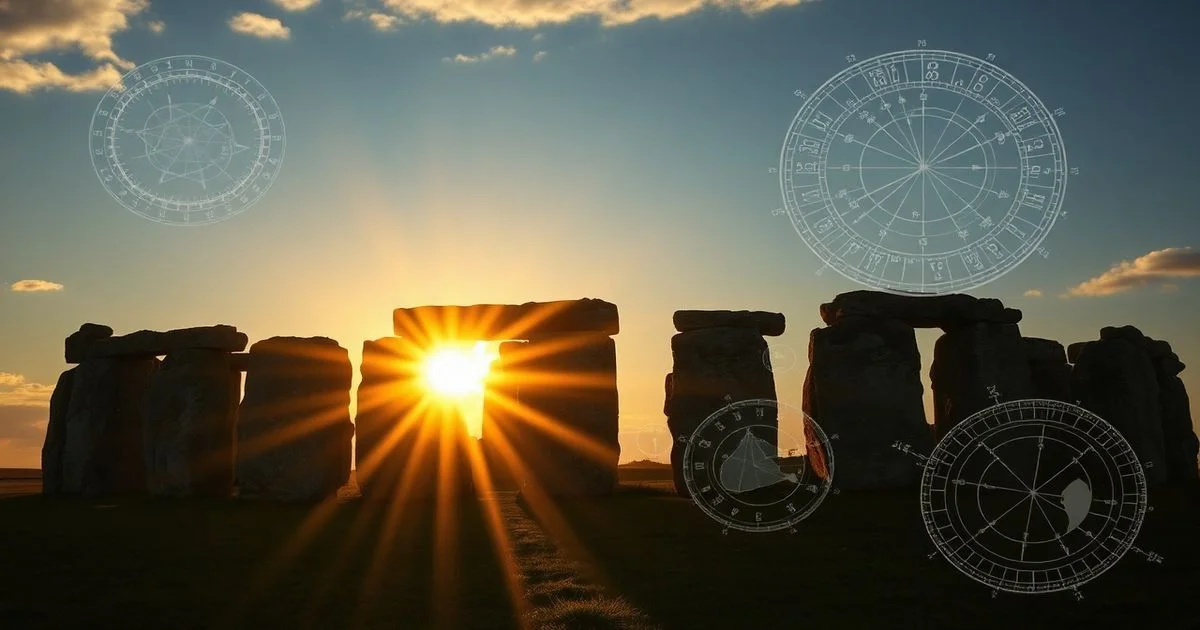
Long before the advent of digital sensors and orbital telescopes, the quest to understand our place in the universe drove a remarkable era of innovation. Understanding how ancient civilizations tracked celestial events is not merely a study of history, but an investigation into the first sophisticated data-gathering systems designed by humanity. These early pioneers transformed their environments into observational hubs, where they precisely tracked the sun, moon, and stars to ensure survival, agricultural success, and religious continuity across various celestial events. This foundational curiosity eventually led to our modern comprehension of Understanding the Physics of Planetary Orbits: Deep Motion, bridging the gap between primitive stone markers and modern physics.
- Defining Archaeoastronomy: The First Tech Stack
- The Scientific Logic Behind How Ancient Civilizations Tracked Celestial Events
- Key Components of Ancient Observational Hardware
- Real-World Applications: Why Track the Sky?
- Chaco Canyon: The "Sun Dagger" of the Americas
- The Global Impact of How Ancient Civilizations Tracked Celestial Events
- Pros and Cons of Ancient Tracking Methods
- The Islamic Golden Age: Refining the Tools
- The Future Outlook: From Megaliths to James Webb
- Frequently Asked Questions
- Conclusion
- Further Reading & Resources
- Technical Appendix: Ancient Mathematical Constants
Defining Archaeoastronomy: The First Tech Stack
Archaeoastronomy is the interdisciplinary study of how people in the past have understood the phenomena in the sky, how they used these phenomena, and what role the sky played in their cultures. For a tech-savvy audience, it is helpful to view this not as mysticism, but as the first "Full Stack" implementation of environmental engineering and data science. In many ways, the ancient observatory was the precursor to the modern server room—a dedicated space for processing external signals into actionable intelligence.
The "data" consisted of repetitive cycles—the 365-day solar cycle, the 29.5-day lunar cycle, and the complex 584-day cycle of Venus. The "hardware" consisted of megalithic structures, gnomons, and horizon markers. The "software" was the mathematical and geometric logic used to interpret these movements into calendars. These systems were designed for high uptime; a stone circle does not require a power source, and its physical structure serves as a permanent database of astronomical constants.
Ancient observers realized that the universe operated on predictable algorithms. By identifying these patterns, they could predict seasonal changes with a degree of accuracy that rivals modern mechanical clocks. This was the birth of predictive modeling, where past observations were used to forecast future environmental states, such as the beginning of a monsoon or the ideal time for harvest.
The Scientific Logic Behind How Ancient Civilizations Tracked Celestial Events
To understand the mechanics of ancient observatories, we must first look at the geometry of the horizon. Ancient astronomers utilized "horizon astronomy," which relies on the fact that the Sun rises and sets at different points on the horizon throughout the year. Because the Earth's axis is tilted, the Sun’s apparent position moves north and south between the tropics over a six-month period.
The Solstice and Equinox Alignments
The most fundamental tracking mechanism involved the solstices. On the summer solstice, the Sun reaches its northernmost point on the horizon; on the winter solstice, its southernmost. Ancient engineers built "sightlines" to mark these extremes.
-
Fixed Sightlines: Using two fixed points—such as a specific window in a temple and a distant mountain peak—to create a "scope." When the sun rose exactly behind the peak, the date was logged.
-
Light-and-Shadow Displays: Designing structures where a beam of light hits a specific petroglyph only on a specific day. This acts as a binary trigger: if the light hits the mark, the "event" is true.
-
Megalithic Gates: Massive stone portals that frame the rising sun only during specific celestial windows. These functioned as physical filters for solar data.
Precision Engineering in the Neolithic Era
Stonehenge is perhaps the most famous example of a "lithic computer." While often viewed through a spiritual lens, its primary function was a high-precision astronomical instrument. The "Heel Stone" marks the sunrise of the summer solstice, but the complexity goes deeper into the realm of computational logic.
The 56 Aubrey Holes located inside the bank of Stonehenge are believed to have functioned as a counting system for predicting lunar eclipses. By moving markers around these holes, the Druids (or their predecessors) could track the 18.6-year nodal cycle of the Moon. This is an early form of a mechanical memory buffer, allowing a civilization without written language to store and retrieve complex chronological data over generations.
Key Components of Ancient Observational Hardware
If we categorize ancient structures by their "technical specifications," we see a recurring pattern of high-precision engineering across the globe. These were not primitive attempts but rather optimized solutions for the available materials.
The Great Pyramid of Giza: A Geo-Celestial Benchmark
The Great Pyramid is not just a tomb; it is one of the most accurately aligned structures on Earth. Its sides are oriented to true north with an error of only 3/60ths of a degree. This level of precision requires a deep understanding of stellar positions, specifically the rotation of the "circumpolar" stars that never set.
Technical Data of the Great Pyramid:
Orientation error: 0.05 degrees from True North
Base perimeter: ~922 meters
Internal "Star Shafts": Aligned to Thuban (North Star) and Orion's Belt
Mathematical constants: Expresses the ratio of 2π in its dimensions
The "star shafts" within the King’s and Queen’s chambers were specifically angled to point toward specific constellations as they appeared in 2500 BCE. This allowed the inhabitants to "ping" the location of the stars at specific times of the night, functioning much like a fixed-position telescope without the lens.
The Antikythera Mechanism: The World's First Analog Computer
Discovered in a shipwreck off the coast of Greece, the Antikythera Mechanism is the pinnacle of ancient celestial tracking technology. Dated to roughly 150-100 BCE, this device used a complex system of over 30 bronze gears to calculate the positions of the sun, moon, and the five known planets.
-
Differential Gearing: The device utilized differential gears—a technology once thought to have been invented in the 16th century—to calculate the lunar anomaly. This accounted for the variation in the moon's speed as it moves through its elliptical orbit.
-
The Saros Dial: On the back of the device, a large spiral dial tracked the Saros cycle, a period of 18 years and 11 days used to predict solar and lunar eclipses. It was essentially an "if-then" logic gate made of bronze.
-
The Exeligmos Dial: This smaller dial indicated the timing of the eclipse to within a few hours, showcasing a resolution of data processing that is staggering for the era.
Real-World Applications: Why Track the Sky?
Tracking celestial events was not a hobby; it was a critical survival utility. The "applications" of this data were widespread and formed the backbone of civilization, much like how we use Black Holes Explained: Formation and Cosmic Impact Guide today to understand the evolution of the galaxy.
Agriculture and Resource Management
The Nile River’s annual flood was the lifeblood of Egypt. Egyptian astronomers noticed that the flood coincided with the "heliacal rising" of Sirius (the Dog Star)—the first day Sirius becomes visible in the dawn sky after being hidden for 70 days. By tracking this event, they could prepare their irrigation systems and planting cycles. Failure to track this would result in catastrophic crop failure and social collapse.
Navigation and Global Expansion
Polynesian navigators used a "star compass" to traverse thousands of miles of open ocean. They didn't have compasses or GPS; they had a mental map of the rising and setting points of stars. They essentially turned the horizon into a 360-degree navigational dashboard, allowing them to maintain a constant heading across the Pacific. This was the "dead reckoning" of the ancient world, optimized for sea-based logistics.
Political and Religious Power
In many civilizations, the ability to predict an eclipse was synonymous with divine favor. By understanding the mechanics of the sky, rulers could use "astronomical forecasting" to consolidate power. If a leader could "predict" the sun would disappear (a solar eclipse), his perceived authority over nature was absolute. It was a form of social engineering driven by astronomical data.
Chaco Canyon: The "Sun Dagger" of the Americas
In the American Southwest, the Ancestral Puebloans created a marvel of astronomical precision at Fajada Butte in Chaco Canyon. Known as the "Sun Dagger," this site consists of three large stone slabs leaning against a cliff face, which channel sunlight onto two spiral petroglyphs carved into the rock.
On the summer solstice, a "dagger" of light pierces the center of the large spiral. On the winter solstice, two daggers of light frame the large spiral. Furthermore, the smaller spiral to the side tracks the 18.6-year lunar cycle. This site represents a "User Interface" for the cosmos, where the interaction of light and shadow provided the local population with a visual calendar of extreme accuracy.
The Global Impact of How Ancient Civilizations Tracked Celestial Events
Different cultures developed unique "OS versions" for celestial tracking based on their geography and mathematical focus.
The Maya: Master Mathematicians
The Maya developed a Long Count calendar that was more accurate than the Gregorian calendar we use today. They tracked the synodic period of Venus with an error of only two hours every 500 years. Their tracking was not just about the Sun and Moon; it was a multi-threaded system that integrated the cycles of Mars, Venus, and Jupiter.
The Mayan Observation Stack:
-
The Caracol at Chichén Itzá: A cylindrical observatory with windows aligned specifically to the northernmost and southernmost settings of Venus.
-
Base-20 Mathematics: Their use of the zero (0) allowed for the calculation of massive time cycles, such as the Baktun (144,000 days), enabling them to track time on a cosmological scale.
The Chinese: Recording "Guest Stars"
Chinese astronomers kept the longest continuous record of celestial observations in history. In 1054 CE, they recorded a "guest star" that was visible during the day for weeks. Modern astronomers now know this was the SN 1054 supernova, a key event in Understanding the Lifecycle of Stars: From Nebula to Supernova. Their method involved:
-
Circumpolar Mapping: Focusing on the "Purple Forbidden Enclosure" (the stars around the North Pole) as the stable center of the universe.
-
Gnomon Arrays: Using giant vertical poles to measure the length of the sun's shadow at noon, which determined the solar year to within minutes of modern measurements.
Pros and Cons of Ancient Tracking Methods
While these ancient systems were incredibly precise, they operated under significant constraints compared to modern orbital mechanics.
Pros:
-
Sustainability: These instruments required no external power and functioned for thousands of years. They were immune to "bit rot" or hardware failure.
-
Intuitive Integration: The data was integrated directly into the architecture of the city, making "time" a public utility that everyone could see.
-
Resilience: Unlike digital records, megalithic data is nearly impossible to erase, surviving millennia of environmental degradation and war.
Cons:
-
Atmospheric Interference: Cloud cover or sandstorms could render an observatory useless for weeks, breaking the data chain and requiring manual "re-syncing."
-
Lack of Magnification: Without lenses, ancient astronomers were limited to "naked-eye" observations, missing deep-space phenomena like galaxies or distant planets (Neptune, Uranus).
-
Geographic Lock-in: A megalithic observatory built in Chichen Itza is only calibrated for that specific latitude; it cannot be "repositioned" like a modern satellite or portable telescope.
The Islamic Golden Age: Refining the Tools
While Europe was in the Middle Ages, Islamic scholars were refining the tools of celestial tracking to an unprecedented level. Figures like Al-Battani and Al-Khwarizmi combined Greek geometry with Indian mathematical concepts to create the first truly portable astronomical computers: the astrolabe and the quadrant.
These devices were essentially handheld analog computers. An astrolabe allowed a user to solve 300 different types of astronomical problems, from determining the time of sunrise to finding the direction of Mecca (the Qibla). This era saw the transition from "building-sized" hardware to "pocket-sized" devices, a miniaturization process that mirrors the evolution of the modern computer.
The Future Outlook: From Megaliths to James Webb
Today, our "celestial tracking" involves the James Webb Space Telescope (JWST) and the Laser Interferometer Gravitational-Wave Observatory (LIGO). However, the logic remains the same. We are still looking for "sightlines"—now they are just in the infrared spectrum or the fabric of spacetime rather than stone gates.
We are currently in a "Digital Renaissance" of archaeoastronomy. Using LiDAR (Light Detection and Ranging), archeologists are discovering thousands of previously hidden structures in the Amazon and Mesoamerica that show clear celestial alignments. We are realizing that the ancient world was far more "wired" to the sky than we ever imagined. Artificial Intelligence is now being used to analyze the Antikythera Mechanism's fragments, revealing hidden text that explains how the machine accounted for the eccentricities of the Moon's orbit.
Frequently Asked Questions
Q: Why did ancient civilizations track celestial events?
A: They tracked celestial events to manage agricultural cycles, navigate oceans, and maintain religious calendars through precise observation of the sun, moon, and stars.
Q: What is the Antikythera Mechanism?
A: It is an ancient Greek analog computer used to calculate astronomical positions and eclipses with a complex system of bronze gears, dating back to roughly 150 BCE.
Q: How accurate were ancient astronomical calendars?
A: Ancient calendars like the Mayan Long Count were incredibly accurate, tracking Venus's cycle within two hours of error every five hundred years, often surpassing early European calendars.
Conclusion
The legacy of how ancient civilizations tracked celestial events is found in every clock, GPS unit, and calendar we use today. These early scientists proved that the universe is not a chaotic void, but a structured system governed by observable laws. By utilizing stone, shadow, and sophisticated mathematics, they built the first information age.
As we look toward Mars and beyond, we are following the same path blazed by the builders of Stonehenge and the Giza pyramids. We are still observers on a pale blue dot, looking up and trying to synchronize our clocks with the rhythm of the stars. The methods have changed, but the fundamental human drive to map the cosmos remains our most enduring trait.
Further Reading & Resources
- NASA: Ancient Observatories - Timeless Knowledge
- The Antikythera Mechanism Research Project
- UNESCO: Heritage of the Skies
- Griffith Observatory: Archaeoastronomy Resources
Technical Appendix: Ancient Mathematical Constants
For those interested in the raw "backend" of these systems, here is how some common celestial values were represented in ancient data sets:
Lunar Month (Synodic): 29.53059 days
Ancient Egyptian Approximation: 29.5 days
Mayan Approximation: 29.5308 days

Solar Year (Tropical): 365.2422 days
Mayan Long Count: 365.2420 days
Julian Calendar (46 BCE): 365.25 days
These figures demonstrate that ancient tracking was not a rough estimate, but a high-fidelity data capture that required centuries of continuous observation and rigorous peer review within their respective scientific communities.