Mastering the Fundamentals of Soccer Tactics: A Deep Dive
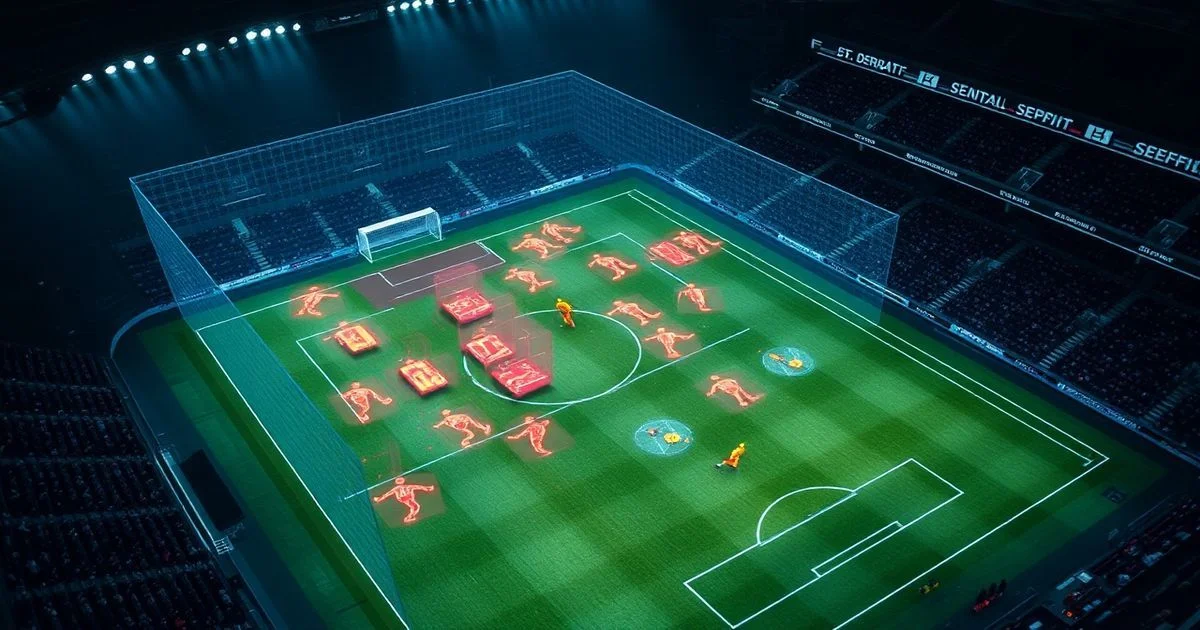
In the modern era, the beautiful game has transformed into a high-stakes algorithmic battle of space and time. Whether you are a weekend warrior or a data scientist analyzing player movement, mastering the fundamentals of soccer tactics is essential for understanding how elite teams manipulate the pitch. This guide breaks down the core fundamentals of soccer strategy, providing a technical roadmap to the complex tactics used by the world's most innovative coaches. By viewing the game through the lens of systems architecture and spatial optimization, we can decode the movements of players like Erling Haaland or Kevin De Bruyne not as random acts, but as calculated responses to a dynamic environment.
- The Architecture of the Pitch: What Is Tactical Theory?
- How Tactical Systems Work: The Four Phases of Play
- Mastering the Fundamentals of Soccer Tactics: The Spatial Paradigm
- Key Components of Modern Tactical Data
- Real-World Applications: Classic Tactical Matchups
- Pros and Cons of Rigid vs. Fluid Tactical Systems
- Tactical Training and the Human Factor
- The Future Outlook: AI and Real-Time Tactical Adjustments
- Frequently Asked Questions
- Conclusion
- Further Reading & Resources
The Architecture of the Pitch: What Is Tactical Theory?
At its core, soccer tactics represent the system design used by a team to achieve a specific objective—usually outscoring the opponent while minimizing risk. Think of a tactical setup as the operating system of a team. Just as an OS manages hardware resources (CPU, RAM) to run applications, a tactical system manages human resources (players) to execute plays.
Mastering the fundamentals of soccer tactics requires an understanding of "structural logic." The pitch is not just a field of grass; it is a coordinate system. Modern coaches like Pep Guardiola and Jürgen Klopp view the pitch as a series of zones that must be controlled or exploited. Much like how athletes study training principles for marathon runners: science and speed to optimize physiological output, soccer players must study spatial principles to optimize tactical output. The goal is to create "superiorities"—moments where your team has a localized advantage over the opponent.
There are three primary types of superiority that analysts look for:
-
Numerical Superiority: Simply having more players in a specific area than the opponent. This is often seen in the "overload" on a wing where a full-back overlaps a winger to create a 2v1 against the opposing defender.
-
Qualitative Superiority: Isolating your best 1v1 dribbler against the opponent’s weakest defender. This is a strategic "mismatch" designed to bypass a low block through individual skill.
-
Positional Superiority: Placing players in specific pockets of space (like the "half-spaces") where they are difficult to mark and have multiple passing lanes. This is about the "where" rather than the "who" or the "how many."
How Tactical Systems Work: The Four Phases of Play
To truly understand how a team operates, one must look beyond the starting formation. A 4-3-3 can look very different depending on the phase of the game. In modern tactical analysis, the game is broken down into a continuous loop of four distinct phases. This systematic breakdown is as crucial to football as understanding the history of the Olympic Games is to understanding the evolution of global competition.
1. Organized Attack (In-Possession)
When a team has the ball and the opponent is set in their defensive shape, the goal is "disorganization." This is achieved through width and depth. By keeping wingers wide, the attacking team stretches the defensive line horizontally, creating gaps between the full-backs and center-backs.
Depth is created by the striker pushing against the last defender, forcing the defensive line toward their own goal. This creates a "tension" in the middle of the pitch, often referred to as the "between the lines" space, where creative midfielders operate. In technical terms, this is about maximizing the effective playing area to force the defenders to cover more ground.
2. Defensive Transition (Negative Transition)
This is the "latency period" immediately after a team loses the ball. In this phase, the team must decide between two primary philosophies:
-
Counter-pressing (Gegenpressing): Attempting to win the ball back within the first 5-8 seconds while the opponent is still disorganized. This requires high physical intensity and immediate reaction times.
-
Recovery Run: Sprinting back to a pre-determined defensive block to minimize the risk of a counter-attack. This is the more conservative approach, prioritizing structure over immediate regain.
3. Organized Defense (Out-of-Possession)
When the opponent has the ball, the defending team seeks "compactness." The distance between the forward line and the defensive line is minimized to prevent the opponent from playing through the middle. This is often measured by "block height":
-
High Block: Pressing the opponent near their own penalty area. This is high risk, high reward, as it leaves space behind the defense for fast attackers to exploit.
-
Mid Block: Sitting near the halfway line, waiting for triggers to press. This is the most common defensive setup in modern European football.
-
Low Block: "Parking the bus" near one’s own goal, minimizing space behind the defense. This requires extreme discipline and mental focus.
4. Attacking Transition (Positive Transition)
The moment the ball is regained. This is the most volatile part of the game. Because the opponent was in an "attacking shape" (spread out), they are now vulnerable. Tactics here focus on verticality—getting the ball forward as quickly as possible before the opponent can recover their defensive structure.
Mastering the Fundamentals of Soccer Tactics: The Spatial Paradigm
One of the most revolutionary developments in modern soccer is the implementation of the "Positional Grid." This is a conceptual mapping of the pitch into 20 zones, popularized by the "Juego de Posición" (Positional Play) school of thought.
The Grid Structure:
Zones: 20
Vertical Lanes: 5 (Left Wing, Left Half-space, Center, Right Half-space, Right Wing)
Horizontal Strips: 4 (Defensive, Midfield-Defensive, Midfield-Attacking, Attacking)
The fundamental rule of this system is that no more than three players should occupy the same horizontal line, and no more than two players should occupy the same vertical line. This ensures optimal spacing and constant passing triangles.
The Importance of Half-Spaces
In the technical lexicon, the "half-space" is the vertical lane between the wing and the center. It is the most dangerous area on the pitch for several reasons:
-
Vision: A player in the half-space has a 360-degree field of view, unlike a winger who is limited by the touchline.
-
Indecision: It forces the opposing center-back and full-back to decide who should step out to press, often creating a gap for a "third-man run."
-
Angle of Attack: Passes from the half-space into the box are harder to defend than crosses from the wings because they are diagonal and bypass the defender's peripheral vision.
Zone 14: The Golden Square
Statistical analysis has shown that the area just outside the opponent's penalty box—traditionally called "Zone 14"—is the most effective area for creating goals. Passes originating from this zone have a significantly higher probability of resulting in a goal than those from the wings. Mastering the fundamentals of soccer tactics involves finding ways to get your most creative player into this zone with enough time to pick a pass.
Key Components of Modern Tactical Data
For the tech-savvy reader, soccer tactics are increasingly driven by data science. Much like how engineers how to optimize SQL queries for high-performance applications to reduce latency, tactical analysts use data to reduce defensive errors and improve scoring efficiency.
Expected Goals (xG) and Expected Assists (xA)
xG is a probabilistic metric that assigns a value to every shot based on its likelihood of resulting in a goal. Factors include distance, angle, the part of the body used, and the position of the defenders.
- Tactical Use: xG allows analysts to see if a team's tactics are actually creating high-quality chances or if they are just getting lucky with "worldie" long-range strikes that are unsustainable over a season.
PPDA (Passes Per Defensive Action)
PPDA measures pressing intensity. It calculates how many passes a team allows the opponent to make in the attacking third before attempting a tackle or interception.
-
High Pressing: A low PPDA (e.g., 6.0-8.0) indicates an aggressive, high-energy pressing system like Liverpool under Klopp.
-
Passive Defense: A high PPDA (e.g., 15.0+) indicates a team that prefers to sit back and wait for the opponent to make a mistake.
Expected Threat (xT)
xT is a newer metric that measures how much a player increases the probability of a goal by moving the ball from one zone to another. It rewards players who make "the pass before the assist," acknowledging their role in tactical progression.
Real-World Applications: Classic Tactical Matchups
Understanding the fundamentals of soccer tactics is best achieved by looking at historical "system clashes." These matches serve as case studies in how different philosophies interact.
The "Total Football" vs. Catenaccio
In the 1970s, the Dutch "Total Football" system (fluid positions, high press) met the Italian "Catenaccio" (The Chain). The Italian system focused on a "Libero" or sweeper who sat behind a man-marking defense.
The Dutch countered this by having players constantly swap positions. If a defender followed a striker out of position, a midfielder would immediately exploit the vacated space. This "positional fluidity" broke the man-marking system, proving that zonal systems and fluid movement were the future of the game.
The Modern "False Nine" Strategy
Pep Guardiola’s Barcelona popularized the "False Nine," where the traditional striker (Lionel Messi) would drop deep into the midfield.
The Tactical Outcome:
-
Midfield Overload: By dropping deep, the striker creates a 4v3 in midfield, allowing for easy ball retention.
-
Center-Back Dilemma: The opposing center-backs have no one to mark. If they follow the striker, they leave a massive hole in the center of the defense for wingers to exploit. If they stay put, the striker has time and space to turn and run at the defense.
Pros and Cons of Rigid vs. Fluid Tactical Systems
There is no "perfect" tactic. Every system involves a trade-off between risk and reward. Coaches must balance the technical ceiling of their players against the structural integrity of the team.
Rigid Systems (e.g., 4-4-2 Flat)
Pros:
-
Defensive Stability: Every player has a clear zone and a clear partner. The coverage is uniform across the pitch.
-
Ease of Implementation: Requires less tactical intelligence and "mental load" from players. It is the default system for teams with limited training time.
-
Counter-Attacking: Naturally creates two banks of four, making it very hard to break down and perfect for launching long-ball transitions.
Cons:
-
Predictability: Easy for elite coaches to find "pockets" between the lines.
-
Isolation: The strikers can often become isolated from the rest of the team if the midfield is forced to defend deep.
Fluid Systems (e.g., 3-2-2-3 "Box Midfield")
Pros:
-
Control: Massive overloads in the center of the pitch ensure high possession stats and territorial dominance.
-
Flexibility: Can transition from a back three to a back five instantly, adapting to the opponent's attacking phase.
Cons:
-
Physical Demand: Requires wing-backs with elite aerobic capacity to cover the entire flank for 90 minutes.
-
Complexity: One player being out of position can cause the entire system to collapse like a house of cards, leading to easy goals for the opponent.
Tactical Training and the Human Factor
While the "operating system" analogy is useful, we must remember that players are not software. Tactical success depends heavily on "game intelligence"—the ability of a player to read the game and make split-second decisions.
Cognitive Load in Tactics:
When a coach introduces a complex new system, the players' performance often dips initially. This is because they are thinking rather than reacting. Mastery is achieved when the tactical movements become muscle memory. This is why long-term stability in coaching (like Sir Alex Ferguson or Arsène Wenger) often leads to better tactical execution; the players internalize the system until it becomes second nature.
Communication Protocols:
Tactical systems also require communication. In a high-pressing system, if one player presses and the others don't follow, the system fails. Teams use "triggers"—specific actions by the opponent, like a poor touch or a back-pass—that signal the entire team to move in unison.
The Future Outlook: AI and Real-Time Tactical Adjustments
We are entering the "Third Wave" of soccer tactics, where Artificial Intelligence and Machine Learning play a pivotal role in the decision-making process.
Ghosting Models
Elite clubs now use "Ghosting" software. This AI calculates where a player should have been in a given second based on the team's tactical profile. By comparing the "ghost" (the optimal tactical position) with the actual player's movement, coaches can provide objective feedback on tactical discipline. This technology is revolutionizing how video analysis is conducted at the highest levels.
Predictive Tactical Modeling
Imagine a coach receiving a notification on their tablet in the 60th minute saying: "Based on current fatigue levels and opponent movement patterns, there is an 80% chance of conceding from the left flank in the next 10 minutes."
We are already seeing the integration of wearable tech (GPS vests) that monitor heart rate variability and sprint distances in real-time. The next step is integrating this with computer vision to suggest tactical substitutions—not just based on "gut feeling," but on real-time probability. This allows for a more scientific approach to game management, reducing the impact of human bias.
Frequently Asked Questions
Q: What are the main phases of soccer tactics?
A: Tactics are divided into four phases: organized attack, defensive transition, organized defense, and attacking transition for fluid play.
Q: What is the 'half-space' in soccer?
A: The half-space is the vertical lane between the wing and the center, offering better passing angles and forcing defenders into difficult choices.
Q: How does data analytics impact soccer strategy?
A: Data like xG and PPDA helps teams quantify performance, allowing for objective analysis of pressing intensity and the quality of scoring chances created.
Conclusion
Mastering the fundamentals of soccer tactics is a journey into the heart of the world's most popular sport. It is a discipline that rewards those who look past the goal and analyze the twenty passes that led to it. By understanding the four phases of play, the importance of the half-spaces, and the data driving modern decisions, you gain a deeper appreciation for the technical mastery on display every weekend.
As the game continues to evolve, the line between the pitch and the laboratory will continue to blur. Whether it's the resurgence of the "Box Midfield" or the use of neural networks to scout the next teenage prodigy, tactics remain the bedrock of success. In the end, soccer is a game of space; the players are the pieces, but the tactics are the master plan that brings the entire system to life. For any fan or professional, mastering the fundamentals of soccer tactics is the ultimate key to unlocking the secrets of the pitch.