The Impact of Ocean Currents on Global Climate Patterns: A Deep Dive
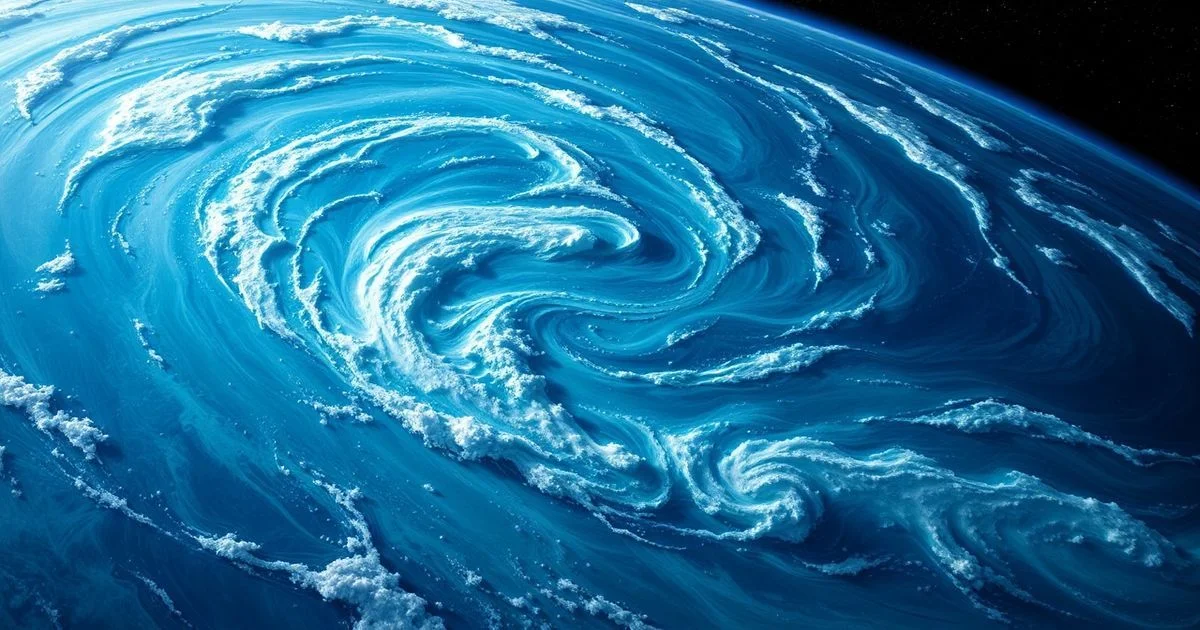
Beneath the seemingly tranquil surface of our planet’s oceans lies a colossal, dynamic system of currents that silently orchestrates much of our world’s climate. These massive marine movements, often invisible to the naked eye, exert a profound impact of ocean currents on global climate patterns, dictating everything from regional temperatures to global weather phenomena. Understanding this intricate interplay is crucial for comprehending Earth's climate engine and predicting its future trajectory. Join us on a deep dive into the complex science behind these oceanic forces, exploring how they shape our planet and influence the lives of billions.
- The Impact of Ocean Currents on Global Climate Patterns: Understanding the Basics
- The Engine of Climate Regulation: How Ocean Currents Work
- Key Oceanic Systems and Their Climatic Influence
- Real-World Impacts and Manifestations of Current Shifts
- Challenges, Feedback Loops, and the Future of Ocean-Climate Dynamics
- Conclusion: Navigating the Future of Our Ocean-Driven Climate
- Frequently Asked Questions
- Further Reading & Resources
The Impact of Ocean Currents on Global Climate Patterns: Understanding the Basics
Imagine Earth not just as a static sphere of land and water, but as a living entity with a vast, interconnected circulatory system. This is an apt analogy for the global network of ocean currents—gigantic, continuous movements of seawater that traverse all major oceans. These currents are far more than mere drifts; they are powerful drivers of energy and mass transfer, playing an indispensable role in maintaining the delicate balance of our planet's climate. Without them, regional temperatures would swing to extremes, marine ecosystems would collapse, and global weather systems would be unrecognizable.
Defining Ocean Currents and Their Global Significance
Ocean currents are essentially vast rivers within the ocean, moving water horizontally and vertically across the globe. They vary in speed, depth, and temperature, carrying everything from microscopic plankton to vast quantities of heat and dissolved gases. Their sheer scale and continuous motion make them central to Earth’s energy budget. These dynamic systems are broadly categorized into two main types, each driven by distinct forces but intricately linked: surface currents and deep ocean currents. Understanding this distinction is the first step in appreciating their global significance.
Surface Currents:
These are primarily driven by wind and affect the upper 400 meters of the ocean. They are warmer, faster, and more influenced by the Coriolis effect, which deflects moving objects (like water) due to Earth’s rotation. Major surface current systems include the North Atlantic Gyre, the Pacific North Equatorial Current, and the Antarctic Circumpolar Current. Their swift movements are directly responsible for much of the immediate, observable climate influence on coastal regions and maritime weather.
Deep Ocean Currents (Thermohaline Circulation):
Often referred to as the "global conveyor belt," these currents are driven by differences in water density, which are controlled by temperature (thermo) and salinity (haline). Cold, salty water is denser and sinks, primarily in polar regions, initiating a slow, deep circulation that can take centuries to complete a full circuit around the globe. This deep circulation is crucial for distributing heat, nutrients, and carbon throughout the world's oceans, impacting everything from marine productivity to long-term climate stability.
The Forces at Play: Wind, Temperature, Salinity, and Coriolis Effect
The complex ballet of ocean currents is orchestrated by a symphony of physical forces. These forces interact in intricate ways to create the predictable, yet often surprising, patterns of water movement we observe. From the whisper of the wind on the surface to the fundamental spin of the Earth itself, each component plays a critical role in shaping the ocean's influence on climate.
-
Wind: The primary driver of surface currents. Prevailing winds transfer energy to the ocean's surface, dragging water along with them. This is most evident in the formation of ocean gyres—large systems of rotating ocean currents. For instance, the Westerlies push water eastward, while the Trade Winds push it westward, creating a continuous loop of movement. The stronger and more consistent the wind, the more pronounced the surface current.
-
Temperature: A key component of thermohaline circulation. As ocean water cools, particularly at high latitudes, it becomes denser. This density increase causes the water to sink, initiating the downward limb of the deep ocean currents. Conversely, warmer water is less dense and tends to remain at the surface. The constant exchange of heat between the ocean and atmosphere directly influences water temperature and, consequently, its density and movement.
-
Salinity: Another crucial determinant of water density. When ocean water freezes to form sea ice, the salt is excluded from the ice crystals, increasing the salinity of the surrounding seawater. This saltier water becomes denser and sinks, further driving the thermohaline circulation. Evaporation also increases salinity, contributing to density differences in warmer regions. Fresh water input from rivers or melting ice can decrease salinity, reducing density and potentially slowing circulation.
-
Coriolis Effect: This is a fictitious force that describes the deflection of moving objects (like ocean currents and winds) due to the Earth's rotation. In the Northern Hemisphere, it deflects currents to the right; in the Southern Hemisphere, it deflects them to the left. The Coriolis effect is responsible for the circular patterns of ocean gyres and significantly influences the direction and shape of major currents, playing a fundamental role in global heat distribution. Its influence is more pronounced over longer distances and durations.
The Engine of Climate Regulation: How Ocean Currents Work
Ocean currents are far more than just moving water; they are fundamental components of Earth's climate regulation system. Their ceaseless motion acts as a planetary engine, redistributing heat, sequestering carbon, and influencing atmospheric moisture, thereby directly shaping global and regional climates. Understanding these mechanisms is key to appreciating the ocean's role as a thermostat for our planet.
Heat Distribution: From Equator to Poles
One of the most critical functions of ocean currents is the redistribution of heat from the tropics towards the poles. The equatorial regions receive significantly more solar radiation than the polar regions, leading to a surplus of heat. Without the oceans, this heat would simply accumulate at the equator, while the poles would grow increasingly colder, creating uninhabitable extremes.
Warm surface currents, such as the Gulf Stream in the Atlantic and the Kuroshio Current in the Pacific, act like massive liquid heating systems. Originating in the warm waters of the equator, they transport immense amounts of thermal energy towards higher latitudes. For example, the Gulf Stream carries tropical warmth across the North Atlantic, significantly moderating the climate of Western Europe. Without this warm current, cities like London and Paris would experience climates similar to Labrador or Anchorage, despite being at comparable latitudes.
As these currents flow towards the poles, they release heat into the atmosphere, warming the overlying air and influencing regional weather patterns. This heat transfer prevents the tropics from overheating and the poles from freezing completely, making Earth habitable across a much wider range of latitudes. Once cooled, these waters sink, becoming part of the deep ocean circulation, which then slowly transports cooler water back towards the equator, completing a vital global loop of heat exchange.
Carbon Sequestration: The Ocean's Role as a Carbon Sink
The oceans are the largest active reservoir of carbon on Earth, playing a crucial role in regulating atmospheric carbon dioxide (CO2) levels. Ocean currents facilitate this massive carbon sequestration through both physical and biological pumps. Without this oceanic buffering capacity, atmospheric CO2 concentrations would be significantly higher, exacerbating the greenhouse effect.
Physical Carbon Pump:
This process involves the dissolution of CO2 from the atmosphere into surface waters. Colder waters can dissolve more CO2 than warmer waters. As cold, dense, CO2-rich water sinks in polar regions as part of the thermohaline circulation, it carries this dissolved carbon into the deep ocean, effectively storing it away from the atmosphere for centuries or even millennia. This deep-ocean storage is a long-term sequestration mechanism. When these deep waters eventually resurface, they can release some of this stored CO2 back into the atmosphere, but the overall circulation provides a significant carbon sink.
Biological Carbon Pump:
Ocean currents also underpin the biological carbon pump, a process where marine organisms play a central role in moving carbon from the surface to the deep ocean. Photosynthesizing phytoplankton, the base of the marine food web, absorb CO2 from surface waters. When these organisms die or are consumed by zooplankton, their carbon-rich organic matter sinks towards the seafloor. Deep ocean currents then distribute these nutrients and organic matter, sustaining deep-sea ecosystems, highlighting how all parts of nature, from the oceans to bees, are vital for our planet's future, and further facilitating carbon storage. Regions of upwelling, where deep, nutrient-rich water is brought to the surface by currents, are highly productive biological hotspots that efficiently draw down atmospheric carbon.
Moisture Transport and Weather Systems
Beyond heat and carbon, ocean currents are instrumental in transporting moisture, directly influencing rainfall patterns, cloud formation, and the intensity of weather systems across the globe. The interaction between warm ocean currents and the overlying atmosphere is a fundamental driver of precipitation.
Warm ocean currents release significant amounts of moisture into the atmosphere through evaporation. This evaporated water vapor rises, cools, condenses into clouds, and eventually falls as precipitation. Regions adjacent to warm currents, such as the eastern coasts of continents in the mid-latitudes, often experience higher rainfall due to this phenomenon. For example, the warm waters of the Japan Current contribute to the moist climate of Japan.
Conversely, cold currents, like the Benguela Current off the coast of Namibia or the Humboldt Current off South America, often lead to arid conditions in adjacent coastal areas. As warm, moist air from land passes over these cold currents, it cools rapidly, leading to condensation and fog, but little precipitation, thus creating desert environments.
Ocean currents also play a critical role in the formation and intensity of major atmospheric circulation patterns and extreme weather events, principles that share similarities with the fundamentals of aerodynamics in flight. The El Niño-Southern Oscillation (ENSO), for instance, involves significant shifts in Pacific Ocean currents and temperatures, leading to global disruptions in rainfall and temperature patterns, manifesting as droughts in some regions and floods in others. Tropical cyclones, such as hurricanes and typhoons, draw their immense energy from warm ocean waters. Changes in the paths and temperatures of ocean currents can therefore directly influence the genesis, intensification, and trajectory of these devastating storms.
Key Oceanic Systems and Their Climatic Influence
Specific ocean current systems have such profound and widespread impacts that they warrant individual attention. These complex systems illustrate the intricate, interconnected nature of global oceanography and its indispensable role in shaping Earth’s climate. Their stability, or lack thereof, holds immense implications for the future of our planet.
The Atlantic Meridional Overturning Circulation (AMOC)
The Atlantic Meridional Overturning Circulation (AMOC) is one of the most crucial ocean current systems for global climate. It is a vast system of ocean currents that acts like a massive conveyor belt, transporting warm, salty water from the tropics northward into the North Atlantic, and returning cold, deep water southward.
Mechanism and Influence:
The AMOC is primarily driven by thermohaline processes. As the warm, surface waters reach high latitudes, particularly near Greenland and the Labrador Sea, they cool and release heat to the atmosphere, significantly warming Western Europe and moderating Arctic temperatures. As this water cools, it becomes denser, and crucially, as sea ice forms, the surrounding water becomes saltier and even denser. This cold, salty, dense water then sinks into the deep ocean, initiating the southward flow of the deep limb of the AMOC. This deep water then slowly moves through the Atlantic, into the Indian and Pacific Oceans, eventually upwelling elsewhere to complete the global circuit.
The AMOC is a vital component of Earth's heat distribution system. It is estimated to transport about 1.25 petawatts of heat northward across the 25°N latitude, an amount equivalent to the output of a million power plants. Its strength directly influences the climate of the North Atlantic region, including Western Europe, Scandinavia, and parts of North America. A stronger AMOC means more warmth transported north, leading to milder winters. It also influences sea levels along the US East Coast and rainfall patterns in the Sahel region of Africa.
Potential Slowing and Implications:
Scientific evidence from multiple studies, including data from Greenland ice cores and direct measurements, indicates that the AMOC has slowed by about 15% since the mid-20th century. This slowdown is largely attributed to climate change, specifically the melting of the Greenland ice sheet and increased precipitation at high latitudes. The influx of fresh water reduces the salinity and density of the surface waters, making them less likely to sink and thus weakening the overturning circulation.
The implications of a continued or accelerated AMOC slowdown are potentially severe:
- Regional Cooling in Europe: Paradoxically, a weakening AMOC could lead to colder winters and more extreme weather events in Western Europe, as less tropical warmth is transported northward.
- Sea Level Rise: A weaker AMOC can cause a piling up of water on the North American East Coast, leading to accelerated regional sea level rise.
- Changes in Rainfall Patterns: Altered AMOC could disrupt monsoon systems, potentially leading to increased droughts in the Sahel and changes in rainfall in the Amazon basin.
- Marine Ecosystem Impacts: Changes in ocean currents affect nutrient distribution and oxygen levels, impacting marine biodiversity and fisheries.
Scientists are closely monitoring the AMOC, as its potential collapse is considered a "tipping point" in the climate system with profound and potentially irreversible global consequences.
El Niño-Southern Oscillation (ENSO): A Pacific Phenomenon with Global Reach
The El Niño-Southern Oscillation (ENSO) is the most prominent year-to-year climate fluctuation on Earth, characterized by periodic variations in sea surface temperatures (SSTs) and atmospheric pressure across the equatorial Pacific Ocean. Its influence extends far beyond the Pacific, triggering a cascade of climate impacts worldwide.
Warm Phase (El Niño):
During an El Niño event, trade winds weaken or even reverse, allowing warm water that typically accumulates in the western Pacific to spread eastward towards South America. This results in unusually warm SSTs across the central and eastern equatorial Pacific. The shift in warm water reconfigures atmospheric convection patterns, leading to:
- Increased rainfall: In the eastern Pacific (e.g., Peru, Ecuador), often causing floods.
- Droughts: In the western Pacific (e.g., Australia, Indonesia) and parts of India and Africa, impacting agriculture and water resources.
- Warmer winters: In parts of North America.
- Reduced Atlantic hurricane activity: Due to increased wind shear.
Cool Phase (La Niña):
La Niña is essentially the opposite of El Niño, characterized by unusually strong trade winds pushing warm surface water further west, leading to cooler-than-average SSTs in the central and eastern equatorial Pacific. Its impacts typically include:
- Increased rainfall: In the western Pacific (e.g., Australia, Southeast Asia), leading to increased risk of floods.
- Droughts: In parts of the Americas (e.g., southern US).
- Colder winters: In parts of North America.
- Increased Atlantic hurricane activity: Due to decreased wind shear.
ENSO events typically occur every 2-7 years and can last for several months to a year or more. Their global reach makes them a critical factor in seasonal climate predictions, with significant implications for agriculture, water management, disaster preparedness, and global commodity markets.
The Indian Ocean Dipole (IOD) and Pacific Decadal Oscillation (PDO)
While ENSO is the most famous, other ocean-atmospheric oscillations also exert significant, albeit often more regional, influence on climate patterns.
Indian Ocean Dipole (IOD):
The IOD describes an irregular oscillation of sea surface temperatures in the Indian Ocean. It involves an alternation between warmer waters in the western Indian Ocean and cooler waters in the eastern Indian Ocean (positive phase), or vice versa (negative phase).
- Positive IOD: Characterized by warmer western Indian Ocean waters and cooler eastern waters. This typically leads to increased rainfall and flooding in East Africa, and decreased rainfall and drought in Australia and parts of Southeast Asia. It can also suppress the Indian monsoon.
- Negative IOD: Characterized by cooler western Indian Ocean waters and warmer eastern waters. This often brings increased rainfall to Australia and can enhance the Indian monsoon.
The IOD influences rainfall patterns across the Indian Ocean rim countries, affecting agriculture, water resources, and the frequency of tropical cyclones in the region.
Pacific Decadal Oscillation (PDO):
The PDO is a long-term ocean fluctuation of the Pacific Ocean, characterized by a pattern of sea surface temperature variability in the North Pacific. Unlike ENSO, which typically operates on a 2-7 year cycle, the PDO typically lasts for 20-30 years. It has two phases:
- Warm (Positive) Phase: Characterized by warmer-than-average SSTs along the coast of North America and cooler-than-average SSTs in the central North Pacific.
- Cool (Negative) Phase: Characterized by cooler-than-average SSTs along the coast of North America and warmer-than-average SSTs in the central North Pacific.
The PDO significantly influences climate patterns around the Pacific basin, affecting salmon populations, forest fires, drought cycles, and winter temperatures in North America. For example, a positive PDO often correlates with warmer winters in the western US and colder winters in the southeastern US. Its longer timescale makes it a crucial factor in understanding decadal climate variability.
These major oceanic systems, along with many others, are not isolated but interact in complex ways, sometimes amplifying each other's effects and at other times modulating them, leading to the highly variable and often unpredictable nature of regional and global climate.
Real-World Impacts and Manifestations of Current Shifts
The dynamic nature of ocean currents means that any shift, whether natural or anthropogenically induced, reverberates throughout the Earth's systems. These changes manifest in tangible ways, from altering local weather to threatening global biodiversity and impacting human societies. The ongoing changes to these oceanic systems are a stark reminder of their pervasive influence.
Extreme Weather Events and Regional Climate Changes
One of the most immediate and impactful consequences of altered ocean currents is the change in extreme weather events and regional climates. As currents redistribute heat and moisture differently, atmospheric circulation patterns are inevitably affected, leading to shifts in rainfall, temperature, and storm intensity.
-
European Heatwaves and Winters: A weakening AMOC, as discussed, can paradoxically lead to more intense heatwaves in parts of Europe during summer, due to altered atmospheric pressure systems, while simultaneously contributing to colder, harsher winters in other parts of the continent by reducing the northward transport of oceanic warmth. The "Beast from the East" cold snaps in Europe have been linked to shifts in Arctic sea ice and associated atmospheric blocking patterns, which can be influenced by ocean circulation.
-
North American Weather: Anomalies in the Pacific Ocean's currents, such as those associated with the Pacific Decadal Oscillation (PDO) or specific marine heatwaves like "The Blob," have been linked to persistent patterns of drought and extreme heat in western North America, as well as shifts in the jet stream that can bring unusual cold to the eastern parts of the continent.
-
Monsoon Patterns: The precise timing and intensity of critical monsoon seasons, particularly in Asia and Africa, are heavily reliant on ocean temperatures and current configurations in the Indian and Pacific Oceans. Changes in the Indian Ocean Dipole or ENSO can lead to devastating droughts or floods, impacting billions who rely on monsoon rains for agriculture.
-
Tropical Cyclones: Warmer ocean waters provide more energy for tropical cyclones (hurricanes, typhoons). While currents don't solely determine their formation, changes in ocean heat content, influenced by currents, can affect a storm's intensity and rapid intensification. Furthermore, ocean currents can steer these storms, influencing where they make landfall and the extent of their destructive power.
Biodiversity and Marine Ecosystems
Ocean currents are the lifeblood of marine ecosystems, acting as vital transporters of nutrients, larvae, and heat. Disruptions to these currents have profound implications for marine biodiversity, from microscopic plankton to vast whale populations.
-
Nutrient Transport: Upwelling currents, where deep, nutrient-rich water rises to the surface, are fundamental to marine productivity. They bring essential nitrates, phosphates, and silicates that fuel phytoplankton blooms—the base of the marine food web. Changes in upwelling intensity or location, often driven by shifts in wind patterns and currents, can decimate local fisheries and alter entire ecosystem structures. For instance, a strong El Niño can suppress upwelling off the coast of Peru, leading to a collapse of the anchovy fishery.
-
Larval Dispersal: Many marine species, including fish, corals, and invertebrates, rely on ocean currents to disperse their larvae to new habitats. Alterations in current pathways can prevent larvae from reaching suitable areas, fragmenting populations and hindering genetic exchange, potentially leading to local extinctions or reduced resilience.
-
Habitat Shift and Ocean Acidification: As ocean currents transport warmer waters poleward, they drive species to migrate towards cooler regions, impacting established food webs and introducing new competitive pressures. Additionally, ocean currents play a role in distributing CO2 throughout the water column. As the ocean absorbs more atmospheric CO2, it becomes more acidic. Changes in deep ocean circulation can affect the rate at which this acidified water is brought to the surface or distributed to vulnerable deep-sea ecosystems, threatening shell-forming organisms and coral reefs globally, underscoring the delicate balance of natural ecosystems.
Sea Level Rise and Coastal Communities
Ocean currents play a nuanced but significant role in global and regional sea level rise, impacting low-lying coastal communities and island nations.
-
Thermal Expansion: As ocean currents distribute warmer water across the globe, the water itself expands. This thermal expansion is a major contributor to global sea level rise, accounting for approximately 50% of the observed rise over the past century. Even small increases in the global ocean's average temperature, driven by warming currents, translate into substantial volume increases.
-
Ice Melt Distribution: Currents also interact with melting glaciers and ice sheets. The meltwater from Greenland and Antarctic ice sheets, for example, can be rapidly transported by currents, influencing regional sea levels. A weakening AMOC, as noted, can lead to a localized increase in sea level along the North American East Coast, independent of the global average, due to reduced oceanic dynamic height.
-
Coastal Impacts: The combined effect of thermal expansion, ice melt, and localized current dynamics means that sea level rise is not uniform globally. Some regions experience faster rates of rise than others. This localized rise, amplified by storm surges and coastal erosion, poses existential threats to infrastructure, freshwater supplies, and ecosystems in vulnerable coastal areas.
The ongoing changes to ocean currents are therefore not abstract scientific curiosities but direct drivers of environmental shifts that impact human societies, economies, and the very fabric of life on Earth. Monitoring and understanding these changes are paramount for adapting to a changing climate.
Challenges, Feedback Loops, and the Future of Ocean-Climate Dynamics
The intricate dance between ocean currents and climate is now facing unprecedented disruption due to human-induced climate change. This section explores the accelerating pace of these changes, the potential for irreversible shifts, and the critical role of scientific advancement in navigating an uncertain future.
The Accelerating Pace of Climate Change
Anthropogenic activities, primarily the emission of greenhouse gases, are fundamentally altering Earth's energy balance. The oceans, absorbing over 90% of the excess heat trapped by these gases and about a quarter of the anthropogenic CO2, are at the forefront of this change. This massive absorption capacity, while mitigating atmospheric warming, is having profound consequences for ocean currents.
-
Ocean Warming and Stratification: The relentless warming of the upper ocean layers is creating a more stratified (layered) ocean. Warmer, less dense surface water is becoming less likely to mix with cooler, denser deep water. This increased stratification can suppress vertical mixing and upwelling, thereby reducing the transport of nutrients to the surface (impacting marine productivity) and hindering the physical carbon pump (reducing CO2 uptake). This creates a vicious cycle, where reduced ocean carbon uptake leaves more CO2 in the atmosphere, accelerating warming further.
-
Freshening from Ice Melt: The rapid melting of glaciers and ice sheets, particularly in the Arctic and Antarctic, is introducing vast quantities of fresh water into the ocean. As discussed, this fresh water reduces the salinity and thus the density of surface waters in critical sinking regions (e.g., North Atlantic). This freshening directly weakens the deep ocean currents, most notably the AMOC, by impeding the sinking of cold, dense water that drives the circulation.
-
Changing Wind Patterns: Climate change is also influencing global wind patterns, which are the primary drivers of surface currents. Shifts in the strength and location of prevailing winds can alter the pathways and intensities of major ocean gyres and current systems, with cascading effects on heat distribution, upwelling, and regional weather.
The cumulative effect of these changes is an ocean system that is becoming warmer, more acidic, less oxygenated, and less dynamic in its deeper circulation. These shifts are occurring at a pace that far exceeds natural variability, presenting significant challenges for marine ecosystems and global climate stability.
Tipping Points and Irreversible Changes
One of the most concerning aspects of current changes in ocean-climate dynamics is the potential for crossing "tipping points"—thresholds beyond which small changes can lead to large, often abrupt and irreversible shifts in the system. The AMOC is a prime example of a potential climate tipping element.
-
Potential Collapse of AMOC: Paleoclimate data indicate that the AMOC has slowed and even shut down in the past during periods of rapid climate change, leading to dramatic shifts in global climate. While a full shutdown is not imminent, the observed weakening is a cause for serious concern. If the AMOC were to collapse completely, the consequences would be severe and widespread:
- Abrupt regional cooling in Europe and parts of North America.
- Significantly increased sea levels along the US East Coast.
- Major disruptions to monsoon systems, leading to widespread droughts or floods in tropical regions.
- Profound changes in marine ecosystems due to altered nutrient and oxygen distribution. These changes would be extremely difficult, if not impossible, to reverse within human timescales.
-
Feedback Loops: Climate change often involves intricate feedback loops, where an initial change triggers further changes that either amplify (positive feedback) or dampen (negative feedback) the original effect.
- Ice-albedo feedback: Melting sea ice (influenced by warming currents) reduces the Earth's albedo (reflectivity), leading to more solar absorption and further warming, which in turn melts more ice.
- Ocean stratification-carbon uptake feedback: Increased stratification reduces the ocean's ability to absorb CO2, leaving more in the atmosphere, accelerating warming and further stratification.
- Methane clathrate release: Warming ocean currents could potentially destabilize vast reservoirs of methane hydrates on the seafloor, releasing powerful greenhouse gases into the atmosphere, creating a catastrophic positive feedback loop.
Understanding and predicting these complex feedback loops is crucial for assessing future climate risks and identifying potential tipping points.
Advancements in Oceanographic Research and Modeling
Despite the daunting challenges, significant advancements in oceanographic research and climate modeling are providing unprecedented insights into the ocean's role in the climate system. These technological and scientific developments are critical for monitoring changes, improving predictions, and informing mitigation and adaptation strategies.
-
Satellite Monitoring: Satellites equipped with altimeters, radiometers, and scatterometers provide continuous, global observations of sea surface height, temperature, salinity, ocean color (indicating phytoplankton), and surface wind speeds. Missions like the Copernicus Sentinel satellites, NASA's Jason series, and GRACE are invaluable for tracking large-scale current movements, sea level changes, and ocean heat content.
-
Autonomous Underwater Vehicles (AUVs) and Drifters: Fleets of robotic instruments, such as the Argo floats, autonomously drift through the oceans, profiling temperature and salinity down to 2,000 meters. These data are transmitted via satellite, providing a continuous, real-time three-dimensional view of ocean conditions that was previously unimaginable. Moored buoys and gliders provide detailed observations in specific, critical regions.
-
Computational Climate Models: Sophisticated Earth System Models (ESMs) integrate atmospheric, oceanic, land, and ice components to simulate the complex interactions that govern Earth's climate. Continual improvements in computational power and model resolution allow scientists to better represent ocean current dynamics, feedback loops, and potential tipping points, leading to more accurate climate projections. These models are essential for running "what-if" scenarios, such as the impact of different emission pathways on AMOC strength or ENSO frequency.
-
Paleoceanography: Analyzing sediment cores, coral skeletons, and ice cores provides historical data on past ocean temperatures, salinity, and current strength. This "paleoclimate" data helps scientists understand natural climate variability and provides context for current changes, allowing them to distinguish anthropogenic signals from natural cycles and to calibrate and validate climate models, much like understanding the science of autumn leaves reveals deeper natural processes.
These ongoing research efforts are indispensable for enhancing our understanding of the ocean's intricate mechanisms and for providing the scientific basis for urgent climate action.
Conclusion: Navigating the Future of Our Ocean-Driven Climate
The oceans are far more than just vast expanses of water; they are dynamic, living systems that exert a monumental impact of ocean currents on global climate patterns. From the monumental distribution of heat that moderates planetary temperatures to the profound sequestration of carbon and the intricate orchestration of global weather systems, ocean currents are indispensable architects of Earth's climate. Our journey through their mechanics, major systems like the AMOC and ENSO, and their real-world consequences underscores their centrality to our planet's habitability and stability.
However, this intricate system is now under unprecedented strain from anthropogenic climate change. Warming temperatures, melting ice, and altered freshwater inputs are already demonstrably weakening critical circulation patterns, with the potential for irreversible tipping points that could dramatically reshape regional climates and marine ecosystems. The scientific community, armed with advanced monitoring technologies and sophisticated models, is striving to unravel these complexities and predict future trajectories.
The future of our climate is inextricably linked to the health and stability of our oceans. Recognizing the profound role of ocean currents demands urgent and coordinated global action to mitigate greenhouse gas emissions, protect marine environments, and adapt to the inevitable changes already in motion. Our understanding and stewardship of these silent, powerful forces will ultimately determine the climate legacy we leave for generations to come.
Frequently Asked Questions
Q: What is the "global conveyor belt" and why is it important?
A: The "global conveyor belt" refers to the deep ocean currents, primarily the thermohaline circulation, driven by temperature and salinity differences. It's crucial for distributing heat, nutrients, and carbon throughout the world's oceans, regulating global climate.
Q: How do ocean currents specifically influence regional climates like Europe's?
A: Ocean currents profoundly influence regional climates by redistributing heat. For example, the warm Gulf Stream carries tropical heat to Western Europe, moderating its winters and preventing extreme cold for its latitude. Cold currents, conversely, can lead to arid coastal conditions.
Q: How do ocean currents contribute to carbon sequestration?
A: Ocean currents facilitate carbon sequestration through physical and biological pumps. Cold, dense water carries dissolved CO2 into the deep ocean for long-term storage, while currents also support marine life that absorbs CO2 from surface waters.