Why Do Leaves Change Color? The Science of Autumn
As the golden hour of the year approaches, many of us marvel at the shifting canopy, yet the science behind these changing leaves in the autumn season remains a complex mystery to most. Understanding Why Do Leaves Change Color? The Science of Autumn requires us to look past the aesthetics and into the cellular machinery of deciduous trees. This seasonal transformation is not merely a sign of decay, but a highly orchestrated survival strategy that involves sophisticated chemical signaling, nutrient reclamation, and the physics of light absorption.
- The Chemical Factory: Pigments and Their Purpose
- Decoding the Mechanism: Why Do Leaves Change Color? The Science of Autumn in Action
- The Mystery of Red: Anthocyanin Production
- Environmental Variables and Their Impact
- Real-World Applications: Tracking Color via Satellite
- Pros and Cons of the Autumn Cycle
- The Future Outlook: Climate Change and Foliage
- Frequently Asked Questions
- Conclusion
- Further Reading & Resources
The Chemical Factory: Pigments and Their Purpose
To understand the shift in hues, we must first recognize that a leaf is a biological solar panel. Throughout the spring and summer, the leaf is dominated by chlorophyll, the primary pigment responsible for photosynthesis. However, the vibrant reds and oranges we see in October are not "new" in the way many believe. They are the result of a delicate chemical rebalancing that occurs as the tree prepares for its winter dormancy.
The Dominance of Chlorophyll
Chlorophyll is the workhorse of the plant world. It resides within organelles called chloroplasts and is responsible for capturing light energy to convert carbon dioxide and water into glucose. Much like how gardeners must learn how to properly care for indoor houseplants by monitoring light levels, trees in the wild are constantly adjusting their chlorophyll production based on solar intensity.
There are two main types of chlorophyll found in leaves:
- Chlorophyll a: Absorbs energy from violet-blue and orange-red light. It is the primary electron donor in the electron transport chain of photosynthesis.
- Chlorophyll b: Absorbs blue and orange light. It acts as an accessory pigment, expanding the absorption spectrum so the plant can capture more light energy.
Because chlorophyll reflects green light, the leaf appears green to our eyes. This pigment is chemically unstable and requires constant sunlight and warm temperatures to be replenished. When the days shorten and temperatures drop, the tree begins to shut down its food-making factories, and the chlorophyll molecule breaks down into smaller, colorless compounds known as nonfluorescent chlorophyll catabolites (NCCs).
The Hidden Palette: Carotenoids and Flavonoids
While chlorophyll is the "loudest" pigment, it is not the only one present. Carotenoids and flavonoids are present in the leaf throughout the entire growing season. They assist chlorophyll by capturing additional light energy and protecting the leaf from "photo-oxidative" damage—essentially acting as a biological sunscreen.
When the green chlorophyll fades, these pigments are finally revealed. Carotenoids are responsible for the bright yellows and oranges we see in species like hickory, aspen, and birch. This reveals a fundamental cycle of life, much like understanding the lifecycle of stars: from nebula to supernova, where one phase must end for the true nature of the next to be revealed.
Key Pigment Chemical Data:
Chlorophyll a: C55H72MgN4O5 (Reflects Green)
Chlorophyll b: C55H70MgN4O6 (Reflects Green)
Beta-Carotene: C40H56 (Reflects Orange)
Lutein: C40H56O2 (Reflects Yellow)
Anthocyanin: C15H11O+ (Reflects Red/Purple)
Decoding the Mechanism: Why Do Leaves Change Color? The Science of Autumn in Action
The transition is triggered by a process known as photoperiodism. Trees are remarkably sensitive to the ratio of light to darkness. As the Earth tilts away from the sun, the nights grow longer, signaling the tree to prepare for dormancy. This is a critical evolutionary adaptation; a tree that holds onto its leaves too long risks having its branches snapped by heavy snow or losing vital moisture through its pores (stomata) during the dry winter.
The Role of Photoperiodism and Phytochrome
Trees utilize a protein called phytochrome to "measure" the length of the night. This protein exists in two interconvertible forms: Pr (red-light absorbing) and Pfr (far-red-light absorbing). During the day, sunlight converts Pr to Pfr. At night, Pfr slowly reverts to Pr. By sensing the levels of Pfr remaining at dawn, the tree can determine the exact time of year with astronomical precision.
Once the threshold for night length is met, the tree begins to produce a hormone called abscisic acid. This hormone signals the start of the next phase: the "kill switch" for the leaf's attachment to the branch. This biological countdown is as precise as any technological algorithm used in modern automation.
The Abscission Zone: The Mechanical Separation
The actual falling of the leaf is controlled by the "abscission zone"—a specialized layer of cells at the base of the leaf petiole (the stalk). This process is a marvel of cellular engineering:
-
Hormonal Shift: As auxin levels drop and ethylene levels rise, the cells in the abscission zone begin to swell.
-
Enzymatic Breakdown: The tree produces enzymes like cellulase and pectinase. These enzymes digest the "glue" (pectin) that holds the cell walls together in this specific layer.
-
Vascular Restriction: The flow of nutrients and water between the leaf and the tree is restricted. A layer of cork-like cells begins to grow at the base of the petiole, eventually severing the vascular connection completely.
This prevents the tree from losing sap and creates a protective seal over the "wound" where the leaf will eventually detach.
-
Nutrient Reclamation: Before the seal is finalized, the tree engages in a massive recycling project. It pulls nitrogen, phosphorus, and potassium out of the leaf and stores them in the bark and roots for the following spring.
The Mystery of Red: Anthocyanin Production
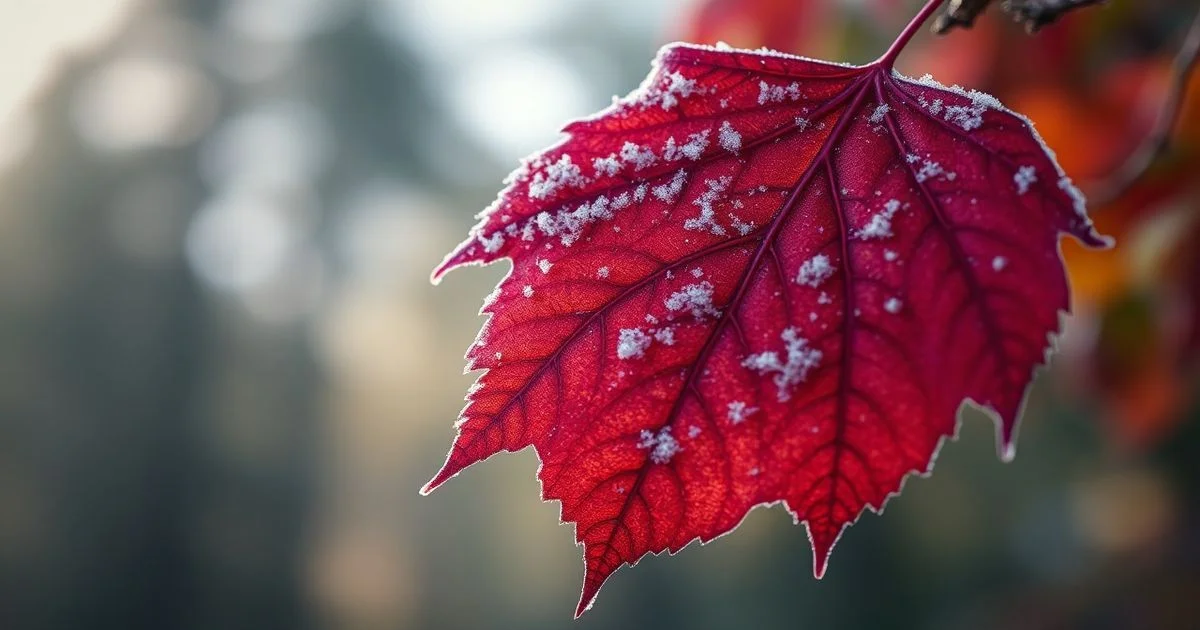
Unlike yellow and orange pigments, which are present all summer, red and purple pigments (anthocyanins) are often manufactured specifically in the fall. This seems counter-intuitive; why would a tree expend precious energy creating a new pigment just before dropping the leaf? This question lies at the heart of the "Science of Autumn."
The Photoprotection Hypothesis
The most widely accepted theory among plant physiologists is that anthocyanins act as a protective shield. When chlorophyll breaks down, the leaf’s internal structures become vulnerable to damage from high-energy sunlight.
By producing red pigments, the tree:
- Shields the photosynthetic apparatus: This allows the tree to continue reclaiming nitrogen and other nutrients from the leaf for a few extra days without the risk of light damage.
- Regulates temperature: Darker colors absorb more heat, keeping the leaf's metabolic processes active during chilly autumn mornings.
- Deters Pests: Some evolutionary biologists suggest that bright red leaves warn aphids and other insects that the tree is healthy and has strong chemical defenses, encouraging the pests to lay their eggs elsewhere.
The Influence of Lifestyle and Environment
The appreciation of this vibrant display has become a staple of modern life. For many, taking time to observe the changing seasons is one of the psychological benefits of minimalist living for modern techies, offering a necessary break from digital saturation. The chemistry that creates these reds requires very specific conditions.
Anthocyanin Synthesis Requirements:
- High Sugar Concentration: Trapped glucose in the leaf is the primary raw material.
- Bright Sunlight: Light is required to trigger the chemical reaction between sugars and proteins.
- Cool Nights: Low temperatures (but not freezing) slow the migration of sugars out of the leaf, keeping the "fuel" for red color in place.
Environmental Variables and Their Impact
No two autumns are identical. The brilliance of the season depends on a delicate "Goldilocks" balance of weather conditions. If the environment is too dry, the leaves may brown and drop early. If it is too wet, mold can dull the colors.
The Ideal Weather Formula
The most spectacular displays occur when we have a succession of warm, sunny days followed by crisp, cool (but not freezing) nights.
Environmental Factors Table:
Condition         | Effect on Foliage
------------------|-----------------------------------------
Heavy Rain        | Knocks leaves off early, promotes fungi.
Drought           | Causes "scorching"; leaves turn brown early.
Early Frost       | Kills the cells instantly, ending the color.
Sunny Days        | Increases sugar and anthocyanin production.
Cool Nights       | Prevents sugar transport, enhancing reds.
Varying Humidity  | Can lead to early leaf drop or fungal rot.
The Role of Soil Chemistry and Tree Species
The pH of the soil can also influence the intensity of the colors. For example, some trees grown in acidic soils will produce more brilliant reds, while those in alkaline soils may lean toward purple or duller bronze. This is because the molecular structure of anthocyanins is sensitive to pH levels, changing shape—and thus color reflection—based on the acidity of the cellular sap.
Furthermore, different species have evolved distinct chemical signatures:
- Oaks: Often turn brown, russet, or dull red because they contain high concentrations of tannins, which are bitter, brownish organic substances.
- Maples: The stars of the show, maples vary from bright yellow (Sugar Maple) to brilliant scarlet (Red Maple) depending on their specific anthocyanin-to-carotenoid ratio.
- Aspens and Birches: These species rarely produce anthocyanins, which is why they offer those iconic, pure golden landscapes.
Real-World Applications: Tracking Color via Satellite
The study of autumn colors isn't just for leaf-peepers; it is a vital metric for climate scientists. Organizations like NASA use satellite remote sensing to track the "Green-Down" period across the globe. By monitoring the transition from green to brown across entire continents, researchers can measure the health of the global carbon cycle.
Phenology and Carbon Sequestration
Phenology is the study of cyclic and seasonal natural phenomena. If the "growing season" (the time between spring bud-burst and autumn leaf-fall) increases due to global warming, it changes how much carbon dioxide forests can sequester.
-
Extended Carbon Intake: Longer autumns mean trees can absorb more CO2.
However, this is often offset by the stress of higher temperatures and drought, which can limit the tree's ability to store that carbon effectively.
-
Shifting Habitats: Species like the Sugar Maple are gradually migrating north toward cooler climates.
This shifts the traditional "foliage belts" of New England and Southeastern Canada, impacting local economies that rely on autumn tourism.
Pros and Cons of the Autumn Cycle
While we often view the change of seasons through a lens of beauty, it is a period of high risk and high reward for the forest ecosystem.
The Benefits (Pros):
- Nutrient Conservation: Trees reabsorb up to 50% of the nitrogen and phosphorus from their leaves before they drop, storing it in the roots for next spring.
- Water Management: Shedding leaves reduces the surface area for transpiration, preventing the tree from dehydrating during the frozen winter months when liquid water is scarce.
- Soil Fertilization: The fallen leaves decompose, returning organic matter and minerals to the forest floor, creating a rich mulch for future growth.
The Challenges (Cons):
- Vulnerability: During the transition, trees are vulnerable to early ice storms which can catch the leaves still on the branches, causing massive structural damage due to the weight of the ice.
- Energy Cost: The production of anthocyanins is metabolically expensive, requiring a significant investment of glucose that could otherwise be stored for spring.
The Future Outlook: Climate Change and Foliage
As global temperatures rise, the timing and quality of autumn colors are changing. We are seeing a trend toward "delayed autumns," where the peak color occurs several weeks later than it did fifty years ago.
Muted Colors and "Leaf Scorch"
Higher nighttime temperatures interfere with the breakdown of chlorophyll and the production of anthocyanins. If nights stay too warm, the chemical triggers for red pigments are never fully activated, leading to a "brown-out" where leaves stay green longer and then turn a dull yellow or brown before falling.
Furthermore, extreme weather events—like the intensified droughts seen in the American West and Northeast—can lead to "leaf scorch." This is where the edges of the leaves die prematurely, preventing the vibrant display we expect and reducing the tree's overall nutrient reclamation efficiency.
Technological Monitoring and AI Predictions
Scientists are now using AI and machine learning to predict peak foliage with higher accuracy. By feeding decades of weather data and satellite imagery into neural networks, researchers can create hyper-local maps that help both the tourism industry and ecologists understand how our forests are responding to a changing world. This intersection of tech and nature is proving vital for conservation efforts.
Frequently Asked Questions
Q: Why are some autumns more colorful than others?
A: Vibrancy depends heavily on the weather. A succession of warm, sunny days and crisp, cool nights (without frost) traps sugars in the leaf, leading to more intense red anthocyanin production.
Q: Do all trees change color in the fall?
A: No, only deciduous trees undergo this process. Evergreens use waxy coatings and internal "antifreeze" chemicals to survive the winter without shedding their foliage.
Q: Why do some leaves turn brown immediately?
A: This often occurs during extreme droughts or early frosts. If a leaf dies before the tree can reclaim its nutrients and break down chlorophyll properly, the pigments rot, resulting in a dull brown color.
Conclusion
The vibrant transition of the forest is a masterpiece of biological engineering. From the degradation of chlorophyll to the sunlight-shielding properties of anthocyanins, every hue serves a purpose in the tree's survival strategy. In summary, understanding Why Do Leaves Change Color? The Science of Autumn allows us to appreciate the forest not just as a static landscape, but as a dynamic, sensing organism that responds to the celestial mechanics of our planet with profound chemical complexity.
As we look toward the future, the health of our autumn forests remains a key indicator of the stability of our environment. By protecting these deciduous ecosystems, we ensure that the complex chemistry of the "Green-Down" continues to sustain the Earth's carbon balance and provide the spectacular visual record of the passing year.
Further Reading & Resources
- Harvard Forest: Long-Term Ecological Research
- The US Forest Service: Fall Colors FAQ
- Nature Journal: The Evolution of Autumn Colors
- NASA: Monitoring Earth's Vegetation from Space
Chemical Composition Note:
The breakdown of chlorophyll into nonfluorescent chlorophyll catabolites (NCCs) is a recent area of intense study. These NCCs are "photochemically silent," meaning they don't react with light to produce harmful free radicals, which is why the tree converts chlorophyll into these specific molecules rather than just letting it rot.
Process: Chlorophyll -> Fluorescent Chlorophyll Catabolites (FCCs) -> NCCs
Outcome: Safe storage of nitrogen without oxidative stress.
Enzymatic Pathway: PAO (Pheophorbide a oxygenase) pathway.
The science remains settled on the primary drivers, but as our sensing technology improves, we are discovering that the chemistry of the autumn forest is even more intricate than once imagined.