How to start a balcony vegetable garden: An Expert Guide
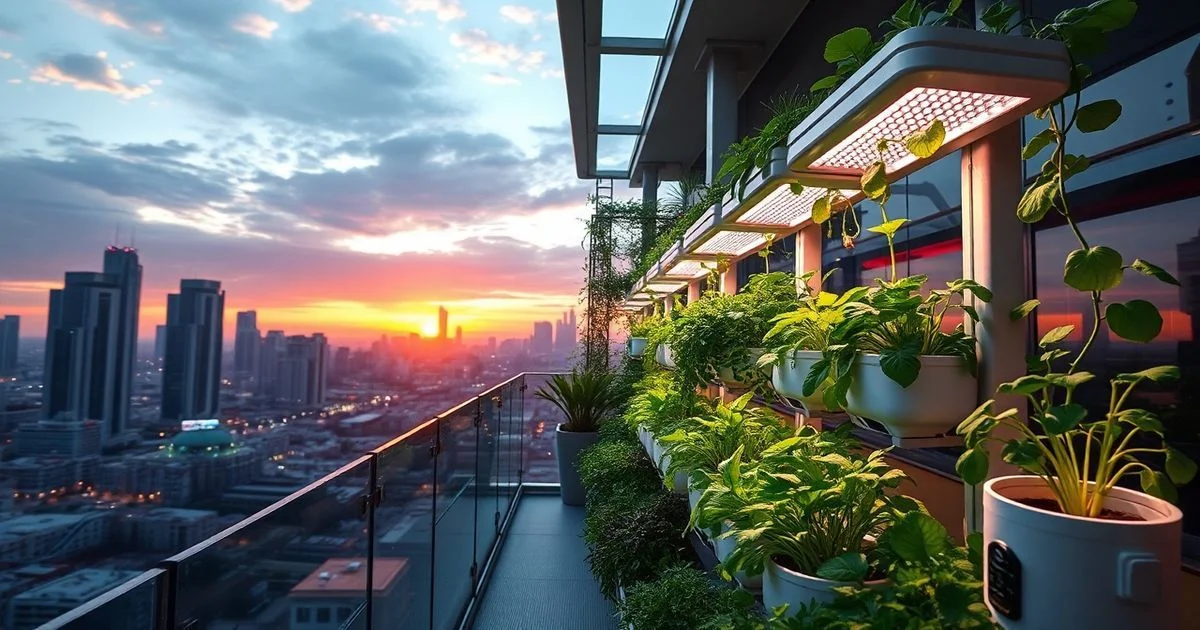
Urban living often feels like a trade-off between career proximity and connection to the natural world. However, learning how to start a balcony vegetable garden allows you to reclaim that connection by transforming small outdoor spaces into high-efficiency food production units. This expert guide explores the intersection of botany and spatial engineering, providing you with a technical roadmap to cultivate fresh produce even in the most restricted urban environments.
- Understanding the Micro-Environment of the Balcony
- Technical Requirements and Structural Constraints
- Hardware Selection: Choosing the Right Infrastructure
- Substrate Engineering: Optimizing the Growing Medium
- Seasonal Successions and Crop Timing
- How to start a balcony vegetable garden: Crop Selection and Varieties
- Advanced Smart Gardening and [IoT]({filename}/glossary/iot.md) Integration
- Nutrient Management: The N-P-K Algorithm
- Troubleshooting: Debugging Your Garden
- Financial and Environmental ROI
- The Future of Urban Agriculture
- Summary of the Modular Garden Setup
- Frequently Asked Questions
- Conclusion
- Further Reading & Resources
Understanding the Micro-Environment of the Balcony
Before placing a single seed in a tray, you must analyze your balcony as a biological cleanroom. Unlike a backyard garden, a balcony is an elevated micro-environment influenced by structural height, wind tunnels, and reflective heat from glass and concrete.
The primary constraint of urban gardening is "Photosynthetically Active Radiation" (PAR). Most fruiting vegetables require at least six to eight hours of direct sunlight. However, in an apartment setting, light is often directional rather than overhead. You must map your "Daily Light Integral" (DLI)—the total amount of light delivered to the plants in 24 hours—to choose your crops effectively.
Wind is another critical variable. High-rise balconies experience higher wind speeds, which increase "evapotranspiration" rates. This is the process by which water is transferred from the land to the atmosphere by evaporation from the soil and other surfaces and by transpiration from plants. High wind effectively acts like a giant hairdryer, sucking moisture out of your plants and cooling them below their optimal metabolic temperature. This environment is very different from the ground, which is why a sustainable vegetable garden at home requires different strategies when moved to an elevated platform.
Technical Requirements and Structural Constraints
Starting a balcony garden is not just about biology; it is about civil engineering. You are adding significant mass to a structure that has specific load-bearing limits.
Load-Bearing Capacity
Standard residential balconies are usually designed to support 40 to 100 pounds per square foot (psf). While this sounds like a lot, the weight of a 20-gallon pot filled with saturated soil and a mature tomato plant can exceed 150 pounds.
To mitigate this, you should focus on:
-
Lightweight Substrates: Use "soilless" mixes containing peat moss, coconut coir, and perlite. These materials retain moisture without the extreme weight of traditional field soil.
-
Structural Placement: Place heavy containers near the balcony’s edges or over structural joists rather than in the center, where the cantilever is weakest.
-
Container Choice: Opt for fabric grow bags or thin-walled resin pots over heavy terracotta or ceramic containers.
Drainage Management
Water management is the most common cause of friction between balcony gardeners and their neighbors (or landlords). You cannot simply let water drain off the side of the building.
Every container must have a drainage tray or be part of a closed-loop "Self-Watering" system. These systems utilize a reservoir at the bottom of the pot, allowing the plant to "wick" water upward through capillary action. This prevents nutrient leaching and keeps your balcony floor dry and structurally sound. Furthermore, proper humidity and moisture control can assist in maintaining indoor air quality if your balcony is semi-enclosed or adjacent to air intakes.
Hardware Selection: Choosing the Right Infrastructure
When considering how to start a balcony vegetable garden, your "hardware"—the pots and supports—acts as the OS for your plants. It dictates how much root space is available and how the thermal mass of the pot affects the roots.
Vertical Hydroponics vs. Soil Containers
If you are a tech-savvy gardener, you might consider a vertical hydroponic tower. These systems use nutrient-rich water instead of soil, allowing you to grow up to 30 plants in a 3-square-foot footprint.
-
Pros: 300% faster growth rates; 90% less water usage; modular scalability.
-
Cons: Higher initial CAPEX; requires a power source for the pump; steeper learning curve regarding pH and EC (Electrical Conductivity) monitoring.
For beginners, "Air-Pruning" fabric pots are the gold standard. In a plastic pot, roots hit the wall and begin to circle (becoming "root-bound"). In a fabric pot, the roots are exposed to air at the edges, which naturally "burns" off the tip and encourages the plant to grow a denser, more fibrous root system.
Trellising and Space Optimization
Space is your most expensive resource. To maximize your ROI (Return on Investment), you must grow vertically.
-
Cattle Panels or Mesh: Use these for vining crops like cucumbers or pole beans.
-
Wall-Mounted Planters: These utilize the vertical surface area of the building's exterior walls.
-
Tiered Shelving: Essential for keeping low-profile greens (lettuce, spinach) off the floor and in the path of the sun.
Substrate Engineering: Optimizing the Growing Medium
In a balcony garden, "soil" is a misnomer. You are creating a synthetic ecosystem. Traditional garden soil is too heavy and often contains pathogens or weed seeds that can thrive in the high-stress environment of a container.
The Ideal Potting Mix Architecture:
40% Coconut Coir (Moisture retention and aeration)
30% Perlite or Vermiculite (Drainage and thermal insulation)
20% High-quality Compost (Microbial life and base nutrients)
10% Earthworm Castings (Natural growth hormones and enzymes)
This mix is highly porous, allowing oxygen to reach the roots—a process called "aeration." Roots require oxygen for cellular respiration. If your soil is too dense, the plant essentially "suffocates," leading to root rot (Pythium).
The Role of Mycorrhizal Fungi
To truly optimize the biological performance of your substrate, you should inoculate it with Mycorrhizal fungi. These are beneficial fungi that form a symbiotic relationship with plant roots. They extend the root system's reach by creating a network of hyphae that can access nutrients and water in pores too small for the plant's own roots. In a container environment where resources are limited, this "biological booster" can increase nutrient uptake efficiency by up to 50%.
Seasonal Successions and Crop Timing
Understanding the "CPU cycles" of your garden—the seasonal timing—is essential for continuous production. In an urban heat island, your growing season might be shifted compared to regional agricultural calendars.
Spring (The Boot-Up Phase): Focus on frost-tolerant crops. Peas, radishes, and spinach can be planted as soon as the threat of deep freezes has passed. These crops perform "C3 carbon fixation," which is more efficient in the cooler, lower-light conditions of early spring.
Summer (Peak Performance): Transition to "C4" and CAM (Crassulacean Acid Metabolism) plants like tomatoes, peppers, and eggplants. These require high PAR and consistent heat. This is also when you must be most vigilant about the vital role of bees and other pollinators, as fruiting crops require successful pollination to produce a harvest.
Autumn (The Maintenance Cycle): As daylight hours diminish, return to leafy greens. However, because the soil is already warm from summer, these "second season" crops often grow faster than their spring counterparts.
How to start a balcony vegetable garden: Crop Selection and Varieties
You cannot grow everything on a balcony. Heavy, long-season crops like pumpkins or corn are inefficient in small spaces. Instead, focus on high-value, high-turnover crops.
High-Efficiency Vegetables
-
Leafy Greens (Lettuce, Kale, Swiss Chard): These have shallow root systems and can tolerate partial shade. They are the "low-latency" crops of the garden, often ready for harvest in 30–45 days.
-
Indeterminate Tomatoes: These grow as vines and can be trained up a single string to the ceiling. They provide a continuous harvest throughout the summer. Look for "cordon" varieties specifically bred for verticality.
-
Bush Beans: These are nitrogen-fixers. They have a symbiotic relationship with bacteria (Rhizobia) that pull nitrogen from the air and store it in the soil, improving the substrate for future crops.
Microgreens: The High-Density Alternative
If you have a north-facing balcony with minimal light, microgreens are your best option. These are seedlings of vegetables like broccoli, radish, and sunflowers, harvested just as the first set of true leaves appears. They are nutrient-dense and can be grown in shallow trays with minimal sunlight.
Advanced Smart Gardening and [IoT]({filename}/glossary/iot.md) Integration
For the tech-savvy reader, the manual labor of gardening can be outsourced to hardware. "Smart Gardening" transforms a hobby into a managed system.
Automated Irrigation (The "Set and Forget" Method)
A simple gravity-fed drip irrigation system can be connected to a WiFi-enabled timer. This allows you to manage watering schedules via your smartphone.
Component List:
-
Smart Timer: Connects to your outdoor faucet (or a rain barrel).
-
Pressure Regulator: Ensures the thin drip lines don't burst under high city water pressure.
-
Drip Emitters: Delivers water directly to the base of each plant, reducing evaporation by up to 60%.
Environmental Sensors and Logic
To truly optimize your yield, you need data. Sensors like the "Xiaomi Flower Care" or DIY Arduino-based probes can monitor:
-
Soil Moisture: Prevents over-watering and root rot. Set a threshold where the pump only activates when moisture drops below 30%.
-
Nutrient Levels (EC): Tells you when the "input" (fertilizer) has been depleted by the plant.
-
Ambient Temperature/Humidity: Helps you predict when pest outbreaks might occur. For example, high humidity combined with stagnant air is the "perfect storm" for Powdery Mildew.
Nutrient Management: The N-P-K Algorithm
Plants are biological machines that require chemical inputs to function. In a container, these inputs are finite and must be replenished.
The Macronutrient Trinity:
-
Nitrogen (N): Used for "Vegetative Growth" (leaves and stems). Essential for the "early build" phase of the plant.
-
Phosphorus (P): Used for "Root Development" and "Reproduction" (flowers and fruit). Switch to high-P fertilizers when you see the first flower buds.
-
Potassium (K): Used for "Cellular Function" and "Disease Resistance." It acts like the plant's immune system.
On a balcony, use liquid organic fertilizers. Synthetic fertilizers contain salts that can build up in containers over time, eventually "burning" the roots through osmotic stress. Organic fertilizers provide a slow-release "buffer" that supports the soil microbiome.
Troubleshooting: Debugging Your Garden
Even the best-engineered systems encounter bugs. In a balcony vegetable garden, these "bugs" are literally insects or fungal pathogens.
Integrated Pest Management (IPM)
On a balcony, you lack the natural predators (ladybugs, birds) found in a ground-level garden. This makes your plants "sitting ducks" for aphids and spider mites.
-
Mechanical Control: A strong stream of water can knock most pests off a plant.
-
Biological Control: You can actually purchase "Beneficial Insects" online. Releasing a bag of 1,000 ladybugs on a 5th-floor balcony is a highly effective way to clear an aphid infestation.
-
Chemical Control: Use Neem Oil or Insecticidal Soap. These are non-toxic to humans but disrupt the lifecycle of soft-bodied insects.
Dealing with "Heat Island" Effects
Urban environments are typically 5–10 degrees warmer than rural areas. This "Heat Island Effect" can cause your plants to "bolt" (go to seed prematurely) or drop their blossoms. Using shade cloth (a 30% or 40% density mesh) can reduce the ambient temperature on your balcony by several degrees, protecting your "biological hardware" from overheating during heatwaves.
Financial and Environmental ROI
Is a balcony garden worth the investment? Let's look at the data.
The Economics of a Tomato Plant:
Initial Investment (Pot + Soil + Seedling): $25.00
Average Yield (Indeterminate variety): 15-20 lbs
Retail Cost of Organic Tomatoes: $4.00/lb
Total Value Produced: $60.00 - $80.00
Net Profit: $35.00 - $55.00 per plant
Beyond the financials, the environmental impact is significant. The average piece of produce in the United States travels 1,500 miles from farm to plate. By growing on your balcony, you reduce your "Food Miles" to zero and eliminate the need for plastic packaging.
The Future of Urban Agriculture
As we move toward 2030, the technology behind balcony gardening is evolving. We are seeing the rise of "Controlled Environment Agriculture" (CEA) for the home.
Integrated balcony systems are being designed that feature built-in composting units (using Bokashi or vermiculture) to recycle kitchen waste back into plant nutrients. Furthermore, AI-driven apps are now capable of identifying plant diseases through a single smartphone photo, providing instant "debugging" advice to the urban farmer.
Summary of the Modular Garden Setup
To succeed, you should view your garden as a series of modules that can be upgraded over time.
-
Phase 1 (The Beta): Start with three 5-gallon grow bags, a high-quality potting mix, and easy-to-grow herbs like basil and mint.
-
Phase 2 (The Alpha): Introduce vertical trellises and high-yield fruiting crops like cherry tomatoes and peppers.
-
Phase 3 (The Full Release): Implement smart irrigation, environmental monitoring, and perhaps a small hydroponic system for year-round greens.
Frequently Asked Questions
Q: Can I grow vegetables on a balcony that gets very little sun?
A: Yes, but you must select shade-tolerant crops. Leafy greens like spinach, arugula, and Swiss chard, as well as certain herbs like mint and parsley, can produce well with as little as 3-4 hours of indirect light.
Q: How do I prevent my balcony garden from becoming too heavy?
A: Avoid traditional garden soil and heavy clay pots. Use "soilless" potting mixes made of coconut coir and perlite, and opt for fabric grow bags or lightweight resin containers to keep the total mass within structural limits.
Q: What is the best way to water a balcony garden if I travel often?
A: An automated drip irrigation system with a smart WiFi timer is the most reliable method. Alternatively, you can use "self-watering" pots with large reservoirs that can sustain plants for up to a week.
Conclusion
Understanding how to start a balcony vegetable garden is about more than just aesthetic appeal; it is about building a resilient, localized food system. By treating your balcony as a high-performance environment and applying engineering principles to biology, you can achieve yields that rival traditional gardens.
Whether you are automating your watering with a micro-controller or simply enjoying the high-fidelity flavor of a home-grown tomato, the transition from consumer to producer is a powerful shift. Start small, iterate often, and transform your urban space into a living laboratory of sustainability.