Essential Steps to Maintain Indoor Air Quality: A Tech Guide
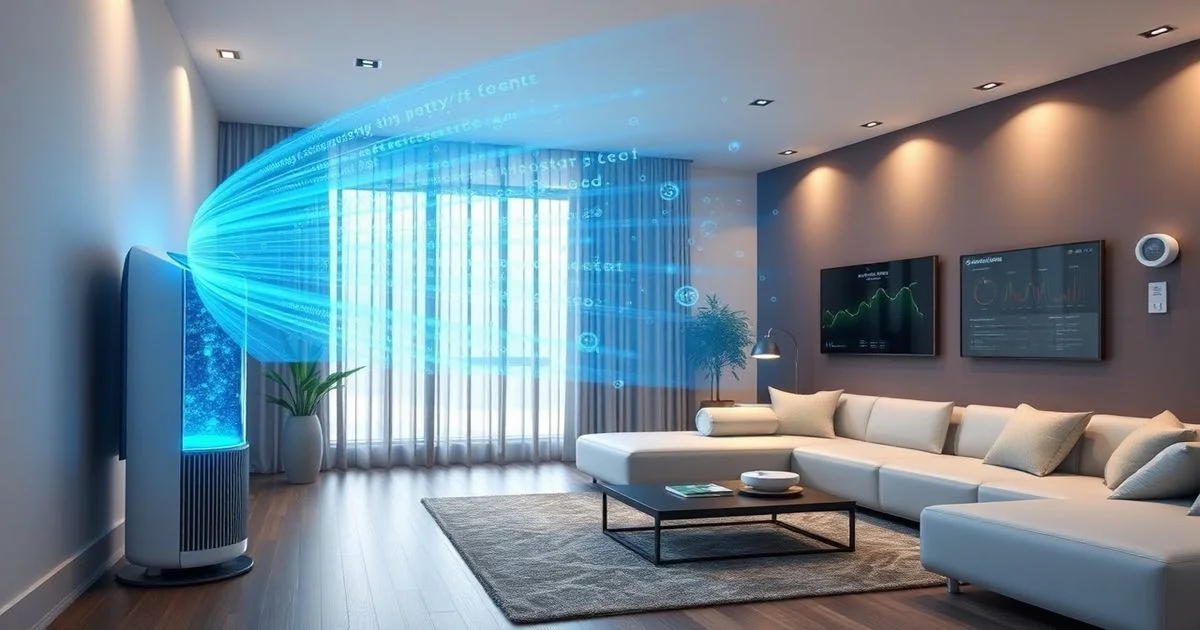
In an era where we spend roughly 90% of our lives inside, understanding the essential steps to maintain indoor air quality has moved from a wellness trend to a critical engineering requirement. As modern building envelopes become increasingly airtight to improve energy efficiency, the concentration of particulate matter and gaseous pollutants has skyrocketed, often reaching levels five times higher than outdoor air. This guide explores the sophisticated sensors, filtration mechanisms, and automated systems required to navigate the complexities of modern atmospheric management within the home.
- The Invisible Physics of Indoor Pollutants
- Essential Steps to Maintain Indoor Air Quality via Sensing
- Mechanical Filtration and Air Changes per Hour (ACH)
- Advanced Ventilation Strategies: ERVs and HRVs
- The Role of IoT and Automation in Air Management
- Maintenance and Calibration Protocols
- Emerging Technologies in Air Purification
- Designing a Clean Air "Tech Stack"
- The Economic and Productivity Impact
- Frequently Asked Questions
- Further Reading & Resources
- Conclusion
The Invisible Physics of Indoor Pollutants
Before we can manage our environment, we must identify the specific adversaries that degrade it. Indoor air is not a static void; it is a complex fluid dynamic system filled with suspended solids, liquid droplets, and volatile gases. The scientific community categorizes these based on their physical behavior and chemical reactivity.
Particulate Matter (PM2.5 and PM10)
Particulate matter is categorized by aerodynamic diameter. PM10 refers to particles 10 micrometers or smaller (dust, pollen), while PM2.5 refers to fine particles 2.5 micrometers or smaller (smoke, combustion byproducts).
To put this in perspective:
- A human hair is approximately 50-70 micrometers in diameter.
- PM2.5 particles are small enough to bypass the cilia in the human respiratory tract and enter the bloodstream directly through the alveolar sacs in the lungs.
Maintaining high air quality requires a filtration strategy that targets the "most penetrating particle size" (MPPS), which typically falls around 0.3 micrometers. This is where the physics of diffusion and interception becomes critical for filter design. Beyond just health, maintaining a clean environment can reduce physiological stressors, much like 5 simple ways to reduce daily stress focuses on mental well-being through environmental control.
Volatile Organic Compounds (VOCs)
VOCs are carbon-based chemicals that evaporate at room temperature. Common sources include "off-gassing" from furniture (formaldehyde), cleaning agents (benzene), and even personal care products. Unlike particulate matter, VOCs are gases. They cannot be caught by a standard fiber filter; they require molecular-level capture, usually through adsorption on activated media.
The chemical complexity of VOCs means that standard ventilation is often insufficient. For instance, formaldehyde has a very low molecular weight, making it difficult for even high-grade carbon filters to capture without specific chemical impregnations like potassium permanganate.
Essential Steps to Maintain Indoor Air Quality via Sensing
You cannot manage what you cannot measure. The first technical pillar of a healthy indoor environment is a robust sensor suite that provides real-time telemetry on air composition. Modern smart homes now rely on a variety of electrochemical and optical sensors to provide a complete picture of the "air stack."
Non-Dispersive Infrared (NDIR) for CO2
Carbon dioxide (CO2) is a primary indicator of "stale air" and poor ventilation. High levels (above 1,000 ppm) lead to cognitive decline and drowsiness.
NDIR sensors work by passing infrared light through a gas-filled chamber. Since CO2 molecules absorb specific wavelengths of IR light, the sensor measures how much light reaches the detector. The delta between the emitted and received light determines the CO2 concentration. For tech-savvy users, look for sensors with "Automatic Baseline Calibration" (ABC) to ensure long-term accuracy without manual resets. High-performance NDIR sensors, such as the Senseair S8 or the Sensirion SCD4x, offer the precision needed for automated HVAC integration.
Laser Scattering for Particulate Matter
High-end air quality monitors use laser-based "Mie scattering" to count particles. A laser beam illuminates a sample of air, and a photodetector measures the intensity and pattern of light scattered by the particles. This allows the device to estimate mass concentration (µg/m³) and particle counts simultaneously.
Sensor Performance Data:
Consumer Grade (Plantower/Sensirion): +/- 10% accuracy, 0.3µm - 10µm range.
Professional Grade (TSI/Aerotrak): +/- 5% accuracy, 0.1µm - 25µm range.
Response Time: < 10 seconds for real-time tracking.
Calibration Cycle: Annual recommended.
Metal Oxide (MOX) Sensors for VOCs
MOX sensors use a heated metal oxide film. When VOCs come into contact with the film, a chemical reaction changes its electrical resistance. The hardware interprets this change as a "Total Volatile Organic Compound" (TVOC) reading. While MOX sensors are great for detecting trends, they are often non-specific, meaning they can't tell the difference between "good" alcohol (hand sanitizer) and "bad" formaldehyde. However, new AI-driven algorithms in sensors like the Bosch BME688 can distinguish between different "smell" profiles through pattern recognition.
Mechanical Filtration and Air Changes per Hour (ACH)
Once the sensors detect a spike in pollutants, the mechanical systems must intervene. The two main metrics of performance here are the HEPA rating and the Clean Air Delivery Rate (CADR).
The Mechanics of HEPA Filtration
High-Efficiency Particulate Air (HEPA) filters are not simple sieves. They utilize three distinct physical mechanisms to trap particles:
-
Interception: Large particles follow the airstream and collide with a fiber.
-
Impaction: Dense particles have too much inertia to follow the curving air and slam directly into the fiber.
-
Diffusion: Very small particles (under 0.1µm) move erratically due to Brownian motion, increasing the likelihood they will hit a fiber.
Filter Gradations:
- MERV 13: The baseline for modern HVAC systems; captures 50% of PM2.5.
- H13 HEPA: Removes 99.97% of particles down to 0.3µm.
- H14 HEPA: Removes 99.995% of particles, often used in hospital surgical suites.
- ULPA: Removes 99.999% of particles down to 0.1µm.
Calculating CADR and Room Volume
A common mistake is buying a filter based on "room size" marketing. Instead, focus on CADR (Clean Air Delivery Rate). CADR measures the cubic feet per minute (CFM) of air that has been cleared of all particles.
To maintain optimal quality, you need at least 4.8 Air Changes per Hour (ACH). The formula for the required CADR is:
Required CADR = (Room Volume in Cubic Feet * Desired ACH) / 60
For a 200 sq. ft. room with 8 ft. ceilings (1,600 cubic feet) and a target of 5 ACH, you would need a purifier with a CADR of at least 133 CFM. If you are designing your own air management logic, you might use version control for your automation scripts. Understanding Git Basics: A Developer's Guide to Version Control can help you manage your home automation configurations effectively as they grow in complexity.
Advanced Ventilation Strategies: ERVs and HRVs
In modern, well-insulated homes, opening a window is often the least efficient way to manage air quality because it wastes thermal energy. Instead, we use mechanical ventilation systems that "swap" indoor air for outdoor air without losing heat.
Heat Recovery Ventilators (HRVs)
An HRV uses a cross-flow heat exchanger (usually made of aluminum or specialized polymers). The outgoing warm, stale air passes through the exchanger alongside incoming cold, fresh air. The two streams never mix, but the heat is transferred. This allows you to vent CO2 and VOCs while retaining up to 80% of your indoor temperature.
Energy Recovery Ventilators (ERVs)
An ERV is essentially an HRV that also manages moisture. It uses a desiccant-coated core to transfer humidity. In the summer, it prevents outdoor humidity from entering the home; in the winter, it keeps your indoor air from becoming too dry.
Selection Matrix:
-
HRV: Best for cold, dry climates where indoor humidity is already high from cooking/showering.
-
ERV: Best for hot, humid climates or very cold climates where indoor air becomes dangerously dry.
In many ways, the interconnectedness of our indoor environment and the external climate mirrors the delicate balance of nature. Just as why bees are vital for our planet's future highlights the importance of biological systems, HRVs and ERVs represent the technological systems we use to maintain our local ecological niche.
The Role of IoT and Automation in Air Management
For the tech-savvy user, the most effective of the essential steps to maintain indoor air quality involves creating an automated feedback loop. By integrating air quality sensors with smart home platforms like Home Assistant, Hubitat, or Apple Home, you can move from reactive to proactive management.
Creating an Automation Logic
A robust automation script ensures that air purification only runs when needed, extending filter life and reducing energy consumption.
Example Home Assistant Automation (YAML):
alias: "Boost Air Purification on High PM2.5"
trigger:
  - platform: numeric_state
    entity_id: sensor.air_monitor_pm25
    above: 15
action:
  - service: fan.set_percentage
    target:
      entity_id: fan.purifier_main
    data:
      percentage: 100
  - service: notify.mobile_app
    data:
      message: "Air quality degraded. Purifier set to Max."
Data Logging for Root Cause Analysis
Using platforms like Grafana to visualize your air quality data can reveal hidden polluters. You might notice a spike in VOCs every Tuesday at 10:00 AM, which correlates with your cleaning service. Or, you may see a PM2.5 spike every time you use a specific toaster. This granular data allows for lifestyle adjustments that technology alone cannot fix.
Maintenance and Calibration Protocols
High-tech systems fail when they are neglected. Sensor drift and filter saturation are the two most common points of failure in indoor air management.
Sensor Drift and Recalibration
Low-cost NDIR sensors can drift by as much as 50 ppm per year. If your monitor has been in a sealed room for months, its baseline might be skewed.
-
Action: Take your air quality monitor outside for 20 minutes once a month.
-
Logic: Outdoor CO2 is a global constant of roughly 420 ppm. Exposing the sensor to this "known good" value allows it to recalibrate its internal baseline.
Filter Saturation and Pressure Drop
As a filter captures particles, it becomes "loaded." This actually increases the filtration efficiency (the captured dust helps catch more dust), but it also increases the "pressure drop."
The fan must work harder to push air through a clogged filter, which reduces the CADR and increases noise. If your smart purifier has a "Filter Life %" indicator, it is usually just a timer. A better metric is measuring the airflow at the exhaust using a simple anemometer. If airflow has dropped by 30% from the baseline, it is time for a replacement.
Emerging Technologies in Air Purification
While HEPA and Activated Carbon are the industry standards, several emerging technologies are attempting to solve the VOC and pathogen problem through molecular transformation.
Photocatalytic Oxidation (PCO)
PCO uses a UV light shining on a titanium dioxide (TiO2) coated filter. This creates hydroxyl radicals that "shatter" organic molecules, turning VOCs into harmless trace amounts of water and CO2. While promising, PCO must be carefully engineered; if the reaction is incomplete, it can produce harmful byproducts like formaldehyde.
Bipolar Ionization
This technology releases positively and negatively charged ions into the air. These ions attach to particles, causing them to clump together (agglomerate). As the particles grow larger, they become easier for a standard HEPA filter to catch or simply fall out of the air.
The Ozone Risk:
-
Older ionizers produced significant amounts of ozone (O3), a potent lung irritant.
-
Modern "UL 2998" certified devices are validated to produce zero ozone.
-
Always check for this certification before integrating ionizers into your HVAC system.
Designing a Clean Air "Tech Stack"
To achieve professional-grade results, you should treat your indoor environment as a series of zones, each with its own sensing and remediation hardware.
The Bedroom: The Recovery Zone
Since we spend the most continuous time here, the focus should be on low-noise, high-efficiency filtration.
-
Hardware: A purifier with a DC motor (for silent, granular speed control) and a dedicated PM2.5 sensor.
-
Optimization: Maintain CO2 below 700 ppm to ensure deep, restorative sleep. Use a silent HEPA unit that dims its LEDs automatically at night.
The Kitchen: The Source Zone
The kitchen is the primary source of VOCs (from cooking oils) and PM2.5 (from gas stoves).
-
Hardware: High-CFM range hood vented to the outside (recirculating hoods are ineffective for gaseous pollutants).
-
Automation: Trigger the range hood or a high-CADR purifier as soon as the stove is powered on via a smart plug or current sensor.
The Home Office: The Cognitive Zone
CO2 management is the priority here to prevent the "brain fog" often associated with long afternoon meetings.
-
Hardware: NDIR CO2 sensor and an ERV outlet.
-
Optimization: Set a "Ventilation Warning" alert at 900 ppm to remind you to step out or increase fresh air intake.
The Economic and Productivity Impact
Maintaining air quality isn't just about health; it's an investment in cognitive performance. Studies from the Harvard T.H. Chan School of Public Health show that doubling the ventilation rate (and reducing CO2/VOCs) can lead to an 8% increase in employee productivity. In a work-from-home era, your office's air quality is directly linked to your professional output.
Furthermore, proper moisture management via ERVs protects the structural integrity of your home. High humidity leads to mold growth (biological VOCs), while low humidity can damage wooden furniture and musical instruments. By using technology to maintain a steady 40-60% Relative Humidity (RH), you are performing essential maintenance on your most valuable asset.
Frequently Asked Questions
Q: How often should I replace HEPA filters?
A: HEPA filters should be replaced every 6-12 months depending on the CADR and PM2.5 levels detected by your sensors. In areas with high pollution or wildfire smoke, replacement may be required every 3 months.
Q: Do indoor plants significantly improve air quality?
A: While plants remove trace VOCs, they lack the CADR to handle PM2.5 or high CO2 levels. Mechanical filtration and ventilation remain the primary requirements for a truly healthy indoor environment.
Q: What is the safest air purification technology?
A: HEPA filtration is the gold standard as it is a passive process. When using active technologies like ionizers or PCO, ensure they are UL 2998 certified to guarantee zero ozone production.
Further Reading & Resources
- EPA - Indoor Air Quality Best Practices
- ASHRAE - Ventilation and Acceptable Indoor Air Quality Standards
- The 9 Foundations of a Healthy Building - Harvard Health
- World Health Organization - Global Air Quality Guidelines
Conclusion
Mastering the essential steps to maintain indoor air quality requires a multi-layered approach that combines the physics of filtration with the logic of automation. By deploying high-accuracy NDIR and laser-scattering sensors, you gain the visibility needed to understand your environment. Integrating these sensors with HEPA-grade purification and mechanical ventilation like ERVs ensures that you are not just filtering air, but actively managing its composition.
The transition from a passive occupant to an active environmental manager starts with data. Whether you are building a custom dashboard in Home Assistant or simply installing a high-quality HEPA unit, the technological tools available today make it possible to breathe outdoor-quality air while enjoying the comforts of the modern indoor world. Stay calibrated, monitor your trends, and prioritize the air you breathe as much as the water you drink. Only through this tech-forward approach can we ensure our indoor sanctuaries remain truly healthy.