NASA Space: Charting New Frontiers in Exploration & Discovery
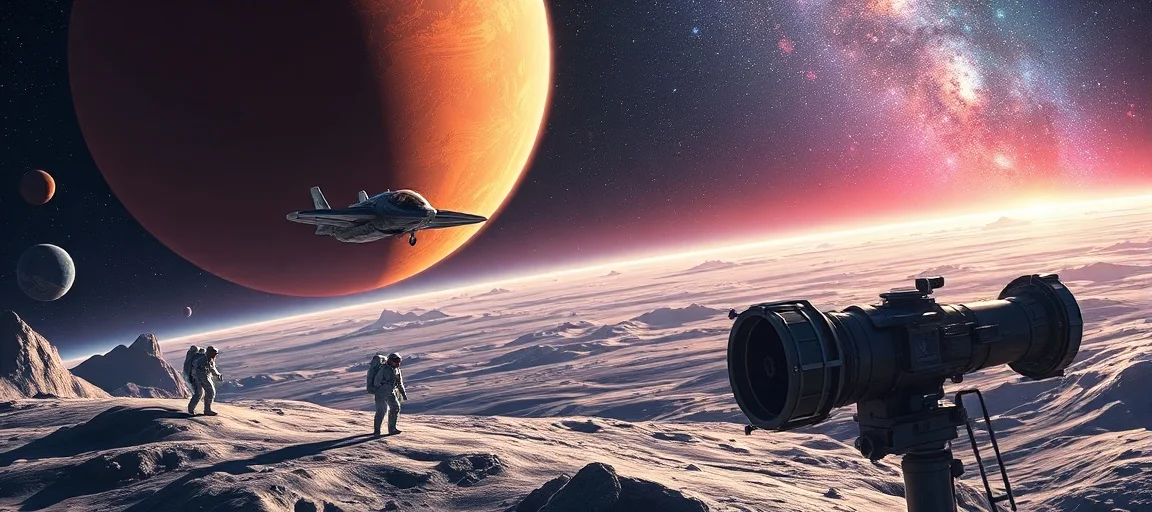
In an era defined by rapid technological advancement and an insatiable human curiosity, NASA Space endeavors continue to redefine our understanding of the universe. From the audacious plans for lunar return to unprecedented telescopic revelations, the agency is charting new frontiers in exploration and discovery, pushing the boundaries of what is possible. These monumental efforts are not only expanding scientific knowledge but also inspiring a new generation to look skyward.
Key Developments in NASA Space Exploration
NASA's commitment to unraveling the cosmos has led to a series of groundbreaking missions and scientific advancements. The ongoing exploration efforts span multiple celestial bodies and observational platforms, each contributing vital pieces to the cosmic puzzle. These endeavors underscore humanity's enduring quest to understand its place in the universe.
Artemis Program: A New Era for Lunar Exploration
The Artemis program represents NASA's ambitious plan to return humans to the Moon, establishing a long-term presence and preparing for future missions to Mars. This multi-phase initiative aims to land the first woman and first person of color on the lunar surface, marking a significant step forward in human spaceflight.
The program's foundational elements include the Space Launch System (SLS) rocket and the Orion spacecraft. Following the successful uncrewed Artemis I mission, which orbited the Moon and safely returned to Earth, NASA is now focused on Artemis II. This mission will carry a crew of four astronauts on a lunar flyby, testing Orion's systems with humans aboard before a lunar landing. Future Artemis missions, like Artemis III, plan to utilize advanced landers developed by commercial partners to transport astronauts to the lunar South Pole, an area of particular scientific interest due to the potential presence of water ice. The long-term vision includes building the Gateway, a lunar orbiting outpost, and establishing a sustainable human presence on the Moon, laying the groundwork for further deep-space exploration and proving out crucial technologies for extended stays beyond Earth orbit.
Mars Exploration: Perseverance and Beyond
Mars remains a primary target for NASA's robotic explorers, with the Perseverance rover continuing its groundbreaking work in Jezero Crater. Since its landing, Perseverance has been collecting rock and soil samples, meticulously storing them for potential return to Earth as part of the Mars Sample Return campaign. This mission aims to bring Martian geological treasures back for in-depth analysis, offering unprecedented insights into the planet's history and potential for past life. The rover also carries the Ingenuity helicopter, which has far exceeded its expected lifespan, demonstrating the feasibility of aerial exploration on Mars and scouting potential routes for Perseverance.
Looking ahead, the Mars Sample Return mission involves a complex collaboration with the European Space Agency (ESA). It includes a Sample Return Lander and a Mars Ascent Vehicle to launch the collected samples from the Martian surface into orbit, where they would then be transferred to an Earth Return Orbiter. This ambitious undertaking is crucial for answering fundamental questions about the Red Planet's habitability and geological evolution, potentially revealing signs of ancient microbial life. The meticulous planning and execution of this mission highlight the international commitment to understanding our solar system.
James Webb Space Telescope: Unveiling the Universe
The James Webb Space Telescope (JWST) continues to revolutionize astronomy, delivering breathtaking images and unprecedented data from the early universe. Operating in infrared light, JWST is capable of peering through cosmic dust clouds to observe the first galaxies that formed after the Big Bang, providing a window into the universe's infancy.
Recent discoveries attributed to JWST include the detection of exceptionally early and massive galaxies, challenging existing models of galaxy formation and evolution. It has also provided detailed atmospheric analyses of exoplanets, identifying key chemical signatures that could indicate the presence of water vapor, methane, and other biosignatures. Its observations are deepening our understanding of planet formation within protoplanetary disks and the life cycles of stars, from their birth in nebulae to their dramatic deaths. The data from JWST is constantly reshaping our cosmic narrative, pushing the boundaries of astrophysical knowledge and opening new avenues for research into the origins of life beyond Earth.
The Future of NASA Space Missions
As NASA looks to the horizon, its future missions promise even more ambitious feats of engineering and scientific discovery. The agency is not only focused on returning humans to the Moon but also on extending humanity's reach deeper into the solar system and beyond, continually expanding our understanding of the universe. These future initiatives embody the spirit of NASA Space exploration, pushing the limits of technology and human endurance.
Human Missions to Distant Worlds
The ultimate goal of NASA's human spaceflight program extends beyond the Moon to Mars. The Artemis program is designed to develop the technologies and operational expertise necessary for sustained human presence on the Moon, which will then serve as a proving ground for Mars missions. Astronauts will gain invaluable experience in deep-space operations, including long-duration stays, resource utilization, and mitigating the effects of radiation, all critical for a multi-year journey to the Red Planet.
Future human missions to Mars envision complex habitats, advanced life support systems, and sophisticated robotic assistance. Planning for these missions involves addressing significant challenges such as propulsion systems that can reduce transit time, protecting crews from cosmic radiation, and developing self-sustaining environments. The insights gained from Mars robotic missions, like Perseverance, are directly informing these human exploration roadmaps, ensuring that future astronauts will have the best possible chance of success and enable scientific breakthroughs only possible with human presence.
Advancements in Space Technology
Innovation in space technology is crucial for enabling these ambitious future missions. NASA is actively investing in and developing a wide array of new technologies that will redefine capabilities for exploration and scientific research.
One significant area is propulsion systems. Work is ongoing on advanced electric propulsion, which offers highly efficient, albeit lower-thrust, options for long-duration interplanetary travel. Nuclear thermal propulsion (NTP) is another area of research, promising faster transit times to Mars by heating a propellant with a nuclear reactor, drastically reducing journey times and radiation exposure for crews. There's also research into solar sails and other exotic propulsion concepts for even faster or longer-range missions.
In-Situ Resource Utilization (ISRU) is vital for reducing mission costs and increasing sustainability. Technologies are being developed to extract water ice from the Moon's poles or Mars' subsurface, which can be converted into breathable air and rocket fuel. This would allow future missions to "live off the land" rather than carrying all resources from Earth, making deep-space exploration more feasible and affordable. Demonstrations like the MOXIE instrument on Perseverance, which generates oxygen from the Martian atmosphere, are critical steps toward this goal.
Robotics and Artificial Intelligence (AI) play an increasingly critical role. Future missions will rely heavily on autonomous systems for tasks such as habitat construction, scientific data collection, and even emergency repairs, particularly on distant worlds where real-time human intervention is impossible due to communication delays. AI algorithms are also enhancing data analysis, helping scientists sift through vast amounts of information from telescopes and probes to identify significant discoveries more efficiently.
Advanced materials science is also key, with research into lighter, stronger, and more radiation-resistant materials for spacecraft and habitats. This includes everything from advanced composites for structural components to novel shielding materials for crew protection against solar flares and cosmic rays, ensuring astronaut safety during long-duration missions.
Expanding Earth Observation and Climate Science
Beyond deep space, NASA continues its vital work in Earth observation and climate science. A fleet of satellites constantly monitors our planet, collecting data on everything from sea-level rise and ice sheet melt to atmospheric composition and extreme weather patterns. This continuous stream of data is critical for understanding climate change, predicting natural disasters, and informing environmental policy.
Upcoming missions in Earth science include advanced lidar and radar systems for more precise measurements of forest biomass and water resources, as well as improved instruments for tracking greenhouse gas emissions. These missions are designed to provide a more holistic and granular view of Earth's interconnected systems, helping scientists better model future climate scenarios and assess human impact on the planet, ultimately contributing to a more sustainable future.
International Collaboration and its Importance
Space exploration has always been a global endeavor, and international collaboration is more vital than ever for NASA's current and future plans. Partnerships with agencies like the European Space Agency (ESA), the Japan Aerospace Exploration Agency (JAXA), the Canadian Space Agency (CSA), and others are fundamental to sharing costs, risks, and expertise, leading to more ambitious and successful missions.
The International Space Station (ISS) stands as a prime example of successful international cooperation, with astronauts from multiple nations living and working together in orbit for over two decades. This partnership has facilitated invaluable scientific research in microgravity and proven the feasibility of long-duration human spaceflight, fostering goodwill and demonstrating humanity's shared capacity for exploration.
The Artemis program is also built on a framework of international agreements, with several countries committing to contributing modules for the Gateway lunar outpost or providing other support for lunar surface missions. Similarly, the Mars Sample Return mission is a joint effort with ESA, demonstrating how complex interplanetary missions can be achieved through shared resources and scientific goals. These collaborations not only advance scientific and technological objectives but also foster diplomatic ties and promote peaceful cooperation on a global scale, showcasing what can be achieved when nations work together towards common aspirations.
Impact on Earth: Spin-offs and Inspiration
The investment in NASA Space exploration yields profound benefits far beyond scientific discovery and national prestige. Technologies developed for space often find unexpected applications on Earth, leading to significant advancements in various industries and improving daily life. These "spin-offs" are a testament to the practical value of pushing technological boundaries.
For example, water purification systems developed for astronauts are now used in communities worldwide, providing access to clean drinking water. Advanced medical imaging techniques, such as MRI and CT scans, trace their roots to image processing technology created for space telescopes. Fire-resistant materials, lightweight composites, and even specialized insulation found in everyday items have their origins in the demands of spacecraft design. Weather satellites, GPS technology, and communication satellites are direct results of space programs, fundamentally altering navigation, communication, and disaster preparedness on Earth.
Beyond tangible technological benefits, NASA's missions serve as an immense source of inspiration. They ignite curiosity in science, technology, engineering, and mathematics (STEM) fields, motivating new generations of scientists, engineers, and innovators. The breathtaking images from telescopes like JWST and the human endeavors of astronauts remind us of humanity's boundless potential and our shared connection to the cosmos, fostering a sense of wonder and unity across diverse cultures and societies.
Conclusion
From the ambitious return to the Moon with the Artemis program to the profound insights delivered by the James Webb Space Telescope, NASA Space continues to be at the forefront of human exploration and scientific discovery. The agency's ongoing missions and future aspirations—including human journeys to Mars, revolutionary technological advancements, and vital international collaborations—underscore its critical role in expanding our understanding of the universe and our place within it. These endeavors not only enrich our scientific knowledge but also drive innovation and inspire humanity, with benefits reverberating across our planet.
Frequently Asked Questions
Q: What is the main goal of NASA's Artemis program?
A: The Artemis program aims to return humans to the Moon, including the first woman and person of color, establish a long-term lunar presence, and prepare for future human missions to Mars. This initiative is a crucial step towards sustainable deep-space exploration.
Q: How is the James Webb Space Telescope contributing to astronomy?
A: JWST is revolutionizing astronomy by observing the early universe in infrared light, detecting exceptionally early galaxies, and analyzing exoplanet atmospheres for biosignatures. Its data is significantly advancing our understanding of cosmic origins and planetary formation.
Q: What are some terrestrial benefits (spin-offs) from NASA Space exploration?
A: NASA's space exploration leads to numerous terrestrial spin-offs, including advancements in water purification systems, medical imaging (MRI, CT), fire-resistant materials, and GPS technology. These innovations improve daily life and contribute to various industries on Earth.