Understanding the basics of planetary orbits: A Deep Dive
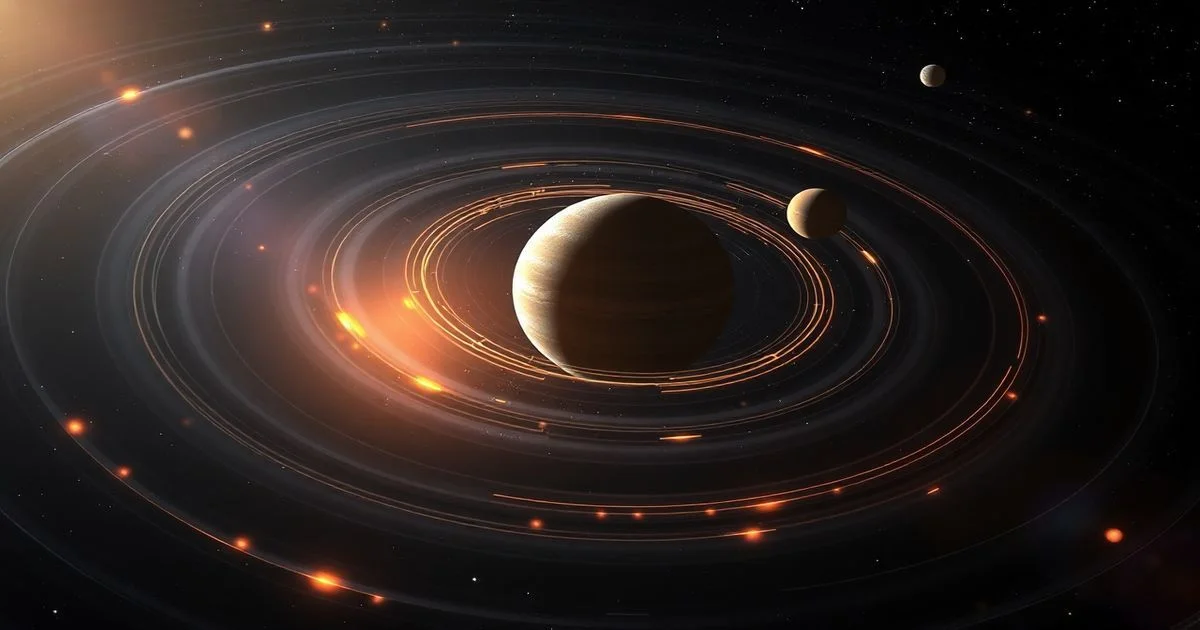
In the realm of celestial mechanics, understanding the basics of planetary orbits is fundamental to our grasp of the cosmos and the technology we send into it, providing a deep dive into the planetary physics that govern the movement of worlds. Whether looking at Earth’s stable trajectory around the Sun or the complex paths of distant exoplanets, these basics involve intricate mathematical models and gravitational forces that dictate the movement of every object in space. To the tech-savvy observer, an orbit isn't just a simple circle in the sky; it is a delicate multi-variable balancing act between inertia and gravity, governed by laws that are as predictable as they are profound.
- Historical Context: From Geocentrism to Ellipses
- The Foundational Mechanics of Orbital Motion
- Kepler’s Three Laws: The Geometry of the Heavens
- Newton’s Universal Law of Gravitation: The Engine of Motion
- Key Orbital Elements: The Tech Specs of a Path
- Types of Orbits in Modern Technology
- Orbital Perturbations: The Messy Reality
- Interplanetary Travel and Transfer Orbits
- Lagrange Points: The Parking Spots of Space
- ## Understanding the basics of planetary orbits: The Future of Navigation
- Frequently Asked Questions
- Conclusion
- Further Reading & Resources
Historical Context: From Geocentrism to Ellipses
Before we can fully master the modern physics of celestial movement, it is helpful to look at how ancient civilizations tracked celestial events to understand where our current knowledge began. For millennia, the prevailing view was the Geocentric model, championed by Ptolemy, which placed the Earth at the center of the universe. This model required complex "epicycles"—circles within circles—to explain why planets sometimes appeared to move backward in the sky (retrograde motion).
It wasn't until the 16th century that Nicolaus Copernicus proposed the Heliocentric model, placing the Sun at the center. However, Copernicus still believed orbits were perfect circles, which led to inaccuracies in his predictions. It was Johannes Kepler, utilizing the incredibly precise observational data of Tycho Brahe, who finally realized that orbits were not circles, but ellipses. This shift in thinking was the "Great Leap Forward" for astronomy, allowing us to move from philosophical guessing to empirical science.
The Foundational Mechanics of Orbital Motion
At its simplest level, an orbit is the gravitationally curved trajectory of an object, such as the path of a planet around a star or a natural satellite around a planet. Usually, orbit refers to a regularly repeating trajectory, although it may also refer to a non-repeating trajectory. To the casual observer, it might seem like planets are simply "floating," but in reality, every orbiting body is in a state of continuous freefall.
To visualize this, we often use the "Newton’s Cannonball" thought experiment. Imagine a cannon atop a very high mountain. If you fire a cannonball horizontally, gravity pulls it toward the Earth, and it hits the ground some distance away. If you increase the muzzle velocity, the ball travels further before hitting the surface. However, because the Earth is curved, there is a specific velocity—the orbital velocity—at which the rate of the ball’s fall matches the rate of the Earth’s curvature. At this point, the ball never hits the ground; it stays in a constant state of falling around the planet.
This state of perpetual falling is what defines an orbit. For Earth, this circular orbital velocity is approximately 7.8 kilometers per second (about 17,500 mph) at low altitudes. If the object goes faster than this, the orbit becomes elliptical; if it reaches the "escape velocity" (about 11.2 km/s for Earth), it breaks free from the gravitational pull entirely and enters a parabolic or hyperbolic trajectory. This transition between atmospheric movement and space movement is a key theme in Understanding Basic Physics of Flight, where the rules of lift give way to the rules of momentum.
Kepler’s Three Laws: The Geometry of the Heavens
Before Isaac Newton provided the "why" through the laws of motion and universal gravitation, Johannes Kepler provided the "how" through three empirical laws. These laws are the cornerstone for anyone interested in understanding the basics of planetary orbits from a geometric perspective.
Kepler’s First Law: The Law of Ellipses
Kepler’s first law states that the orbit of every planet is an ellipse with the Sun at one of the two foci. An ellipse is a closed curve in which the sum of the distances from any point on the curve to two fixed points (the foci) is constant.
- The Foci: In our solar system, the Sun sits at one focus, while the other focus is an empty point in space. This means the planet is never at a perfectly constant distance from its star.
- Eccentricity (): This parameter describes how "stretched" the orbit is. A circle has an eccentricity of 0. Most planetary orbits in our solar system have very low eccentricities (Earth’s is about 0.0167), meaning they are nearly circular, but comets often have highly eccentric orbits exceeding 0.9.
- Perihelion and Aphelion: These terms describe the points where a planet is closest to (perihelion) and farthest from (aphelion) the Sun.
Kepler’s Second Law: The Law of Equal Areas
This law describes the speed at which a planet travels through its orbit. It states that a line joining a planet and the Sun sweeps out equal areas during equal intervals of time.
This means that a planet does not move at a constant speed. When a planet is at perihelion (closest to the Sun), it moves at its maximum orbital velocity. When it is at aphelion (farthest away), it moves at its minimum velocity. From a physics perspective, this is a demonstration of the conservation of angular momentum. As the radius (distance from the Sun) decreases, the velocity must increase to keep the system's momentum constant.
Kepler’s Third Law: The Law of Harmonies
Kepler’s third law provides a mathematical relationship between the distance of a planet from the Sun and its orbital period. It states that the square of the orbital period () of a planet is directly proportional to the cube of the semi-major axis () of its orbit.
The formula is often expressed as:
T^2 ∝ a^3
This law implies that planets farther from the Sun take significantly longer to complete an orbit, not just because they have a longer path to travel, but also because their orbital velocity is slower due to the weaker gravitational pull at greater distances. For example, while Earth takes one year to orbit the Sun, Neptune, which is 30 times further away, takes approximately 165 years to complete a single revolution.
Newton’s Universal Law of Gravitation: The Engine of Motion
While Kepler described the paths, Sir Isaac Newton identified the force driving them. In his Philosophiæ Naturalis Principia Mathematica, Newton proposed that every mass exerts an attractive force on every other mass. This discovery allowed scientists to calculate the exact masses of planets by observing the orbits of their moons.
The Mathematical Foundation:
The force of gravity () between two objects is calculated as:
F = G * (m1 * m2) / r^2
Where:
- is the universal gravitational constant ().
- are the masses of the two objects.
- is the distance between the centers of the two masses.
This "inverse-square law" is critical. If you double the distance between a planet and its star, the gravitational pull doesn't just halve; it drops to one-fourth of its original strength. This relationship is why the inner planets must move so much faster than the outer planets to avoid being pulled into the Sun.
Newton’s laws also expanded Kepler’s work by showing that orbits don't have to be closed loops (circles or ellipses). Depending on the total energy of the system—kinetic energy plus potential energy—an orbit can be an "open" conic section, such as a parabola or a hyperbola. This is essential for deep-space probes like Voyager 1, which used "gravity assists" to reach speeds exceeding the Sun's escape velocity.
Key Orbital Elements: The Tech Specs of a Path
In modern aerospace engineering and astronomy, we use a set of six parameters known as "Keplerian Elements" to uniquely identify a specific orbit. These are the "technical specifications" of celestial motion used to track everything from the ISS to distant asteroids.
-
Semi-major Axis (): This defines the size of the orbit. It is half of the longest diameter of the ellipse. It essentially tells you the average distance between the two bodies.
-
Eccentricity (): This defines the shape of the orbit. A value of 0 is a perfect circle, while a value approaching 1 indicates a very long, thin ellipse.
-
Inclination (): The tilt of the orbit relative to a reference plane. For satellites around Earth, the reference is usually the Equator. For planets around the Sun, it is the Ecliptic.
-
Longitude of the Ascending Node (): This determines the "twist" of the orbit. It is the horizontal angle where the satellite crosses the reference plane moving from south to north.
-
Argument of Periapsis (): This defines the orientation of the ellipse within the orbital plane. It determines where the "closest point" of the orbit is located relative to the nodes.
-
Mean Anomaly at Epoch (): This defines the position of the orbiting body at a specific point in time (the "epoch"). It acts as a timestamp for where the object was on its path.
By combining these six values, scientists can predict the exact position of a planet, moon, or satellite at any moment in the past or future with extreme precision.
Types of Orbits in Modern Technology
Understanding the basics of planetary orbits isn't just about planets; it's the foundation of our global telecommunications and observation infrastructure. We categorize human-made orbits based on their altitude, purpose, and relationship to Earth’s rotation.
Low Earth Orbit (LEO)
Low Earth Orbit typically ranges from 160 km to 2,000 km above the surface. LEO is the most common orbit for satellites because it requires the least amount of energy to reach and provides high-resolution imaging of the surface.
- Applications: International Space Station (ISS), Hubble Space Telescope, and Starlink constellations.
- Characteristics: Satellites in LEO move very fast, circling the Earth in about 90 to 120 minutes. This creates high "revisit rates" for observation satellites.
Medium Earth Orbit (MEO)
MEO spans from 2,000 km to just below 35,786 km. This region is primarily used for navigation systems that require a balance between coverage and signal strength.
- Applications: GPS (USA), GLONASS (Russia), and Galileo (EU).
- Characteristics: These satellites have orbital periods of around 12 hours, ensuring that several satellites are visible from any point on Earth at any time.
Geostationary Orbit (GEO)
At an altitude of exactly 35,786 km, the orbital period matches the Earth's rotation period (23 hours, 56 minutes, 4 seconds). This is a specialized circular orbit above the equator.
- Applications: Weather satellites, satellite TV, and secure military communications.
- Characteristics: To an observer on the ground, a satellite in GEO appears to hang motionless in the sky at a fixed longitude. This eliminates the need for ground antennas to track them.
Sun-Synchronous Orbit (SSO)
This is a specialized polar orbit where the satellite passes over any given point of the Earth's surface at the same local solar time. This is achieved by using the Earth's "J2 perturbation" (the equatorial bulge) to precess the orbit at the same rate the Earth orbits the Sun. It is the gold standard for climate monitoring and spy satellites.
Orbital Perturbations: The Messy Reality
In a perfect textbook scenario, an orbit is a stable, unchanging ellipse. However, the real universe is cluttered and "noisy." Several factors, known as perturbations, cause orbits to drift over time. Managing these drifts is a matter of constant Strategic Long-Term Investment for space agencies.
1. Atmospheric Drag:
Even at 400 km, the Earth's atmosphere hasn't completely vanished. Rarefied gas particles collide with the spacecraft, gradually bleeding off its kinetic energy. This causes the orbit to decay. Without regular "re-boosts" using thrusters, LEO satellites would eventually spiral down and burn up in the atmosphere.
2. The J2 Effect (Oblateness of the Earth):
Earth is not a perfect sphere; it is an oblate spheroid, bulging at the equator due to its rotation. This uneven distribution of mass creates a gravitational field that isn't perfectly uniform. This causes the orbital plane of satellites to "precess" or rotate slowly over time, a phenomenon engineers actually use to their advantage in Sun-Synchronous orbits.
3. Solar Radiation Pressure:
Photons from the Sun exert a tiny but constant pressure on spacecraft. Over months and years, this pressure can push a satellite out of its intended path, especially those with large surface areas like solar sails or large communication dishes.
4. The N-Body Problem:
Newton could solve the math for two bodies, but adding a third body (like the Moon's influence on an Earth satellite) makes the system mathematically "chaotic." While we can simulate these movements with incredible precision using computers, there is no simple formula that solves the motion of three or more bodies for all time.
Interplanetary Travel and Transfer Orbits
To travel from Earth to Mars, we don't just point the rocket at the Red Planet and fire. Because both planets are moving in their own orbits, we must use a Hohmann Transfer Orbit.
A Hohmann transfer is an elliptical orbit used to transfer between two circular orbits of different radii in the same plane. It is the most fuel-efficient way to travel through space, though not the fastest.
- Departure: The spacecraft fires its engines to increase its velocity (Delta-V), "stretching" its circular Earth orbit into a long ellipse whose aphelion reaches the orbit of Mars.
- Coast: The spacecraft coasts along this ellipse under the influence of the Sun's gravity. No fuel is burned during this phase, which can take several months.
- Arrival: Once it reaches Mars' orbit, the spacecraft must fire its engines again (an "insertion burn") to match Mars' orbital velocity and becomes captured by its gravity.
This requirement for specific "launch windows" is why we can only send missions to Mars roughly every 26 months—the time it takes for the two planets to be in the correct relative positions for the ellipse to intercept Mars.
Lagrange Points: The Parking Spots of Space
One of the most fascinating aspects of orbital mechanics is the existence of Lagrange Points. These are five positions in space where the gravitational pull of two large masses (like the Sun and Earth) precisely equals the centripetal force required for a small object to move with them.
- L1: Located between the Sun and Earth. It provides an uninterrupted view of the Sun, making it perfect for solar observatories like SOHO.
- L2: Located on the opposite side of the Earth from the Sun. This is where the James Webb Space Telescope (JWST) resides. It allows the telescope to stay in Earth’s "shadow" and maintain a stable, cold environment for infrared observations.
- L3: Located on the opposite side of the Sun from the Earth, hidden by the Sun itself. While scientifically less useful, it is a staple of science fiction.
- L4 and L5: Located 60 degrees ahead and behind a planet in its orbit. These are stable points where "Trojan asteroids" often gather naturally.
Lagrange points are effectively "gravitational islands" where a spacecraft can stay with minimal fuel consumption for "station-keeping."
## Understanding the basics of planetary orbits: The Future of Navigation
As we look toward the future, our mastery of orbits is evolving into a more complex discipline. We are moving from simple "parking" in orbit to the development of the Interplanetary Transport Network (ITN), sometimes called the "Astronomic Highway."
The ITN is a concept where "low-energy trajectories" are mapped out through the solar system. By navigating the complex gravitational interactions between planets and their moons, we could theoretically send robotic probes across the solar system using almost no fuel by "hopping" between Lagrange points.
Furthermore, with the rise of "Mega-constellations," orbital debris management is becoming a critical tech challenge. Understanding the basics of planetary orbits is now a prerequisite for "Space Traffic Management," ensuring that we don't succumb to the Kessler Syndrome—a chain reaction of collisions that could make LEO unusable for generations. This requires international cooperation and adherence to understanding the history of international diplomacy as we craft new laws for the high frontier.
Frequently Asked Questions
Q: Why don't planets eventually slow down and fall into the Sun?
A: In the vacuum of space, there is no air resistance to slow a planet down. According to Newton's First Law, an object in motion stays in motion. The planet's forward momentum perfectly balances the Sun's gravitational pull, keeping it in a stable orbit for billions of years.
Q: Is a circular orbit better than an elliptical one?
A: Neither is "better," but they serve different purposes. Circular orbits (like GEO) are ideal for communication because the distance remains constant. Elliptical orbits (like Molniya orbits) are useful for providing long dwell times over specific high-latitude regions of the Earth.
Q: How much fuel does a satellite use to stay in orbit?
A: Ideally, none. Once a satellite reaches its target velocity and altitude, gravity does all the work. Fuel is only used for "station-keeping" to correct for perturbations (like atmospheric drag) or to move the satellite to a "graveyard orbit" at the end of its life.
Conclusion
From the simple beauty of Kepler’s ellipses to the complex mathematics of the N-body problem, understanding the basics of planetary orbits is essential for navigating our future as a spacefaring species. These laws of motion act as the invisible rails upon which our universe runs, providing a predictable framework for everything from the seasons on Earth to the landing of a rover on a distant moon.
As we continue to push the boundaries of space exploration, the principles of orbital mechanics remain unchanged. Whether you are an engineer designing the next generation of satellites or a curious observer looking at the night sky, grasping these fundamentals allows you to see the cosmos not as a chaotic void, but as a perfectly choreographed mechanical masterpiece. By mastering the delicate dance between gravity and velocity, humanity has turned the sky from a barrier into a highway.