The History of Global Trade Routes: From Silk to Silicon
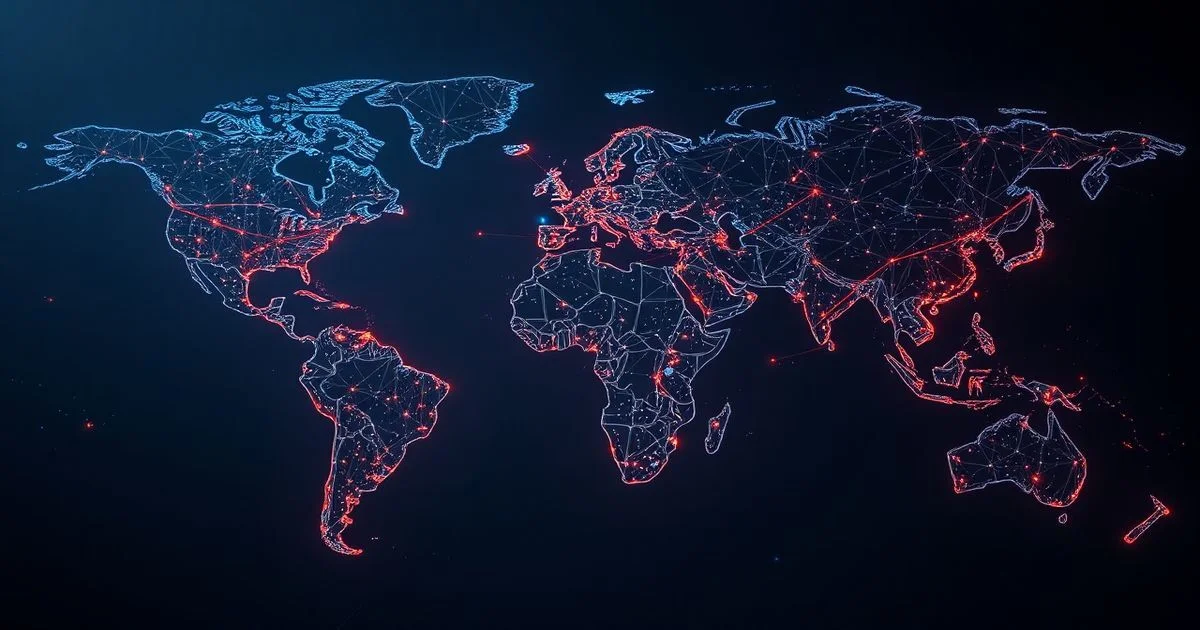
Understanding the history of global trade routes reveals how human civilization transitioned from the ancient Silk Road to the modern silicon-based digital economy. By examining these global connections, we see how trade and historical routes formed the backbone of our interconnected world, functioning much like the physical layers of the internet. From the spice-laden ships of the 15th century to the fiber-optic cables of the 21st, the movement of value has always relied on robust infrastructure and standardized protocols. As we delve into this narrative, we find that the fundamental drive to exchange goods has served as the greatest catalyst for technological advancement in human history.
- Mapping the Network: What Are Trade Routes?
- The First Wide Area Networks: Ancient Silk and Incense
- Maritime Upgrades: The Age of Discovery and Global Latency
- The Great Protocol Shift: Navigating the History of Global Trade Routes Through Steam
- Packet Switching for Cargo: The Container Revolution
- System Vulnerabilities: Chokepoints and Network Failure
- The Silicon Layer: Digital Trade and Data Pipelines
- Pros and Cons of the Modern Global Exchange System
- The Future of Global Logistics: From Earth to Orbit
- Frequently Asked Questions
- Conclusion: Summarizing the Global Exchange System
- Further Reading & Resources
Mapping the Network: What Are Trade Routes?
In the context of a tech explainer, we should view a trade route not merely as a path on a map, but as a complex logistical protocol. Just as data packets traverse the internet via TCP/IP, physical goods move across the globe via a series of nodes (ports, warehouses) and edges (shipping lanes, roads). The efficiency of these routes determines the "bandwidth" of global civilization.
The Architectural Framework:
A trade route consists of several critical layers:
-
The Physical Layer: This includes the actual geography—mountain passes, deep-water harbors, and prevailing wind patterns. In the ancient world, these were the "hard-coded" constraints of the system.
-
The Transport Layer: The vehicles or vessels used to move goods. This has evolved from camel caravans and wooden galleons to massive Triple-E class container ships and autonomous drones. Each upgrade in the transport layer represents a massive increase in throughput and a reduction in latency.
-
The Protocol Layer (Lex Mercatoria): The laws, treaties, and customs duties that govern how goods are allowed to pass from one jurisdiction to another. Without a standardized protocol layer, trade becomes impossible due to high "handshake" costs between different cultures and legal systems.
-
The Application Layer: The final delivery of products—spices, silk, or semiconductor chips—to the end consumer. This layer is where the economic value is finally realized.
Historically, these routes have been the primary drivers of technological innovation. The need to navigate open oceans led to the development of the astrolabe and the chronometer. These tools were the GPS of their day, allowing sailors to calculate their position with increasing precision.
The First Wide Area Networks: Ancient Silk and Incense
Long before the first trans-Atlantic telegraph cable, the world was connected by a "Wide Area Network" of overland paths. The most famous of these was the Silk Road, which functioned less like a single highway and more like a decentralized mesh network.
The Silk Road (130 BCE – 1453 CE)
The Silk Road was the original backbone of global connectivity. It spanned over 6,400 kilometers, linking the Han Dynasty in China with the Roman Empire. However, it is a common misconception that a single merchant would travel the entire length. Instead, the route operated on a "hop-by-hop" relay system, where goods were traded from one merchant to another at various oasis towns.
Network Characteristics:
- Latency: Extremely high. A package could take over a year to travel from Chang'an to Rome, traversing the treacherous Gobi Desert and the Pamir Mountains.
- Packet Loss: Significant. Caravans were subject to banditry, extreme weather, and political instability. The "cost of transmission" included heavy insurance premiums in the form of armed guards.
- Throughput: Low. Limited by the carrying capacity of pack animals.
The goods exchanged were high-value, low-volume items (luxury "packets") such as silk, spices, and precious metals. This era also saw the first "data transfer" of ideas, including the spread of religious philosophies and medical knowledge. To understand how early scholars managed such vast systems, one might look at how ancient civilizations tracked celestial events to aid in navigation and timing their seasonal departures.
The Incense Route and Maritime Spices
Parallel to the Silk Road was the Incense Route, connecting the Mediterranean world with southern Arabia. Simultaneously, the maritime "Spice Routes" began to take shape in the Indian Ocean. These were the early "high-speed" alternatives to the slow overland caravans, utilizing the seasonal monsoon winds as a natural propulsion system. Sailors learned to "buffer" their journeys, waiting months for the wind to shift direction to carry them back across the sea.
Maritime Upgrades: The Age of Discovery and Global Latency
The fall of Constantinople in 1453 acted as a major network outage for European powers. The Ottoman Empire’s control of the Silk Road’s western nodes forced Europeans to find a "hardware bypass." This led to the Age of Discovery, a period of rapid expansion in maritime "bandwidth."
The Search for a Western Gateway
Christopher Columbus and Vasco da Gama were essentially looking for a lower-latency route to the "server farms" of the East Indies. When da Gama rounded the Cape of Good Hope in 1498, he effectively established a direct point-to-point connection between Europe and Asia. This bypass effectively "de-platformed" the traditional middlemen of the Silk Road, shifting the center of economic power from the Mediterranean to the Atlantic.
The Impact of Cartography:
During this era, maps were the proprietary source code of nations. To have an accurate map of the trade winds or hidden reefs was to have a decisive competitive advantage. The development of the Mercator projection in 1569 was a software breakthrough for navigation, allowing sailors to plot straight-line courses on a flat surface. This era also redefined international relations, much like understanding the history of international diplomacy helps us see how power protocols were established on the high seas.
The First Global Corporations
The Dutch East India Company (VOC) and the British East India Company (EIC) were the "Big Tech" firms of the 17th and 18th centuries. They were granted monopolies over specific trade routes, effectively controlling the routing tables of global commerce. They pioneered the use of joint-stock ownership to fund the high-risk, high-reward "R&D" of establishing new naval routes and fortified trading posts.
The Great Protocol Shift: Navigating the History of Global Trade Routes Through Steam
The 19th century brought about the first major "system upgrade" since the invention of the sail: the steam engine. This shifted the history of global trade routes from being dependent on natural forces (wind and tide) to being driven by artificial power (coal and later oil).
Technological Disruptors:
-
The Steamship: Reduced the "round-trip time" between London and Bombay from months to weeks. Steamships were not beholden to trade winds, allowing for more predictable schedules and "uptime" for global trade.
-
The Railway: Steam-powered locomotives transformed the interior of continents. For the first time, land-based trade could compete with maritime throughput in terms of volume and speed.
-
The Telegraph: Crucially, the telegraph decoupled the movement of information from the movement of physical goods. Before the telegraph, information traveled at the speed of a horse or ship. After 1866, the "control signal" for trade moved at the speed of light.
Engineering the Shortcuts: Suez and Panama
The construction of the Suez Canal (1869) and the Panama Canal (1914) were the equivalent of massive infrastructure optimizations. By cutting through isthmuses, these canals removed thousands of miles from global shipping routes, dramatically reducing the "hop count" for global logistics.
Route: London to Mumbai
Via Cape of Good Hope: ~19,800 km
Via Suez Canal: ~11,600 km
Distance Reduction: 41%
These "chokepoints" became the most valuable nodes in the global network architecture. Control over these nodes meant control over the flow of the entire system, leading to numerous geopolitical conflicts.
Packet Switching for Cargo: The Container Revolution
If the steam engine was the hardware upgrade, containerization was the standardization of the software. Before the 1950s, loading a ship was a chaotic process of "break-bulk" shipping, where crates and bags of various sizes were manually stowed by stevedores.
The Malcolm McLean Innovation
In 1956, Malcolm McLean, a trucking magnate, realized that the bottleneck wasn't the transit time at sea, but the "interface" between different modes of transport. He developed the standardized metal shipping container, which allowed for seamless "handoffs" between ships, trains, and trucks.
The Standardization Specs:
The adoption of ISO (International Organization for Standardization) containers changed everything. It turned shipping into a form of physical "packet switching."
-
Interoperability: A container can be moved from a ship to a train to a truck without ever being opened or the contents being handled individually.
-
Error Correction: Standardized dimensions meant that cranes and ships could be designed with precision, minimizing damage, theft, and loss.
-
Efficiency: Loading a ship went from taking several days to taking only a few hours.
This standardization allowed for the rise of "Just-in-Time" (JIT) manufacturing. A computer factory in Texas could now treat a shipping container currently on the Pacific Ocean as a virtual "part of its warehouse," knowing exactly when it would arrive based on GPS tracking and standardized schedules.
System Vulnerabilities: Chokepoints and Network Failure
In computer networking, a "Single Point of Failure" (SPOF) is a part of a system that, if it fails, will stop the entire system from working. The modern history of global trade routes is defined by its reliance on a few critical SPOFs.
Major Global Chokepoints:
-
The Strait of Malacca: The primary gateway between the Indian and Pacific Oceans. Over 25% of the world's traded goods pass through this narrow stretch.
-
The Suez Canal: The "backbone" of Europe-Asia trade. The 2021 grounding of the Ever Given demonstrated how a single "buffer overflow" (a stuck ship) could cause a global cascade of delays, costing billions in lost trade per day.
-
The Strait of Hormuz: The critical node for global energy (oil and gas) throughput. Any disruption here causes an immediate "latency spike" in global energy prices.
-
The Panama Canal: Currently facing "bandwidth" issues due to climate-change-induced water shortages, forcing ships to reduce their load (effectively decreasing the packet size) or wait in long queues.
To counter these vulnerabilities, nations are looking for alternative routes. China’s "Belt and Road Initiative" (BRI) is essentially a massive project to build "redundant links" via new railways and ports across Central Asia and the Indian Ocean, creating a more resilient "multi-path" network for trade.
The Silicon Layer: Digital Trade and Data Pipelines
We are currently witnessing the convergence of physical trade routes and digital data paths. In many ways, the subsea fiber-optic cables that carry our internet traffic are the "New Silk Road," carrying the most valuable "goods" of the 21st century: information and capital.
Subsea Cables: The Modern Silk Road
Over 99% of international data is transmitted via subsea cables. These follow many of the same historical paths as the spice ships of the 1600s, landing in the same port cities because the geography of global commerce hasn't changed.
Technical Constraints:
-
Protection: Just as ancient caravans needed protection from bandits, subsea cables must be armored against fishing trawlers, anchors, and undersea earthquakes.
-
Latency: The "speed of trade" is now measured in milliseconds. High-frequency trading firms pay millions to have their data routed through the most direct undersea paths to minimize the travel time of light.
The Digitization of Logistics
Modern trade routes are now managed by AI-driven "routing protocols" that optimize every movement.
Smart Logistics Features:
-
IoT Tracking: Sensors inside containers monitor temperature, humidity, and location in real-time, providing "telemetry" for physical goods.
-
Predictive Analytics: Algorithms predict port congestion and suggest "re-routing" to avoid delays, similar to how dynamic routing works in a data network.
-
Blockchain Integration: Distributed ledgers are being used to replace the "paperwork layer" of trade, providing a transparent, immutable record of a product's journey from origin to consumer, reducing fraud and clerical errors.
Pros and Cons of the Modern Global Exchange System
The evolution of trade routes has created a world of unprecedented abundance, but it has also introduced new systemic risks that require careful management.
The Advantages:
-
Cost Efficiency: The cost of shipping a television across the ocean is now a negligible fraction of its retail price, thanks to the scale of modern containerization.
-
Specialization: Countries can focus on their "comparative advantage," leading to rapid technological progress and cheaper goods for everyone.
-
Global Access: Consumers have access to products and resources that are not locally available, raising the standard of living in many regions.
The Disadvantages:
-
Fragility: The "Just-in-Time" model has very little buffer. A disruption in one part of the world can cause "stock-outs" globally, as seen during recent supply chain crises.
-
Environmental Impact: The carbon footprint of global shipping is massive. The "hardware" of trade still relies heavily on fossil fuels, though the shift to green hydrogen and ammonia-powered ships is beginning.
-
Economic Disparities: While global trade builds wealth, the impact of globalization on local economies explained reveals that not all regions benefit equally from these high-speed connections.
The Future of Global Logistics: From Earth to Orbit
Where do the trade routes go next? The narrative of trade is currently moving into three dimensions, expanding beyond the surface of the Earth.
1. The Arctic Route:
As polar ice melts, the "Northern Sea Route" is becoming a viable alternative to the Suez Canal. This "Polar Silk Road" could reduce the distance between East Asia and Europe by up to 40%, creating a new high-speed "tier" for maritime traffic.
2. Space-Based Logistics:
Companies like SpaceX are exploring "Point-to-Point" rocket travel. Imagine delivering high-value cargo from Shanghai to New York in 30 minutes. This would be the ultimate reduction in latency, though the energy "cost per bit" remains prohibitively high for now.
3. The Rise of Localized Manufacturing (Edge Computing):
With the advent of 3D printing and localized "micro-factories," we might see a shift from moving "physical packets" (goods) to moving "digital packets" (blueprints). In this scenario, you don't ship the product; you ship the data, and the product is "rendered" at the edge—the consumer's home or a local print shop. This would represent the final virtualization of the trade route.
Frequently Asked Questions
Q: What was the primary purpose of the Silk Road?
A: It served as a decentralized mesh network for high-value goods, ideas, and technologies between China and Rome. It wasn't a single road but a series of relay points where goods changed hands multiple times.
Q: How did containerization change global trade?
A: It standardized shipping as physical "packet switching," enabling seamless interoperability between different transport modes. This drastically reduced loading times and costs, making modern global supply chains possible.
Q: What are the current vulnerabilities in global trade routes?
A: Modern trade relies on critical chokepoints like the Suez Canal and the Strait of Malacca. These act as single points of failure where a single accident or geopolitical conflict can disrupt the entire global economy.
Conclusion: Summarizing the Global Exchange System
The history of global trade routes is a story of continuous optimization and the relentless pursuit of efficiency. We have moved from a world of high-latency, low-bandwidth camel caravans to a world of real-time, high-capacity global logistics. Each step in this evolution—from the astrolabe and the steam engine to the shipping container and the fiber-optic cable—has been a technological leap aimed at reducing the friction of distance.
As we look toward the future, the integration of AI, blockchain, and perhaps even interplanetary logistics will continue to reshape how we exchange value. However, the fundamental logic remains the same: the health of our global civilization depends on the resilience, speed, and security of our trade routes. Whether it is silk on a camel or silicon in a server, the path it takes defines the world we live in. The history of global trade routes is, in many ways, the history of our shared human progress.