Deadly China Mine Blast Kills 82, Rescue Efforts On Amid Safety Scrutiny
A catastrophic gas explosion at the Liushenyu coal mine in Qinyuan County, Shanxi province, has resulted in a devastating Deadly China Mine Blast Kills 82, Rescue Efforts On as teams work tirelessly to locate survivors and recover victims. The incident, which occurred on Friday evening, has sent shockwaves across the nation and intensified scrutiny on workplace safety within China's vast mining sector. As of Saturday, the death toll reached 82, with an unknown number of workers still unaccounted for, prompting a massive response from emergency services. This tragic event underscores the inherent dangers faced by miners and raises urgent questions about the implementation of safety protocols in the country's coal-mining heartland.
- Devastating Blast in Shanxi: Initial Reports and Rescue Operations
- Government Response and Accountability
- Understanding Coal Mine Gas Explosions
- Challenges in Mine Rescue Operations
- The Broader Context of China's Mine Safety
- Social and Economic Impact of the Deadly China Mine Blast Kills 82, Rescue Efforts On
- Conclusion
- Frequently Asked Questions
- Further Reading & Resources
Devastating Blast in Shanxi: Initial Reports and Rescue Operations
The explosion ripped through the Liushenyu coal mine on Friday at approximately 7:29 p.m. local time, trapping numerous workers underground. Initial reports indicated that 247 miners were inside the shaft when the accident occurred. The immediate aftermath was chaotic, with emergency services swiftly deploying to the scene to commence rescue operations. The sheer scale of the disaster quickly became apparent as rescue teams navigated perilous underground conditions.
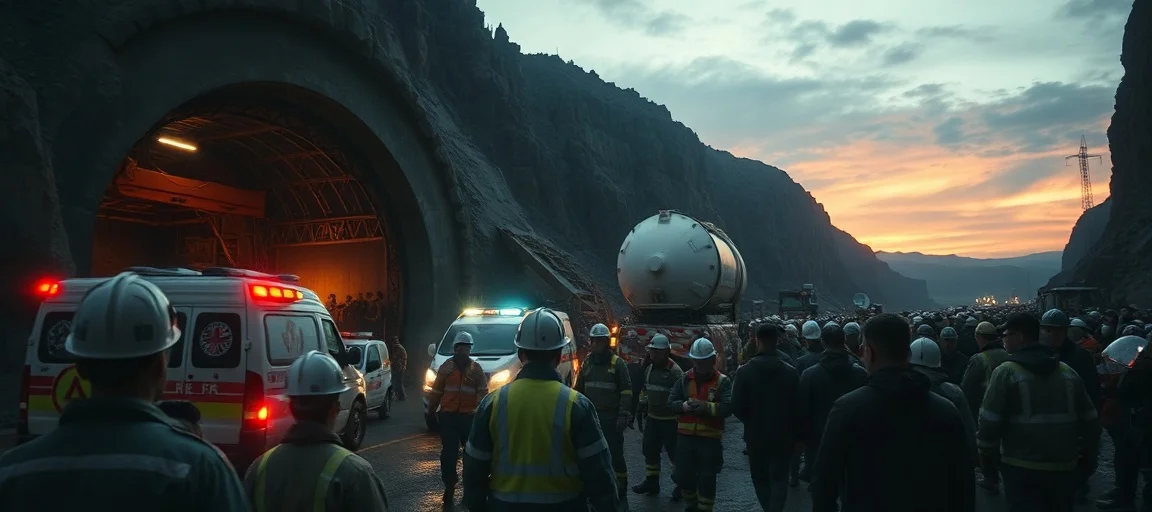
The Ministry of Emergency Management in China dispatched six national mine emergency rescue teams, comprising 345 personnel equipped with specialized gear, to assist in the efforts. Additionally, Shanxi province contributed 755 local rescuers and medical personnel. These teams are working in rotation, braving structural instability, toxic gas accumulations, and waterlogged tunnels to reach those still trapped. Footage from state media showed paramedics and ambulances on standby, highlighting the urgent medical response required.
As of early Saturday morning, 201 miners had been safely brought to the surface. However, many of those rescued required immediate medical attention, with 123 individuals hospitalized for treatment. Among the injured, two were in critical condition and two in serious condition, while 119 sustained minor injuries. Some hospitalized miners recounted seeing smoke and blacking out during the blast, with many suffering from toxic gas exposure, particularly carbon monoxide, which exceeded safety limits inside the mine.
Government Response and Accountability
Chinese President Xi Jinping swiftly issued important instructions, urging all-out efforts to rescue the missing, provide comprehensive treatment for the injured, and launch a thorough investigation into the accident's cause. President Xi emphasized the critical need to hold those responsible fully accountable in accordance with the law. Vice Premier Zhang Guoqing was dispatched to Shanxi to oversee the emergency response, including search and rescue, medical treatment, and handling of the aftermath, stressing the importance of verifying the number of missing workers and preventing secondary casualties.
Local officials stated that the company operating the Liushenyu mine had committed "serious violations" of the law, although specific details were not immediately released. Executives of the company have been taken into custody by law enforcement, and preliminary investigations are underway to uncover the exact triggers and underlying issues that led to the devastating gas explosion. Reports indicated that blueprints provided by the mine did not match the actual underground layout, further complicating rescue efforts. Furthermore, the mine had reportedly been penalized twice last year for safety violations.
Following the incident, local authorities announced a "comprehensive, blanket" inspection of the coal mining sector, focusing on gas drainage, ventilation, safety monitoring systems, and underground layouts across the region. This directive underscores the government's commitment to address persistent safety challenges and prevent future tragedies.
Understanding Coal Mine Gas Explosions
Gas explosions are a pervasive and highly dangerous threat in underground coal mines, frequently leading to high casualty counts. These blasts typically occur when methane gas (CH₄), also known as firedamp, accumulates in enclosed spaces. Methane is a colorless and odorless byproduct of the geological processes that form coal, making its detection without proper monitoring equipment extremely difficult.
The critical danger arises when methane concentrations in the air reach between 5% and 15% by volume, forming a highly explosive mixture. An ignition source – which can be anything from a faulty electrical spark, a cable short circuit, a mine lamp misfire, hot-line work, or blasting sparks – can then trigger a catastrophic explosion. Carbon monoxide, another toxic and flammable gas, can also contribute to the volatility, especially when mixed with coal dust.
Beyond gas accumulation, several factors exacerbate the risk of such explosions:
- Structural Instability: Blasts can compromise mine shafts and tunnels, leading to further collapses and creating unstable environments that endanger both trapped miners and rescue personnel.
- Ventilation Issues: Damaged or inadequate ventilation systems are a primary cause of gas accumulation. If these systems fail, smoke and toxic fumes can become trapped, posing severe threats.
- Outdated Equipment and Practices: The use of old equipment, drilling beyond approved areas, and failure to properly mark boundaries on mine drawings have historically contributed to accidents.
- Inadequate Monitoring: Without robust and continuously operating monitoring systems for gas levels, an invisible threat can quickly turn deadly.
Challenges in Mine Rescue Operations
Rescue operations in deep coal mines, particularly after a gas explosion, are exceptionally challenging and hazardous. The precarious conditions demand specialized skills, advanced equipment, and immense bravery from the rescue teams.
Key challenges include:
- Unstable Geological Conditions: The structural integrity of the mine can be severely compromised by the explosion, leading to the risk of secondary collapses, which endanger rescuers.
- Toxic Gas Accumulation: Beyond the initial blast, the presence of toxic gases like carbon monoxide and residual methane continues to pose a significant threat to both trapped miners and emergency responders. Rescuers must operate with sophisticated breathing apparatus.
- Poor Visibility: Smoke, dust, and darkness hinder visibility, making search and recovery efforts painstakingly slow.
- Confined Spaces and Debris: Rescuers often have to navigate through narrow, rubble-filled passages, sometimes requiring the removal of large amounts of debris.
- Waterlogging: Flooded tunnels, as reported in the Liushenyu mine, present an additional obstacle, requiring pumping operations before rescuers can advance.
- Limited Access: Reaching the deepest parts of a mine can be time-consuming and difficult, significantly delaying critical rescue efforts during the crucial initial hours.
- Secondary Explosions: The risk of further gas ignitions remains a constant threat, necessitating careful atmospheric monitoring and control.
Despite these daunting obstacles, rescue teams maintain hope. As one rescuer stated to Xinhua, "As long as there is hope, we will make every possible effort."
The Broader Context of China's Mine Safety
China is the world's largest producer and consumer of coal, and while significant improvements in mine safety have been made over the past two decades, the industry continues to grapple with a high incidence of accidents. The period before 2017 saw a dramatic decline in the number of coal accidents and fatalities, with deaths dropping from 6,995 in 2002 to 375 in 2017. This improvement is largely attributed to continuous advancements in safety laws and regulations, upgraded safety technology and equipment, and increased investment in safety production.
However, the safety situation in China's coal mines is still not optimistic when compared to developed countries. The death rate per million tons of coal produced in China remains significantly higher than in countries like the United States and Australia. This disparity highlights ongoing challenges in fully implementing and enforcing stringent safety protocols across all operations.
Recent years have seen the government double down on China's abundant coal reserves to ensure energy security, leading to record-high coal output. This push for increased production can sometimes create tension with safety priorities, as mines may overstretch facilities and equipment. The Liushenyu mine accident occurs at a particularly delicate time, with regional authorities already launching wider inspection and remediation efforts targeting risks in coal mines.
Past instances reveal common themes contributing to accidents:
- Clandestine Operations and Illegal Activities: Despite regulations, some mines operate without proper licenses or engage in illegal subcontracting, circumventing safety standards.
- Cutting Corners on Safety: Some operators prioritize production quotas over safety investments, leading to inadequate maintenance, outdated equipment, and insufficient safety training for workers.
- Inadequate Oversight and Enforcement: While laws and regulations exist, their rigorous enforcement across all mining operations, regardless of size or ownership, remains a persistent challenge.
- Fabrication of Surveillance Footage: There have been concerns about the manipulation or deletion of surveillance footage to conceal safety breaches.
The Chinese government has taken various measures to address these issues, including closing down unsafe mines and introducing new guidelines to strictly regulate mines at risk of severe disasters. However, the frequency of "heavy catastrophic accidents" (those resulting in more than 30 deaths, as classified by Chinese regulations) remains a concern, with gas explosions being the most severe in terms of fatalities per accident.
Social and Economic Impact of the Deadly China Mine Blast Kills 82, Rescue Efforts On
Mining disasters have profound social and economic impacts. For the local community in Qinyuan County, the Deadly China Mine Blast Kills 82, Rescue Efforts On has brought immense grief and uncertainty. Families of the trapped and deceased miners face an agonizing wait for news, highlighting the human cost of such industrial accidents. Many miners are seen as "earning money with their lives at risk," and these tragedies underscore the sacrifices made by those working in dangerous industries.
Beyond the immediate loss of life, these accidents lead to significant economic losses, impacting livelihoods and regional economies. The incident in Shanxi, a major coal-producing hub, could also trigger broader inspections that temporarily halt production in other mines, potentially affecting China's overall coal output and energy supply at a time when energy security is a top priority.
Public scrutiny following such disasters often acts as a catalyst for renewed commitment to safety reforms and stricter enforcement of regulations. There is a growing demand for transparency and accountability from both the government and mining enterprises.
Conclusion
The tragic Deadly China Mine Blast Kills 82, Rescue Efforts On in Shanxi province serves as a stark reminder of the ongoing perils inherent in the coal mining industry. The loss of 82 lives has spurred a massive rescue operation and a renewed commitment from the Chinese government, led by President Xi Jinping, to ensure thorough investigation and accountability. While China has made considerable strides in improving mine safety over the years, this incident highlights that significant challenges persist in upholding and strictly enforcing safety standards across the vast mining sector. The focus now remains on the heroic rescue teams battling dangerous conditions underground and on the comprehensive investigation that promises to hold those responsible accountable, with the hope of preventing such devastating loss of life in the future.
Frequently Asked Questions
Q: What caused the deadly mine blast in China?
A: The blast at Liushenyu coal mine was primarily caused by a gas explosion, likely methane. Poor ventilation, outdated equipment, and inadequate monitoring contribute to such incidents. Investigations are ongoing to determine the exact triggers.
Q: How many people died in the Liushenyu mine disaster?
A: As of initial reports, the deadly China mine blast killed 82 people. Rescue efforts are still underway, and the final toll may fluctuate as more information becomes available and recovery operations continue.
Q: What measures is the Chinese government taking after this incident?
A: President Xi Jinping has ordered a thorough investigation, comprehensive medical treatment for the injured, and holding those responsible fully accountable. A nationwide safety inspection of the coal mining sector has also been launched across the region.