Viral Ocean Trash Video is AI-Generated Fake: Exposing the Hoax
A seemingly alarming viral video, purporting to show an unprecedented surge of trash overwhelming the ocean, recently circulated across social media platforms, sparking outrage and concern among viewers. However, investigations have confirmed that this Viral Ocean Trash Video is AI-Generated Fake, a deceptive creation meticulously crafted by artificial intelligence. This exposure of the digital hoax underscores a growing challenge in the age of advanced AI: the proliferation of synthetic media designed to mislead, even on critical environmental issues, blurring the lines between reality and fabrication. The swift spread of this video, and the subsequent efforts to expose its true nature, highlight the urgent need for heightened media literacy and robust detection mechanisms in our increasingly digital world.
- Deep Dive: Why the Viral Ocean Trash Video is AI-Generated Fake
- The Realities of Ocean Plastic Pollution
- The Psychological Fallout of Environmental Misinformation
- Combating AI Misinformation: Tools and Strategies
- Frequently Asked Questions
- Conclusion: The Urgent Need for Vigilance
- Further Reading & Resources
Deep Dive: Why the Viral Ocean Trash Video is AI-Generated Fake
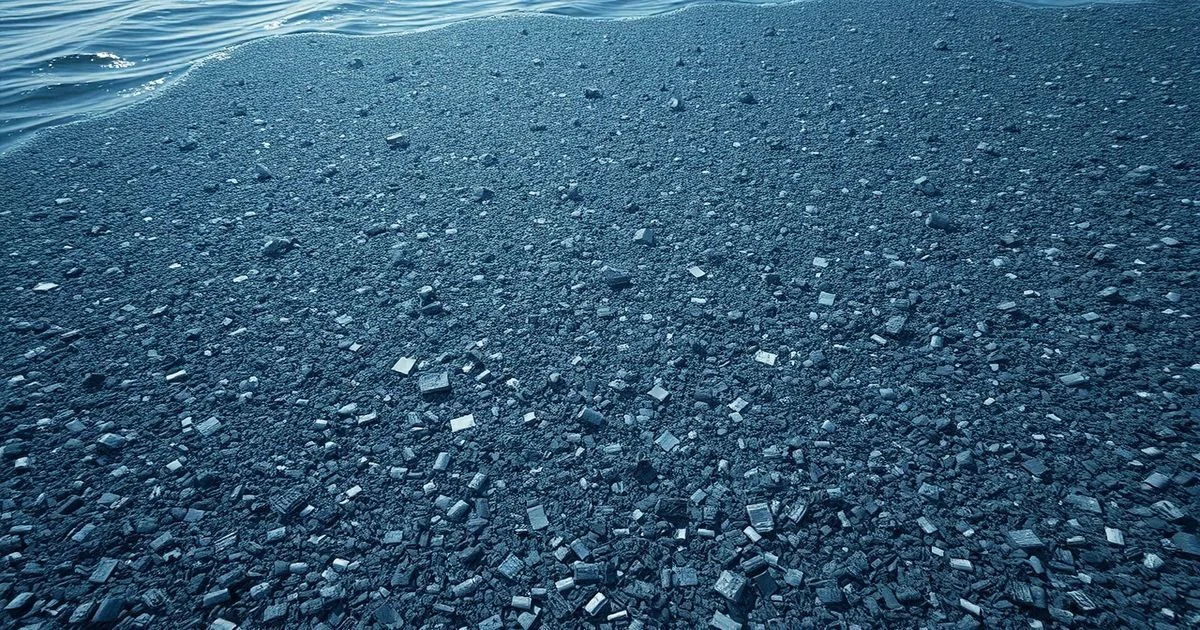
The emergence of the fake ocean trash video is not an isolated incident but rather a stark illustration of how generative AI is being weaponized to create convincing, yet entirely fabricated, content. While AI offers immense potential for positive change, its capacity to produce realistic images and videos also presents a formidable tool for misinformation campaigns. This particular video, depicting garbage that appeared unnaturally uniform and static despite crashing waves, quickly garnered millions of views and shares, capitalizing on genuine public concern over marine pollution. It exploited the emotional impact of environmental degradation, making it a potent vehicle for spreading false narratives.
The deceptive nature of such content is particularly insidious when it touches upon sensitive topics like the environment, where factual accuracy is paramount for informed policy-making and public action. Experts warn that AI could be used to generate misinformation about climate change, downplaying threats or fabricating disasters, which can hinder real environmental efforts. Similar instances have occurred in urban environments, such as the Auckland trash video which also sparked intense public debate over environmental responsibility. The global risk perception survey by the World Economic Forum (2023–2024) ranked AI-generated misinformation as the second-highest global risk, underscoring the severity of this issue.
Anatomy of a Digital Hoax: How the Video Spread
The now-debunked ocean trash video gained traction rapidly across various social media platforms. Initial analysis by fact-checking organizations revealed several tell-tale signs of its artificial origin. For instance, the trash depicted in the video was predominantly gray and appeared unnaturally rigid, almost stuck to the sea surface, despite the visible motion of the waves. This lack of realistic interaction with its environment is a common artifact of AI-generated visuals, where complex physics simulations are still challenging for current models to flawlessly replicate.
Further investigation into the video's dissemination revealed that an early version of the content, shared by a Kannada-language account on X (formerly Twitter) in February 2026, reportedly included a "made with AI" caption. This crucial disclosure was evidently stripped away or ignored as the video was reposted and shared across other platforms, allowing it to circulate as genuine footage. The viral spread of the video highlights how easily contextual information can be lost, transforming a declared AI creation into perceived reality. This phenomenon is why scientific literacy, even in simple topics like Why Do Leaves Change Color?, is vital for discerning natural phenomena from digital fabrications.
Identifying AI-Generated Content: Red Flags
As AI-generated content becomes increasingly sophisticated, distinguishing authentic media from deepfakes requires a keen eye and critical thinking. Several key indicators can help viewers identify potentially fabricated videos, especially those related to environmental issues:
-
Visual Inconsistencies: Look for unnatural patterns, repetitive elements, or objects that defy the laws of physics. In the ocean trash video, the static, uniformly gray debris was a major red flag. Other deepfakes might show distorted facial features, inconsistent shadows, or unusual blinking patterns.
-
Unusual Movement and Physics: AI models sometimes struggle with realistic motion, water dynamics, or natural lighting. Observe how objects interact with their environment; do ripples, reflections, or gravity behave as expected? In this hoax, the water moved through the trash rather than the trash moving with the water.
-
Lack of Context or Source: Videos that appear without credible sources, professional news logos, or verifiable information should be treated with skepticism. Always question where the video originated and whether the uploader is reputable.
-
Audio Anomalies: For deepfake videos with sound, listen for unnatural speech patterns, robotic voices, or inconsistencies in background noise. Often, AI video generators produce silent clips, and sounds are added later, leading to synchronization errors.
-
Metadata Analysis: While not always accessible to the general public, forensic tools can analyze metadata embedded in media files, which can reveal manipulation or indicate AI generation.
-
AI Detection Tools: A growing number of AI content detectors are available, such as Copyleaks, GPTZero, Quillbot's AI Detector, and Hive Moderation, which can analyze text and visual content for signs of AI generation. Some of these tools confirmed the ocean trash video as AI-generated. However, it's important to note that no AI detection tool is 100% perfect.
The Realities of Ocean Plastic Pollution
While the viral video portraying an ocean choked with trash was fake, the underlying issue of marine plastic pollution is a stark and undeniable reality. Our oceans are indeed facing a severe crisis due to the immense volume of plastic waste entering marine ecosystems annually. This pollution poses a profound threat to marine life, biodiversity, and human health.
Millions of tons of plastic enter the oceans each year, degrading slowly into microplastics that infiltrate the entire food web. This plastic debris harms marine animals through entanglement and ingestion, leading to injuries, starvation, and death. It also introduces toxic chemicals into the environment, disrupting ecosystems and potentially impacting human health through seafood consumption. Reducing our overall footprint through Minimalist Living can help reduce individual waste, but systemic change is required to address the millions of tons of industrial plastic.
Data from sources like the National Waste Management Information System (SIPSN) 2025 in Indonesia indicates that national waste generation reaches 50 million tons per year, with nearly half, approximately 20 million tons, ending up in the ocean. This staggering figure highlights the scale of the global problem, which is far from being resolved.
Global Impact and Ongoing Efforts
The global impact of ocean plastic pollution extends beyond environmental damage, affecting livelihoods, tourism, and even climate regulation. Coral reefs, mangrove forests, and other vital coastal ecosystems are suffocated and damaged by plastic debris, reducing their capacity to provide habitats, protect coastlines, and sequester carbon.
Numerous international organizations, governments, and local communities are actively engaged in combating marine plastic pollution. These efforts include:
-
Waste Management Improvements: Implementing better waste collection, sorting, and recycling infrastructure, especially in coastal regions and developing countries where runoff is highest.
-
Plastic Reduction Policies: Introducing bans or restrictions on single-use plastics, encouraging reusable alternatives, and promoting extended producer responsibility schemes to hold manufacturers accountable.
-
Ocean Cleanup Initiatives: Developing and deploying technologies for removing existing plastic from oceans and rivers, though prevention remains the primary solution. Projects like The Ocean Cleanup are currently testing large-scale removal systems in the Great Pacific Garbage Patch.
-
Research and Innovation: Investing in scientific research to understand the full scope of plastic pollution and developing biodegradable alternatives and advanced recycling technologies.
-
Public Awareness and Education: Campaigns aimed at educating consumers about the impact of plastic and encouraging responsible consumption habits.
Despite these efforts, the challenge remains immense, with many policies struggling to be effectively enforced. The spread of misinformation, even through seemingly well-intentioned but fabricated content, risks diverting attention and resources from these tangible and urgent real-world problems.
The Psychological Fallout of Environmental Misinformation
The incident of the Viral Ocean Trash Video is AI-Generated Fake underscores a critical danger of misinformation in environmental advocacy: the erosion of trust and the potential for misdirected efforts. When fake content goes viral, it can desensitize the public to real crises or, conversely, create a sense of helplessness based on exaggerated realities. This is often referred to as "compassion fatigue," where individuals become overwhelmed by the perceived scale of a problem and eventually disengage entirely.
Misinformation, whether intentionally spread as disinformation or unwittingly shared, can have profound consequences:
-
Undermining Trust: Repeated exposure to fake content makes the public more skeptical of all environmental reporting, including legitimate scientific findings and urgent calls to action. This erosion of trust can be exploited by those with vested interests in delaying climate action.
-
Distorting Priorities: Fabricated crises, while momentarily grabbing attention, can divert focus and resources away from proven problems and effective solutions. For instance, an exaggerated deepfake might overshadow the need for better waste management or the development of sustainable materials.
-
Fostering Apathy or Alarmism: Misinformation can lead to either a sense of overwhelming despair, making people feel that the problem is too big to tackle, or an exaggerated alarmism that burns out engagement over time. Neither outcome is conducive to sustained, effective environmental action.
-
Hindering Policy and Public Support: When falsehoods about climate science or environmental issues circulate widely, people are less likely to support necessary policy changes or adopt behavioral shifts. This phenomenon, observed during the COVID-19 pandemic regarding vaccine hesitancy, directly applies to the climate crisis.
Combating AI Misinformation: Tools and Strategies
The battle against AI-generated misinformation is a complex and ongoing one, requiring a multi-faceted approach involving technology, education, and collaboration. While AI detection tools are continuously improving, the "arms race" between AI generation and detection means new strategies are constantly needed.
Media Literacy in the Digital Age
Empowering individuals with strong media literacy skills is one of the most crucial defenses against the spread of deepfakes and misinformation. This involves:
Skepticism and Critical Thinking:
Encouraging viewers to question the authenticity of sensational or emotionally charged content, especially if it lacks clear sourcing. If a video seems "too perfect" or "too horrific," it warrants a closer look.
Source Verification:
Teaching users how to check the origin of a video or image, looking for reputable news organizations or official channels. Reverse image searching is a powerful tool for finding the original context of a clip.
Awareness of AI Artifacts:
Educating the public about common visual and audio cues that can indicate AI generation, such as unnatural movements, inconsistent lighting, or strange textures that appear to "shimmer" or "melt."
Role of Social Media Platforms
Social media platforms bear a significant responsibility in mitigating the spread of AI-generated misinformation. Their actions are critical in shaping the information landscape:
-
Content Labeling: Platforms like Meta (Instagram, Facebook), TikTok, and YouTube have policies for flagging and labeling AI-generated content. Expanding and enforcing these labeling systems is essential to ensure consumers know what they are viewing.
-
Fact-Checking Partnerships: Collaborating with independent fact-checking organizations to quickly identify and debunk false or misleading content. These partnerships help surface the truth before a video reaches millions of users.
-
Algorithm Adjustments: Modifying algorithms to prioritize credible sources and reduce the amplification of unverified, sensational content. Currently, many algorithms reward high-engagement content, which unfortunately includes many deepfakes.
-
Technological Investment: Investing in advanced AI detection technologies to identify deepfakes and synthetic media at scale before they go viral.
Frequently Asked Questions
Q: Why would someone create a fake video of ocean trash?
A: Creators may generate such content for several reasons, including "engagement farming" to gain followers, testing the capabilities of AI tools, or sometimes with the misguided intent of "raising awareness" through sensationalism.
Q: Can AI detection software always catch these deepfakes?
A: No, AI detection is an ongoing arms race. While many current tools can identify artifacts in existing models, as generative AI improves, it becomes harder for detection software to distinguish between synthetic and real footage with 100% certainty.
Q: What should I do if I see a suspicious environmental video online?
A: Do not share it immediately. Instead, check the comments for debunking info, perform a reverse image search, and look for reporting from reputable scientific or news organizations to verify the claims.
Conclusion: The Urgent Need for Vigilance
The confirmation that a widely shared Viral Ocean Trash Video is AI-Generated Fake serves as a powerful reminder of the evolving challenges presented by advanced artificial intelligence. While the digital age offers unprecedented access to information, it also brings with it sophisticated tools for deception. The real crisis of ocean pollution requires our urgent, informed attention, not distractions from fabricated imagery.
As generative AI continues to advance, the distinction between authentic and synthetic media will become increasingly subtle. Therefore, a collective effort is needed from individuals, technology companies, and policymakers alike. By fostering media literacy, supporting robust fact-checking initiatives, and holding platforms accountable, we can build a more resilient information ecosystem. This vigilance is not just about debunking individual fakes; it's about safeguarding the integrity of public discourse, especially when it comes to critical issues like environmental protection, where accurate information is the foundation for effective action.