A Guide to the Evolution of Modern Cinema Storytelling
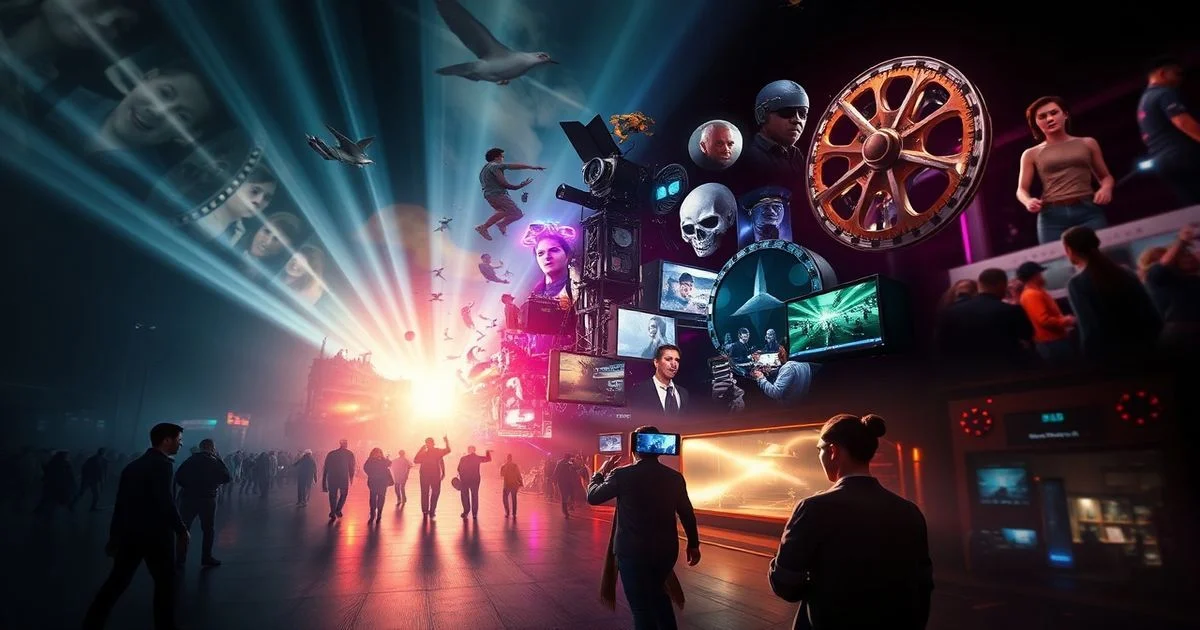
The evolution of modern cinema storytelling has transformed the silver screen from a simple canvas into a potent medium for sharing narratives that reflect, shape, and challenge our understanding of the world. From flickering silent films to today's hyper-realistic digital epics, the way stories are told in cinema has undergone a profound transformation. This guide to the evolution of modern cinema storytelling delves into the technological leaps, cultural shifts, and artistic innovations that have continually reshaped the narrative landscape, moving beyond simple spectacle to complex, immersive, and often interactive experiences. Understanding this evolution offers crucial insights into the enduring power of film and its future trajectory, illustrating how each era builds upon the last to redefine what's possible in cinematic expression.
- The Genesis: Early Cinema's Narrative Seeds
- The Golden Age and the Arrival of Sound: A New Dimension for Storytelling
- Post-War and the Rise of Auteurs: Challenging Conventions
- The Blockbuster Era: Spectacle and Scale as Story Elements
- Digital Revolution and Hyper-Connected Narratives
- The Modern Landscape: Interactivity, AI, and Audience Engagement
- A Guide to the Evolution of Modern Cinema Storytelling: Future Trajectories
- Conclusion: The Unfolding Canvas of Cinematic Narratives
- Frequently Asked Questions
- Further Reading & Resources
The Genesis: Early Cinema's Narrative Seeds
The very first moving images were marvels of technology, captivating audiences with the simple act of showing life in motion. However, it wasn't immediately clear that these novelties could also be powerful storytelling devices. The journey from mere spectacle to intricate narrative art was a gradual, experimental process, driven by visionary pioneers who understood cinema's unique potential.
From Spectacle to Story: The Lumières and Méliès
In the nascent days of cinema, films primarily served as curiosity pieces. Auguste and Louis Lumière's 1895 presentation of "Workers Leaving the Lumière Factory" or "Arrival of a Train at La Ciotat Station" captivated audiences not through plot, but through the sheer novelty of moving pictures. These were actualities—documentary snippets of everyday life—lacking traditional narrative structure. Their appeal lay in the immediate, almost magical representation of reality.
However, it was Georges Méliès, a French illusionist, who truly began to unlock cinema's narrative potential by integrating it with theatricality and special effects. His 1902 masterpiece, "A Trip to the Moon" (Le Voyage dans la Lune), is often cited as the first science fiction film and a foundational work in narrative cinema. Méliès used stop-motion, multiple exposures, dissolves, and hand-painted frames to create fantastical sequences that were impossible to achieve on stage. His films were still heavily influenced by stage conventions, often using a fixed camera and proscenium arch framing, but they introduced the concept of a structured plot, characters with goals, and a distinct beginning, middle, and end, albeit in a highly theatricalized manner. Méliès demonstrated that cinema could transport audiences to imaginary worlds and tell stories beyond the confines of reality.
The Silent Era's Sophistication: Griffith and Eisenstein
As the technology matured, filmmakers moved beyond simple tricks and stage adaptations to develop a cinematic language uniquely suited to the medium. The silent era, far from being primitive, was a period of intense innovation in visual storytelling, where gestures, expressions, intertitles, and sophisticated editing techniques conveyed complex emotions and narratives.
D.W. Griffith is often credited with synthesizing many of these early techniques into a cohesive narrative style. His 1915 epic, "The Birth of a Nation," despite its controversial content, was groundbreaking in its use of parallel editing (cross-cutting), close-ups, long shots, and varying camera angles to build suspense, convey emotion, and advance multiple storylines simultaneously. Griffith's innovations laid the groundwork for modern narrative filmmaking, establishing many of the conventions we take for granted today. He understood that editing was not just about assembling scenes but about shaping the audience's perception of time, space, and emotion. For instance, his famous "last-minute rescue" sequences, where he cut rapidly between characters in peril and their approaching saviors, generated unprecedented levels of tension.
Sergei Eisenstein, the Soviet filmmaker, took the art of editing to another level with his theories of montage. In films like "Battleship Potemkin" (1925), Eisenstein didn't just use cuts to advance the plot; he used them to create intellectual and emotional impact through collision and juxtaposition. His "Odessa Steps sequence," where rhythmic cutting and contrasting shots evoke a sense of panic and brutality, remains a masterclass in visual storytelling without dialogue. Eisenstein's montage theory proposed that the collision of two independent shots creates a new, third meaning, pushing the narrative beyond simple chronological progression into a realm of conceptual depth. Other silent film directors like F.W. Murnau ("Nosferatu," "Sunrise: A Song of Two Humans") further explored visual poetry, chiaroscuro lighting, and camera movement to tell stories with profound psychological depth, proving that a lack of spoken words did not equate to a lack of narrative sophistication.
The Golden Age and the Arrival of Sound: A New Dimension for Storytelling
The introduction of synchronized sound in the late 1920s was a seismic shift, arguably the single most transformative technological advancement in cinema history. "Talkies" forever changed how stories were told, adding layers of realism, complexity, and immediacy that silent films could only approximate. This era, often dubbed the Golden Age of Hollywood, saw the rapid development of narrative conventions that continue to influence filmmaking today.
Dialogue, Music, and Pace: Integrating Auditory Elements
When "The Jazz Singer" premiered in 1927, its limited synchronized dialogue and musical numbers heralded the end of the silent film era. Suddenly, characters could speak, sing, and engage in verbal exchanges, dramatically altering storytelling possibilities. Dialogue became a primary driver of plot and character development, allowing for exposition, witty banter, and emotional nuance previously conveyed through gestures or intertitles. This shift, however, wasn't without its challenges. Early sound technology was cumbersome, requiring cameras to be encased in soundproof booths, limiting movement and initially making films more static. Actors, many of whom had perfected their craft for silent performances, had to adapt to new vocal demands.
The integration of music also evolved dramatically. While silent films often had live orchestral accompaniment, synchronized soundtracks allowed composers to score films precisely, using leitmotifs, ambient soundscapes, and dramatic flourishes to enhance mood, foreshadow events, and amplify emotional resonance. The rhythm and pace of a film could now be orchestrated not just visually, but aurally, creating a more holistic and immersive experience. Sound effects, from gunshots to footsteps, added layers of realism, making cinematic worlds feel more tangible and believable. Think of the iconic sound of the shark in "Jaws" or the subtle hum of a spaceship in "2001: A Space Odyssey" – these auditory cues are as integral to the narrative as any visual element.
The Studio System's Narrative Formulas and Genres
The Golden Age of Hollywood, roughly from the 1930s to the 1950s, was characterized by the dominance of the studio system. Major studios like MGM, Warner Bros., Paramount, and 20th Century Fox operated like industrial factories, producing hundreds of films annually. This system fostered the development of highly polished narrative formulas and distinct genres. Studios often had specific stars, directors, and writers under long-term contract, leading to a recognizable house style and consistent output.
Narrative conventions became well-established within genres such as musicals, Westerns, film noir, screwball comedies, and melodramas.
- Musicals: Often featured integrated song-and-dance numbers that advanced the plot and revealed character emotions (e.g., "Singin' in the Rain").
- Westerns: Adhered to archetypal heroes, villains, and moral dilemmas set against vast landscapes.
- Film Noir: Explored dark, morally ambiguous characters and complex plots, often employing chiaroscuro lighting and cynical voiceovers.
These genre conventions provided audiences with familiar narrative frameworks, making films easily digestible and highly marketable.
The studio system also perfected classical Hollywood narrative structure: a linear, cause-and-effect plot driven by clear goals, relatable characters, and a definitive resolution. This structure, often termed the "three-act structure," became the dominant storytelling model, emphasizing clarity, suspense, and emotional catharsis. Films like "Casablanca" (1942) exemplify this structure, weaving complex character arcs and romantic dilemmas within a taut political thriller framework, demonstrating the power of dialogue and carefully crafted plots to engage audiences deeply. This period cemented many of the traditional narrative techniques that would be challenged and deconstructed in later eras, but which remain fundamental to mainstream filmmaking.
Post-War and the Rise of Auteurs: Challenging Conventions
The aftermath of World War II brought profound social, political, and cultural shifts that inevitably influenced cinema. Audiences were weary of escapism and ready for more complex, realistic, and often darker reflections of their world. This period saw the decline of the rigid studio system and the rise of the "auteur"—a director whose personal vision and stylistic signature were the primary driving force behind a film. This led to a deliberate challenging of established narrative conventions and a flourishing of diverse storytelling approaches.
European Influence: Neorealism and The French New Wave
European cinema, particularly in Italy and France, spearheaded this narrative revolution. Italian Neorealism, emerging in the mid-1940s, was a direct response to the devastation of the war. Directors like Roberto Rossellini ("Rome, Open City," 1945), Vittorio De Sica ("Bicycle Thieves," 1948), and Luchino Visconti ("Ossessione," 1943) eschewed studio sets, professional actors, and polished scripts. Instead, they filmed on location with non-professional actors, often improvising dialogue and focusing on the struggles of ordinary people in post-war Italy.
The narrative style of Neorealism was characterized by:
- Slice-of-life storytelling: Plots often lacked traditional dramatic arcs, opting for episodic narratives that depicted the mundane yet poignant realities of daily life.
- Ambiguous endings: Resolutions were frequently open-ended or bittersweet, reflecting the harsh uncertainties of the era rather than providing comforting closure.
- Moral complexity: Characters were rarely purely good or evil, grappling with difficult ethical choices driven by survival.
This stripped-down, authentic approach profoundly influenced filmmakers worldwide, demonstrating that powerful narratives could emerge from stark realism and social commentary.
A decade later, The French New Wave (Nouvelle Vague) burst onto the scene in the late 1950s, building upon Neorealism's realism but pushing stylistic and narrative boundaries even further. Directors like Jean-Luc Godard ("Breathless," 1960), François Truffaut ("The 400 Blows," 1959), and Claude Chabrol ("Le Beau Serge," 1958) embraced a radical, self-reflexive approach to filmmaking.
Their narrative innovations included:
- Disjointed narratives: Using jump cuts, non-linear timelines, and fragmented storytelling to disrupt traditional coherence and reflect a more subjective reality.
- Breaking the fourth wall: Characters sometimes addressed the audience directly, reminding them they were watching a film.
- Improvisation and naturalism: Allowing actors more freedom, resulting in a rawer, less polished performance style.
- Ambiguity and existential themes: Exploring complex philosophical questions, alienation, and the arbitrary nature of life without clear answers.
Godard's "Breathless," with its iconic jump cuts and cynical protagonist, epitomized this rebellious spirit, consciously deconstructing cinematic grammar to explore new ways of telling stories about modern alienation.
New Hollywood: Character-Driven, Ambiguous Narratives
The influence of European art cinema eventually reached American shores, coalescing into the "New Hollywood" movement of the late 1960s and 1970s. This era saw a generation of film school-trained directors—including Francis Ford Coppola, Martin Scorsese, Steven Spielberg, George Lucas, and Brian De Palma—who were deeply knowledgeable about film history and eager to experiment. The decline of the restrictive studio system and a shift in audience demographics (younger, more educated) created fertile ground for more daring narratives.
New Hollywood films often featured:
- Anti-heroes and morally ambiguous protagonists: Characters who were flawed, cynical, or outside the conventional heroic mold, reflecting the disillusionment of the post-Vietnam War era (e.g., Travis Bickle in Scorsese's "Taxi Driver," 1976).
- Complex, often non-linear plots: Moving away from straightforward cause-and-effect, these films embraced intricate narratives that demanded more from the audience (e.g., Coppola's "The Godfather Part II," 1974, with its parallel timelines).
- Downbeat or ambiguous endings: Rejecting the mandated happy endings of the studio era, many films concluded with tragedy, uncertainty, or a sense of unease, mirroring the turbulent times (e.g., the ending of "Chinatown," 1974).
- Psychological depth: A greater focus on internal states, motivations, and the subjective experiences of characters.
- Genre deconstruction: Taking traditional genres like the Western ("The Wild Bunch," 1969) or the gangster film ("Bonnie and Clyde," 1967) and subverting their tropes to explore darker themes or challenge societal norms.
Films like Arthur Penn's "Bonnie and Clyde" and Dennis Hopper's "Easy Rider" (1969) reflected a counter-cultural sensibility, exploring themes of rebellion, freedom, and societal critique. This period profoundly enriched cinematic storytelling, pushing it towards greater realism, psychological complexity, and artistic freedom, setting the stage for the blockbuster era that would follow.
The Blockbuster Era: Spectacle and Scale as Story Elements
The mid-1970s marked another significant turning point in cinema storytelling, characterized by the emergence of the "blockbuster." While often associated with commercialism and special effects, the blockbuster fundamentally altered narrative strategies, emphasizing high-concept premises, broad appeal, and the creation of immersive cinematic experiences that transcended mere storytelling to become cultural events.
Spielberg, Lucas, and the Birth of Franchise Storytelling
The catalyst for the blockbuster era is widely attributed to two films: Steven Spielberg's "Jaws" (1975) and George Lucas's "Star Wars" (1977). "Jaws" redefined summer movie releases, proving that a film could open nationwide on thousands of screens, accompanied by massive advertising campaigns, to generate immense box office returns. Its narrative, a classic man-versus-nature struggle, was meticulously crafted for suspense and thrills, demonstrating the power of a simple, compelling premise executed with exceptional skill. Spielberg's mastery of pacing, character development, and suspenseful visual language made the unseen shark more terrifying than any monster.
"Star Wars," however, arguably had an even more profound impact on storytelling. Lucas crafted a sprawling space opera that blended elements of myth, Westerns, samurai films, and serialized adventures. Its narrative innovations included:
- World-building: Creating a richly detailed fictional universe with its own history, cultures, and technologies, inviting audiences to immerse themselves beyond the confines of a single film.
- Mythic archetypes: Drawing heavily on Joseph Campbell's monomyth (the "hero's journey"), "Star Wars" presented a universal narrative that resonated deeply with audiences across generations.
- Episodic potential: From its opening scroll, "Star Wars" hinted at a larger story, effectively laying the groundwork for sequels, prequels, and an expansive cinematic universe—the genesis of modern franchise storytelling.
These films demonstrated that spectacle could be a powerful narrative tool, not just an aesthetic flourish. They proved that audiences craved epic tales with clear heroes, villains, and a strong sense of adventure, creating a template that Hollywood would emulate for decades. This shift also propelled a focus on marketability, merchandise, and the creation of cinematic "brands."
Special Effects and Narrative Scope
The blockbuster era coincided with massive advancements in special effects technology, which in turn expanded the narrative scope of what could be depicted on screen. Early blockbusters still relied heavily on practical effects, models, and matte paintings, but even these allowed for previously unimaginable visual storytelling.
- Expanded worlds: Special effects enabled filmmakers to transport audiences to fantastical realms, distant galaxies, or terrifying prehistoric landscapes, pushing the boundaries of imagination (e.g., the detailed miniatures in "Star Wars," the animatronic shark in "Jaws").
- Larger-than-life characters and threats: The ability to convincingly portray creatures, monsters, and monumental events allowed for narratives centered on existential threats or extraordinary abilities, making the stakes higher and the drama more intense.
- Immersive action sequences: Complex stunts, pyrotechnics, and innovative camera work created action sequences that were integral to the plot, driving suspense and showcasing character skills.
Films like Ridley Scott's "Alien" (1979) and James Cameron's "The Terminator" (1984) used groundbreaking effects to create palpable tension and explore dark, intense narratives. The visual capabilities often dictated the kind of stories that could be told, favoring high-stakes, action-driven plots that could fully leverage the spectacle. This interdependence between technology and narrative would only intensify with the advent of digital effects.
Digital Revolution and Hyper-Connected Narratives
The late 20th and early 21st centuries ushered in the digital revolution, profoundly transforming every aspect of filmmaking, from production to distribution. This era dramatically expanded the toolkit for visual and narrative storytelling, enabling filmmakers to craft increasingly complex and immersive cinematic experiences.
CGI and Visual Storytelling: Expanding the Impossible
The advent of Computer-Generated Imagery (CGI) fundamentally altered the landscape of visual storytelling, allowing filmmakers to create realistic worlds, creatures, and effects that were previously impossible or prohibitively expensive with practical methods. While early CGI was often criticized for its artificiality, it quickly evolved into a sophisticated tool that could seamlessly integrate with live-action footage.
- Unleashing imagination: CGI liberated filmmakers from the constraints of physical sets and practical effects, enabling them to realize truly fantastical visions, from the dinosaurs of "Jurassic Park" (1993) to the sprawling alien landscapes of "Avatar" (2009). This expanded narrative possibilities by allowing stories set in any conceivable environment or featuring any type of character.
- Enhancing realism: Beyond fantasy, CGI is also used subtly to enhance realism, for example, by digitally augmenting crowd scenes, creating elaborate historical settings, or seamlessly compositing disparate elements.
- Virtual cinematography: Directors can now "film" scenes entirely within a digital environment, controlling virtual cameras with unprecedented freedom, exploring angles and movements impossible with physical equipment.
The increased visual fidelity and flexibility offered by CGI have led to a proliferation of narratives that rely heavily on spectacle, visual world-building, and action sequences that push the boundaries of reality. However, the challenge for storytellers remains integrating CGI effectively, ensuring it serves the narrative rather than overwhelming it. The best uses of CGI enhance the story, making impossible events feel real and characters more believable, rather than merely showcasing technical prowess. The sheer scale and intricate coordination required for modern VFX pipelines often parallel the challenges encountered in developing robust software systems, such as those detailed in articles on Building Scalable Microservices Architecture: A Deep Dive.
Non-Linear Storytelling and Multi-Perspective Narratives
While non-linear narratives existed before the digital age (e.g., "Rashomon," 1950), the 1990s and 2000s saw a resurgence and refinement of these techniques, often influenced by the fragmented, hyper-connected nature of digital information. Directors like Quentin Tarantino ("Pulp Fiction," 1994), Christopher Nolan ("Memento," 2000), and Alejandro G. Iñárritu ("Amores Perros," 2000) embraced complex temporal structures and multiple perspectives to create more engaging and thought-provoking narratives.
- Non-linear chronology: Films jumped between past, present, and future, requiring audiences to actively piece together the narrative puzzle. This technique often mirrored the subjective experience of memory or revealed character motivations and plot twists in surprising ways.
- Multiple perspectives: Presenting the same events from different characters' viewpoints added layers of ambiguity, challenged audience assumptions, and explored the subjective nature of truth (e.g., "Go," 1999; "Vantage Point," 2008). This approach frequently made the audience an active participant in constructing the overall story.
- Hyperlink cinema: Narratives where seemingly disparate characters and storylines intersect in unexpected ways, often linked by chance encounters or subtle connections, reflecting the interconnectedness of modern life. Paul Thomas Anderson's "Magnolia" (1999) and Stephen Gaghan's "Syriana" (2005) are prime examples.
These narrative strategies moved away from the straightforward, linear storytelling of classical Hollywood, offering more complex, intellectually stimulating, and emotionally resonant experiences that blurred the lines between plot and theme.
The Rise of Streaming and Episodic Storytelling
Perhaps one of the most significant shifts in modern cinema storytelling has been the explosion of streaming platforms (Netflix, HBO Max, Disney+, Amazon Prime Video, etc.) and the subsequent rise of high-quality episodic television. This has fundamentally altered audience consumption habits and, by extension, narrative construction.
- Long-form narratives: Streaming platforms thrive on long-form, serialized storytelling. This allows for deeper character development, more intricate plotlines, and extended exploration of themes over many hours, mimicking the depth of a novel rather than the brevity of a short story. Shows like "Game of Thrones" or "The Sopranos" pioneered this, creating deeply immersive worlds that traditional two-hour films struggled to match.
- Binge-watching culture: The ability to watch an entire season in one sitting has influenced how narratives are structured, with cliffhangers between episodes designed to encourage continuous viewing. It has also enabled writers to tell stories that demand close attention over time, knowing viewers can revisit details.
- Blurred lines between film and television: With blockbuster-level budgets and A-list talent migrating to television, the distinction between cinema and episodic series has become increasingly blurred. Many "limited series" are essentially multi-part films, offering cinematic quality with extended narrative scope. Directors like David Lynch ("Twin Peaks: The Return") and Steven Soderbergh ("The Knick") have embraced the format to tell stories that wouldn't fit traditional cinematic releases. This shift presents an enormous opportunity for storytellers to craft narratives of unprecedented scale and depth.
The Modern Landscape: Interactivity, AI, and Audience Engagement
Today's cinematic landscape is a dynamic fusion of traditional artistry, cutting-edge technology, and evolving audience expectations. Storytelling continues to push boundaries, exploring new forms of immersion, personalization, and interaction that challenge the very definition of a "film."
Immersive Experiences: VR/AR and Narrative Immersion
Virtual Reality (VR) and Augmented Reality (AR) represent the frontier of immersive storytelling, promising to place audiences directly inside the narrative. While still in nascent stages for mainstream cinema, these technologies offer unprecedented levels of engagement.
- VR Storytelling: Instead of watching a story unfold on a screen, VR experiences allow users to be active participants within a 360-degree environment. This shifts storytelling from passive observation to active exploration, where narrative elements can be discovered by looking around, moving through virtual spaces, and sometimes even interacting with characters or objects. The challenge lies in guiding the viewer's attention without breaking immersion, balancing freedom of exploration with coherent narrative progression. Projects like "Wolves in the Walls" or "Bao VR" demonstrate the emotional potential of this medium.
- AR Enhancements: AR overlays digital information or characters onto the real world, creating mixed-reality narratives. This could involve supplementary narrative content appearing on a smartphone screen when pointed at a movie poster, or interactive elements within a themed physical space related to a film. While less direct than VR, AR expands the narrative universe into the viewer's immediate environment, fostering deeper engagement outside the traditional viewing experience.
These technologies demand a fundamental rethinking of narrative structure, character agency, and audience perspective, moving towards more experiential and participatory forms of storytelling.
AI in Screenwriting and Content Personalization
Artificial Intelligence is beginning to seep into the creative industries, raising fascinating questions about its role in cinematic storytelling. While fully autonomous AI screenwriters are still science fiction, AI is already impacting the creative process and content delivery.
- AI-assisted screenwriting: AI tools can analyze vast amounts of scripts, identify common narrative structures, character archetypes, and successful plot points. They can suggest dialogue, generate ideas for scenes, or even outline entire narratives based on genre and desired emotional beats. This doesn't replace human creativity but augments it, acting as a powerful assistant for writers. An example is Benjamin, an AI that co-wrote the short film "Sunspring."
- Content personalization: AI algorithms are already sophisticated at analyzing viewer preferences and recommending tailored content. In the future, this could extend to dynamically altering narrative elements to suit individual tastes. Imagine a film that subtly adjusts its ending or character focus based on your viewing history and preferences, creating a truly personalized storytelling experience. This raises ethical questions about creative intent versus algorithmic optimization, and whether a universal story loses its power when made singular.
- Deepfakes and synthetic media: While controversial, AI-driven synthetic media (deepfakes) could allow for unprecedented control over visual performances, enabling the de-aging of actors, the creation of entirely new digital performers, or even the resurrection of deceased icons. This opens up narrative possibilities for historical recreations or fantastical scenarios, though with significant ethical implications regarding authenticity and consent. For a broader discussion on synthetic media and its implications, especially regarding fabricated content, consider Viral Ocean Trash Video is AI-Generated Fake: Exposing the Hoax.
Transmedia Storytelling: Expanding Universes
Modern cinema increasingly operates within vast, interconnected universes that extend far beyond a single film. Transmedia storytelling involves telling a single, cohesive story across multiple platforms and formats, with each medium contributing a unique and valuable piece to the overall narrative.
- Marvel Cinematic Universe (MCU): The MCU is perhaps the most successful example, with films, TV series, comics, and video games all contributing to an overarching saga. Each installment enriches the world, develops characters, and reveals new plot threads, encouraging audiences to engage with the entire ecosystem.
- Shared universes: Beyond superheroes, concepts like the "Conjuring Universe" or "MonsterVerse" demonstrate how interconnected films can build a larger mythology, deepening audience investment and creating long-term franchises.
- Interactive extensions: This can also involve interactive websites, augmented reality experiences, or alternate reality games (ARGs) that immerse audiences in the storyworld, allowing them to uncover clues or influence minor plot points outside the main cinematic narrative.
Transmedia storytelling shifts the focus from a singular viewing experience to a broader, ongoing engagement with a narrative world, driven by a highly invested and digitally savvy audience.
Audience as Co-Creators: Fan Theories and Participatory Culture
The digital age has transformed passive viewers into active participants, challenging the traditional one-way flow of storytelling from creator to audience. Social media and online forums have become vibrant spaces for discussion, analysis, and even co-creation.
- Fan theories: Audiences actively engage in deciphering plot points, speculating on future developments, and proposing intricate theories about character motivations or hidden meanings. This collective narrative construction demonstrates a deep level of engagement, effectively extending the film's narrative life beyond its initial release. Filmmakers sometimes even incorporate popular fan theories into future installments.
- Fandom and transformative works: Fan fiction, fan art, and fan films represent transformative works where audiences take existing narrative elements and reinterpret, expand, or subvert them. This grassroots creativity demonstrates a powerful desire to engage with stories on a deeper, more personal level.
- Social media engagement: Directors, writers, and actors often engage directly with fans on social media, creating a dialogue that can influence public perception and even subtly shape future creative decisions. This feedback loop blurs the lines between creator and audience, fostering a more collaborative storytelling environment.
This participatory culture means that a film's narrative isn't just what appears on screen; it's also the ongoing conversation, interpretation, and expansion generated by its audience, making storytelling a living, evolving entity.
A Guide to the Evolution of Modern Cinema Storytelling: Future Trajectories
Looking ahead, the forces driving the evolution of cinema storytelling—technology, audience demands, and creative ambition—show no signs of slowing down. The future promises even more personalized, adaptive, and immersive narratives.
Algorithmic Narratives and Predictive Storytelling
The increasing sophistication of artificial intelligence and machine learning could lead to an era of algorithmic storytelling. Imagine narrative frameworks that adapt in real-time based on audience feedback, biometric data (like heart rate or gaze), or even environmental factors.
- Dynamic plot generation: AI could potentially generate variations of a scene or plot twist based on audience engagement metrics, creating slightly different viewing experiences for different groups, or even for the same viewer on repeat watches.
- Predictive content creation: By analyzing vast datasets of successful narratives, AI might identify patterns and formulas that are highly likely to resonate with specific demographics, leading to films tailored for maximum emotional impact or commercial success. This raises questions about artistic originality versus data-driven optimization.
Hyper-Personalized Content Delivery
Building on the trends of content personalization, future cinema could offer truly bespoke viewing experiences.
- Choose-your-own-adventure films: Interactive narratives like Netflix's "Black Mirror: Bandersnatch" are just the beginning. Future iterations could offer more complex branching storylines, allowing viewers to make significant choices that alter the narrative path, character fates, and even the film's genre.
- Adaptive character arcs: Imagine films where character development shifts based on a viewer's past choices or expressed preferences, creating a sense of deep personal connection and agency. This could blur the line between film and gaming.
- Modular narratives: Content could be delivered in modular blocks, allowing viewers to assemble their preferred narrative order, focus on specific characters, or even omit certain subplots, offering unparalleled control over the storytelling experience.
Ethical Considerations in Evolving Narratives
As storytelling becomes more technologically advanced and personalized, new ethical considerations emerge.
- Data privacy and consent: If narratives adapt based on personal data, how is that data collected and protected? What are the implications for user privacy?
- Algorithmic bias: AI-driven narratives could inadvertently perpetuate existing biases if trained on unrepresentative or biased datasets, potentially limiting diversity in storytelling.
- Authenticity and authorship: When AI assists in creation or narratives are dynamically altered, who holds artistic ownership? What does "authenticity" mean in a hyper-personalized, algorithmically influenced world?
- Narrative echo chambers: If content is constantly tailored to individual preferences, could it lead to narrative "echo chambers," where viewers are only exposed to stories that reinforce their existing worldviews, limiting exposure to challenging or diverse perspectives?
Addressing these questions will be crucial as we navigate the exciting, yet complex, future of cinematic storytelling.
Conclusion: The Unfolding Canvas of Cinematic Narratives
The journey through a guide to the evolution of modern cinema storytelling reveals a continuous saga of innovation, adaptation, and artistic daring. From the flickering novelties of the Lumières to the immersive potential of virtual reality and artificial intelligence-driven narratives, cinema has never stopped reinventing itself. Each technological leap, cultural shift, and creative impulse has added new layers to the narrative canvas, enabling filmmakers to explore human experience with ever-increasing depth, complexity, and engagement.
The constant evolution underscores cinema's unique power: its ability to reflect and shape our collective imagination. As we look to the future, the boundaries of cinematic storytelling will undoubtedly continue to blur, offering audiences not just stories, but worlds to inhabit, experiences to shape, and narratives that might even learn and adapt to us. What remains constant is the fundamental human desire for compelling stories, a desire that cinema, in its myriad forms, will continue to fulfill.
Frequently Asked Questions
Q: What defines "modern" cinema storytelling?
A: Modern cinema storytelling is characterized by non-linear plots, complex character arcs, and high technological integration like CGI. It often leverages streaming platforms for long-form narratives and engages audiences through interactivity and transmedia approaches.
Q: How has technology influenced cinematic narratives?
A: Technology, from synchronized sound to CGI and virtual reality (VR), has continually expanded narrative possibilities. It allows for impossible visuals, immersive experiences, and complex world-building, while artificial intelligence (AI) is beginning to assist in screenwriting and content personalization.
Q: What is transmedia storytelling in cinema?
A: Transmedia storytelling involves expanding a narrative across multiple platforms like films, TV shows, comics, and video games. Each medium contributes unique elements, creating an interconnected universe that deepens audience engagement and investment in the overall story.