The Surprising Origins of Common Holiday Traditions Unveiled
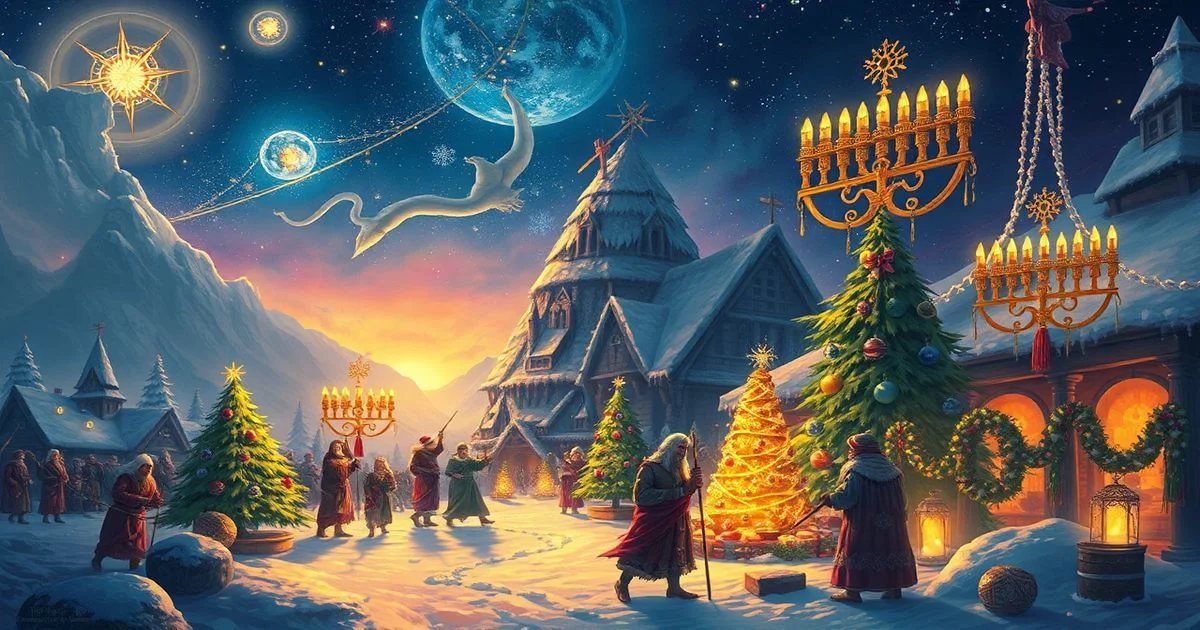
The festive season descends upon us annually, bringing with it a cascade of familiar rituals: decorated trees, exchanged gifts, glowing menorahs, and hopeful New Year's resolutions. We participate in these deeply ingrained customs, often without pausing to consider their roots. For the tech-savvy mind, understanding the underlying architecture of any system is key. In the realm of cultural practice, this means delving into the surprising origins of common holiday traditions. This article will unravel the historical threads, ancient beliefs, and societal evolutions that have shaped our most cherished celebrations, offering a deep dive into the complex algorithms of cultural memory and adaptation. We'll explore how many of these seemingly disparate customs share a fascinating, intertwined history, revealing layers of meaning often hidden beneath centuries of practice.
- What Defines a "Common Holiday Tradition"?
- The Deep Roots: Pre-Christian and Pagan Influences
- Deconstructing The Surprising Origins of Common Holiday Traditions
- The Christmas Tree: A Symbol of Everlasting Life
- Gift-Giving: From Ritual to Commerce
- Santa Claus: A Blend of Saints, Shamans, and Soda Ads
- The Menorah and Hanukkah: A Festival of Dedication and Light
- New Year's Resolutions: Ancient Oaths and Modern Goals
- Easter Eggs and Rabbits: Fertility Symbols Reimagined
- Cultural Assimilation and Evolution: The Algorithm of Tradition
- The Psychological and Societal Impact: Why Traditions Endure
- The Future of Festive Customs: Adapting to a Digital Age
- Conclusion: The Enduring Echoes of History in Our Holidays
- Frequently Asked Questions
- Further Reading & Resources
What Defines a "Common Holiday Tradition"?
Before dissecting individual customs, it's essential to define what constitutes a "common holiday tradition" within an anthropological context. These are not merely arbitrary acts; they are cultural algorithms, sets of learned behaviors, symbols, and values passed down through generations. They serve various functions: reinforcing community bonds, marking significant temporal shifts (like seasons or years), commemorating historical events, or celebrating shared beliefs.
From a sociological perspective, traditions provide predictability and stability in an often-unpredictable world. They are rituals that connect us to a past, give meaning to the present, and offer a sense of continuity for the future. Like robust software frameworks, they evolve incrementally, integrating new features while retaining core functionalities. This inherent adaptability allows them to persist across vast stretches of time, subtly reshaping their outward manifestations to remain relevant to contemporary societies. Their resilience is a testament to their fundamental role in human experience.
The Deep Roots: Pre-Christian and Pagan Influences
Many of the holiday traditions we observe today, particularly those around winter, spring, and the New Year, trace their lineage back to ancient pagan and pre-Christian festivals. These were often agricultural in nature, deeply tied to the cycles of the sun, moon, and seasons. For early agrarian societies, the solstices and equinoxes were not just astronomical events but critical markers for survival, determining planting, harvesting, and periods of scarcity.
One of the most influential precursors to modern winter holidays was the Roman festival of Saturnalia. Celebrated in mid-December, it honored Saturn, the god of agriculture and time. During Saturnalia, traditional social order was inverted: masters served their slaves, gambling was permitted, and gift-giving was common. It was a time of feasting, revelry, and general merriment, often involving evergreen decorations. Similarly, the Germanic and Norse peoples celebrated Yule, or Yuletide, around the winter solstice. This festival honored the rebirth of the sun, involving bonfires, feasting, and the custom of bringing evergreens indoors to symbolize life enduring through the harsh winter. These ancient celebrations, with their themes of light in darkness, feasting, and community, formed a powerful substrate upon which later religious and secular holidays would be built.
Deconstructing The Surprising Origins of Common Holiday Traditions
To truly grasp the surprising origins of common holiday traditions, we must break them down into their constituent elements, much like analyzing the source code of a complex application. Each tradition is a layered construct, influenced by myth, history, and cultural exchange.
The Christmas Tree: A Symbol of Everlasting Life
The decorated evergreen tree, a centerpiece of modern Christmas celebrations, has roots far deeper than Christianity itself. Long before the birth of Christ, various pagan cultures revered evergreen trees as potent symbols of life, rebirth, and fertility during the darkest days of winter.
Ancient Egyptians, for example, brought palm rushes into their homes at the winter solstice, symbolizing life's triumph over death. The Romans decorated their homes with evergreens during Saturnalia. Most notably, Germanic pagan tribes celebrated Yule by honoring forest spirits and decorating trees, believing evergreens warded off evil spirits and signified the promise of spring. The custom of bringing a whole tree indoors and decorating it is widely believed to have originated in 16th-century Germany. Legend suggests Martin Luther, the Protestant reformer, added lighted candles to a tree after being inspired by the sight of stars twinkling through evergreens on a winter's night.
However, the Christmas tree remained largely a German tradition until the 19th century. Its global popularization can be attributed to the British Royal Family. In 1846, Queen Victoria, whose husband Prince Albert was German, was depicted in the Illustrated London News with her family around a decorated Christmas tree. This image quickly disseminated across the British Empire and to America, instantly transforming the Christmas tree from a regional custom into a widespread, beloved holiday symbol, its pagan origins largely forgotten or recontextualized within Christian narratives.
Gift-Giving: From Ritual to Commerce
The act of exchanging gifts, a seemingly universal component of many holidays, also possesses a long and varied history, transcending its modern commercial connotations. Its origins lie in ancient rituals of appeasement, reciprocity, and social bonding, reflecting complex human psychology and societal structures.
In ancient Rome, gift-giving was a significant part of Saturnalia and the Kalends (Roman New Year). Small gifts, such as wax candles (cerei) and earthenware figurines (sigillaria), were exchanged as tokens of goodwill and prosperity. These gifts often carried symbolic meaning, wishing the recipient good fortune. Similarly, in many tribal societies, reciprocal gift-giving was crucial for establishing alliances, maintaining social harmony, and demonstrating wealth or status. The practice served as a form of social currency, cementing relationships and obligations.
With the advent of Christianity, the tradition was reinterpreted. The story of the Three Wise Men bringing gifts to the infant Jesus provided a powerful religious justification. Later, figures like Saint Nicholas, renowned for his anonymous acts of generosity, further solidified the association of gift-giving with charity and kindness. Over centuries, particularly from the Victorian era onwards, and dramatically amplified by 20th-century consumerism, the practice evolved from symbolic offerings and practical necessities to an elaborate annual economic phenomenon. What began as a ritualistic exchange designed to reinforce social bonds or honor deities has transformed into a global industry, yet at its heart, the impulse to share and show affection through giving remains.
Santa Claus: A Blend of Saints, Shamans, and Soda Ads
The jolly, red-suited figure of Santa Claus, who supposedly delivers gifts to children worldwide, is a fascinating composite of historical figures, mythological beings, and brilliant marketing. His surprising origins reveal a complex evolutionary path.
The most direct ancestor of Santa Claus is Saint Nicholas of Myra, a 4th-century Greek bishop from modern-day Turkey. Nicholas was known for his piety and secret acts of charity, such as dropping bags of gold down chimneys to help a poor man's daughters avoid prostitution. After his death, he became the patron saint of children, sailors, and merchants. His feast day is December 6th, and traditions of children receiving gifts on this day spread across Europe. In the Netherlands, he became "Sinterklaas," who arrived by steamboat from Spain, rode a white horse, and had a helper (Zwarte Piet).
However, elements of Santa's mythology also hark back to pre-Christian pagan beliefs. The Norse god Odin, for instance, was said to ride through the sky on his eight-legged horse Sleipnir during the winter solstice, delivering gifts (or sometimes punishments). Shamans in Siberian and Arctic regions were also known to dress in red and white, enter homes through the smoke hole (chimney), and distribute hallucinogenic mushrooms gathered from under evergreen trees, creating a visual echo of Santa's descent.
The modern image of Santa Claus largely crystallized in America. Washington Irving, in his 1809 History of New York, depicted a portly, pipe-smoking Dutch Santa. Clement Clarke Moore's 1823 poem "A Visit from St. Nicholas" (more famously known as "'Twas the Night Before Christmas") established many of Santa's defining characteristics: a miniature sleigh and eight tiny reindeer, his rosy cheeks, twinkling eyes, and belly like a "bowl full of jelly." Artist Thomas Nast further refined Santa's image through his political cartoons in Harper's Weekly from the 1860s to 1880s, giving him his workshop at the North Pole and his list of naughty and nice children. Finally, Coca-Cola's advertising campaigns, starting in the 1930s with artist Haddon Sundblom, standardized the red suit, white beard, and warm, benevolent demeanor that is now globally recognized.
The Menorah and Hanukkah: A Festival of Dedication and Light
Hanukkah, the Jewish Festival of Lights, commemorates a significant historical event and a symbolic miracle. Unlike many traditions rooted in ancient agricultural cycles, Hanukkah's surprising origins are firmly historical, though its ritualistic elements evolved over time.
The holiday celebrates the rededication of the Second Temple in Jerusalem following the Maccabean Revolt against the Hellenistic Seleucid Empire in the 2nd century BCE. Led by Judah Maccabee, Jewish rebels reclaimed the Temple from Antiochus IV Epiphanes, who had desecrated it and forbidden Jewish practices. Upon purifying the Temple, the Maccabees found only a small cruse of oil, enough to light the menorah (a seven-branched candelabrum) for one day. Miraculously, the oil burned for eight days, the time needed to prepare more ritually pure oil. This "miracle of the oil" is the central narrative underpinning the eight-day celebration.
The lighting of the nine-branched menorah (or hanukkiah) is the primary observance, with one candle lit each night, symbolizing the increasing light of the miracle. Other traditions include playing with the dreidel (a spinning top with Hebrew letters forming an acronym for "a great miracle happened there"), eating oil-rich foods like sufganiyot (jelly-filled doughnuts) and latkes (potato pancakes) to commemorate the oil miracle, and giving gelt (chocolate coins, sometimes real money) to children. Hanukkah emphasizes themes of religious freedom, perseverance, and the triumph of light over darkness. While traditionally a minor holiday in the Jewish calendar, its proximity to Christmas in Western cultures has led to an increased emphasis on gift-giving and public celebration.
New Year's Resolutions: Ancient Oaths and Modern Goals
The practice of making New Year's resolutions, a commitment to self-improvement or change, feels inherently modern, yet its surprising origins stretch back millennia, showcasing a cyclical human desire for renewal and a fresh start.
One of the earliest recorded instances comes from ancient Babylon, dating back nearly 4,000 years. During their 12-day Akitu festival, which celebrated the spring equinox (the start of their new year), Babylonians made promises to their gods. These promises often involved returning borrowed farm equipment and pledging to pay debts. If they kept their word, their gods would grant them favor for the coming year.
The ancient Romans also engaged in New Year's resolutions, though their New Year shifted. Originally celebrated in March, it moved to January 1st with Julius Caesar's calendar reforms. January is named after Janus, the Roman god of beginnings and transitions, who had two faces – one looking to the past, the other to the future. Romans would offer sacrifices to Janus and make promises of good conduct for the new year.
In the Middle Ages, knights would take the "Peacock Vow" at the end of the Christmas season, pledging to uphold chivalry for the coming year. This practice underscores the enduring human inclination to use the turning of the calendar as an opportunity for reflection and commitment to personal betterment. While the focus has largely shifted from divine appeasement to individual self-improvement, the underlying impulse to shed old habits and embrace new aspirations remains a powerful, culturally transmitted behavior.
Easter Eggs and Rabbits: Fertility Symbols Reimagined
Easter, the central Christian holiday celebrating the resurrection of Jesus Christ, is deeply imbued with symbolism that predates Christianity, drawing heavily from pagan spring festivals. The surprising origins of its most recognizable secular symbols – eggs and rabbits – lie in ancient fertility rites.
Many scholars suggest the name "Easter" itself derives from Eostre, or Ostara, a Germanic goddess of spring and fertility whose feast was celebrated at the vernal equinox. Her symbols were the hare (a prolific breeder) and the egg (a universal symbol of new life and rebirth). As Christianity spread, missionaries often found it easier to convert pagan populations by incorporating existing traditions and symbols into their new faith, recontextualizing them to fit Christian narratives.
Eggs, in particular, have been celebrated as symbols of new life across various cultures for millennia. Ancient Persians, Egyptians, and Romans exchanged eggs in spring as symbols of renewal. For Christians, the egg took on new meaning, symbolizing the empty tomb from which Jesus emerged, representing resurrection and new life. The practice of decorating eggs dates back centuries, with intricate designs and vibrant colors representing the joy and promise of spring. The custom of "egg rolling" and "egg hunts" further connects to ancient games of chance and symbolic quests for new life.
The Easter Bunny, or Easter Hare, also emerges from this pagan fertility symbolism. Hares and rabbits are well-known for their rapid reproduction, making them potent symbols of spring's abundance and new life. German folklore from the 17th century speaks of the "Osterhase," a hare that laid colorful eggs for good children. German immigrants brought this tradition to America in the 18th century, particularly to Pennsylvania, where the "Osterhase" tradition evolved into the beloved Easter Bunny, who now delivers baskets of candy and eggs, blending ancient fertility rites with modern celebratory customs.
Cultural Assimilation and Evolution: The Algorithm of Tradition
Understanding the specific origins of individual traditions illuminates a broader cultural phenomenon: assimilation and evolution. These practices are not static artifacts but dynamic systems that adapt, merge, and transform over time. This process can be viewed as a cultural algorithm, constantly processing new inputs and updating its outputs. This adaptive capacity is evident in various global customs, including the fascinating evolution of traditional Japanese tea ceremonies.
One key mechanism is syncretism, where elements from different cultural or religious traditions merge to form new, composite practices. As Christianity spread, it often absorbed existing pagan festivals, re-framing their meanings within a Christian framework. This wasn't always a top-down mandate; often, it was a grassroots adaptation, where local customs simply persisted, gradually acquiring new justifications. The timing of Christmas near the winter solstice, for instance, facilitated the integration of Yule and Saturnalia customs, providing a continuous celebratory period.
The rise of globalization and mass media in the last two centuries has accelerated this evolution. Traditions, once localized, can now spread worldwide, sometimes homogenizing in the process. Marketing and commercialization play a significant role, often simplifying complex histories into easily digestible, commercially viable narratives. The global ubiquity of Santa Claus or the Christmas tree demonstrates how cultural elements, like viral memes, can achieve widespread adoption, sometimes at the expense of their nuanced historical depth. This cultural exchange is less a linear progression and more akin to an open-source project, where different communities fork, modify, and merge codebases, resulting in diverse yet interconnected versions of similar traditions.
The Psychological and Societal Impact: Why Traditions Endure
Beyond their historical lineages, holiday traditions persist because they fulfill profound psychological and societal needs. They are more than mere celebrations; they are vital components of individual well-being and collective cohesion.
1. Creating a Sense of Belonging and Identity:
Whether it's a family gathering for Christmas dinner or a community lighting of a giant menorah, these rituals reinforce group identity and provide a sense of belonging. They act as social anchors, connecting individuals to their immediate family, local community, and broader cultural group.
2. Providing Structure and Predictability:
In a world that often feels chaotic and unpredictable, the regularity of holiday traditions offers comfort. Knowing that certain events and rituals will recur annually provides a rhythm to life, a predictable pattern that can be psychologically reassuring. This cyclical nature taps into ancient human desires for order and cosmic alignment.
3. Memory-Making and Intergenerational Bonding:
Traditions are powerful memory-makers. The smells, sounds, and rituals associated with holidays often become indelible memories, especially from childhood. They provide opportunities for intergenerational bonding, as stories are shared, and customs are passed down from elders to youth, strengthening familial ties and cultural transmission.
4. Marking Time and Transition:
Holidays serve as temporal markers, helping us delineate the passage of time. They signal shifts in seasons, the end of one year and the beginning of another, prompting reflection on the past and anticipation of the future. This function, rooted in ancient agrarian calendars, remains fundamentally relevant even in highly industrialized societies.
However, traditions are not without their critiques. The intense commercialization of many holidays can lead to consumerism, stress, and feelings of inadequacy. This highlights the growing interest in practices that offer psychological benefits like minimalist living as a counterpoint. Modern approaches to reducing daily stress offer counterpoints to these challenges, providing a more balanced perspective. Understanding these impacts is crucial for appreciating the full spectrum of tradition's influence.
The Future of Festive Customs: Adapting to a Digital Age
Just as traditions have evolved over millennia, they continue to adapt to contemporary challenges and technological advancements. The future of festive customs will likely see a blend of enduring core elements with innovative new forms.
One significant area of evolution is the rise of digital traditions. Virtual gatherings, online gift exchanges, and social media campaigns for holidays have become increasingly common, particularly in an era of global interconnectedness and remote work. These digital adaptations allow traditions to transcend geographical boundaries, connecting dispersed families and communities in new ways. The traditional act of sharing a meal, for instance, might now involve a video call, extending the reach of the celebration.
There's also a growing trend towards personalization and customization. While mass-produced holiday experiences persist, many individuals and families are crafting unique traditions that blend elements from various cultures or reflect personal values. This individualization can lead to a richer tapestry of celebrations, moving beyond strict adherence to historical norms. Furthermore, increasing awareness of environmental concerns is driving movements towards more sustainable and ethical holiday practices, from eco-friendly decorations to mindful consumption, signaling a shift in underlying values.
Ultimately, holiday traditions are resilient codebases, continually updated and debugged by each generation. Their core functions — community, meaning-making, and marking time — will likely endure, but their interfaces and implementations will continue to transform. The underlying human need for ritual and celebration is a constant, ensuring that these surprising and complex traditions will continue to shape our lives in new and unexpected ways.
Conclusion: The Enduring Echoes of History in Our Holidays
The journey through the historical layers of our holiday customs reveals a tapestry far richer and more complex than meets the eye. From the pagan reverence for evergreens to the Babylonian oaths that prefigured New Year's resolutions, and from the charitable acts of a 4th-century bishop to the commercialized image of Santa Claus, each tradition is a living archive of human history, belief, and adaptation. We’ve explored the surprising origins of common holiday traditions and seen how they are not fixed monuments, but dynamic systems, continually reinterpreted and passed down.
Understanding these deep roots enriches our experience of the festive season, allowing us to appreciate the intricate dance of cultures and the enduring human desire for connection, meaning, and celebration. As we light our candles, exchange our gifts, and gather with loved ones, we are not just performing modern rituals; we are participating in a conversation that spans millennia, echoing the joys and aspirations of countless generations before us. The power of these traditions lies not just in their present-day warmth, but in the echoes of their ancient, fascinating past.
Frequently Asked Questions
Q: What is the main origin of many modern holiday traditions?
A: Many modern holiday traditions, especially around winter, spring, and New Year, trace their roots back to ancient pagan and pre-Christian festivals. These were often agricultural, deeply tied to seasonal cycles and astronomical events like solstices and equinoxes, crucial for early societies.
Q: How did the Christmas tree become a global symbol?
A: The Christmas tree originated from pagan evergreen reverence in Germanic cultures, symbolizing life enduring winter. Its global popularity surged after 1846, when a depiction of Queen Victoria and her German husband, Prince Albert, with a decorated tree was published, quickly spreading the custom across the British Empire and to America.
Q: Is Santa Claus based on a real person?
A: Yes, Santa Claus is primarily based on Saint Nicholas of Myra, a 4th-century Greek bishop known for his secret acts of charity. His modern image, however, is a fascinating composite influenced by pagan myths (like Odin) and later refined by American authors and Coca-Cola advertising campaigns.