EU Summit Convenes: Shaping Europe's Future in a Changing World
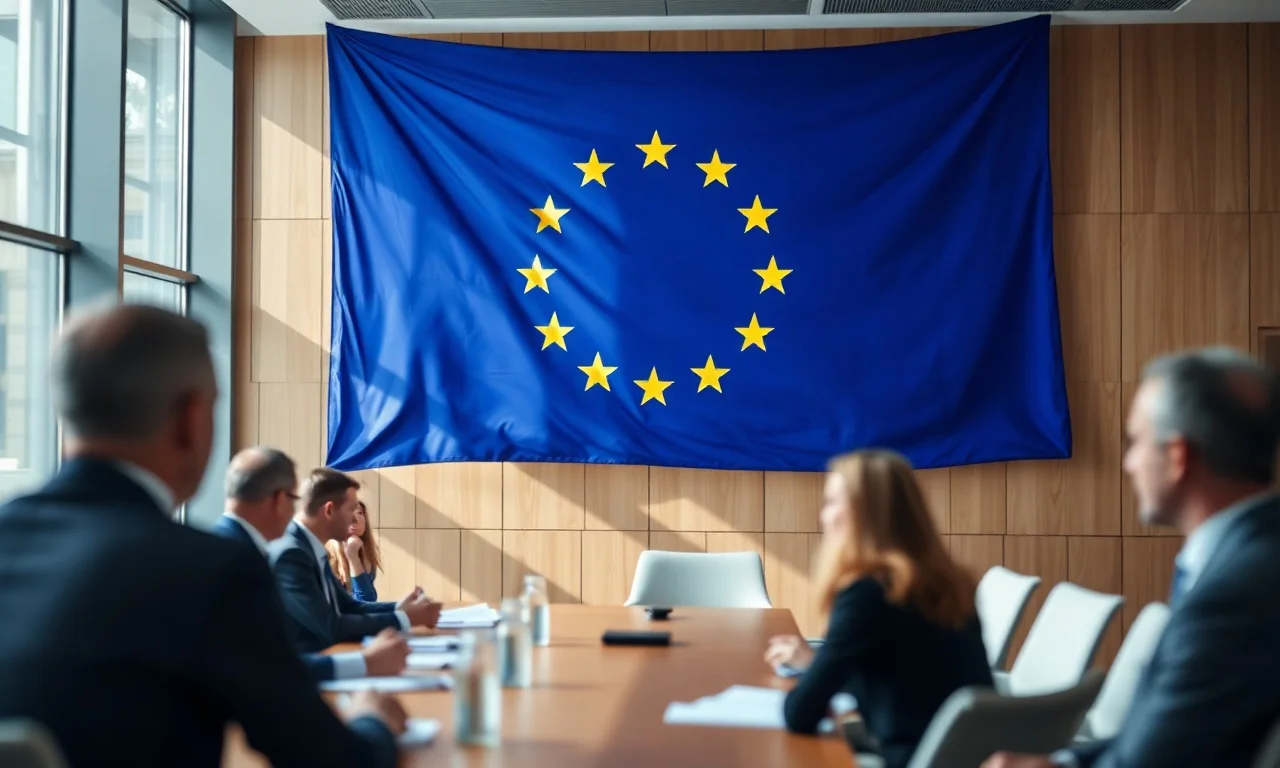
The recent EU Summit concluded with leaders from across the European Union engaging in critical discussions aimed at shaping Europe's future in an increasingly complex and changing world. These high-level meetings are pivotal moments for the bloc, addressing a myriad of challenges from economic stability to geopolitical tensions. This particular EU Summit convened at a crucial juncture, seeking to forge unified strategies and reinforce the Union's resilience against both internal and external pressures. The outcomes of such gatherings often have far-reaching implications, influencing policy directions, international relations, and the daily lives of over 447 million European citizens.
Background Context: Understanding the EU Summit's Role
The European Council, commonly referred to as the EU Summit, brings together the heads of state or government of the 27 EU member countries, along with the President of the European Council and the President of the European Commission. These gatherings are the highest political body within the European Union, responsible for defining the EU's overall political direction and priorities. Unlike the Council of the European Union (Council of Ministers), which comprises national ministers, the European Council does not negotiate or adopt legislation. Instead, its role is to set the EU's policy agenda, resolve complex or sensitive issues that cannot be settled at a lower level of intergovernmental cooperation, and guide the Union's strategic development.
Held typically four times a year in Brussels, extraordinary summits can be called to address urgent matters. The decisions made at these summits are crucial as they provide the impetus and direction for future legislative work by other EU institutions, such as the European Commission and the European Parliament. The summits serve as a forum for leaders to address common challenges, coordinate national policies, and project a unified European stance on the global stage. Understanding the function and authority of the European Council is fundamental to appreciating the significance of its discussions and the weight of its conclusions.
Key Issues at the Recent EU Summit
The latest EU Summit tackled an extensive agenda, reflecting the multifaceted challenges and opportunities confronting the Union. Discussions spanned critical areas from economic resilience and security to climate action and migration, underscoring the interconnectedness of these issues in defining Europe's trajectory. Leaders aimed to consolidate a unified approach, seeking common ground on policies that would strengthen the EU's internal coherence and external influence. The following sections delve into the major topics that dominated the recent summit's deliberations.
Economic Stability and Growth
A primary focus of the EU Summit was bolstering economic stability and fostering sustainable growth across the member states. Europe continues to navigate the aftershocks of global economic fluctuations, supply chain disruptions, and inflationary pressures. Leaders discussed strategies to enhance the EU's competitiveness, reduce dependency on external economic shocks, and strengthen the single market. Key proposals included deepening the Capital Markets Union to facilitate investment, supporting small and medium-sized enterprises (SMEs), and fostering innovation in critical sectors. The EU's Economic Security Strategy, updated in December 2025, emphasizes protecting critical economic interests and reducing strategic dependencies in areas like raw materials and semiconductors, while safeguarding key technologies.
Furthermore, discussions revolved around the effective implementation of the NextGenerationEU recovery fund, ensuring that the substantial investments lead to tangible economic benefits and structural reforms. The goal is not merely recovery but building a more resilient, dynamic, and integrated European economy capable of facing future challenges. Member states reported on their progress in utilizing these funds, with an emphasis on projects aligned with digital and green transitions. The EU aims to promote its industrial base through increased investment in areas like the Chips Act and support for net-zero technologies, alongside simplifying regulations to support businesses.
Geopolitical Challenges and Foreign Policy
The geopolitical landscape formed a significant part of the summit's deliberations, particularly in light of ongoing conflicts and shifts in global power dynamics. The EU leaders reaffirmed their unwavering support for Ukraine, discussing further military, financial, and humanitarian aid packages. Sanctions against aggressor nations were reviewed, and strategies to prevent their circumvention were emphasized.
Beyond immediate conflicts, the summit addressed the broader implications for European security and defense. There was a strong push for greater strategic autonomy, with leaders exploring ways to strengthen Europe's defense industrial base and coordinate defense spending more effectively. Discussions also touched upon the EU's relationship with key global partners, including the United States, China, and countries in the Global South, aiming to project a coherent and influential foreign policy stance. The importance of multilateralism and international cooperation in addressing global challenges like terrorism, cyber threats, and regional instabilities was reiterated. The European Council defines the principles and general guidelines for the EU's Common Foreign and Security Policy. An October 2025 meeting of EU leaders, for example, reaffirmed their determination to "decisively ramp up Europe's defence readiness by 2030."
Climate Action and Green Transition
Climate change remains a top priority for the European Union, and the recent summit dedicated substantial time to reviewing progress on the European Green Deal. Leaders assessed the implementation of policies aimed at achieving the EU's ambitious climate targets, including the Fit for 55 package, which seeks to reduce net greenhouse gas emissions by at least 55% by 2030 compared to 1990 levels.
Discussions focused on accelerating the transition to renewable energy sources, enhancing energy efficiency, and promoting sustainable industrial practices. The summit also addressed the challenges of ensuring a just transition, particularly for regions and industries heavily reliant on fossil fuels, and the need for adequate funding and technological innovation to support these transformations. The importance of international climate cooperation, especially in the lead-up to upcoming UN Climate Change Conferences, was also a key theme. The European Climate Law legally binds the EU to climate neutrality by 2050, with intermediate targets of a 55% reduction by 2030 and 90% by 2040.
Migration and Asylum Policies
Migration management and reform of the EU's asylum system were contentious but critical topics at the EU Summit. Leaders sought to reconcile differing national approaches and strengthen external border controls while upholding humanitarian principles. The ongoing debate centers on burden-sharing mechanisms among member states and cooperation with third countries to manage migratory flows effectively.
The summit reviewed the progress on the New Pact on Migration and Asylum, which is a set of new EU rules managing migration and establishing a common asylum system. The Pact, which entered into force in June 2024 and will apply after two years, aims to ensure strong and secure external borders and guarantee people's rights. A European Commission report in June 2025 assessed the implementation, noting significant progress but also remaining challenges in areas like the renewed Eurodac database, screening and border procedures, and reception conditions. The Pact also introduces a "mandatory solidarity mechanism" where all EU countries must either physically host asylum seekers or assist financially or operationally. It also aims for faster and more efficient asylum procedures and allows for speedier deportation of people to safe countries of origin or transit.
Digital Transformation and Innovation
In an era defined by rapid technological advancements, the EU Summit also placed significant emphasis on digital transformation and innovation. Leaders explored strategies to strengthen Europe's digital sovereignty, promote the ethical development and deployment of artificial intelligence (AI), and ensure a secure and resilient digital infrastructure.
Discussions included the implementation of the EU's Digital Decade targets, which aim to achieve ambitious goals by 2030 in areas such as digital skills, secure and sustainable digital infrastructures (including gigabit connectivity and 5G), the digitalization of public services (100% online accessibility, e-medical records, eID solutions), and the digital transformation of businesses (e.g., 75% of enterprises using cloud, big data, or AI, and over 90% of SMEs reaching a basic digital intensity level). The summit underscored the need to foster a vibrant European tech ecosystem, supporting start-ups and scale-ups, and investing in cutting-edge research and development. Recent reports, like one from June 2025, have provided an overview of progress, highlighting both achievements and persistent gaps in these areas. Regulations concerning data governance, cybersecurity, and consumer protection in the digital realm were also high on the agenda.
The Road Ahead: Potential Outcomes and Future Implications
The conclusions drawn at the EU Summit are not merely declarations but serve as a roadmap for future action across the Union. While immediate legislative changes are not typically enacted at these meetings, the political impetus and strategic guidance provided are invaluable. The directives set forth by the leaders influence the work programs of the European Commission, the legislative priorities of the European Parliament, and the national policies of member states.
In the realm of economic policy, we can expect a renewed push for structural reforms aimed at improving competitiveness and productivity, particularly in areas identified as strategic for Europe's future, such as green technologies and digital industries. The commitment to further integrate financial markets through the Capital Markets Union will likely see accelerated efforts to remove barriers to cross-border investment and create a more attractive environment for European businesses. The EU's updated Economic Security Strategy will continue to guide efforts to de-risk critical supply chains and protect sensitive technologies, balancing openness with resilience.
On geopolitical matters, the continued steadfast support for Ukraine signals a long-term commitment, potentially leading to further sanctions packages and more coordinated defense initiatives among member states. The emphasis on strategic autonomy suggests that future defense spending will increasingly prioritize European capabilities and industries, fostering greater self-reliance in security matters. The EU's diplomatic engagement with other global powers will likely intensify, seeking to assert its values and interests more effectively on the world stage.
Regarding climate action, the summit's discussions will likely translate into more stringent enforcement of existing environmental regulations and potentially new legislative proposals to accelerate the green transition. This includes increased investment in renewable energy infrastructure, research into sustainable technologies, and measures to ensure that the transition is socially equitable across all regions of the EU.
For migration and asylum, the consensus reached (or the persistent disagreements highlighted) will shape ongoing negotiations on the New Pact. We might see a stronger focus on external border management and closer cooperation with countries of origin and transit, alongside efforts to streamline asylum procedures and foster greater solidarity among member states.
Finally, the digital agenda will see continued investment in digital infrastructure, skills development, and the regulatory framework for emerging technologies like AI. The EU aims to position itself as a global leader in ethical AI and data governance, and the summit's conclusions will guide legislative efforts to achieve this ambition, ensuring that technological progress aligns with European values and fundamental rights. The collective will demonstrated at the summit is critical for navigating these complex issues and ensuring the EU remains a cohesive and influential actor in global affairs.
Expert Analysis: Perspectives on the Summit's Impact
Experts widely concur that the recent EU Summit underscored the bloc's resolve to tackle multifaceted crises while simultaneously pursuing long-term strategic goals. Dr. Elena Rostova, a prominent analyst in European affairs, commented, "This summit reinforced the idea that the EU is committed to finding common solutions, even on the most divisive issues. While compromises are always necessary, the underlying unity in confronting global challenges like climate change and geopolitical instability remains strong." Her analysis highlights the critical role of these high-level meetings in maintaining the EU's internal cohesion and external credibility.
Another perspective comes from Dr. Marcus Thorne, an economist specializing in European integration. He noted, "The emphasis on economic competitiveness and the deepening of the Capital Markets Union is a clear signal that the EU understands the imperative of self-reliance in a turbulent global economy. The discussions on NextGenerationEU's implementation are crucial for ensuring that these funds deliver transformational change, not just short-term fixes." His insights point to the economic pillars being strengthened to support future growth and resilience.
Furthermore, Professor Anya Sharma, an expert in international law and migration studies, observed, "The migration discussions, though challenging, signify a continued effort to forge a more comprehensive and equitable asylum system. The focus on both external cooperation and internal solidarity suggests a maturing approach to one of the EU's most sensitive policy areas." These expert views collectively emphasize the summit's role in advancing the EU's strategic agenda across various critical domains, albeit often through complex and protracted negotiations.
Conclusion: Shaping Europe's Future
The recent EU Summit served as a crucial platform for European leaders to address the pressing issues of our time, from economic resilience and geopolitical stability to climate action and digital transformation. The comprehensive discussions and the resulting strategic guidance underscore the European Union's ongoing commitment to collective action and its ambition to shape a secure, prosperous, and sustainable future for its citizens. While challenges remain, the outcomes of this EU Summit provide a clear direction for policies that will enhance the bloc's internal cohesion and strengthen its influence on the global stage. The collaborative spirit and determination exhibited by the leaders are essential for navigating the complexities of the 21st century and ensuring the EU's continued relevance and effectiveness.
Frequently Asked Questions
Q: What is the primary role of the EU Summit (European Council)?
A: The EU Summit brings together heads of state or government to define the EU's overall political direction and priorities. It guides the Union's strategic development and resolves complex issues without directly adopting legislation.
Q: What were the key areas of discussion at the recent EU Summit?
A: The summit focused on economic stability and growth, geopolitical challenges and foreign policy (especially Ukraine and defense), climate action via the Green Deal, migration and asylum policies, and digital transformation and innovation.
Q: How do the decisions from an EU Summit impact future EU policy?
A: While not enacting immediate legislation, the summit's conclusions provide political impetus and strategic guidance. They influence the work programs of the European Commission, legislative priorities of the European Parliament, and national policies of member states.