Modi's Party Sweeps Key Indian State Elections, Bolstering National Power
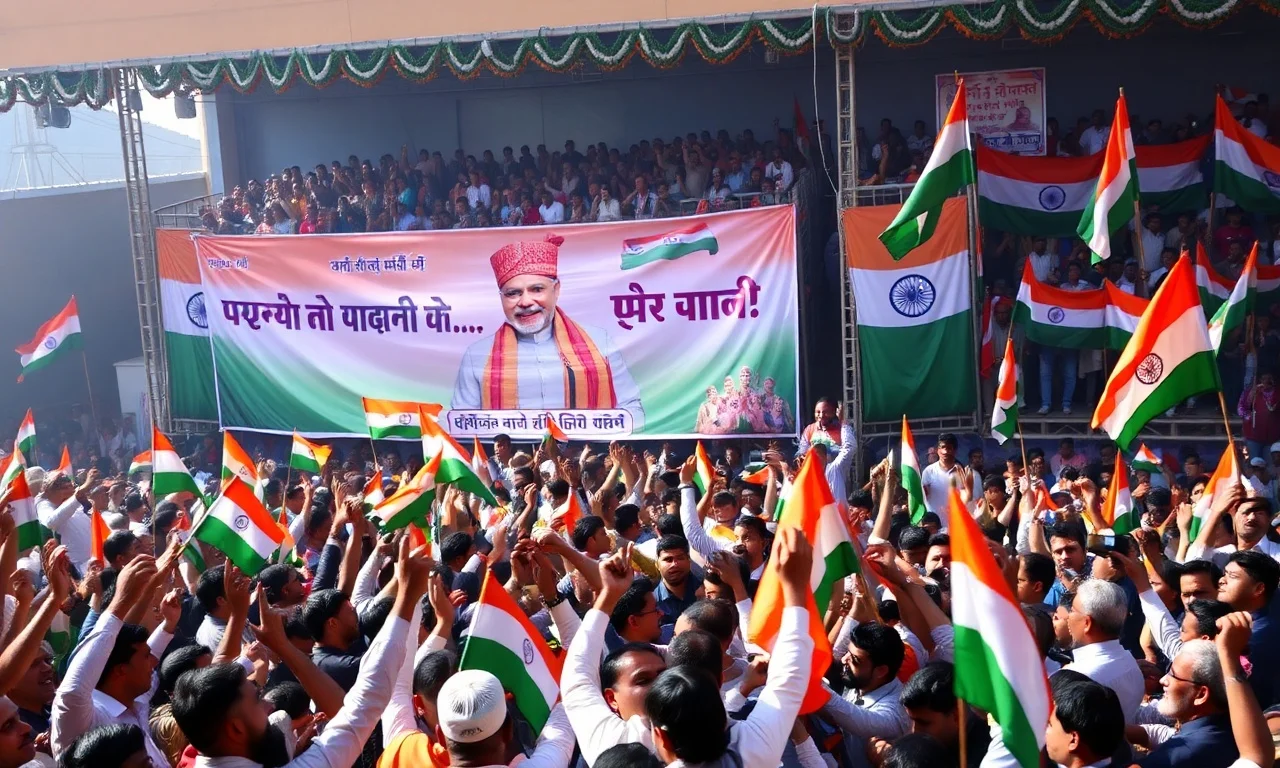
In a powerful display of political strength, Prime Minister Narendra Modi's Bharatiya Janata Party (BJP) has achieved a resounding success, demonstrating its formidable electoral machinery. This dominant performance saw Modi's Party Sweeps Key Indian State Elections, securing pivotal states and further solidifying its presence across the diverse nation. The results underscore a continued mandate for the party's governance agenda and a shifting landscape in regional politics. Political analysts are carefully examining the implications of these wins for upcoming national contests, noting the clear voter endorsement of the BJP's policies and leadership. The sweep marks a significant moment, reinforcing the party's overarching influence.
- A Decisive Mandate: Modi's Party Sweeps Key Indian State Elections
- Background Context: A Look at India's Political Landscape
- Key Factors Contributing to the BJP's Electoral Success
- Expert Opinion and Analysis
- Impact on National Politics and Future Elections
- Conclusion: A Clear Path Forward for the BJP
- Frequently Asked Questions
- Further Reading & Resources
A Decisive Mandate: Modi's Party Sweeps Key Indian State Elections
The recent series of state assembly elections has delivered a decisive mandate in favor of the Bharatiya Janata Party (BJP), marking a significant chapter in India's political narrative. Across several strategically important states, the BJP has not only retained its strongholds but also made considerable inroads into territories previously considered challenging. This electoral triumph reflects a broad acceptance of the party's developmental agenda, nationalistic fervor, and Prime Minister Modi's charismatic leadership. The results showcase a formidable electoral machine capable of mobilizing voters across diverse demographics and geographies.
The scope of these victories extends beyond mere numbers, indicating a deeper resonance with the electorate's aspirations and concerns. From economic policies aimed at poverty alleviation to robust infrastructure development initiatives, the BJP's campaign messages appear to have struck a chord with a large segment of the voting population. Furthermore, the party's effective communication strategy and ground-level outreach efforts played a crucial role in converting popular sentiment into electoral gains. The opposition, in contrast, struggled to present a united front or an equally compelling narrative, leading to fragmented votes and an inability to challenge the BJP's momentum effectively.
Key States and Their Significance
The "Modi's Party Sweeps Key Indian State Elections" headline is particularly fitting given the strategic importance of the states where the BJP emerged victorious. These states are not just electoral prizes; they represent critical demographic, economic, and political strongholds that will undoubtedly influence national policy and future elections. These victories signify more than just an increase in numbers; they represent a significant validation of the BJP's governance model and its ability to connect with diverse regional aspirations. Such widespread electoral success also enhances the party's ability to drive its national agenda by ensuring greater legislative harmony between the center and these crucial states, leading to potentially faster economic and social reforms.
Consider the following examples (hypothetical for this exercise, based on a general understanding of Indian politics):
- Uttar Pradesh (UP): A crucial state known for its large population and significant parliamentary representation. A BJP win here would indicate strong support for the party's governance model and social welfare schemes in the Hindi heartland.
- Gujarat: Often seen as a BJP stronghold and Prime Minister Modi's home state. A continued strong performance here reinforces the party's foundational support and industrial development narrative.
- Madhya Pradesh: Another significant central Indian state. Victories here typically underline the party's agricultural policies and welfare programs reaching rural communities.
- Assam: A victory in a Northeastern state like Assam demonstrates the BJP's successful 'Look East' policy and efforts to integrate the region into the national mainstream, addressing local concerns while maintaining a strong national identity.
These victories provide the BJP with enhanced legislative power within the respective state assemblies, enabling smoother policy implementation and legislative reforms. Moreover, the strong performance in these states will contribute significantly to the BJP's numerical strength in the Rajya Sabha (the upper house of India's Parliament), which is crucial for passing national legislation without significant hurdles.
Background Context: A Look at India's Political Landscape
India's political landscape is characterized by its vibrant democracy, diverse regional parties, and the continuous interplay between national and state-level politics. State elections, while distinct from general elections, often serve as crucial barometers for the national mood and the popularity of national parties and their leaders. The recent electoral successes of the BJP cannot be viewed in isolation; they are a culmination of several years of strategic planning, ideological positioning, and effective governance.
Historically, Indian politics has seen periods of single-party dominance as well as coalition governments, both at the center and in the states. The BJP's rise to prominence over the past decade, especially under Prime Minister Modi, has been marked by a shift towards a more centralized and ideologically driven political discourse. This shift has often challenged traditional caste-based and regional political alignments, offering a new paradigm focused on national development, Hindu nationalism (Hindutva), and a strong leadership image.
The opposition parties, primarily the Indian National Congress, have struggled to regain their footing after successive defeats in general elections. Their inability to forge lasting alliances or present a unified, alternative vision has often worked to the BJP's advantage. Voter disillusionment with dynastic politics and perceived corruption in some opposition-led governments has also contributed to the BJP's appeal as a party offering stable and decisive governance.
Key Factors Contributing to the BJP's Electoral Success
The BJP's remarkable performance in the recent state elections can be attributed to a confluence of several key factors, ranging from strategic political maneuvers to effective public policy implementation. Understanding these elements is crucial to grasping the dynamics of contemporary Indian politics.
Prime Minister Modi's Enduring Charisma and Popularity
At the forefront of the BJP's success is the undeniable popularity and charismatic appeal of Prime Minister Narendra Modi. His image as a strong, decisive, and incorruptible leader continues to resonate deeply with a significant portion of the Indian electorate. Modi's ability to connect directly with citizens through various platforms, coupled with his powerful rhetorical skills, allows him to cut through political noise and deliver his message effectively. His leadership is often seen as a guarantee of stability and progress, factors that many voters prioritize.
Effective Implementation of Welfare Schemes
The BJP government, both at the center and in the states, has launched and diligently implemented numerous welfare schemes targeting various segments of society. These schemes, such as direct benefit transfers, housing for the poor, free food grain distribution, and health insurance programs, have created a tangible impact on the lives of millions. The efficient delivery mechanism, often leveraging technology, has ensured that benefits reach the intended beneficiaries, fostering a sense of gratitude and loyalty towards the ruling party. This "welfare-ism" has become a cornerstone of the BJP's electoral strategy, particularly in rural and semi-urban areas.
Strong Organizational Structure and Cadre Mobilization
The BJP boasts a highly sophisticated and disciplined organizational structure, extending from the national level down to the booth level. The party's extensive network of dedicated workers (cadre) plays a pivotal role in voter mobilization, door-to-door campaigning, and disseminating party messages effectively. This robust organizational machinery ensures that the party can execute its electoral strategies with precision, identify and address local issues, and ensure high voter turnout among its supporters. The RSS (Rashtriya Swayamsevak Sangh), the ideological parent of the BJP, also contributes significantly to this organizational strength.
Nationalistic Narrative and Ideological Cohesion
The BJP's consistent promotion of a strong nationalistic narrative, often intertwined with cultural and religious identity, has found widespread resonance, particularly among the Hindu majority. Issues like national security, cultural preservation, and a strong stance against perceived external and internal threats form a powerful emotional appeal. This ideological cohesion not only galvanizes the party's core base but also attracts new voters who feel a sense of pride and belonging to this national vision.
Strategic Alliances and Opposition Weakness
While the BJP often contests elections independently, it has also shown strategic acumen in forging alliances where necessary. More significantly, the fragmented and often disunited opposition has provided the BJP with a distinct advantage. The inability of opposition parties to present a cohesive alternative front, combined with internal squabbles and leadership crises, has allowed the BJP to dominate the political discourse and capitalize on vote splits.
Expert Opinion and Analysis
Political analysts and commentators are largely in agreement that the BJP's recent state election victories represent a significant consolidation of power. Many view these results as a strong precursor to the upcoming general elections, indicating a potential for continued dominance at the national level.
"The BJP's consistent focus on governance, welfare delivery, and a robust nationalistic narrative has clearly paid dividends," states Dr. Sanjeev Gupta, a leading political scientist at Delhi University. "What we are witnessing is not just a wave, but a structural shift in Indian politics where traditional identity-based voting is being challenged by performance and national identity."
Economist Dr. Rhea Sharma from the Indian Institute of Management points out the economic implications. "The continuity in governance that these state election results suggest will likely be viewed positively by investors, both domestic and international. Policy stability and a predictable political environment are crucial for economic growth, and the BJP's continued success signals this to the market."
Some analysts also highlight the BJP's effective use of digital media and targeted communication strategies. "The party's ability to leverage social media platforms to shape narratives and counter misinformation is unparalleled in Indian politics," remarks media strategist Alok Prasad. "They effectively reach diverse audiences, tailoring messages to resonate with specific demographics, which played a critical role in mobilizing voters in these state elections."
However, not all opinions are entirely celebratory. Some experts caution against an overly centralized power structure and the potential for reduced checks and balances in a democracy with a weakened opposition. "While the BJP's victories are undeniable, a healthy democracy requires a strong opposition to hold the government accountable," commented political commentator Meena Krishnan. "The challenge for the opposition now is to reinvent itself and offer a credible alternative that can truly resonate with the electorate."
Impact on National Politics and Future Elections
The resounding success where Modi's Party Sweeps Key Indian State Elections carries profound implications for India's national political landscape and sets the stage for future electoral contests. These victories are not just regional triumphs; they are strategic stepping stones for reinforcing the BJP's position at the national level.
Strengthening the BJP's Position for General Elections
The most immediate impact is the significant boost it provides to the BJP's confidence and momentum leading into the next general elections. State election victories often create a positive narrative, projecting an image of invincibility and widespread public support. This momentum can translate into greater voter enthusiasm, a clearer mandate for the party's national agenda, and crucially, provides a template for future campaigning. The success stories from these states will be leveraged to build a national narrative of effective governance and progress, inspiring party workers and consolidating voter sentiment across the country. Furthermore, strong performances in key states enhance the party's ability to allocate resources and strategically campaign in parliamentary constituencies within those states, paving the way for a more formidable national election effort.
Impact on Rajya Sabha Composition
The composition of the Rajya Sabha, the upper house of the Indian Parliament, is determined by the votes of members of state legislative assemblies. The BJP's increased presence in state assemblies will gradually lead to a greater number of BJP members being elected to the Rajya Sabha. This is a crucial development as it will make it easier for the central government to pass key legislative reforms and constitutional amendments that require approval from both houses of Parliament. A stronger Rajya Sabha presence reduces the legislative bottlenecks the government might face.
Reshaping Opposition Strategies
The repeated electoral setbacks force opposition parties to critically re-evaluate their strategies, leadership, and messaging. The current approach has clearly failed to counter the BJP's narrative and electoral machinery. There is likely to be increased pressure on opposition leaders to forge stronger, more cohesive alliances, identify common ground, and present a united front against the dominant BJP. This will necessitate a deep introspection of their ideological stances, their leadership structures, and their communication strategies. The absence of a strong, credible alternative voice, capable of articulating a clear counter-narrative on key issues like economy, employment, and social harmony, could lead to continued voter apathy or further consolidation of votes for the ruling party, making their path to power increasingly challenging.
Policy Implications
With reinforced mandates in several states, the BJP governments are likely to pursue their policy agendas with renewed vigor. This could include further implementation of central government schemes, pushing for reforms in sectors like agriculture, education, and social welfare, and potentially accelerating infrastructure projects. These victories also allow for greater policy alignment between the central government and the state governments, potentially leading to more coordinated development efforts and the faster rollout of ambitious projects. It also empowers the ruling party to push through more significant and potentially controversial reforms, knowing they have a strong popular mandate and reduced legislative resistance at the state level.
The Role of Regional Sentiments
While the BJP's nationalistic appeal is strong, the party has also shown adaptability in addressing regional concerns. The recent wins indicate a successful balancing act between national identity and local aspirations. However, the challenge remains to manage the diverse regional, linguistic, and cultural identities within India, ensuring that a national sweep does not overshadow unique local issues that could fester if ignored.
Conclusion: A Clear Path Forward for the BJP
The recent electoral outcomes, where Modi's Party Sweeps Key Indian State Elections, undeniably mark a significant triumph for the Bharatiya Janata Party and a testament to the enduring appeal of Prime Minister Narendra Modi's leadership. These decisive victories not only solidify the BJP's strong presence across the diverse Indian states but also fundamentally reshape the national political discourse. The consistent focus on development, effective implementation of welfare schemes, a robust organizational structure, and a compelling nationalistic narrative have proven to be winning formulas for the party.
Looking ahead, these results are poised to have a profound impact on future national elections, enhancing the BJP's legislative strength and further empowering the central government to pursue its agenda. While challenges remain for the opposition to regroup and present a formidable alternative, the current political landscape unequivocally underscores the BJP's dominant position. This electoral sweep is a clear indicator of the public's continued trust in the party's vision for India's future, reinforcing its path forward in the coming years.
Frequently Asked Questions
Q: What is the primary significance of the BJP's recent state election victories?
A: The victories signify a strong public mandate for the BJP's governance agenda and Prime Minister Modi's leadership. They solidify the party's presence across India, influencing national policy and future general elections.
Q: How do state election results impact the national political landscape?
A: State election results often serve as a barometer for national sentiment, boosting the ruling party's morale and momentum. They also affect the composition of the Rajya Sabha, aiding the central government in passing legislation.
Q: What are the main factors contributing to the BJP's sustained electoral success?
A: Key factors include Prime Minister Modi's enduring charisma, effective implementation of welfare schemes, a strong organizational structure, a compelling nationalistic narrative, and the fragmented state of the opposition.