India's Youth Rage: "Cockroach" Group Challenges Modi
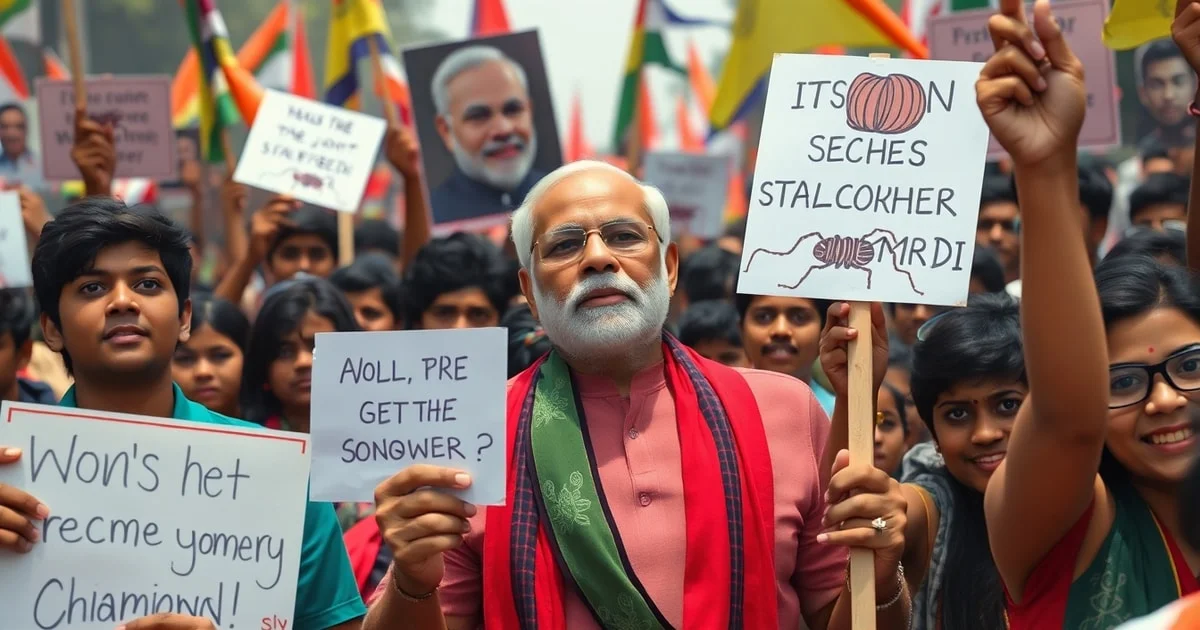
A new, rapidly burgeoning satirical political movement, the "Cockroach Janta Party" (CJP), has swiftly captured the attention of millions, signaling a palpable India's Youth Rage: "Cockroach" Group Challenges Modi. This unexpected phenomenon, born from a controversial remark by India's Chief Justice, Surya Kant, who reportedly compared unemployed youth to "cockroaches" and "parasites of society," has escalated into a significant expression of dissent. The movement's compelling rise underscores growing frustration among India's young population with political, economic, and social issues, directly challenging the established political dominance of Prime Minister Narendra Modi and the ruling Bharatiya Janata Party (BJP).
- Understanding India's Youth Rage: The "Cockroach" Challenge to Modi
- Underlying Factors Fueling Youth Discontent
- The "Cockroach" Movement: Structure, Ideology, and Campaigns
- Political and Societal Reactions
- The Broader Impact on Indian Politics
- Conclusion: A Generation Demanding Accountability
- Frequently Asked Questions
- Further Reading & Resources
Understanding India's Youth Rage: The "Cockroach" Challenge to Modi
The Cockroach Janta Party (CJP) was founded on May 16, 2026, by Abhijeet Dipke, a political communications strategist with a background in the Aam Aadmi Party (AAP). Dipke, a 30-year-old Boston University graduate, initiated the satirical movement as a direct response to Chief Justice Surya Kant's remarks made just a day prior. While Kant later clarified that his comments were directed at individuals with "fake and bogus degrees" and not intended to criticize all young people, the damage was done, igniting widespread anger and criticism across social media.
The CJP's name itself is a satirical parody of the ruling Bharatiya Janata Party (BJP), deliberately chosen to embrace the insult and transform it into a symbol of resilience. What began as an online gag quickly evolved into a full-fledged movement, leveraging memes, mock campaign slogans, and satirical commentary to target the government. Within days of its launch, the CJP garnered immense online traction, amassing over 350,000 sign-ups and exceeding 20 million followers on Instagram, surpassing even the official BJP handle in follower count. This meteoric rise highlights the deep-seated frustration among young Indians, estimated to constitute over half of the country's 1.42 billion population, who feel unrepresented and unheard by mainstream politics.
Underlying Factors Fueling Youth Discontent
The rapid embrace of the CJP by India's youth is not merely a reaction to a single controversial statement but a symptom of deeper, long-standing grievances. Several critical issues contribute to the widespread discontent among the under-30 demographic:
The Persistent Challenge of Youth Unemployment
One of the most significant drivers of youth rage is the chronic issue of unemployment and underemployment. India, despite being one of the world's fastest-growing major economies, struggles to generate enough quality jobs for its burgeoning youth population. Nearly 1 million young Indians enter the workforce every month, intensifying the demand for large-scale job creation.
Official statistics and independent reports paint a concerning picture. India's youth unemployment reached approximately 15.2% in March 2026, with unemployment among young women approaching 18%. Some independent analyses, like those by the Centre for Monitoring Indian Economy (CMIE), suggest even higher figures, with the overall unemployment rate rising sharply from 7% to 9.2% between May and June of the previous year. The International Labour Organization (ILO) also reported that the unemployment rate for young people in India was estimated at 12.4% in 2022, and the share of young unemployed Indians aged 15-29 reached a massive 82.9% of all unemployed in the country.
- Skill Mismatch: A significant portion of graduates, nearly 50%, are considered unemployable due to a mismatch between academic curricula and industry-relevant skills. This structural issue limits their access to formal employment opportunities.
- Informal Economy Dominance: Over 90% of the workforce remains in informal employment, lacking stable wages, social security, or long-term job security.
- Stagnant Manufacturing: The manufacturing sector contributes only around 13% to India's GDP, limiting labor-intensive job creation despite the expanding workforce.
- Vacancy Backlog: Over 30 lakh (3 million) posts remain vacant in central government departments, further exacerbating the job crisis.
The economic insecurity and lack of opportunities lead to widespread frustration, migration pressures, and a decline in confidence among educated young Indians.
Education System Failures and Exam Scandals
The education system's inability to deliver on promises of a brighter future is another major pain point. Recent leaks of exam papers and errors in marking final-year school exams have severely impacted the careers of millions of students. These recurring scandals fuel a sense of injustice and despair among students who invest years preparing for competitive examinations. Abhijeet Dipke, the CJP founder, has specifically called for the resignation of Education Minister Dharmendra Pradhan, citing these exam-related failures and a petition signed by nearly 800,000 students.
Broader Governance and Affordability Concerns
Beyond jobs and education, young Indians express frustration with a range of governance issues:
- Inflation and Rising Costs: Concerns over rising fuel prices, gas shortages linked to international conflicts like the Iran war, and general inflation contribute to a brewing affordability crisis, directly impacting daily life.
- Corruption and Lack of Accountability: Allegations of corruption, coupled with a perceived lack of accountability from political leaders, erode public trust in institutions. The CJP's manifesto explicitly targets issues like the non-appointment of judges to political posts after retirement and stringent penalties for vote deletion.
- Suppression of Dissent: Citizens who attempt to voice their concerns through protests or activism often face suppression, intimidation, or legal pressure, leading to a sense that questioning authority is riskier than abusing it. The blocking of CJP's X account by the government, citing national security, underscores this perception.
- Political Discourse and Representation: Many young people feel that political discourse is dominated by distractions rather than urgent issues like climate change, pollution, and social inequality. The CJP's vision explicitly states its focus is not on divisive topics like "Ram Mandir or love jihad" but on tangible issues affecting "actual people," such as leaked exam papers and unfulfilled job promises.
The "Cockroach" Movement: Structure, Ideology, and Campaigns
The Cockroach Janta Party, while operating largely as a satirical political movement, has a clear ideology and specific demands. Its core principles revolve around anti-corruption, youth empowerment, and transparent governance, primarily channeled through digital activism and viral campaigns.
A Satirical and Digital-First Approach
The CJP has effectively utilized social media, memes, reels, and videos to disseminate its message, transforming "absurdist humour into protest". This digital-first strategy allows for widespread reach and engagement among a demographic that is "chronically online". The party's self-mocking membership criteria, which include being "unemployed, lazy, and chronically online," resonate deeply with the frustrations of Gen Z.
Its official symbol, the smartphone, is described as "the ultimate equalizer," reflecting the belief that digital connectivity empowers youth to effect change with "low energy required" – even "while lying completely horizontal". This tongue-in-cheek approach distinguishes it from traditional political organizations and taps into the unique communication style of younger generations.
Core Demands and Manifesto
The CJP's formal five-point manifesto outlines its non-negotiable demands, addressing critical areas of governance and justice:
- No Rajya Sabha Seats for Retired Chief Justices: To ensure judicial independence, the CJP demands a five-year ban on all government appointments for judges after retirement, arguing that a judge "auditioning for their next post is not an independent judge".
- UAPA for Vote Deletion: The movement calls for arresting the Chief Election Commissioner under the Unlawful Activities (Prevention) Act (UAPA) if legitimate votes are deleted, equating it to an act of "terrorism" against voting rights. This refers to the 2025 Indian electoral controversy.
- 50% Women's Reservation in Parliament: The CJP advocates for immediate implementation of 50% reservation for women in forming the country's policies, noting that despite a 2023 law, women only hold 13.6% of parliamentary seats.
- Cancel Corporate Media Licenses: To combat media monopolies and ensure journalistic integrity, the CJP proposes revoking licenses of organizations that function as political wings or fail journalistic standards.
- 20-Year Ban on Political Defectors: To eradicate "horse-trading," politicians who switch parties would face an absolute 20-year ban from elections.
The CJP also highlights other critical issues such as the Prime Minister not holding a single open press conference in 11 years, and the long delays in justice for cases like the Nirbhaya rape case, demanding a 90-day verdict-to-sentencing period for rape cases.
Transitioning from Online to Offline Activism
While initially a digital phenomenon, the CJP has begun to translate its online momentum into offline action. Founder Abhijeet Dipke has announced plans to return to India to lead peaceful street protests in Delhi, specifically demanding the resignation of the education minister. The movement has also engaged in offline activities such as clean-up drives, with volunteers reportedly participating in cockroach costumes. This move signifies an important step for the CJP, as political analysts suggest that building an offline presence is crucial for the movement to have a direct political impact and avoid fizzling out.
Political and Societal Reactions
The emergence and rapid growth of the "Cockroach" group has elicited varied reactions from political circles and society at large.
Government Response and Criticism
The Modi government has shown signs of being rattled by the CJP's popularity. Senior cabinet minister Kiren Rijiju has accused the CJP of undermining India's democracy and of seeking social media followers from "arch-enemy Pakistan and the 'anti-India gang'". The government has also taken direct action, blocking the CJP's X (formerly Twitter) account in India on "national security grounds". Abhijeet Dipke has reported receiving death threats and losing access to the party's social media accounts due to alleged hacking. However, this attempt at censorship appears to have backfired, generating a "Streisand effect" that has only increased the movement's visibility and aura of political dissent.
Prime Minister Modi himself has yet to comment publicly on the CJP. However, the government's actions suggest a recognition of the potential threat this youth-led dissent poses, especially given that such widespread online expressions of opposition against Modi's 12-year rule are rare.
Opposition and Public Opinion
Members and supporters of opposition parties, including the Congress, have amplified the cockroach imagery online, though the CJP maintains it is not affiliated with any political organization. While some opposition leaders have endorsed the movement, poll strategists caution against viewing it as a ready-made anti-BJP wave, noting that India's Gen Z feels neither the ruling party nor the opposition is truly listening to them.
Political activist Yogendra Yadav commented that the CJP's rise indicates a "latent but widespread disquiet" beneath claims of total dominance, stating, "If all was well with the country and the economy, 20 million young people would not rally around something like this". However, experts like Sanjay Kumar of the Centre for the Study of Developing Societies highlight the challenges the CJP faces in translating online popularity into sustained offline political impact, citing resource-based hurdles like funding and volunteer recruitment.
Historical Context of Youth Movements in India
Youth movements have a long and influential history in Indian politics. From the anti-Emergency movement of 1975-1977 to Anna Hazare's anti-corruption crusade in 2011 and the Nirbhaya protests, young people have consistently played a crucial role in challenging injustice and demanding reform. These movements often leverage social media for mobilization and involve significant participation from educated, urban middle-class youth.
While past youth movements have influenced policy discourse and democratic engagement, their ability to achieve direct institutional representation has often been constrained by structural barriers. However, the increasing involvement of youth and the explosive rise of social media platforms have significantly reshaped the electoral landscape, with youth forming a powerful electoral force.
The Broader Impact on Indian Politics
The rise of the "Cockroach" group and the underlying youth rage carries significant implications for the future of Indian politics.
Potential to Dent Modi's Image
Analysts suggest that the CJP's rapid ascent could dent Prime Minister Modi's carefully cultivated image, despite his party's recent electoral victories. The movement's ability to unify widespread discontent over economic issues, education failures, and governance concerns could expose cracks in the perception of stability and control. With half of India's population under 30, their collective frustration cannot be easily ignored.
Redefining Political Engagement
The CJP represents a new paradigm in political engagement, one that is highly satirical, digitally native, and focused on specific, tangible issues rather than traditional ideological divides. This approach could force established political parties to re-evaluate their communication strategies and actively address the concerns of Gen Z, who often feel unrepresented by both the ruling party and the opposition. The movement emphasizes a "community first" approach with free and open membership, aiming to engage "every Indian told to wait their turn while the turn kept getting sold".
Challenges for the Movement
Despite its viral success, the CJP faces considerable challenges:
- Sustaining Offline Presence: Translating massive online following into sustained, impactful offline political action is a major hurdle. Without organized physical presence, the movement risks being a temporary online sensation.
- Resource Mobilization: Building a national movement requires significant financial resources and a strong volunteer network, which can be difficult for an emergent, satirical group.
- Government Opposition: The government's attempts at censorship and accusations of undermining democracy indicate strong pushback, which the CJP will need to navigate carefully.
- Lack of Direct Political Affiliation: While its apolitical stance helps it attract diverse youth, the lack of formal registration as a political party with the Election Commission of India means it currently cannot directly contest elections.
Conclusion: A Generation Demanding Accountability
The rapid rise of the "Cockroach Janta Party" is a clear and potent signal of India's Youth Rage: "Cockroach" Group Challenges Modi and the broader political establishment. It symbolizes a generation's profound discontent with unemployment, education system failures, and perceived governmental indifference. What started as a satirical response to a dehumanizing comment has quickly transformed into a significant online movement, leveraging digital platforms to articulate grievances and demand accountability.
While the CJP faces the challenge of converting its massive digital following into sustained, tangible political impact, its emergence undeniably highlights a critical moment in Indian politics. The movement serves as a stark reminder to India's political class that ignoring the aspirations and frustrations of its vast youth population comes at an increasingly high cost. The "cockroaches" have found their voice, and they are demanding change, challenging the narrative, and reshaping the landscape of dissent in the world's largest democracy.
Frequently Asked Questions
Q: What is the "Cockroach Janta Party"?
A: The "Cockroach Janta Party" (CJP) is a satirical political movement that rapidly gained traction in India, primarily among the youth. Founded by Abhijeet Dipke, it uses humor and digital activism to challenge the government, particularly Prime Minister Modi, and highlight widespread discontent.
Q: What are the main grievances fueling India's youth rage that the CJP addresses?
A: The CJP and its supporters are driven by several key issues. These include chronic youth unemployment, failures within the education system such as exam scandals, and broader governance concerns like inflation, perceived corruption, and the suppression of dissent.
Q: How does the "Cockroach Janta Party" challenge the Modi government?
A: The CJP challenges the government through viral social media campaigns, memes, and a five-point manifesto that outlines demands for judicial independence, electoral integrity, women's reservation in parliament, media reform, and a ban on political defectors. It has also begun organizing peaceful street protests.