US-Iran Tensions Escalate in Strait of Hormuz: A Deep Dive
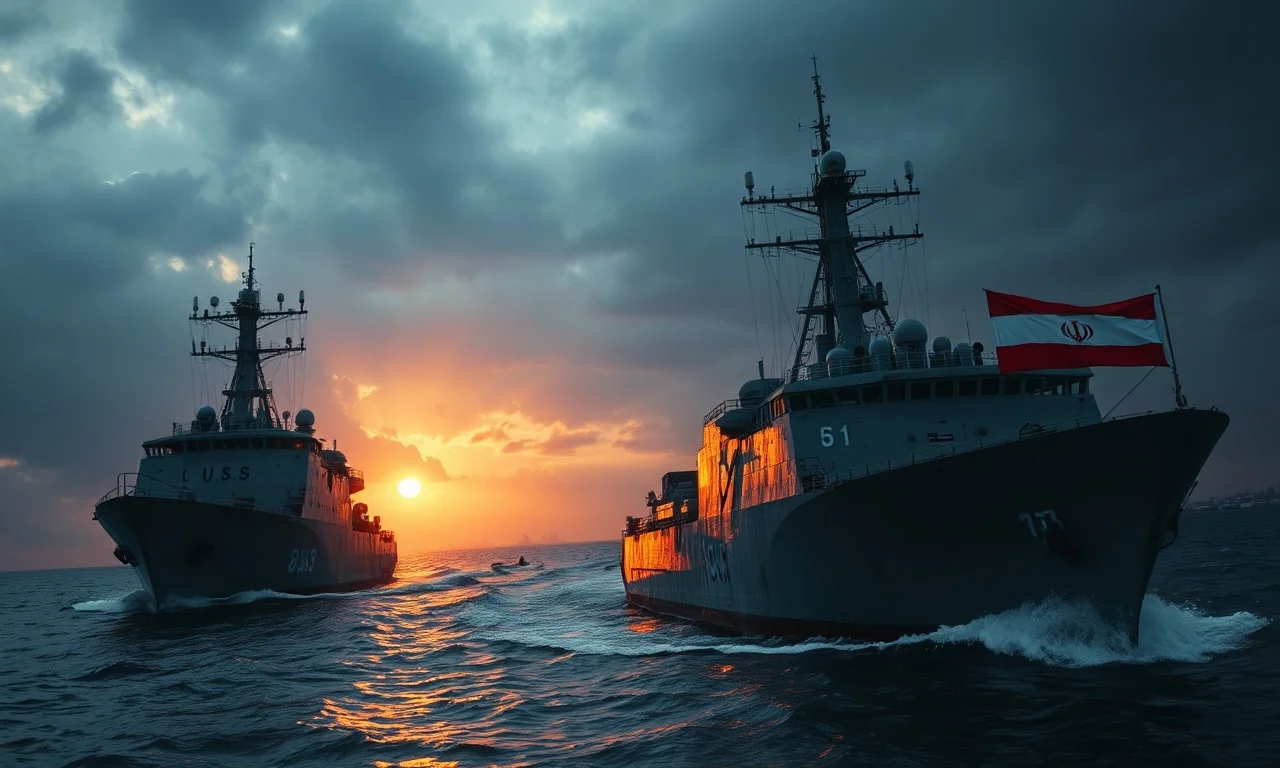
The global community watches with increasing concern as US-Iran tensions escalate in the Strait of Hormuz. This critical maritime chokepoint, vital for international oil trade, has once again become a flashpoint for geopolitical friction between the United States and Iran. Recent developments underscore a precarious situation where naval encounters, rhetorical sparring, and strategic maneuvers risk further destabilizing an already volatile region. Understanding the multifaceted nature of these tensions, their historical roots, and their potential global impact is crucial for anyone interested in current events and international relations.
- The Strait of Hormuz: A Global Chokepoint
- Recent Provocations and Military Build-up
- Understanding the Escalation of US-Iran Tensions in the Strait of Hormuz
- International Reactions and Regional Impact
- Expert Analysis on De-escalation Paths
- Conclusion: Navigating Continued US-Iran Tensions in the Strait of Hormuz
- Frequently Asked Questions
- Further Reading & Resources
The Strait of Hormuz: A Global Chokepoint
The Strait of Hormuz holds an unparalleled position in global energy security and international trade. This narrow waterway connects the Persian Gulf with the Arabian Sea and beyond, making it the sole maritime passage for a significant portion of the world's oil supply. Its strategic importance ensures that any disruption or heightened tension within its waters sends ripples across global markets and diplomatic circles.
Geographical Significance and Trade
Stretching approximately 39 kilometers (21 nautical miles) at its narrowest point, the Strait of Hormuz is flanked by Iran to the north and Oman and the United Arab Emirates to the south. Each day, an estimated one-fifth of the world's total petroleum liquids consumption, roughly 21 million barrels per day, transits through this strait. This includes crude oil, refined petroleum products, and liquefied natural gas (LNG) from major producers like Saudi Arabia, Iran, Iraq, Kuwait, Qatar, and the UAE. The continuous flow of these resources is indispensable for the economies of East Asia, Europe, and North America, highlighting why stability in the Strait is paramount for global economic well-being. The geographical reality means that any attempt to impede this flow would have immediate and severe repercussions for international energy prices and supply chains.
Historical Flashpoints
The Strait of Hormuz has a long history of geopolitical significance, marked by numerous incidents and confrontations. During the Iran-Iraq War in the 1980s, the "Tanker War" saw both sides attacking commercial shipping, prompting the deployment of international naval forces to protect neutral vessels. More recently, since the early 2000s, interactions between Iranian Revolutionary Guard Corps (IRGC) naval forces and Western navies, particularly the U.S. Navy, have frequently been described as "unsafe and unprofessional." These past events serve as a stark reminder of the strait's vulnerability and its capacity to quickly become a stage for international conflict. The strategic importance of the waterway ensures that both the US and Iran view control and influence over it as critical to their national security and economic interests.
Recent Provocations and Military Build-up
In recent times, the region has witnessed a concerning uptick in activities that have contributed to the escalating tensions. These include specific naval maneuvers, drone incidents, and the seizure of commercial vessels, all set against a backdrop of strong diplomatic rhetoric from both sides. Such events often spark international condemnation and calls for de-escalation from global powers.
Naval Deployments and Exercises
Both the United States and Iran regularly conduct naval exercises in the Persian Gulf and the Strait of Hormuz, often leading to close encounters. The U.S. Fifth Fleet, headquartered in Bahrain, maintains a significant naval presence in the region, conducting freedom of navigation operations and participating in multilateral exercises with allies. Iran, in turn, frequently conducts large-scale drills involving its conventional navy and the IRGC, often simulating responses to perceived threats and showcasing its missile capabilities. These exercises, while ostensibly for defensive purposes, can be interpreted by the opposing side as provocative, increasing the risk of miscalculation or accidental confrontation. The sheer volume of naval assets operating in such a confined space inherently elevates the potential for friction.
Drone Incidents and Ship Seizures
The use of drones and the targeting of commercial shipping have emerged as significant elements in the escalating tensions. There have been multiple reported incidents of drones, suspected to be Iranian, harassing or attempting to surveil U.S. naval assets. Furthermore, Iran has, on several occasions, seized commercial oil tankers in the Strait of Hormuz or nearby waters, often citing violations of maritime law or in retaliation for the seizure of Iranian oil by other nations. These seizures typically involve Iranian naval forces boarding vessels, diverting them to Iranian ports, and detaining their crews. Such actions disrupt global shipping, raise insurance premiums, and are widely condemned by international maritime organizations and governments as violations of international law and freedom of navigation.
Diplomatic Rhetoric and Warnings
The military actions are often accompanied by strong and often inflammatory rhetoric from both Washington and Tehran. U.S. officials frequently issue warnings about Iran's "destabilizing activities" in the region and reaffirm their commitment to ensuring freedom of navigation. Iranian leaders, conversely, often denounce the U.S. military presence as a violation of their sovereignty and a source of regional instability, threatening to close the Strait of Hormuz if their interests are threatened. This cycle of warnings and accusations further exacerbates the situation, making diplomatic breakthroughs more challenging and contributing to a climate of distrust and apprehension. The public declarations serve to reinforce national stances and signal intent, but also leave little room for nuanced de-escalation.
Understanding the Escalation of US-Iran Tensions in the Strait of Hormuz
The current escalation is not an isolated phenomenon but rather the latest chapter in a long and complex relationship marked by deep-seated mistrust and conflicting strategic interests. Unpacking these underlying factors is essential to grasping the dynamics at play in the Strait of Hormuz and the broader Persian Gulf region.
US Strategic Interests
The United States has long maintained a robust military presence in the Persian Gulf, primarily to ensure the free flow of oil, protect its allies, and counter perceived threats to regional stability. For Washington, the Strait of Hormuz is not just an energy corridor but a crucial artery for global commerce and security. Disruptions here could cripple world economies and undermine alliances. The U.S. also seeks to prevent Iran from developing nuclear weapons and to curb its regional influence, which it views as destabilizing. This involves supporting regional partners like Saudi Arabia and the UAE, who share concerns about Iranian ambitions, and maintaining strong deterrence capabilities against any potential aggression.
Iran's Regional Ambitions and Security Concerns
From Tehran's perspective, its actions in the Strait of Hormuz are often framed as defensive measures and demonstrations of its sovereignty and regional power. Iran views the presence of foreign military forces in its backyard, particularly the U.S. Navy, as a direct threat to its national security. The country also harbors regional ambitions, seeking to establish itself as a dominant power in the Middle East, often through proxies in countries like Iraq, Syria, Lebanon, and Yemen. Furthermore, the Strait offers Iran a crucial lever in its foreign policy. The threat of disrupting oil shipments through the strait is a potent tool to deter aggression, protest sanctions, or gain leverage in international negotiations. For Iran, maintaining a strong presence and control in these waters is a matter of national pride and strategic necessity.
The Role of International Sanctions
The imposition of international sanctions, particularly by the United States, plays a significant role in fueling tensions. These sanctions, often targeting Iran's oil exports and financial sector, are designed to pressure Tehran into altering its nuclear program and regional behavior. However, from Iran's viewpoint, these sanctions are an act of economic warfare that cripples its economy and punishes its populace. Iran often responds to these pressures by demonstrating its ability to disrupt global trade, particularly oil shipments, as a means of signaling its leverage and pushing back against perceived unfairness. The tit-for-tat nature of sanctions and responses creates a cycle of escalation, with the Strait of Hormuz often bearing the brunt of these retaliatory actions. The economic impact of sanctions can further incentivize Iran to take more assertive actions in the Strait.
International Reactions and Regional Impact
The escalating tensions in the Strait of Hormuz inevitably elicit strong reactions from the international community and have profound implications for regional stability and global markets. The interconnectedness of global trade and diplomacy means that few nations can remain unaffected by events in this critical waterway.
Global Powers' Concerns
Major global powers, including European nations, China, and India, all have vested interests in the free and safe passage of goods through the Strait of Hormuz. These countries are heavily reliant on oil supplies from the Persian Gulf, and any disruption could severely impact their economies. Consequently, they often call for de-escalation, diplomatic solutions, and respect for international maritime law. They typically advocate for dialogue between Washington and Tehran and express concerns that a localized incident could quickly spiral into a broader regional conflict with devastating global consequences. The potential for higher energy prices and supply chain disruptions creates a strong incentive for international mediation.
Impact on Oil Prices and Supply Chains
Even the perception of increased risk in the Strait of Hormuz can send shockwaves through global oil markets. News of naval incidents, drone attacks, or tanker seizures often leads to immediate spikes in crude oil prices, as traders factor in the increased potential for supply disruptions. Prolonged instability could lead to sustained higher prices, impacting consumers and industries worldwide. Beyond oil, the strait is a transit route for other commodities, and increased shipping costs due to higher insurance premiums or rerouting can affect global supply chains. The uncertainty created by the tensions makes long-term planning difficult for energy companies and manufacturers reliant on the region's resources.
Regional Allies and Adversaries
The escalating tensions also deeply affect the complex web of alliances and rivalries within the Middle East. U.S. allies in the Gulf, such as Saudi Arabia and the UAE, often feel directly threatened by Iran's actions and rely on the U.S. presence for their security. They frequently express solidarity with U.S. efforts to counter Iranian influence and maintain freedom of navigation. Conversely, Iran's regional adversaries, including Israel, closely monitor developments, fearing that increased instability could empower Iranian-backed groups or lead to direct confrontation. The dynamic between these regional actors further complicates any de-escalation efforts, as their own security concerns and strategic objectives are intricately linked to the US-Iran rivalry.
Expert Analysis on De-escalation Paths
Navigating the treacherous waters of US-Iran relations in the Strait of Hormuz requires a nuanced understanding of potential pathways to de-escalation, alongside an awareness of the significant challenges that impede diplomatic progress. Experts frequently weigh in on the delicate balance required to prevent conflict.
Diplomatic Overtures and Stalemate
Analysts often point to the need for sustained diplomatic engagement to ease tensions, yet direct official dialogue between the U.S. and Iran remains rare and often fraught with difficulty. Attempts at indirect talks, mediated by third parties, have had limited success, often collapsing over fundamental disagreements, such as Iran's nuclear program or its regional activities. The lack of trust on both sides, combined with hardline elements within their respective political systems, makes significant diplomatic breakthroughs challenging. However, many experts agree that some form of communication channel is vital to prevent misunderstandings from escalating into open conflict, especially in a high-stakes environment like the Strait of Hormuz.
Risks of Miscalculation
One of the most significant dangers in the Strait of Hormuz is the risk of miscalculation. The close proximity of naval vessels, coupled with differing rules of engagement and frequent "unsafe" interactions, creates a fertile ground for accidents or unintended confrontations. A minor incident, such as a navigational error or an aggressive maneuver, could quickly escalate into a larger conflict if not managed carefully. Both sides understand this risk, but the nature of their geopolitical standoff makes it difficult to dial down the aggressive posturing. Experts consistently warn that even without a deliberate intention to wage war, the operational environment in the Strait carries an inherent risk of accidental escalation that could have catastrophic consequences for the region and the global economy.
Conclusion: Navigating Continued US-Iran Tensions in the Strait of Hormuz
The persistent US-Iran tensions escalate in the Strait of Hormuz, representing a complex and dangerous geopolitical challenge that demands careful attention from the international community. The Strait's pivotal role in global energy markets ensures that any escalation of friction between Washington and Tehran reverberates far beyond the immediate region, affecting oil prices, trade routes, and international stability. While both nations assert their rights and interests in the critical waterway, the continuous cycle of naval provocations, rhetorical exchanges, and economic pressures only serves to heighten the risk of miscalculation. De-escalation remains a paramount concern, requiring a delicate balance of deterrence, diplomacy, and an acute awareness of the potential for unintended conflict. The future stability of this vital chokepoint hinges on the ability of all parties to navigate these treacherous waters with prudence and a commitment to peaceful resolution.
Frequently Asked Questions
Q: Why is the Strait of Hormuz so important?
A: It's a critical chokepoint connecting the Persian Gulf to the open ocean, through which roughly one-fifth of the world's daily petroleum consumption transits. Its disruption impacts global energy markets and supply chains significantly.
Q: What are the main reasons for US-Iran tensions in the Strait?
A: Tensions stem from conflicting strategic interests, Iran's regional ambitions, the U.S. military presence, and international sanctions against Iran. Both sides view the strait as vital to their security and leverage.
Q: What are the potential global impacts of escalation?
A: Escalation could lead to severe spikes in global oil prices, disrupt international trade, increase shipping costs, and risk a broader regional conflict affecting alliances and stability worldwide.