Brazil Protests: A Nation's Ongoing Struggle for Change
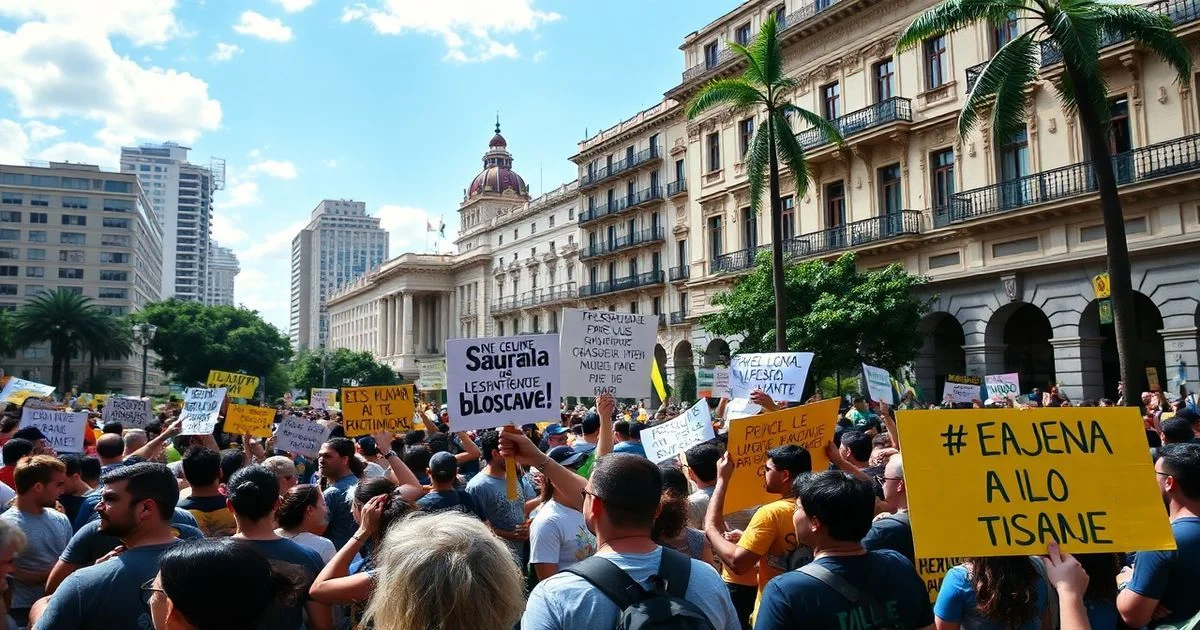
Brazil, a vibrant South American nation, has a rich and complex history punctuated by periods of intense public demonstrations and widespread social activism. The Brazil protests represent a powerful testament to its citizens' persistent demand for change, justice, and improved governance, reflecting a continuous struggle against deeply entrenched issues. From historical grievances to contemporary political upheavals and varied social movements, the nation's streets have frequently become stages for expression, reflecting the varied frustrations and aspirations of its diverse populace. These demonstrations have shaped Brazil's political landscape, influencing policies, challenging leaders, and solidifying the public's role in democratic processes.
- A Deep Rooted History of Brazilian Protests
- The June Journeys of 2013: A Turning Point in Brazil Protests
- Protests During the COVID-19 Pandemic (2020-2021)
- Post-Election Unrest and the January 8th Attacks (2022-2023)
- Ongoing Political and Social Movements in 2025-2026
- Impact and Future Outlook
- Frequently Asked Questions
- Further Reading & Resources
A Deep Rooted History of Brazilian Protests
The act of public protest is not new to Brazil; its history is replete with popular revolts and social movements that have challenged authorities and pushed for fundamental shifts. Even in the 19th century, during the Empire of Brazil, citizens frequently rose up to champion their rights, often upholding liberal ideas and sometimes even calling for the return of former emperors. These early movements involved impoverished free and freed people who mobilized based on their values and new concepts of rights that emerged in the 1820s. Student movements have also historically played a significant role, with organizations like the União Nacional de Estudantes (UNE) formed in 1937, advocating for student interests and later aligning with socialists to protest issues like the nationalization of the oil industry in the late 1940s, popularizing the slogan "O petróleo é nosso" (The petroleum is ours).
The period leading up to and during the military dictatorship (1964-1985) also saw significant protests, often met with harsh repression. Student rallies sometimes resulted in tragic outcomes, yet the outpouring of support for these students strengthened the resolve of those who believed in the necessity of demonstrations. Discontent grew within the working class due to uneven distribution of economic benefits despite an initial "Brazilian Economic Miracle". Protests against the military regime intensified as the economic boom soured, removing the justification some elites had for supporting the use of violence against dissenters. This long history underscores a national tradition of public engagement when facing perceived injustices or unmet societal needs. For a deeper dive into Brazil's historical political landscape, explore Brazil's rich political history.
The June Journeys of 2013: A Turning Point in Brazil Protests
One of the most significant modern waves of Brazil protests occurred in June 2013, famously known as the "June Journeys." These demonstrations initially erupted in response to an increase in public transportation fares in São Paulo and other cities. While the fare hike was the immediate trigger, the protests quickly evolved to encompass a much broader array of grievances that had been simmering beneath the surface of a seemingly prosperous decade.
Brazilians took to the streets to condemn political corruption, inadequate public services, and the substantial funds being spent on hosting major international sporting events like the 2014 FIFA World Cup and the 2016 Olympic Games, while essential services like healthcare and education lagged. The burgeoning middle class, which had experienced increased consumer goods access but also faced economic stagnation and rising inflation in the preceding years, felt particularly frustrated. Polls among demonstrators revealed that while bus fare increases were a primary concern for 56% of participants, corruption (40%), dissatisfaction with "politicians" (35%), and police violence (31%) were also major motivators. These protests drew over a million people into the streets across more than 100 cities, demonstrating an unprecedented level of public mobilization and marking a significant turning point in Brazil's contemporary political landscape.
The government, then led by President Dilma Rousseff, responded by rolling back bus fare increases in several cities, including São Paulo and Rio. However, the underlying issues persisted. The 2013 protests are retrospectively seen as having initiated a chain of events that contributed to Brazil's worst recession in recorded history and ultimately led to President Rousseff's impeachment in late 2016, leading to a general disgrace of the political class that had governed Brazil since its return to democracy in 1989.
Protests During the COVID-19 Pandemic (2020-2021)
The COVID-19 pandemic, which began in early 2020, struck Brazil amidst intense political polarization and a pre-existing cycle of protests. The country faced a severe health crisis, reaching over 600,000 deaths by October 2021, second only to the United States. Despite these alarming figures, the administration of then-President Jair Bolsonaro was criticized for denying the seriousness of the disease and opposing preventive measures such as social isolation, mask-wearing, and vaccination.
This denial and perceived mishandling of the pandemic became a significant catalyst for renewed public outrage. Protests during this period, particularly in 2021, saw citizens demanding a faster vaccination program and government policies to mitigate the severe economic effects of the pandemic, such as providing emergency aid. The core agenda of protests from before the pandemic—which largely centered on opposition to Bolsonaro and in favor of democracy—persisted and was compounded by these new health-related demands.
These demonstrations were diverse, including motorcades, picketing, and general demonstrations across many Brazilian cities and even internationally. While anti-government protests called for Bolsonaro's impeachment, investigations into government corruption, economic stabilization, and more funding for education and healthcare, there were also pro-government counter-protests supporting Bolsonaro. Issues like the Black Lives Matter movement also gained traction, with smaller demonstrations under the motto "Vidas Negras Importam" (Black Lives Matter), condemning police brutality against young Black individuals. The pandemic, rather than halting the cycle of protests, integrated new concerns into the ongoing ideological clashes within Brazilian society.
Post-Election Unrest and the January 8th Attacks (2022-2023)
The highly contested 2022 Brazilian general election, which saw Luiz Inácio Lula da Silva defeat incumbent Jair Bolsonaro, ignited a new wave of intense unrest. Following Bolsonaro's narrow loss on October 30, 2022, his supporters, fueled by false claims of widespread electoral fraud and distrust in the electoral process, initiated mass protests and roadblocks across the country. Truckers, a key demographic for Bolsonaro, blocked highways in numerous locations, demanding military intervention to keep Bolsonaro in power and overturn the election results.
These protests culminated in a violent assault on Brazil's democratic institutions on January 8, 2023, just a week after Lula's inauguration. Thousands of pro-Bolsonaro demonstrators stormed and vandalized the National Congress, the Supreme Federal Court, and the Planalto Presidential Palace in Brasília's Praça dos Três Poderes (Three Powers Square). The rioters sought to violently overthrow the democratically elected government, with many explicitly calling for a "military intervention" – a euphemism for a coup d'état – based on a misinterpretation of the Brazilian constitution.
The attacks were widely condemned as acts of terrorism and an attempted coup both domestically and internationally. Brazilian authorities responded swiftly, deploying federal forces, clearing the occupied buildings within hours, and making mass arrests. Over 1,200 people were initially detained. Investigations were launched into those who financed the protests and whether security forces were negligent or complicit. This event highlighted the extreme political polarization in Brazil and the enduring fragility of democratic institutions when challenged by extremist elements. Learn more about strengthening democratic institutions globally.
Ongoing Political and Social Movements in 2025-2026
As of early 2026, Brazil protests continue to reflect the nation's dynamic political and social landscape, with several significant developments since the January 8th attacks.
Legal Repercussions and Amnesty Debates for Bolsonaro
A major focus of public attention throughout 2025 was the legal fate of former President Jair Bolsonaro. In September 2025, the Brazilian Supreme Court convicted Bolsonaro and several other former officials for plotting a coup, sentencing him to over 27 years in prison for attempting to remain in office after losing the 2022 election. This landmark ruling was the first time in Brazil's history that leaders of a coup attempt were tried and convicted. Seven co-defendants, including military personnel, also received prison sentences.
This conviction triggered massive nationwide demonstrations on September 21, 2025, with tens of thousands of Brazilians taking to the streets to oppose any attempts to grant amnesty to Bolsonaro and his co-conspirators. These "No Amnesty" protests, spearheaded by legendary musicians who were also prominent figures in the fight against the 1964-85 military dictatorship, rejected efforts by right-wing factions in Congress to pass legislation that would make it harder to prosecute lawmakers or grant a "National Pacification Package" that included amnesty for those involved in the January 8th riots. The public sentiment clearly demonstrated a strong commitment to upholding democracy and ensuring accountability for attempts to subvert it.
Economic Policies and Worker Strikes under Lula's Government
Despite the return of President Luiz Inácio Lula da Silva to power in 2023, his administration has also faced public opposition, particularly concerning economic policies. Since the beginning of 2026, a series of protests and strikes have erupted across Brazil against the austerity and privatization policies pursued by Lula's Workers' Party (PT) administration. These movements have revealed the "pro-corporate character" of Lula's third term, with a significant number of federal auctions for infrastructure concentrating between 2023 and 2025.
The latest strikes in April 2026 involved technical and administrative staff and hospital workers at federal universities, demanding that agreements signed with the Lula administration at the end of a sector-wide national strike in 2024 be honored. Teachers at federal universities also planned a one-day strike in mid-April 2026 to press for similar demands. These ongoing labor actions underscore the continued struggles over economic inequality and the role of the state in providing public services, echoing some of the underlying economic grievances seen in past protest waves.
Indigenous Rights and Environmental Concerns
Indigenous communities in Brazil have consistently advocated for their land rights and the protection of the Amazon rainforest. In April 2026, thousands of Indigenous people marched in Brasília to protest what they described as violations of their land rights by large corporations pushing farming, logging, and mining projects. These protests highlight the ongoing conflict between economic development interests and the environmental and human rights of Indigenous populations.
Additionally, Brazil is set to host COP30 in Belém in November 2025, a major international climate change conference. While this presents an opportunity for Brazil to assert its environmental leadership, social movements have expressed concerns about the government's commitment to ambitious climate goals, particularly given its pursuit of increased oil production. The People's Summit Against the G20, held in Rio de Janeiro in November 2024, also saw social movements critiquing government initiatives and planning for future protests related to international summits.
The Role of Technology and Disinformation in Elections
Looking ahead to Brazil's 2026 elections, there are significant concerns about the potential impact of AI-driven disinformation in an already highly polarized democracy. The country's electoral cycle will be a crucial test for its regulatory frameworks regarding new technologies. This concern follows the widespread use of false claims of electoral fraud that fueled the post-2022 election protests and the January 8th attacks. The role of social media and online rhetoric in mobilizing and influencing public sentiment remains a critical challenge for democratic processes in Brazil. Discover more about the global fight against election disinformation.
Impact and Future Outlook
The persistent and multifaceted nature of Brazil protests reflects a deeply engaged civil society continually pushing for accountability, social justice, and democratic integrity. These movements have profoundly impacted Brazil's political trajectory, leading to policy reversals, presidential impeachments, and a heightened awareness of issues like corruption and inequality. The ability of the Supreme Court to convict a former president for an attempted coup demonstrates a strengthening of democratic institutions, though challenges remain from polarized political factions.
Looking forward, the upcoming 2026 general elections will be a highly competitive and decisive period for Brazil's political outlook. The country must navigate complex issues, including economic stability, environmental protection, social inequality, and the burgeoning threat of disinformation. The ongoing engagement of social movements, labor unions, and Indigenous groups will undoubtedly continue to shape the national discourse and exert pressure for meaningful change. The collective voice of the people, expressed through both peaceful demonstrations and critical civic engagement, remains a powerful force in determining Brazil's path forward.
Frequently Asked Questions
Q: What triggered the major Brazil protests in 2013?
A: The 2013 "June Journeys" protests were initially sparked by public transportation fare hikes. However, they quickly expanded to voice widespread grievances over political corruption, inadequate public services, and excessive spending on major sporting events like the World Cup and Olympics, reflecting deeper societal frustrations.
Q: What was the significance of the January 8th, 2023 attacks in Brazil?
A: The January 8th, 2023 attacks involved supporters of former President Bolsonaro storming democratic institutions in Brasília. This event was a violent attempt to overthrow the democratically elected government, widely condemned as an act of terrorism and attempted coup, highlighting extreme political polarization.
Q: What are some key issues driving recent protests in Brazil (2025-2026)?
A: Recent protests in 2025-2026 focus on amnesty debates for Jan 8th attackers, worker strikes against Lula's austerity, and Indigenous land rights in the Amazon. AI disinformation in upcoming elections is also a key concern.