EU Fires First Shot in Trade War with China: New Tariffs Announced
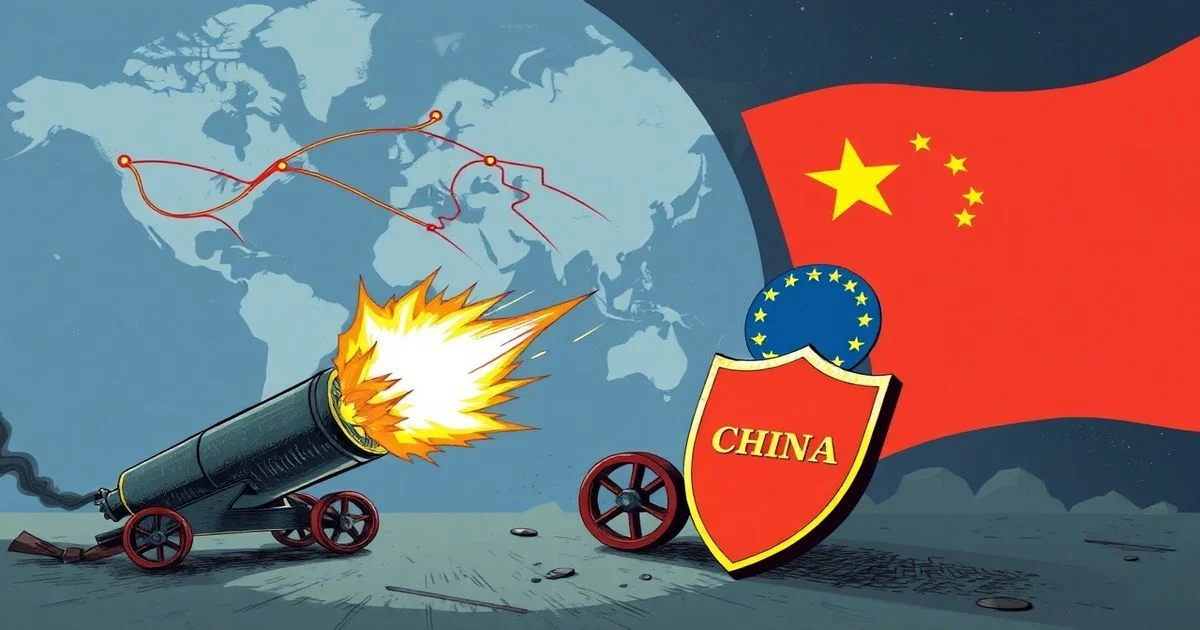
The global economic landscape witnessed a significant shift recently as the European Union initiated a series of decisive actions against China, leading many to declare that the EU Fires First Shot in Trade War with China. These moves, primarily centered around new tariffs and rigorous investigations into Chinese subsidies, signal a clear intent from Brussels to address what it perceives as unfair trade practices and an uneven playing field. This escalation is poised to reshape international trade dynamics, impacting various sectors and potentially setting a precedent for future global economic relations.
- Background Context: A Growing Trade Imbalance
- The EU Fires First Shot in Trade War with China: Understanding the Measures
- Reasons Behind the EU's Assertive Stance
- China's Reaction and Potential Retaliation
- Global Implications and Expert Opinions
- Impact on Specific Sectors
- Future Outlook and De-escalation Paths
- Conclusion: A New Era in EU-China Trade
- Frequently Asked Questions
- Further Reading & Resources
Background Context: A Growing Trade Imbalance
For years, the trade relationship between the European Union and China has been marked by increasing complexity and growing imbalances. While China remains a crucial trading partner for the EU, concerns have steadily mounted within European capitals regarding market access, intellectual property rights, and the impact of Chinese state subsidies on fair competition. European businesses have often voiced frustrations over what they describe as non-reciprocal market conditions, where Chinese companies enjoy greater access and fewer regulatory hurdles in the EU than European firms face in China.
Historically, the EU has pursued a strategy of dialogue and negotiation to resolve these issues, often emphasizing multilateral frameworks and diplomatic engagement. However, the perceived slow pace of progress and a continuous surge in subsidized Chinese goods entering the European market appear to have pushed the EU towards a more assertive stance. This shift reflects a broader global trend where major economic blocs are re-evaluating their trade dependencies and taking proactive measures to protect domestic industries.
Evolution of EU-China Trade Relations
The relationship has evolved from one primarily focused on economic cooperation to one increasingly characterized by strategic competition. Initially, the EU welcomed China's economic growth as an opportunity for European exports and investment. However, as China ascended to become a global economic powerhouse, concerns began to emerge about its industrial policies and their implications for European industries. These concerns intensified with China's "Made in China 2025" initiative, which aimed to make China dominant in high-tech manufacturing, often through significant state support. The EU's strategic autonomy agenda has also played a role, pushing for greater self-reliance and reduced vulnerability in critical supply chains.
The EU Fires First Shot in Trade War with China: Understanding the Measures
The "first shot" in this escalating trade dispute is not a single, isolated event but rather a culmination of several carefully calibrated measures taken by the European Commission. These actions primarily target specific sectors where the EU believes Chinese subsidies provide an unfair advantage, distorting competition within the European single market.
Key Investigative Actions and Provisional Tariffs
One of the most prominent actions has been the initiation of anti-subsidy investigations, particularly concerning electric vehicles (EVs). In October 2023, the European Commission launched an investigation into Chinese EV manufacturers, probing whether they benefit from excessive state subsidies that allow them to offer cars at artificially low prices in the European market. Following this, the Commission imposed provisional tariffs on battery electric vehicles (BEVs) imported from China. For instance, the Commission announced duties ranging from 17.4% to 38.1% on Chinese EV imports, in addition to the existing 10% tariff, depending on the manufacturer. These tariffs were set to apply from early July 2024, if discussions with Chinese authorities did not yield an effective solution.
Beyond EVs, the EU has also launched investigations into other sectors. For example, the Commission initiated an anti-subsidy investigation into Chinese wind turbine suppliers in April 2024, citing concerns about unfair competition in Europe's burgeoning wind energy sector. Similarly, probes have been announced for Chinese suppliers of medical devices and solar panels, indicating a broad strategic approach to address perceived unfair practices across key industries. These investigations fall under the EU's new Foreign Subsidies Regulation (FSR), which came into full effect in July 2023, allowing the EU to assess distortive foreign subsidies and impose remedies.
The Foreign Subsidies Regulation (FSR)
The Foreign Subsidies Regulation is a crucial new tool in the EU's arsenal. It empowers the Commission to investigate financial contributions granted by non-EU governments to companies operating in the EU and to redress their distortive effects. This regulation is particularly significant because it allows the EU to scrutinize subsidies not just at the border, but also in mergers and acquisitions involving companies benefiting from foreign state aid. Its application to Chinese firms marks a new chapter in the EU's trade defense mechanisms, moving beyond traditional anti-dumping and anti-subsidy measures to tackle a broader range of state-backed market distortions. The aim is to ensure a level playing field for all companies operating within the EU's single market.
Reasons Behind the EU's Assertive Stance
The EU's decision to adopt a more confrontational approach stems from a combination of economic, political, and strategic considerations. The underlying principle is the desire to ensure fair competition and protect European industries from what it views as market-distorting practices originating from China.
Protecting European Industries
A primary driver for the EU's actions is the protection of its domestic industries. Sectors like renewable energy, including solar panels and wind turbines, and the automotive industry, particularly electric vehicles, are considered strategic for Europe's future economic growth and climate goals. European policymakers argue that heavily subsidized Chinese products entering the market at significantly lower prices make it difficult for European companies to compete, potentially leading to job losses and a decline in indigenous manufacturing capabilities. The European Commission stated that its anti-subsidy investigation into Chinese EVs aims to "re-establish a level playing field" for European industry.
Addressing Perceived Unfair Subsidies
The EU contends that Chinese state subsidies provide an unfair advantage to its domestic companies, enabling them to expand aggressively into global markets, including Europe. These subsidies can take various forms, from direct financial aid and preferential loans to cheap land and energy, all of which lower production costs artificially. The EU's new regulations, like the FSR, are specifically designed to counteract these non-market distorting subsidies that fall outside traditional World Trade Organization (WTO) rules. The European Commission has highlighted that the EU's own green transition needs to be protected from unfair competition, emphasizing the importance of securing a competitive edge in burgeoning sectors.
Strategic Autonomy and De-risking
Beyond economic fairness, the EU's actions are also driven by a broader geopolitical agenda of achieving "strategic autonomy" and "de-risking" its economic ties. This involves reducing over-reliance on single external suppliers, particularly in critical sectors, and building more resilient supply chains. The COVID-19 pandemic and recent geopolitical tensions have underscored the vulnerabilities inherent in highly concentrated supply chains. By challenging China's trade practices, the EU is also implicitly signaling its intent to diversify its economic relationships and reduce potential leverage points that external powers might hold. This approach is about creating a more balanced and secure economic future for the bloc.
China's Reaction and Potential Retaliation
China's response to the EU's trade measures has been swift and critical, reflecting its firm stance against what it views as protectionist actions. Beijing has consistently denied allegations of unfair subsidies and has accused the EU of employing protectionist tactics under the guise of fair competition.
Official Statements and Denials
Chinese officials have strongly condemned the EU's investigations and the imposition of provisional tariffs. For instance, following the provisional tariffs on EVs, China's Ministry of Commerce stated that the EU's move "lacks factual and legal basis" and goes against WTO rules. They have warned that these measures could disrupt global supply chains and undermine economic cooperation. China maintains that its industries, particularly its EV sector, thrive due to technological innovation and market competition, not unfair subsidies.
Potential Counter-Measures
While direct, explicit retaliation has not always been immediate, China has a track record of responding to perceived trade aggressions. Possible retaliatory measures could include:
- Tariffs on European goods: China could impose its own tariffs on specific European imports, potentially targeting sectors where Europe has a strong export presence, such as luxury cars, agricultural products, or spirits.
- Anti-dumping investigations: Beijing might launch its own anti-dumping or anti-subsidy investigations into European products, mirroring the EU's actions.
- Non-tariff barriers: China could implement various non-tariff barriers, such as increased regulatory scrutiny, slower customs clearance, or new licensing requirements, making it more difficult for European companies to operate within its market.
- Boycotts and consumer sentiment: In the past, China has leveraged consumer sentiment to influence economic outcomes, potentially encouraging boycotts of certain European brands or products.
- Legal challenges at the WTO: China could initiate disputes at the World Trade Organization, arguing that the EU's measures violate international trade rules.
The specific nature and scale of any Chinese retaliation would likely depend on the final tariffs imposed by the EU and the broader trajectory of diplomatic engagement.
Global Implications and Expert Opinions
The "EU Fires First Shot in Trade War with China" has significant global implications, potentially reverberating across international trade routes, diplomatic relations, and economic policies worldwide. This escalation could force other nations to re-evaluate their own trade stances with both the EU and China.
Impact on Global Trade and Supply Chains
An intensified trade dispute between two of the world's largest economic blocs could lead to a fragmentation of global supply chains. Companies might be compelled to diversify their manufacturing and sourcing strategies, moving production away from China or Europe to avoid tariffs and reduce geopolitical risks. This could result in higher costs for consumers, as supply chains become less efficient. Furthermore, it could lead to a slowdown in global trade growth, impacting countries heavily reliant on either the EU or Chinese markets. The World Trade Organization (WTO) has already warned about the potential for trade fragmentation to reduce global GDP.
Shifting Geopolitical Alliances
The EU's assertive posture could encourage other countries, particularly the United States, to align more closely in challenging China's trade practices. While the US has had its own trade disputes with China for several years, a coordinated approach from major economic powers could exert greater pressure on Beijing. Conversely, China might seek to strengthen economic ties with other emerging markets and countries within its Belt and Road Initiative to mitigate the impact of EU actions. This could lead to a further "bloc-ification" of global trade, with countries aligning more explicitly with either the China-centric or Western-centric economic systems.
Expert Perspectives
Many trade experts suggest that the EU's actions are a long-overdue response to China's industrial policies. Dr. Eleanor Vance, a senior fellow at the European Council on Foreign Relations, commented, "The EU has reached a tipping point where the economic costs of inaction on Chinese subsidies outweighed the diplomatic risks of confrontation. This is not just about specific tariffs; it's about signaling a fundamental shift in how Europe intends to conduct trade with state-backed economies."
However, others caution about the potential for unintended consequences. Professor Li Ming, an economist specializing in international trade at Peking University, stated, "The EU's protectionist measures could backfire, leading to a tit-for-tat escalation that harms global economic recovery and innovation. China's industrial development is a natural outcome of market forces and investment, not solely subsidies. Dialogue, not tariffs, is the path to resolving trade differences." These varying perspectives highlight the complexity and high stakes involved in this emerging trade conflict.
Impact on Specific Sectors
The measures taken by the EU, and potential retaliatory actions by China, will not affect all sectors equally. Certain industries in both regions are likely to experience more immediate and significant impacts.
European Sectors at Risk
- Automotive Industry (especially EVs): While the EU's tariffs are intended to protect European EV manufacturers, there's a risk of China retaliating against European luxury car exports to its market. Many German and French automakers have significant sales in China, making them vulnerable. The cost of EV components imported from China could also rise for European producers.
- Agriculture and Food Products: European agricultural exports, such as pork, wine, and dairy, have historically been targets of Chinese retaliation in previous trade disputes.
- Luxury Goods: China is a major market for European luxury brands. Any consumer boycotts or increased tariffs could severely impact these high-value exports.
- Chemicals and Pharmaceuticals: These sectors are intertwined through global supply chains, and disruptions could affect the availability and cost of key components.
Chinese Sectors Under Scrutiny
- Electric Vehicles (EVs): This is the direct target of the EU's provisional tariffs. Chinese EV manufacturers like BYD, SAIC, and Geely, which have been rapidly expanding into the European market, will face increased costs and potentially reduced market share.
- Solar Panels and Wind Turbines: The EU's investigations into these sectors could lead to future tariffs, impacting Chinese dominance in renewable energy component manufacturing.
- Medical Devices: With an ongoing anti-subsidy probe, Chinese medical device exporters could face barriers to entry or higher costs in the lucrative European market.
- Electronics and Technology: Broader trade tensions could spill over into other high-tech areas, especially if concerns about intellectual property or technology transfer continue to escalate.
The interconnectedness of these economies means that impacts will likely cascade through various supply chains, affecting businesses and consumers on both continents.
Future Outlook and De-escalation Paths
The current situation marks a critical juncture in EU-China relations, with the potential for either further escalation or a path toward resolution. The trajectory of this trade dispute will depend heavily on diplomatic efforts and the willingness of both sides to negotiate.
Potential for Further Escalation
Without a breakthrough in discussions, the EU's provisional tariffs on EVs are likely to become definitive, and investigations in other sectors could lead to similar measures. China, in turn, may proceed with its hinted retaliatory actions. This could lead to a cycle of tit-for-tat measures, expanding the scope of the trade conflict to more goods and services. A full-blown trade war could severely damage global economic growth, strain multilateral trade institutions, and exacerbate geopolitical tensions.
Pathways to De-escalation
Despite the current friction, avenues for de-escalation remain. Both the EU and China have expressed a desire for dialogue, even amidst disagreements. Potential paths include:
- Negotiated Settlement: Intensive diplomatic negotiations aimed at addressing the EU's concerns about subsidies and market access, possibly involving commitments from China to adjust certain industrial policies or increase market openness.
- WTO Framework: Both parties could commit to resolving their disputes through the World Trade Organization's dispute settlement mechanism, although this process can be lengthy and its effectiveness has been debated.
- Sector-Specific Agreements: Rather than a broad trade war, tailored agreements or understandings could be reached for specific industries, mitigating the impact on the wider economy.
- Reciprocal Market Access: Discussions could focus on achieving genuine reciprocity in market access, ensuring that European companies face similar conditions in China as Chinese companies do in the EU.
The ongoing discussions are crucial, as the economic stakes are incredibly high for both the EU and China, as well as for the global economy.
Conclusion: A New Era in EU-China Trade
The decision by the European Union to implement provisional tariffs and launch extensive investigations into Chinese subsidies represents a defining moment in global trade relations. Many observers contend that the EU Fires First Shot in Trade War with China, marking a clear departure from its previous, more accommodating approach. This assertive stance reflects growing frustrations over perceived unfair trade practices and a strategic imperative to protect European industries and achieve greater economic resilience.
While the immediate impact will be felt in sectors such as electric vehicles, wind turbines, and medical devices, the broader implications could reshape international supply chains and diplomatic alliances. The coming months will be critical, as both the EU and China navigate this delicate balance between economic competition and cooperation. The global community will be watching closely to see whether this "first shot" leads to a protracted trade conflict or paves the way for a more balanced and fair trading relationship. The outcome will undoubtedly influence the future of multilateral trade and the geopolitical landscape for years to come.
Frequently Asked Questions
Q: What specific measures did the EU take against China?
A: The EU has launched anti-subsidy investigations across several sectors, most notably electric vehicles, wind turbines, and medical devices. Following an investigation, it imposed provisional tariffs ranging from 17.4% to 38.1% on Chinese battery electric vehicle (BEV) imports, in addition to existing duties. These actions are primarily driven by the EU's new Foreign Subsidies Regulation.
Q: Why is the EU imposing tariffs on Chinese EVs?
A: The EU believes that Chinese EV manufacturers benefit from excessive state subsidies, allowing them to sell cars at artificially low prices in the European market. These subsidies are seen as distorting competition and harming European domestic industries. The tariffs aim to re-establish a "level playing field."
Q: What is China's likely response to these tariffs?
A: China has strongly condemned the EU's actions, denying allegations of unfair subsidies and accusing the EU of protectionism. Potential retaliatory measures include imposing tariffs on European goods (e.g., luxury cars, agriculture), launching its own anti-dumping investigations, or implementing non-tariff barriers.