China & Taiwan Tensions Rise: Warships Spotted Amid Geopolitical Strain
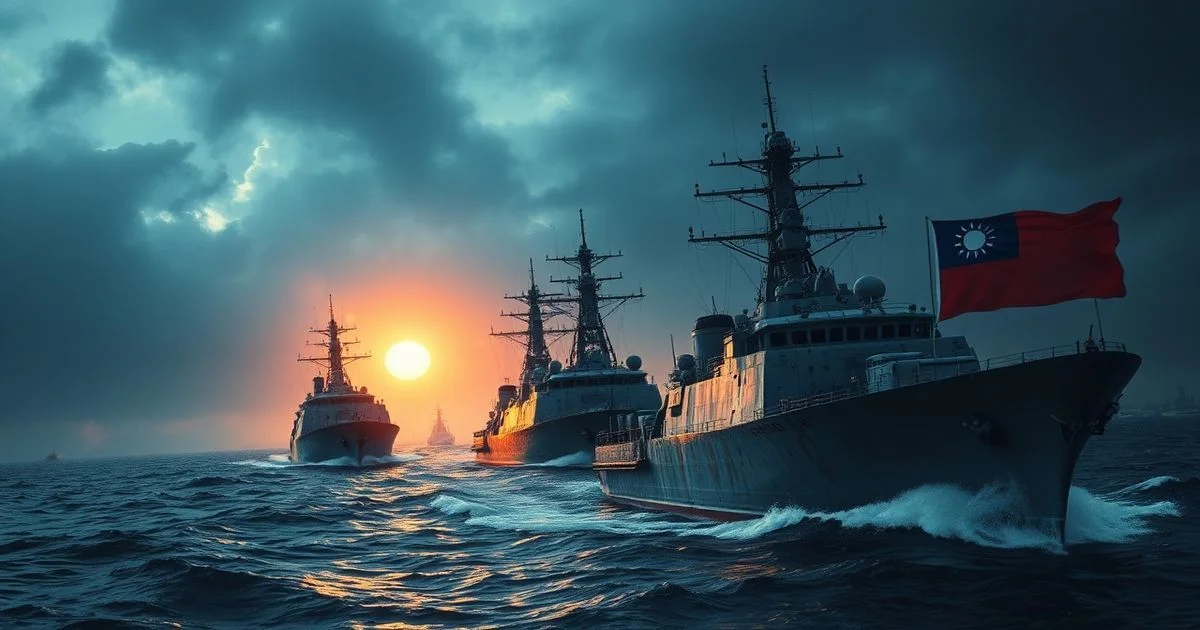
The delicate geopolitical balance in the Indo-Pacific has once again been underscored by recent developments, as China & Taiwan Tensions Rise: Warships Spotted in the strategic Taiwan Strait. This escalating situation involves increased naval posturing, which has captured the attention of international observers and analysts alike. The recent sightings of naval vessels from both the People's Republic of China (PRC) and Taiwan underscore the persistent and profound challenges to regional stability, with significant implications for global trade and security. These ongoing tensions raise serious questions about the future of cross-strait relations and the potential for miscalculation in one of the world's most volatile flashpoints.
- Historical Context of Cross-Strait Relations
- Recent Warship Sightings: A Detailed Account of China & Taiwan Tensions Rise
- Strategic Significance of the Taiwan Strait
- International Reactions and Concerns
- Expert Analysis on Escalation Risks
- Economic and Global Impact
- Conclusion
- Frequently Asked Questions
- Further Reading & Resources
Historical Context of Cross-Strait Relations
The intricate relationship between China and Taiwan is rooted in a complex history spanning decades, largely stemming from the Chinese Civil War. Following their defeat by Mao Zedong's Communist forces in 1949, Chiang Kai-shek's Nationalist government (Kuomintang) retreated to Taiwan, establishing the Republic of China (ROC). Beijing, however, views Taiwan as an inseparable part of its territory, a renegade province that must eventually be reunified with the mainland, by force if necessary. Taiwan, on the other hand, asserts its self-governance and democratic identity.
The "One China" Principle
Central to this dynamic is Beijing's "One China" principle, which posits that there is only one sovereign state under the name China, and that Taiwan is part of it. This principle forms the cornerstone of Beijing's foreign policy and its diplomatic relations globally. Many countries recognize the "One China" policy, often acknowledging, but not necessarily endorsing, Beijing's claim over Taiwan. The United States, while adhering to its own "One China" policy, also maintains robust unofficial relations with Taiwan and provides defensive capabilities under the Taiwan Relations Act. This nuanced diplomatic dance often creates a delicate tightrope walk for international actors.
Taiwan's Democratic Identity
In contrast to mainland China's authoritarian system, Taiwan has evolved into a vibrant democracy, holding free and fair elections and upholding civil liberties. This stark ideological difference further complicates the prospects of peaceful reunification. The Taiwanese populace, particularly younger generations, increasingly identifies as distinctly Taiwanese rather than Chinese, reinforcing a separate national identity. This democratic consolidation on the island is a significant factor in its resistance to Beijing's overtures and its desire for self-determination. The island's democratic achievements are often cited by its international supporters as a reason to uphold its autonomy.
Recent Warship Sightings: A Detailed Account of China & Taiwan Tensions Rise
In recent months, the already simmering tensions in the Taiwan Strait have been visibly exacerbated by an uptick in naval and aerial activities. There have been multiple reports of warships from the People's Liberation Army Navy (PLAN) operating in close proximity to Taiwan's contiguous zone, sometimes even breaching the unofficial median line of the Taiwan Strait. These actions are often perceived as a direct challenge to Taiwan's sovereignty and a clear message from Beijing regarding its territorial claims. The increased frequency and scale of these deployments mark a significant escalation in the ongoing geopolitical standoff.
PLA Navy Activity
Chinese state media has frequently highlighted the PLAN's growing capabilities and its routine "patrols" around Taiwan, framing them as exercises aimed at safeguarding national sovereignty. These maneuvers often involve a variety of vessels, including destroyers, frigates, and even aircraft carriers, demonstrating China's expanding blue-water navy capabilities. For instance, specific reports from late 2025 and early 2026 detailed multiple PLAN vessel groups being detected in the waters surrounding Taiwan, sometimes conducting what Beijing describes as "combat readiness patrols". Such deployments are not merely symbolic; they provide invaluable training for the PLAN in potential blockade or invasion scenarios, raising concerns about their true intent. The sophisticated nature of these naval operations indicates a deliberate strategy to project power and test Taiwan's defensive readiness.
Taiwanese Countermeasures
In response to these persistent incursions, Taiwan's Ministry of National Defense (MND) consistently tracks and monitors Chinese military movements, often scrambling its own naval and air assets to shadow and warn away PLAN vessels and aircraft. Taiwan's military, though significantly smaller than China's, is well-trained and equipped with advanced defense systems, many procured from the United States. These include a fleet of agile frigates, patrol boats, and anti-ship missile batteries strategically placed along its coastline. The routine release of information about Chinese incursions by the MND serves a dual purpose: to inform its own populace and allies, and to publicly condemn Beijing's aggressive posturing. This transparent approach aims to highlight the threat posed by China's military expansion and garner international support for Taiwan's defense.
Strategic Significance of the Taiwan Strait
The Taiwan Strait is not merely a body of water separating two political entities; it is one of the world's most vital geopolitical arteries. This narrow waterway, approximately 180 kilometers (110 miles) wide at its narrowest point, is a critical international shipping lane, facilitating a substantial portion of global maritime trade. Billions of dollars worth of goods, including crucial energy supplies and raw materials, pass through the strait annually, making its stability paramount for the global economy. Any significant disruption in this strait, whether due to military conflict or a blockade, would have catastrophic ripple effects on international supply chains and financial markets worldwide.
Beyond its economic importance, the Taiwan Strait holds immense military and strategic value. For China, control over the strait is seen as essential for projecting power into the broader Pacific and challenging American naval dominance in the region. For Taiwan, it is its primary defensive barrier. For the United States and its allies, ensuring freedom of navigation and maintaining peace in the strait is a core component of their Indo-Pacific strategy. The strait thus becomes a focal point for competition, surveillance, and military maneuvering, with each side keenly aware of the other's movements and intentions.
International Reactions and Concerns
The increasing military activity in the Taiwan Strait has drawn widespread international concern, with numerous countries and multilateral organizations urging restraint and dialogue. The potential for conflict in this region carries global implications, not only for security but also for economic stability, given Taiwan's critical role in the global technology supply chain, particularly in semiconductor manufacturing. Nations around the world have a vested interest in maintaining the status quo and preventing any actions that could destabilize the region.
United States' Stance
The United States has consistently reiterated its commitment to peace and stability across the Taiwan Strait, emphasizing the importance of resolving cross-strait differences peacefully. While maintaining its "strategic ambiguity" regarding direct military intervention, the U.S. has simultaneously strengthened its security cooperation with Taiwan and increased its military presence in the Indo-Pacific region. U.S. officials have frequently voiced concerns over Beijing's coercive actions and warned against any unilateral attempts to change the status quo. High-level diplomatic statements often accompany freedom of navigation operations by U.S. naval vessels through the strait, asserting international rights and challenging what it views as excessive territorial claims.
Regional Allies' Perspectives
Key regional allies, including Japan, Australia, and South Korea, have also expressed deep apprehension about the escalating tensions. Japan, in particular, views the security of Taiwan as directly linked to its own national security, given its geographical proximity and vital shipping routes through the strait. Both Japan and Australia have increased their defense spending and enhanced their military partnerships with the U.S., partly in response to China's growing military assertiveness in the region. These countries routinely call for adherence to international law and the peaceful resolution of disputes, underscoring a collective desire to prevent conflict and preserve regional stability. Australia, for instance, has deepened its engagement with regional security dialogues like the Quad, while also participating in joint exercises to enhance interoperability. South Korea, while balancing its economic ties with China, has also voiced concerns regarding stability in the Indo-Pacific and its implications for regional security. The European Union has also shown increased interest in the Taiwan Strait, recognizing the global economic impact of any conflict there and the need to protect international norms of navigation and territorial integrity. This collective concern highlights the truly global ramifications of cross-strait stability.
Expert Analysis on Escalation Risks
Geopolitical analysts widely agree that the recent increase in military activity in the Taiwan Strait significantly elevates the risk of miscalculation, potentially leading to unintended conflict. While Beijing's actions are often interpreted as a means of intimidation and a demonstration of its resolve, the constant probing of Taiwan's defenses creates an environment where accidents could easily spiral out of control. Experts highlight the danger of a tactical error or a communications breakdown between opposing forces, which could rapidly escalate a localized incident into a broader confrontation. The sheer volume of military assets operating in close proximity increases the probability of such an event.
Perspectives on Beijing's Intentions
Analysts offer varying perspectives on Beijing's specific intentions behind the increased warship sightings. Some believe these actions are primarily aimed at psychological warfare, designed to wear down Taiwan's resolve and deter any moves towards formal independence. Others suggest that the drills serve a more practical purpose, allowing the PLAN to hone its operational capabilities for a potential future invasion or blockade scenario. A significant school of thought also posits that these displays of force are intended to send a clear message to the United States and its allies, warning them against deepening ties with Taiwan. Regardless of the primary motive, the underlying message is one of unwavering commitment to unification, under Beijing's terms.
Taiwan's Resilience and Deterrence
Taiwan's defense strategy focuses on maintaining a credible deterrent, often referred to as an "asymmetric warfare" approach, designed to inflict significant costs on any invading force. This involves investing in mobile, hard-to-target weapons systems, such as anti-ship missiles, anti-aircraft defenses, and submarine capabilities, rather than attempting to match China's raw military might. International support, particularly from the United States, in terms of arms sales and intelligence sharing, is also crucial to Taiwan's defensive posture. Analysts emphasize that Taiwan's ability to resist and inflict damage plays a vital role in complicating Beijing's strategic calculations and potentially deterring an outright invasion. The resilience of Taiwan's democratic society also contributes to its overall defense.
Economic and Global Impact
The Taiwan Strait is not only a geopolitical flashpoint but also a critical nexus for the global economy. Taiwan's preeminent position in the semiconductor industry means that any disruption in the strait would have devastating effects on technology supply chains worldwide. Taiwan Semiconductor Manufacturing Company (TSMC), for example, is the world's largest contract chipmaker, producing advanced semiconductors essential for everything from smartphones and computers to automotive systems, artificial intelligence, and defense technology. A conflict or sustained blockade would trigger an unprecedented global economic crisis, halting production across numerous industries, impacting the availability of consumer electronics, and leading to widespread shortages and soaring prices. The sheer volume of high-tech components that flow through this region underscores its irreplaceable role in modern manufacturing. The direct and indirect costs, including increased shipping insurance, rerouting of vessels, and lost productivity, would be staggering, far exceeding any previous global economic shock.
Beyond semiconductors, the Strait's role as a major shipping lane means that any impediment to maritime traffic would significantly impact global trade flows. Energy supplies, raw materials, and finished goods would face severe delays and increased costs, contributing to inflation and economic instability. The interconnectedness of the modern global economy means that a regional conflict in the Taiwan Strait would rapidly transform into a global economic catastrophe, affecting every corner of the world. This profound economic interdependence underscores the urgent need for peaceful resolution and de-escalation of tensions.
Conclusion
The recent increase in naval activity and the continuous China & Taiwan Tensions Rise: Warships Spotted are stark reminders of the precarious security situation in the Indo-Pacific. The strategic importance of the Taiwan Strait, coupled with the deeply entrenched historical and political differences between Beijing and Taipei, creates a highly volatile environment. While both sides assert their positions, the international community remains vigilant, calling for de-escalation and peaceful dialogue to prevent a potential conflict that could have catastrophic global consequences. The world watches closely as the delicate balance of power in this critical region continues to be tested, underscoring the urgent need for diplomacy and restraint to safeguard regional and global stability.
Frequently Asked Questions
Q: What is the "One China" principle and how does it relate to Taiwan?
A: The "One China" principle is Beijing's stance that there is only one China, and Taiwan is an inseparable part of it. This principle governs Beijing's foreign policy and its claims over the island, which Taiwan disputes as a self-governing democracy.
Q: Why is the Taiwan Strait strategically important?
A: The Taiwan Strait is a critical international shipping lane, vital for global trade and energy supplies. Its stability is paramount for the world economy, and it's a key military and strategic area for China, Taiwan, and international powers like the US.
Q: What are the economic implications of conflict in the Taiwan Strait?
A: A conflict would devastate the global economy, especially due to Taiwan's dominance in semiconductor manufacturing. It would disrupt supply chains, cause widespread shortages, and trigger a global economic crisis affecting numerous industries worldwide.