Russia-Ukraine War: Kyiv Attacked, Six Dead in Escalated Assault
Kyiv, the heart of Ukraine, reeled today from a brutal Russian missile strike that tragically left six civilians dead, marking a devastating escalation in the ongoing conflict. The attack, which targeted residential areas, sent shockwaves through the capital and across the globe, bringing into sharp focus the persistent human cost of the Russia-Ukraine War: Kyiv Attacked, Six Dead. This latest assault underscores the relentless violence that continues to grip the nation, shattering peace and claiming innocent lives in the early hours of the morning.
- Russia-Ukraine War: Kyiv Attacked, Six Dead - A Night of Terror
- Background to the Conflict: A Protracted Struggle
- Unpacking the Attack on Kyiv: Details and Damage
- Global Condemnation and Calls for Action
- Humanitarian Impact and Long-Term Consequences
- Ukraine's Resilience and Future Outlook
- Conclusion: The Enduring Impact of Conflict
- Frequently Asked Questions
- Further Reading & Resources
Russia-Ukraine War: Kyiv Attacked, Six Dead - A Night of Terror
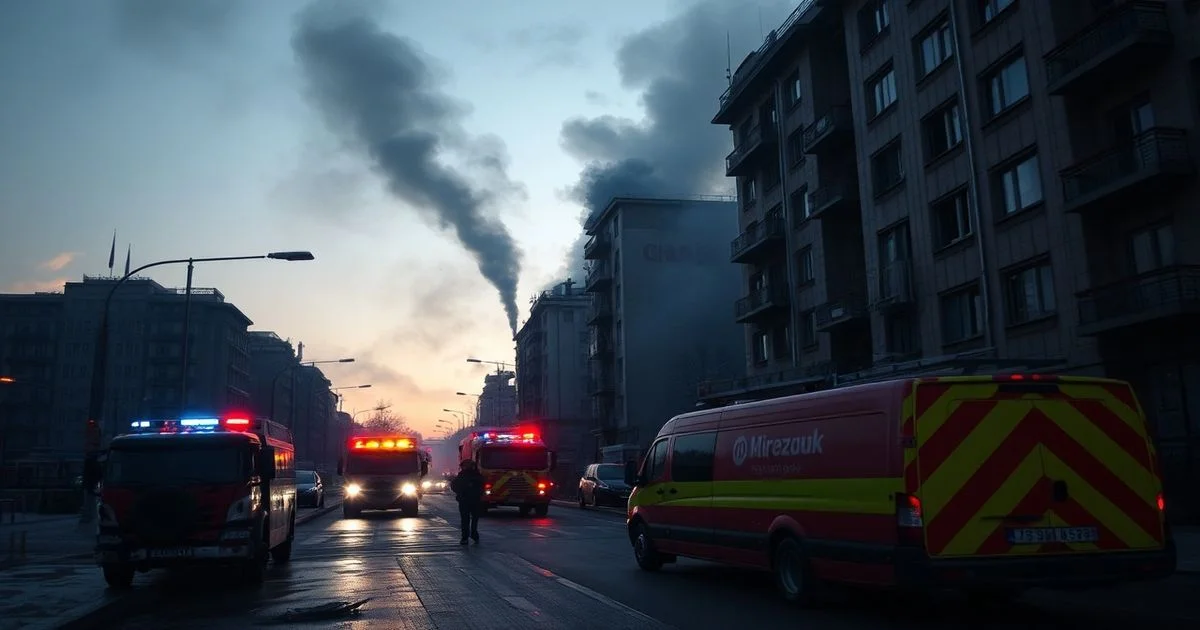
The pre-dawn hours of April 29, 2026, brought terror to Kyiv residents as multiple explosions rocked the city, signaling a fresh wave of Russian aggression. Emergency services immediately rushed to the scenes, battling blazes and working tirelessly to rescue survivors trapped amidst the rubble. Reports confirm that at least six people lost their lives in the onslaught, with dozens more sustaining injuries, some critically. The sheer force of the explosions caused widespread damage to civilian infrastructure, including apartment buildings, businesses, and essential utilities, plunging parts of the city into darkness and chaos.
Mayor Vitali Klitschko condemned the attacks, labeling them as heinous acts of terrorism aimed at breaking the spirit of the Ukrainian people. He urged international partners to enhance air defense capabilities, stressing the urgent need for more robust protection against such indiscriminate bombardments. President Volodymyr Zelenskyy echoed these sentiments, vowing that Ukraine would retaliate and that justice would prevail for those lost and affected. International calls for an immediate cessation of hostilities and increased humanitarian aid were swift, highlighting global concern over the escalating violence.
Background to the Conflict: A Protracted Struggle
The current escalation is set against the backdrop of an ongoing full-scale invasion that began in February 2022, following years of simmering tensions and a partial annexation of Ukrainian territory dating back to 2014. Russia's actions in 2014, including the illegal annexation of Crimea and support for separatists in the Donbas region, laid the groundwork for the broader conflict. Efforts to de-escalate through the Minsk agreements, which aimed to establish a ceasefire and political settlement, ultimately failed to prevent further hostilities, with both sides accusing the other of violations. Russia's stated objectives have varied since the full-scale invasion, but consistently include claims of demilitarization and "denazification" of Ukraine – assertions widely rejected by Ukraine and the international community as baseless pretexts for aggression and a violation of international law.
Since the initial invasion, the conflict has evolved into a grinding war of attrition, characterized by intense fighting along extensive front lines in the east and south. This territorial struggle is compounded by periodic long-range missile and drone strikes, which systematically target cities across Ukraine, including the capital. These strikes often aim at critical infrastructure, such as energy facilities and transportation hubs, but frequently hit civilian areas, causing immense suffering, displacement, and significant loss of life, further exacerbating the humanitarian crisis. The repeated targeting of residential zones highlights a blatant disregard for international humanitarian law.
Key Milestones in the Russia-Ukraine War
The conflict has seen several significant turning points:
- Initial Invasion and Resistance: The swift and unexpected resistance from Ukrainian forces, coupled with substantial international aid, prevented a rapid Russian takeover of Kyiv in early 2022.
- Shift to Eastern and Southern Fronts: After failing to capture Kyiv, Russia refocused its efforts on consolidating control over the Donbas region and securing a land bridge to Crimea.
- Counteroffensives: Ukraine launched successful counteroffensives in late 2022, reclaiming significant territory in Kharkiv and Kherson regions.
- Persistent Air Campaigns: Russia has consistently employed missile and drone attacks, particularly targeting Ukraine's energy infrastructure during winter months, aiming to cripple the country's ability to resist.
The international community has responded with extensive sanctions against Russia and provided substantial military, financial, and humanitarian aid to Ukraine. Despite these efforts, a definitive end to the conflict remains elusive, and the toll on human lives and infrastructure continues to mount.
Unpacking the Attack on Kyiv: Details and Damage
The latest assault on Kyiv involved a relentless barrage of cruise and ballistic missiles, according to detailed reports from Ukrainian air defense command. Residents were awoken by the terrifying sounds of incoming projectiles and subsequent explosions. Witnesses described harrowing scenes, with explosions ripping through the quiet of the night, followed by the wail of air raid sirens and the frantic, courageous efforts of emergency responders. Ukrainian air defense forces, using a combination of Western-supplied and domestically produced systems, managed to intercept a significant portion of the incoming missiles, preventing even greater devastation, but some payloads inevitably broke through.
Damage Assessment:
- Residential Buildings: At least three multi-story apartment buildings sustained direct hits or significant damage from falling debris and blast waves, leading to critical structural instability and widespread destruction of homes. The impact areas indicate a pattern of indiscriminate targeting, hitting densely populated civilian districts.
- Civilian Casualties: In addition to the six confirmed fatalities, medical personnel reported treating over 30 injured individuals, including several children who were sleeping in their beds. The psychological trauma inflicted on survivors and witnesses, many of whom have endured years of conflict, is immeasurable and will require extensive long-term support.
- Infrastructure: Key power lines were severed, disrupting electricity to thousands of households and businesses for hours. Roads were blocked by debris and shattered glass, severely hindering emergency access in some areas and complicating evacuation efforts.
- Search and Rescue Operations: Firefighters battled multiple blazes for hours amidst falling debris and secondary explosions, while rescue teams meticulously searched through the rubble for any remaining victims, working under extremely hazardous conditions and against time.
The precise number and type of missiles used are still under investigation, but Ukrainian military intelligence suggests a combination of sea-launched Kalibr cruise missiles and air-launched Kh-101 cruise missiles, along with potentially Iskander ballistic missiles, fired from various locations, including Russian naval vessels in the Black Sea, strategic bombers, and land-based launchers within Russian territory. The use of varied missile types and launch platforms complicates interception efforts.
Global Condemnation and Calls for Action
The international response to the latest attack on Kyiv has been swift and unified in condemnation. Leaders from numerous countries and international organizations have issued strong statements denouncing Russia's actions and expressing solidarity with Ukraine.
Statements from Key International Bodies
- United Nations: UN Secretary-General António Guterres deplored the loss of civilian lives and reiterated calls for an immediate cessation of hostilities and a peaceful resolution in line with international law. The UN Office for the Coordination of Humanitarian Affairs (OCHA) pledged continued support for humanitarian efforts in Ukraine.
- European Union: The EU High Representative for Foreign Affairs and Security Policy, Josep Borrell, called the attack a "barbaric act" and reaffirmed the EU's unwavering commitment to supporting Ukraine's sovereignty and territorial integrity. He also indicated discussions are underway for further sanctions against Russia and increased military aid to Ukraine.
- NATO: NATO Secretary General Jens Stoltenberg condemned the indiscriminate attacks on civilians and reiterated the alliance's commitment to strengthening Ukraine's defense capabilities through continued provision of advanced air defense systems and training.
Bilateral Reactions
Several nations, including the United States, the United Kingdom, Germany, and France, have individually condemned the attack and reaffirmed their commitment to supporting Ukraine. U.S. President Joe Biden described the strikes as a "brutal reminder" of the ongoing conflict and vowed to accelerate the delivery of crucial military assistance to Kyiv. German Chancellor Olaf Scholz emphasized the need for continued vigilance and support for Ukraine's self-defense.
Humanitarian Impact and Long-Term Consequences
The human cost of the Russia-Ukraine War is immeasurable, extending far beyond the immediate casualties of such attacks. Millions have been displaced, with over 6 million Ukrainians seeking refuge in neighboring countries and across Europe, and an additional 5-7 million internally displaced within Ukraine's borders. These forced migrations lead to profound instability, family separation, and the loss of established communities and livelihoods. The psychological toll on the entire population, particularly children who have known little else but war, is profound, with widespread reports of trauma, anxiety, depression, and post-traumatic stress disorder requiring extensive and accessible mental health support.
Challenges Faced by Civilians
- Displacement: Ongoing attacks force families to flee their homes, often repeatedly, leading to profound instability, loss of community, and a constant struggle to find safety and security.
- Access to Basic Services: Damage to critical infrastructure systematically disrupts access to essential services like electricity, clean water, heating, and healthcare, particularly during harsh winter months, turning everyday life into a struggle for survival.
- Food Insecurity: The war has severely impacted agricultural production, destroyed farmlands, and disrupted global supply chains, contributing significantly to food insecurity not only in parts of Ukraine but also exacerbating global food price volatility and hunger in vulnerable nations dependent on Ukrainian grain.
- Mental Health Crisis: Constant exposure to violence, loss of loved ones, destruction of homes, and pervasive uncertainty has led to a significant and escalating mental health crisis among the Ukrainian population, necessitating robust, long-term psychological and psychiatric support programs.
The long-term consequences of the conflict are multifaceted and far-reaching. Ukraine faces a monumental task of reconstruction and recovery, with damage estimates reaching hundreds of billions of dollars. This effort will require sustained international support for decades to come, encompassing housing, infrastructure, and economic revitalization. Beyond Ukraine, the war has profoundly reshaped the geopolitical landscape, solidifying alliances, prompting significant shifts in defense policies across Europe, and reigniting debates about international security architecture. The global economy has keenly felt the ripple effects, particularly in volatile energy and food markets, underscoring the interconnectedness of global stability.
Ukraine's Resilience and Future Outlook
Despite the relentless aggression, Ukraine has consistently demonstrated remarkable resilience. Its armed forces continue to defend the country with unwavering resolve, and its civilian population, even under bombardment, maintains a strong sense of national identity and determination to rebuild.
Focus on Defense and Reconstruction
The immediate focus remains on strengthening air defenses to protect population centers from further attacks. Ukraine's allies are working to provide more advanced systems, including Patriot missile batteries and F-16 fighter jets, to bolster its aerial shield. Efforts are also underway to establish mechanisms for international financial aid to support the Ukrainian budget and critical services.
Simultaneously, planning for reconstruction is already underway, often in parallel with ongoing hostilities. International forums and initiatives are being established to coordinate efforts and secure funding for rebuilding homes, infrastructure, and the economy. The scale of this task is enormous, estimated to cost hundreds of billions of dollars, and will require transparent governance and robust international oversight. Ukraine's aspirations for closer integration with the European Union, including potential membership, also guide many of these reform and reconstruction efforts.
Path Towards Peace
While the prospect of a lasting peace remains distant, diplomatic efforts continue, albeit with limited success so far. Ukraine insists on the restoration of its full territorial integrity and sovereignty as a prerequisite for any peace agreement, a stance supported by most of the international community. Russia, however, has shown little willingness to withdraw from occupied territories or to accept Ukraine's sovereign choices.
The future of Ukraine, and indeed the broader European security architecture, hinges on the outcome of this conflict. The unwavering support from its allies and the steadfast determination of its people offer hope that Ukraine will ultimately prevail and emerge from the ashes stronger. The international community's continued commitment to justice, accountability, and humanitarian aid will be paramount in supporting Ukraine through this protracted crisis.
Conclusion: The Enduring Impact of Conflict
The recent missile strike on Kyiv, resulting in six tragic deaths, serves as a stark and painful reminder of the brutal reality of the Russia-Ukraine War: Kyiv Attacked, Six Dead. This devastating event not only adds to the tragic human toll but also underscores the urgent need for sustained international efforts to protect civilian lives, enhance Ukraine's defense capabilities, and work towards a just and lasting peace. The global community must remain steadfast in its condemnation of aggression and its support for Ukraine's sovereignty and territorial integrity. The sacrifices made and the suffering endured in Kyiv and across Ukraine demand a resolute commitment to ending this conflict and ensuring that such acts of violence are never repeated.
Frequently Asked Questions
Q: What prompted this missile strike on Kyiv?
A: The strike is part of Russia's ongoing aggression in the protracted war, aimed at degrading Ukrainian infrastructure and morale. While no specific immediate prompt was publicly stated, such attacks often target residential and critical areas to exert pressure on the capital.
Q: How did the international community respond to this attack?
A: International bodies like the UN, EU, and NATO, alongside several national leaders, swiftly condemned the attack. They reiterated calls for peace, pledged continued support for Ukraine, and discussed potential new sanctions against Russia and enhanced military aid.
Q: What are the long-term impacts of such strikes on Ukraine?
A: These attacks cause immense human suffering, displacement, and contribute to a severe mental health crisis. Long-term, they necessitate massive reconstruction efforts, reshape geopolitical alliances, and have significant ripple effects on the global economy, especially in energy and food sectors.