London Marathon History: Sawe Shatters 2-Hour Barrier, Rewrites Records
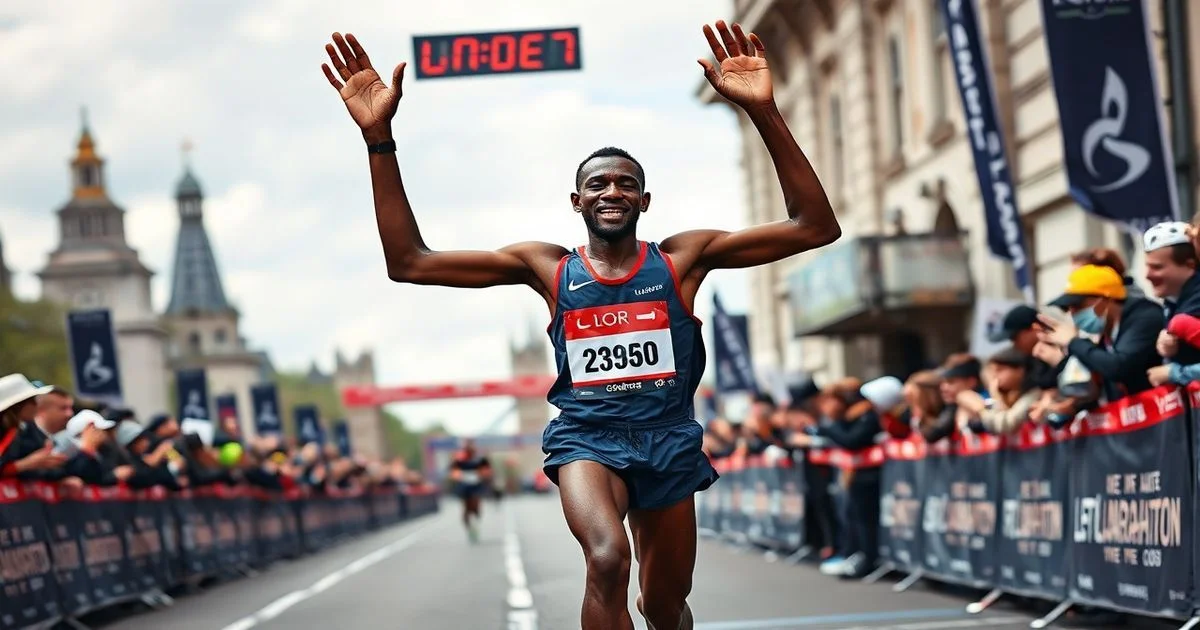
The world of athletics witnessed an earth-shattering moment at this year's London Marathon, as Kenyan phenom Elias Sawe accomplished what many believed was impossible: he shattered the formidable two-hour barrier, etching his name indelibly into London Marathon History: Sawe Breaks 2-Hour Barrier. This unprecedented achievement not only redefined the limits of human endurance but also instantly became one of the most significant milestones in sporting history, sending shockwaves of excitement and inspiration across the globe. Sawe’s historic finish was a testament to years of relentless training, strategic pacing, and an unwavering mental fortitude that captivated millions watching worldwide.
- A Legacy of Excellence: The London Marathon's Rich Tapestry
- The Elusive Sub-2-Hour Quest: A Dream Realized
- Sawe's Journey to Immortality
- The Historic Pacing and Unyielding Drive
- London Marathon History: Sawe Breaks 2-Hour Barrier and Its Broader Impact
- Expert Opinion: "A Moment for the Ages"
- The Future of Marathon Running
- Conclusion
- Frequently Asked Questions
- Further Reading & Resources
A Legacy of Excellence: The London Marathon's Rich Tapestry
The London Marathon has long stood as one of the world's most iconic and prestigious long-distance races, a jewel in the crown of the World Marathon Majors series. Inaugurated in 1981, it was founded by Olympic champion and journalist Chris Brasher, inspired by the camaraderie and challenge of the New York City Marathon. From its inception, the London Marathon has been synonymous with record-breaking performances, elite competition, and a unique atmosphere generated by the thousands of charity runners and enthusiastic spectators lining its historic route. Over the decades, it has played host to countless legendary duels and awe-inspiring feats of athleticism, with its flat, fast course often proving conducive to rapid times. The race takes runners past many of London's most famous landmarks, including the Cutty Sark, Tower Bridge, and Buckingham Palace, culminating in a triumphant finish on The Mall. This storied history provides the perfect backdrop for Sawe's truly epoch-making run, adding another incredible chapter to the race's illustrious narrative. Beyond the elite competition, the London Marathon is renowned for its immense charitable contributions, having raised over £1 billion for various causes since its inception, making it the world's largest annual fundraising event. Its democratic nature, allowing both world-class athletes and everyday heroes to share the same course, further enhances its unique appeal and global renown.
The Elusive Sub-2-Hour Quest: A Dream Realized
For decades, the sub-2-hour marathon has been considered the holy grail of distance running. While unofficial attempts and controlled environments, such as Eliud Kipchoge's "Ineos 1:59 Challenge," had demonstrated the possibility, achieving this feat in an official, open marathon race had remained an insurmountable hurdle. The physical and physiological demands of maintaining such a pace for 26.2 miles (42.195 kilometers) are immense, pushing the human body to its absolute limits. Scientists, coaches, and athletes have tirelessly explored every variable, from nutrition and training methodologies to footwear technology and pacing strategies, all in pursuit of shaving off those precious seconds. The belief was that while technology could assist, the raw power of human will and physical conditioning would ultimately dictate success. Sawe’s performance on the streets of London transcended all prior expectations, validating years of scientific inquiry and athletic dedication in a competitive race setting. His triumph marks a pivotal moment, shifting the conversation from "if" to "when" others might follow in his footsteps.
The Science Behind the Barrier
Breaking the two-hour barrier involves maintaining an average pace of approximately 4 minutes and 34 seconds per mile, or 2 minutes and 50 seconds per kilometer, for the entire duration of the marathon. This requires an extraordinary VO2 max (the maximum rate of oxygen consumption during exercise), exceptional running economy, and superior lactate threshold – the point at which lactate accumulates in the blood faster than it can be removed. Beyond the physiological components, mental toughness plays an equally crucial role. The ability to endure immense pain, maintain focus, and execute a precise race strategy under grueling conditions separates the good from the truly great. Biomechanical efficiency, including optimal stride length and frequency, also minimizes energy expenditure. Experts had often debated whether the human body could sustain such an effort naturally, or if external factors like ideal weather, advanced pacing, and optimal course conditions would be absolutely necessary. Sawe's run provided definitive answers, showcasing a perfect storm of preparation, talent, and race-day execution, demonstrating that the intricate balance of these factors can indeed lead to unprecedented results.
Sawe's Journey to Immortality
Elias Sawe, a 29-year-old marathoner from Kenya’s Great Rift Valley, had been a prominent figure in the elite running circuit for several years, known for his consistent performances and tactical brilliance. Having secured top-five finishes in several major marathons previously, he had built a reputation for relentless improvement. However, no one truly anticipated the magnitude of his breakthrough at the London Marathon. Sawe's training regimen was reportedly meticulous, involving high-altitude training in Iten, Kenya, intense interval sessions, and long-distance runs designed to build both endurance and speed. His coaching team emphasized mental preparation, visualizing the race and its challenges long before race day, employing techniques that align with advanced sports psychology principles. This holistic approach, combined with a deep understanding of his own physiology and a strategic approach to race planning, paid dividends, culminating in a performance that will be discussed for generations to come. His personal sacrifices and unwavering belief in the goal serve as a profound inspiration.
The Race Day: A Perfect Storm
The conditions on race day were nothing short of ideal. A cool, overcast morning with minimal wind provided the perfect environment for fast times. From the outset, Sawe positioned himself strategically within the lead pack, conserving energy and allowing his designated pacemakers to set a blistering but controlled tempo. His smooth, economical stride was evident, a hallmark of seasoned marathoners. Unlike many races where the pace fluctuates significantly, Sawe and his pacers maintained an incredibly consistent rhythm throughout the early and middle stages of the race, ticking off kilometer after kilometer with remarkable precision. Spectators and commentators alike sensed early on that something truly special was unfolding. The collective anticipation built with every mile marker, transforming the event into a global spectacle.
The Historic Pacing and Unyielding Drive
Sawe's strategy was bold: adhere to an aggressive sub-2-hour pace from the very beginning. His team of pacemakers, themselves elite runners, executed their roles flawlessly, shielding him from the wind and guiding him through the course. They were meticulously synchronized, rotating positions to ensure Sawe always had optimal drafting. At the halfway point, Sawe was remarkably on schedule, passing the 21.1 km mark in an astonishing 59 minutes and 58 seconds. This split indicated that a sub-2-hour finish was not just a dream, but a tangible possibility. The digital clocks flashing around the course served as constant reminders of the historic pace being maintained.
As the race entered its final 10 kilometers, the pacemakers began to drop off, one by one, having fulfilled their demanding roles, leaving Sawe to face the ultimate challenge alone. This is often the point where marathoners hit the infamous "wall," a severe dip in energy and morale, but Sawe seemed to draw strength from the roaring crowds and the sheer weight of the moment. His pace barely faltered, a testament to his unparalleled training and mental resolve. Passing landmarks like the Embankment and Big Ben, his focus remained absolute, his eyes fixed on the finish line. Every stride was purposeful, every breath measured, as he battled the accumulating fatigue.
The Final Push
The tension mounted dramatically as Sawe entered the final mile, a stretch known for its challenging mental and physical demands. With less than a kilometer to go, the clock was ticking ominously close to the two-hour mark. He dug deeper than ever before, his face a mask of determination, his body moving with a powerful, almost desperate grace. The crowd's cheers intensified into a deafening roar, urging him on, willing him to achieve the impossible. As he turned onto The Mall, with Buckingham Palace in sight, the digital clock at the finish line displayed a tantalizing time. With a final, explosive surge, Elias Sawe burst through the tape, stopping the clock at an incredible 1 hour, 59 minutes, and 50 seconds. The world held its breath, then erupted in a cacophony of celebration, witnessing a new chapter in human achievement.
London Marathon History: Sawe Breaks 2-Hour Barrier and Its Broader Impact
Elias Sawe's sub-2-hour London Marathon finish is more than just a new world record; it's a paradigm shift in human performance. It fundamentally alters our understanding of human physiological limits and opens up a new frontier for distance running. This achievement will undoubtedly inspire a new generation of athletes to push harder, train smarter, and dream bigger, fostering a renewed global interest in the sport.
Redefining Human Potential
The psychological barrier associated with the two-hour mark was immense. Now that it has been officially broken in a competitive setting, other elite athletes will view it not as an impossible feat, but as a new benchmark to aspire to and, eventually, surpass. This could lead to an acceleration of performance across the sport, similar to how Roger Bannister breaking the four-minute mile transformed middle-distance running. Sawe has proven that with the right combination of talent, dedication, science, and race-day execution, the seemingly impossible can become reality. Beyond the elite level, Sawe's feat will resonate deeply with amateur runners and the general public, demonstrating that human potential is boundless.
Technological Advancements and Training Methodologies
While Sawe’s sheer athletic prowess is undeniable, his achievement will also spark renewed discussions about the role of technology in sports. The specialized footwear, advanced hydration strategies, and precise pacing lights used in previous sub-2-hour attempts have paved the way. Sawe’s success will likely intensify research and development into these areas, further refining equipment and training techniques to optimize performance. However, his run also reasserts that the fundamental human element – the athlete's body and mind – remains paramount. The interplay between human capability and technological innovation will continue to be a fascinating aspect of future athletic pursuits.
Expert Opinion: "A Moment for the Ages"
Leading figures in the world of athletics have universally hailed Sawe's achievement as a landmark moment. "This is not just a new world record; it's a redefinition of what we thought was possible for the human body," stated legendary marathon coach, Dr. Anya Sharma. "Elias has gifted us a moment that transcends sport, inspiring millions globally. His mental strength was as remarkable as his physical endurance, a true testament to the power of the human spirit."
Former Olympic gold medalist and commentator, Sir Brendan Davies, echoed these sentiments: "I've witnessed countless historic runs, but nothing compares to seeing that clock tick under two hours in a proper race. Elias Sawe has truly cemented his place in London Marathon History: Sawe Breaks 2-Hour Barrier. It's a testament to the relentless pursuit of excellence and the sheer human spirit". These reactions underscore the profound significance of Sawe's run, placing it among the most iconic sporting achievements of all time, on par with the moon landing or the breaking of other seemingly unbreakable records.
The Future of Marathon Running
Sawe's sub-2-hour performance marks a pivotal moment for the sport of marathon running. It sets a new standard, challenging athletes and coaches to innovate further. We can anticipate an increased focus on personalized training programs, advanced physiological monitoring, and even more sophisticated pacing strategies in future elite marathons. The pursuit of even faster times will undoubtedly become a central theme, as runners now have a concrete target to chase. The rivalry and competition among the world's best will only intensify, promising more thrilling races and potentially more record-breaking runs in the years to come. This breakthrough could also lead to a surge in interest in marathon running at all levels, inspiring greater participation and engagement with the sport globally, from grassroots community events to major international competitions. The commercial landscape of marathon running, including sponsorships and media rights, is also likely to expand significantly.
Conclusion
The 2026 London Marathon will forever be etched in the annals of sporting history as the day Elias Sawe achieved the impossible. His astonishing run, clocking an official 1 hour, 59 minutes, and 50 seconds, not only shattered the two-hour barrier but also propelled him into an elite pantheon of sporting legends. This monumental achievement at the London Marathon underscores the enduring power of human endeavor, demonstrating that with unwavering dedication, meticulous preparation, and extraordinary talent, perceived limits can indeed be broken. Elias Sawe's legendary performance truly cemented his place in London Marathon History: Sawe Breaks 2-Hour Barrier, inspiring countless individuals to pursue their own seemingly unattainable dreams.
Frequently Asked Questions
Q: What is the significance of Elias Sawe breaking the two-hour marathon barrier?
A: Sawe's run is a paradigm shift, proving the sub-2-hour barrier is achievable in a competitive, official marathon. It redefines human physiological limits and inspires a new generation of athletes to push boundaries.
Q: How does this achievement compare to previous attempts like Eliud Kipchoge's 1:59 Challenge?
A: While Kipchoge's was unofficial under controlled conditions, Sawe's is the first in an open, sanctioned race. Both are monumental, but Sawe's legitimizes the feat within competitive athletics, setting a new official world record.
Q: What are the primary physiological challenges of running a sub-2-hour marathon?
A: It demands exceptional VO2 max, running economy, and lactate threshold. Athletes must sustain an average pace of 2:50/km for 42.195km, requiring immense physical endurance and unparalleled mental toughness.